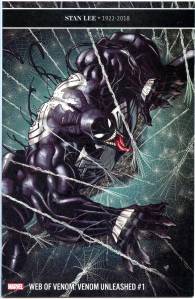
After Eddie fought the Symbiote god Knul, and seemingly killed him, Eddie’s Symbiote has lost its personality. In a new tie-in issue Web Of Venom: Venom Unleashed #1, written by Ryan Stegman with art by Kyle Hotz and Juan Gedeon, that story pushes forward and it appears Carnage is attempting to fill the void Knull left when he died.
Web of Venom – Venom Unleashed #1 Bradshaw Variant NM $8
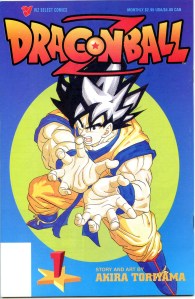
The English language version of the Dragon Ball manga is licensed for North America by Viz Media. Viz originally published the first 194 chapters as Dragon Ball and chapters over 195 as Dragon Ball Z to mimic the names of the anime series, feeling it would reduce the potential for confusion by its readers. They initially released both series simultaneously, chapter by chapter in a monthly comic book format starting in 1998, before stopping in 2000 to switch to a graphic novel format similar to the Japanese tankōbon.
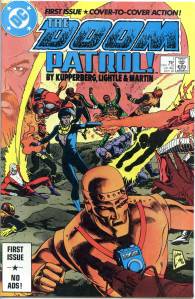
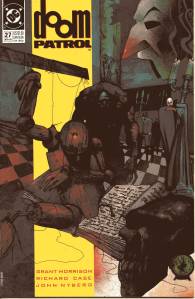
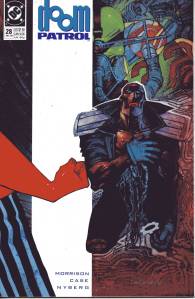
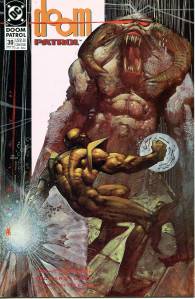
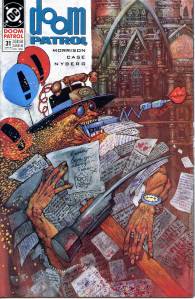
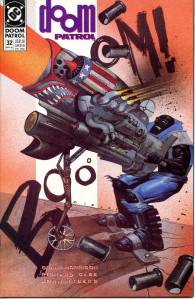
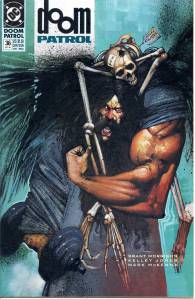
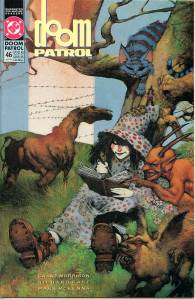
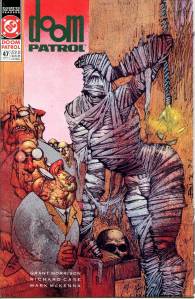
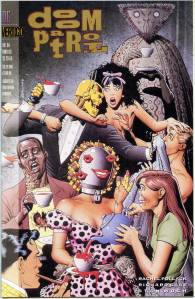
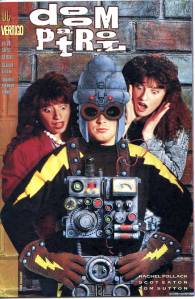
Paul Kupperberg laid the groundwork for the new series by writing the John Byrne illustrated Secret Origins Annual #1, published in 1987, which recapped the origins of the two iterations of the Doom Patrol that had existed thus far. In October 1987, DC relaunched Doom Patrol, written by Kupperberg and illustrated by Steve Lightle.
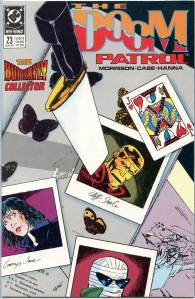
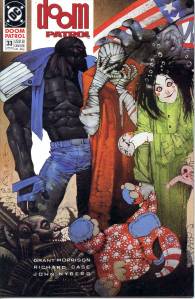
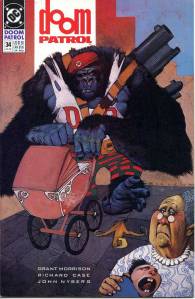
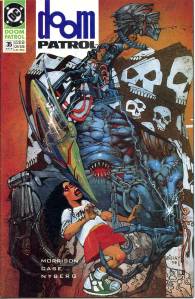
After the first 18 issues (and various crossovers and annuals), Kupperberg was replaced by Grant Morrison, starting with issue #19. Kupperberg agreed to help Morrison by writing out characters Morrison did not want to use: Celsius and Scott Fischer died before issue #18—Celsius was killed in an explosion in DC Comics’ “Invasion!” event, and Scott Fischer (already suffering from a recurrence of childhood leukemia) was the only known active superhero casualty of the Dominators‘ gene-bomb (also in “Invasion!”); Karma had left the team as he was still on the run from the law (he became a member of the Suicide Squad and died on his first mission with them in the “War of the Gods” crossover event); the Negative Spirit left Negative Woman’s body; and Lodestone plunged into a coma, where she would remain for the first half of Morrison’s run on the book. Tempest gave up fieldwork to become the team’s physician. Conversely, Morrison picked up a throw-away character from DP #14, who was slipped into the art on the last page of #18 to set up Morrison’s use: Dorothy Spinner is an ape-faced girl with powerful “imaginary friends.” Morrison also substantially retooled Negative Man: Larry Trainor (revealed to be alive in the Kupperburg run, as a prisoner of an underground society but now powerless) is forcibly merged with the Negative Spirit (now a cosmic entity) and a black doctor named Dr. Eleanor Poole, to create a transgender transracial gestalt entity known as Rebis. The new writer introduced some new characters to the team, including the multiple personality-afflicted Crazy Jane; and sentient roadway Danny the Street.
In 2016, DC Comics announced a new version of the Super Sons to appear in 2017. The two new super-kids are Damian Wayne, son of Bruce Wayne and Talia al Ghul, and Jonathan Kent, son of Superman and Lois Lane. The former is thirteen years of age in this version (as of the 80-page DC Universe Rebirth special), while the latter is ten years old. The advance releases describe them as “best frenemies forever” who will save the world together, “if they don’t kill each other first.” The series was launched in February 2017 and ended in May 2018 with 16 issues and 1 Annual.
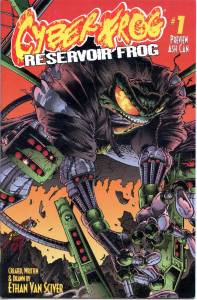
Cyberfrog attacks a band of cybernetic insects known as the Swarm who murdered a young couple in their apartment. As the Swarm gain the advantage Cyberfrog finds two large cannons have appeared on his arms. Unsure of the origins of the weapons Cyberfrog quickly drives the Swarm away. Meanwhile, the spirit of Ben Riley appears to a suicidal teen named Yoshi and offers Yoshi his artifact. Later, the Swarm have assembled underground and rally together, vowing to rid the streets of those who created and abandoned them; Traffik. Heather arrives at Cyberfrog’s apartment shortly before the Swarm attacks in full force.
A large spacecraft emerges from a swamp and flies away as the Swarm surrounds Cyberfrog’s apartment and begins their attack. Cyberfrog has again found himself bearing powerful weapons. The leader of the Swarm kills the leader of Traffik, and Ben passes his artifact to Yoshi, christening him as Dragon-Fly. Cyberfrog engages the Swarm in a heated battle and is eventually overwhelmed. Heather investigates the battle and is targeted by the Swarm. Cyberfrog jumps in front of the shots meant for Heather and is heavily wounded.The spacecraft from the swamp suddenly arrives at the battle, kills all members of the Swarm and informs Heather that it is Cyberfrog’s mother.
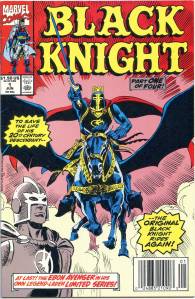
“The Rebirth of the Black Knight” – At last! The Ebon Avenger in his own legend-laden limited series! To save the life of his 20th century descendant, the original Black Knight rides again! Characters: Captain America, Hawkeye, Victoria Bentley; Black Knights I, II, and III.
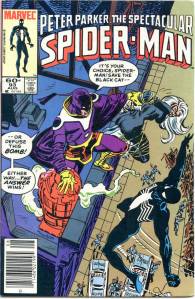
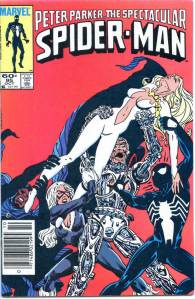
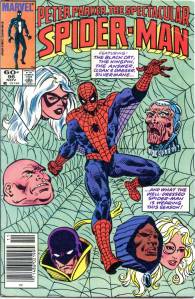
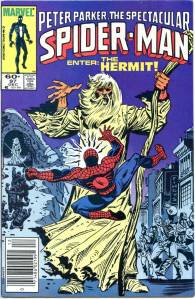
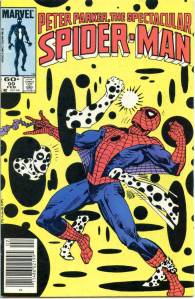
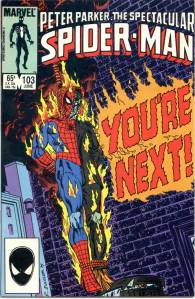
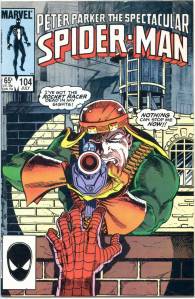
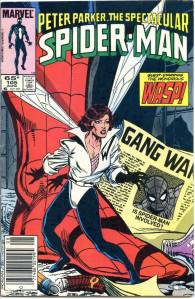
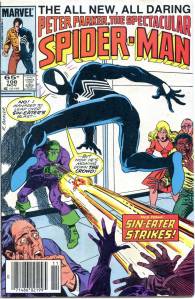
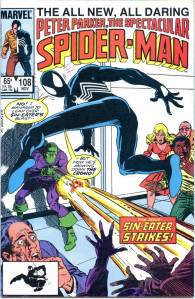
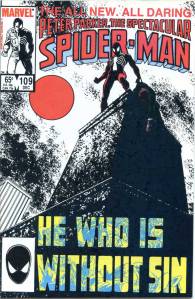
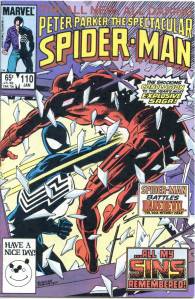
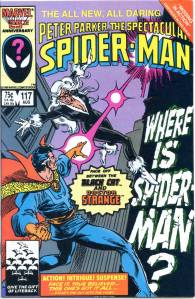
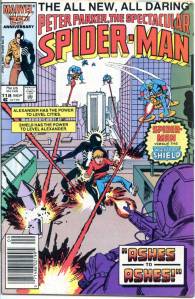
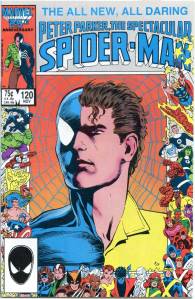
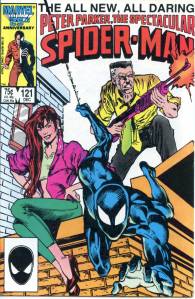
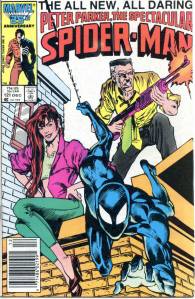
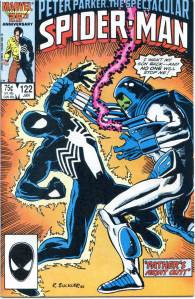
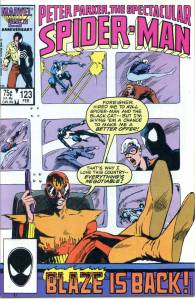
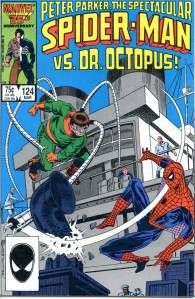
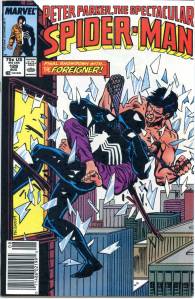
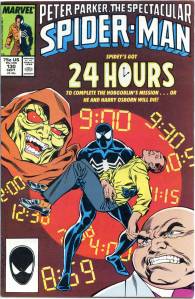
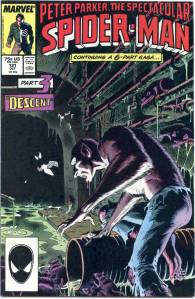
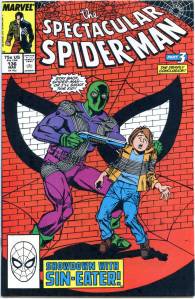
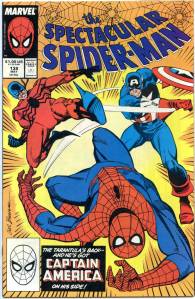
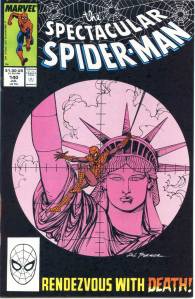
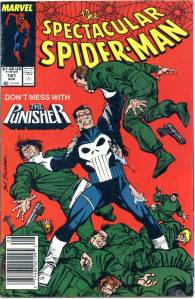
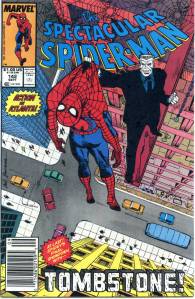
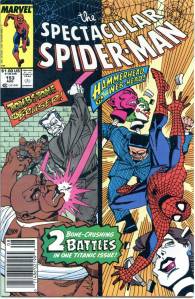
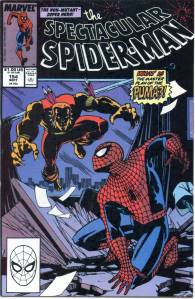
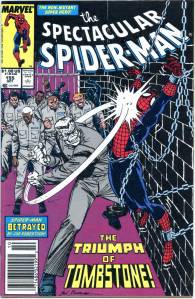
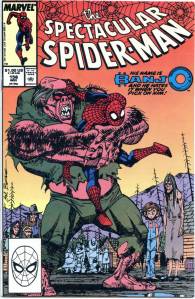
Al Milgrom took over scripting as well as art on the title with issue #90 (May 1984) and worked on it through #100 (March 1985). Milgrom imbued the book with a more whimsical tone, for example, pitting Spider-Man against The Spot, an enemy so ridiculous he gave Spider-Man fits of laughter. Jim Owsley, then editor of the Spider-Man books, disapproved of this approach and had Milgrom replaced as writer by newcomer Peter David in 1985. David and artist Rich Buckler, said Owsley, had the series “focusing on stories with a serious, ‘grown-up’ tone and more complex themes”. The most notable story arc of the David/Buckler era is “The Death of Jean DeWolff” (#107–110, Oct. 1985–Jan. 1986), in which Spider-Man’s ally, NYC Police Captain Jean DeWolff – a supporting character in the Spider-Man comics since 1976 – is murdered by the vigilante/serial killer the Sin-Eater. This multi-part story guest-starred Daredevil. The “Kraven’s Last Hunt” storyline by writer J.M. DeMatteis and artists Mike Zeck and Bob McLeod crossed over into Peter Parker, The Spectacular Spider-Man #131 and 132.
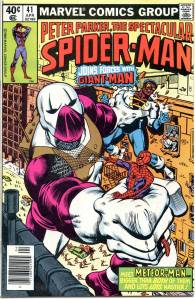
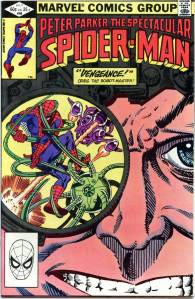
Spectacular Spider-Man #41 VF+ $7
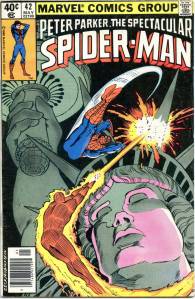
Spectacular Spider-Man #42 F-VF $4
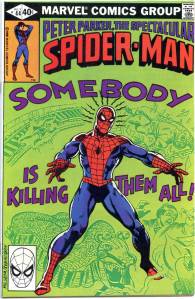
Spectacular Spider-Man #44 VF-NM $8
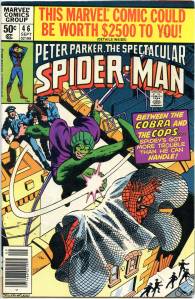
Spectacular Spider-Man #46 VF- $5
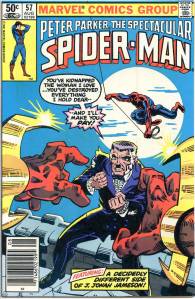
Spectacular Spider-Man #57 VF-NM $8
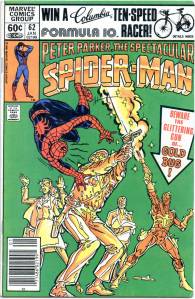
Spectacular Spider-Man #62 VF $4
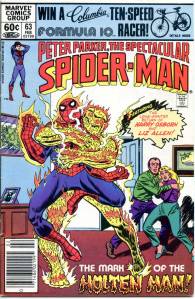
Spectacular Spider-Man #63 Newsstand FN $2
Spectacular Spider-Man #67 FN-VF $4
Spectacular Spider-Man #68 VF $6
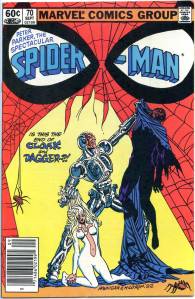
Spectacular Spider-Man #70 Newsstand VF- $9
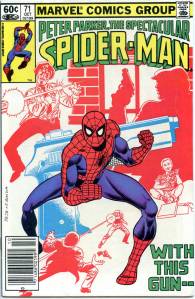
Spectacular Spider-Man #71 Newsstand FN-VF $5
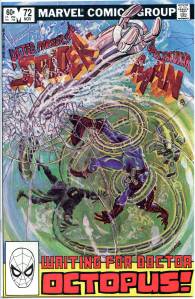
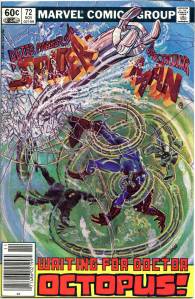
Spectacular Spider-Man #72 NM $11
Spectacular Spider-Man #72 Newsstand VF $9
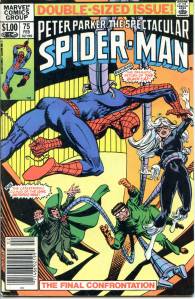
Spectacular Spider-Man #75 Newsstand FN-VF $5
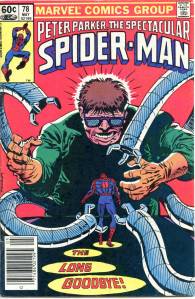
Spectacular Spider-Man #78 Newsstand FN-VF $4
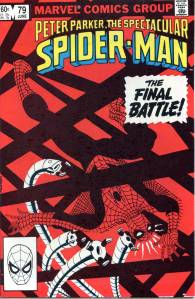
Spectacular Spider-Man #79 NM $9
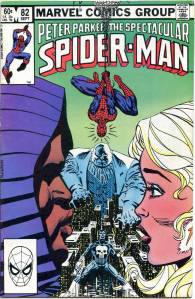
Spectacular Spider-Man #82 F-VF $4
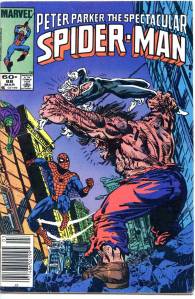
Spectacular Spider-Man #88 F-VF $3
Spectacular Spider-Man #89 VF- $4
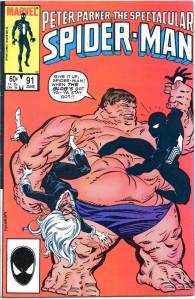
Spectacular Spider-Man #91 F+ $2
Spectacular Spider-Man #93 Newsstand FN-VF $4
Spectacular Spider-Man #95 Newsstand VF- $5
Spectacular Spider-Man #96 Newsstand FN+ $3
Spectacular Spider-Man #97 Newsstand NM $10
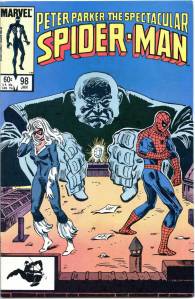
Spectacular Spider-Man #98 VF $39
Spectacular Spider-Man #99 Newsstand FN-VF $6
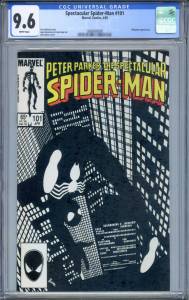
Spectacular Spider-Man #101 CGC 9.6 White Pages $149
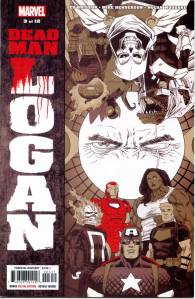
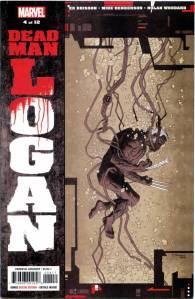
The writing’s been on the wall for months now… Logan is dying. And he ain’t getting any better. Sick from the Adamantium coating his skeleton, his search for a cure has led to nothing but dead ends. But for once he’s actually trying to leave this world with some unfinished business… Can Logan take his last breath without slaughtering the X-Men again? Not if Mysterio has anything to say about it…






 EHT Comics