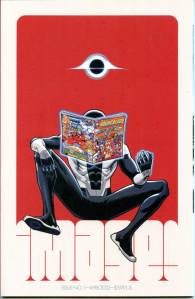
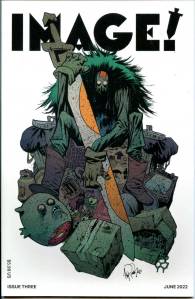
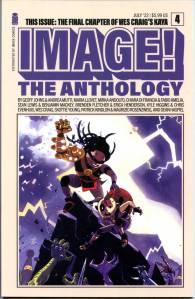
Celebrate the 30th anniversary of Image Comics with the anthology series Image! This 12-issue series will treat readers to all-new stories from some of the biggest and best names in comics. Edited by Image Comics’ Publisher Eric Stephenson and featuring a combination of ongoing serials and standalone short stories.
X-Force is the CIA of the mutant world-one half intelligence branch, one half special ops. Beast, Jean Grey and Sage on one side, Wolverine, Kid Omega and Domino on the other.
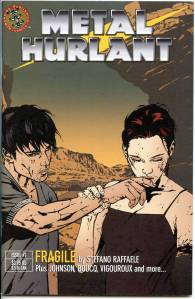
Métal Hurlant began publishing again in July 2002 by Humanoids Publishing, with a French, English, Spanish and Portuguese version, under the French name. As a “two-headed”, transatlantic (France-US) magazine, led by Fabrice Giger in Los Angeles, it published original short stories, sometimes related to existing or to be published comic books. Its aim was to discover young creators and promote the products from the publisher. This incarnation of the magazine ceased publication with issue No. 14, dated November/December 2004.
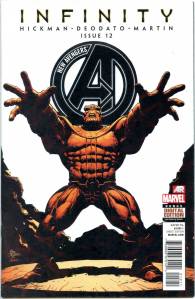
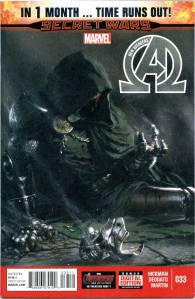
New Avengers was renumbered as a new volume in January 2013, written by Jonathan Hickman and originally drawn by Steve Epting. The new volume shifted its focus to the powerful group known as the Illuminati, which includes Black Bolt, Captain America, Doctor Strange, Iron Man, Mister Fantastic, and Namor, who reassembled to confront the threat of incursions. Black Panther and Reed Richards discovered that universal decay centered on Earth was causing universes to collide with one another, with Earth at the focal point. In issue #3, Black Panther, who had previously opposed the existence of the Illuminati, joined the group, and the Beast was brought in to fill the spot vacated by the death of Professor X. In the same issue, Captain America leaves. In issue #12, after having helped the Illuminati to defeat Thanos‘s army, Black Bolt’s brother Maximus joined the team. Bruce Banner joined the team in Avengers Vol. 5 #28 after discovering the universal decay on his own.
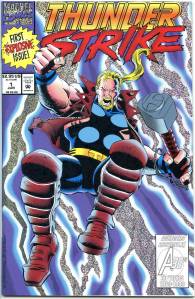
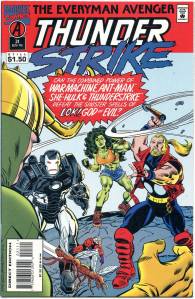
Following Thor #459, Masterson was introduced as “Thunderstrike” in the eponymous series starting in June 1993. The series lasted approximately two years. Thunderstrike ran for 24 issues, the series canceled in September 1995. Creator Tom DeFalco has often claimed that the book outsold Thor and The Avengers combined at the time of its cancellation; although this has been shown to be extremely unlikely.
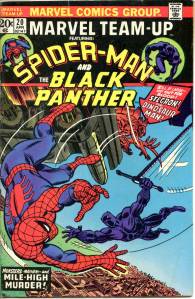
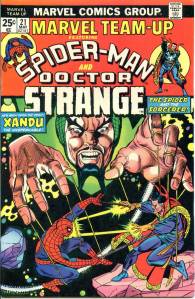
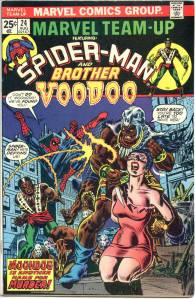
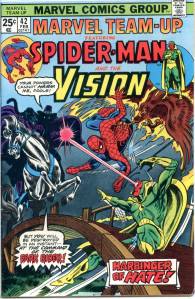
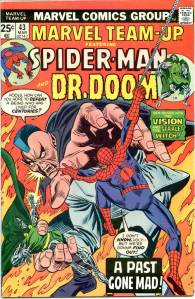
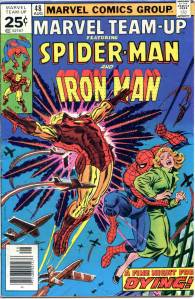
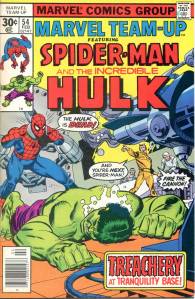
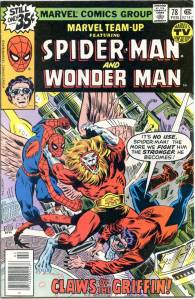
The series featured two or more Marvel characters in one story. The series was originally published from March 1972 through February 1985, and featured Spider-Man as the lead “team-up” character in all but ten of its 150 issues, and in six of its seven Annuals. It was the first major ongoing spin-off series for Spider-Man, being preceded only by the short-lived The Spectacular Spider-Man magazine.
I, Lusiphur (December 1991-December 1992) – Poison Elves (February 1993-February 1995) Hayes originally self-published the series during the early 90s under his company Mulehide Graphics under the title of I, Lusiphur. The title was changed to Poison Elves because the similarity of Lusiphur to Lucifer led to the misconception that the series was Satanic in nature. Sales were reported to have increased significantly after the name change. Drew claimed in one of his Starting Notes that the name change was prompted by a letter from a teen-aged fan whose mother had thrown out his comics after finding I, Lusiphur comics amongst his collection.
The first ten issues of the Mulehide series were published in a larger magazine size format. In 1995, Drew Hayes signed on with Sirius Entertainment, a move that increased his exposure, fan base, and publishing rate. To date, ten trade paperbacks have been released, but the last issue of the main series published by Sirius was #79. Hayes died in 2007, thus bringing the series to an abrupt end. A commemorative issue #80 was released to give fans a look at sketches and plans Drew Hayes had for the future of the series before his death.
Death: The High Cost of Living is written by Neil Gaiman with art by Chris Bachalo and Mark Buckingham. It is a spin-off from Gaiman’s best-selling Vertigo Comics series The Sandman, featuring the Sandman (Dream)’s elder sister, Death of the Endless in a self-contained story based around the fable that Death takes human form once a century, to remain grounded and in touch with humanity, an idea touched upon in several other media, for example in the 1934 film Death Takes a Holidayand in the Terry Pratchett novel Reaper Man.
A movie based on this series has been in the works for several years in various stages of development and until recently was in the works at New Line Cinema. Gaiman had previously confirmed that this movie was in progress and that he was planning on writing the script and directing it, with Guillermo del Toro as executive producer. The film, which is currently on hold, was operating under the title Death and Me.
Death the High Cost of Living 1 Platinum Edition VF- $49
Death the High Cost of Living #1 VF- Signed by Gaiman and Bachalo $16
Death – The High Cost of Living #1 Signed Bachalo NM $19
Death – The High Cost of Living #1 Signed Bachalo VF $16
A year or so before Image began publishing Sam Kieth’s most famous work, Maxx, Fantagraphics produced two volumes of Kieth’s drawings and short stories as I Before E. With creepy aliens, prowling tigers, and visual treats like the short story “Max the Hare,” these two comic-sized volumes make a fine companion to any Sam Kieth collection.
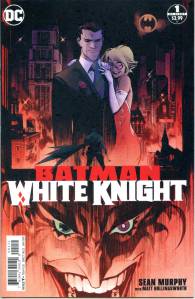
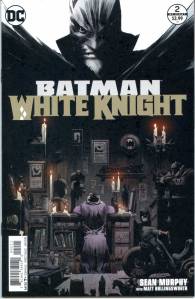
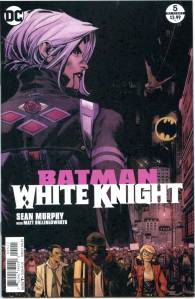
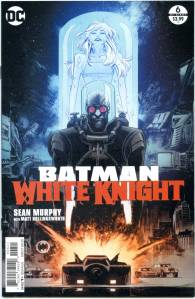
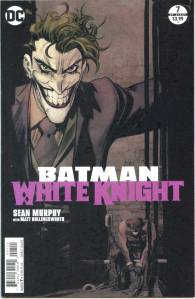
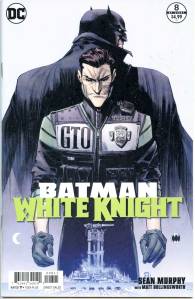
Batman: White Knight is set in a different continuity to the prime DC Universe/The New 52, though several common arcs are still present; most notably, Jason Todd is believed to be dead at the Joker’s hands. The story follows Jack Napier, a reformed Joker, who has been cured of his insanity and now views Batman as the greatest villain of Gotham City and the source of the city’s endless crime cycle. Additionally, the series reworks Harley Quinn as two individuals: her initial jester design is the original Harleen Quinzel, whereas her Suicide Squad design is an equally obsessed doppelgänger named Marian Drews who took her place in her absence.
























 EHT Comics