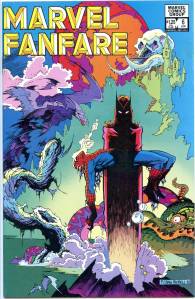
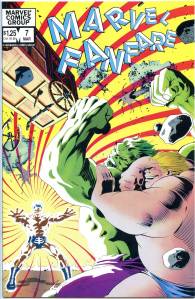
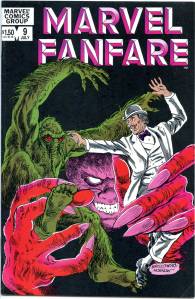
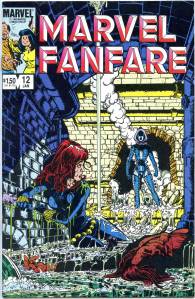
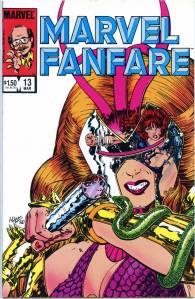
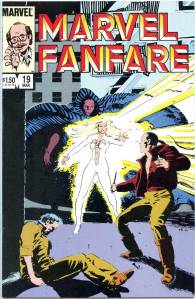
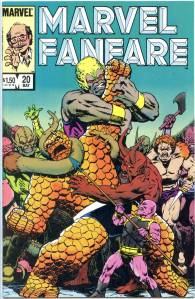
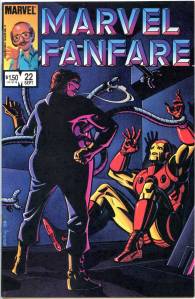
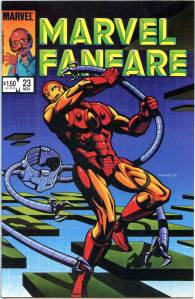
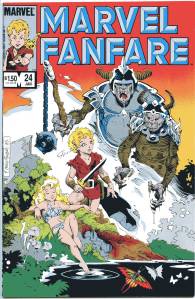
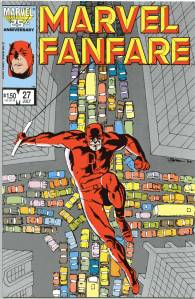
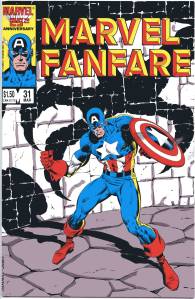
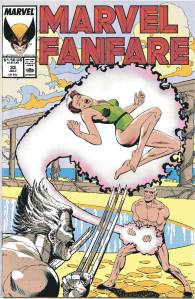
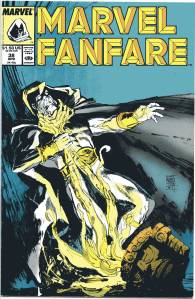
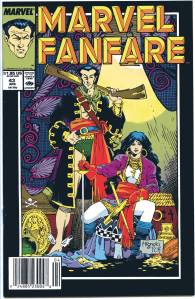
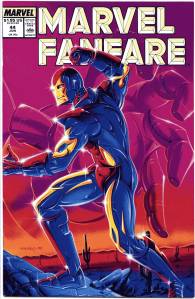
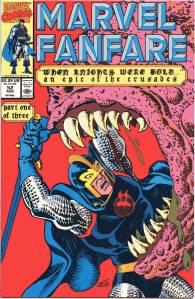
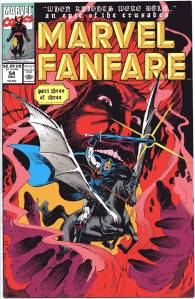
Marvel Fanfare was envisioned as a showcase of the comics industry’s best talent. Each issue featured 36 pages of material with no advertisements and it was printed on magazine-style slick paper. It was more than twice as expensive as standard comic books ($1.25 in 1982 when most titles were 60 cents and $2.25 in 1991 when most were $1).
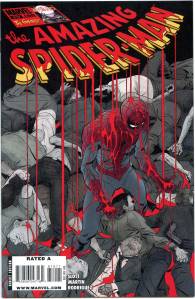
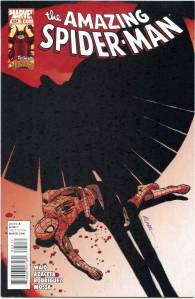
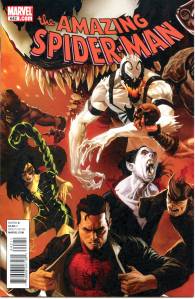
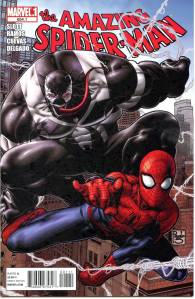
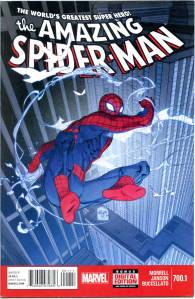
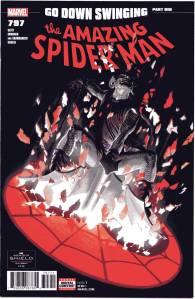
Mark Waid scripted the opening of “The Gauntlet” storyline in issue No. 612. The Gauntlet story was concluded by Grim Hunt (No. 634-637) which saw the resurrection of long-dead Spider-Man villain, Kraven the Hunter. The series became a twice-monthly title with Dan Slott as sole writer at issue No. 648, launching the Big Time storyline. Eight additional pages were added per issue. Big Time saw major changes in Spider-Man/Peter Parker’s life, Peter would start working at Horizon Labs and begin a relationship with Carlie Cooper (his first serious relationship since his marriage to Mary Jane), Mac Gargan returned as Scorpion after spending the past few years as Venom, Phil Urich would take up the mantle of Hobgoblin, and the death of J. Jonah Jameson’s wife, Marla Jameson. Issues 654 and 654.1 saw the birth of Agent Venom, Flash Thompson bonded with the Venom symbiote, which would lead to Venom getting his own series Venom (volume 2). Starting in No. 659 and going to No. 655, the series built-up to the Spider-Island event which officially started in No. 666 and ended in No. 673. Ends of the Earth was the next event that ran from No. 682 through No. 687. This publishing format lasted until issue No. 700, which concluded the “Dying Wish” storyline, in which Parker and Doctor Octopus swapped bodies, and the latter taking on the mantle of Spider-Man when Parker apparently died in Doctor Octopus’ body. The Amazing Spider-Man ended with this issue, with the story continuing in the new series The Superior Spider-Man.] Despite The Superior Spider-Man being considered a different series to The Amazing Spider-Man, the first 33 issue run goes towards the legacy numbering of The Amazing Spider-Man acting as issues 701-733. In December 2013, the series returned for five issues, numbered 700.1 through 700.5, with the first two written by David Morrell and drawn by Klaus Janson.
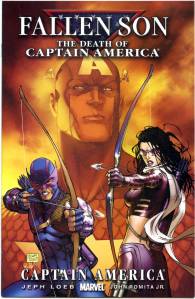
The premise for this limited series was created by J. Michael Straczynski during a Marvel retreat in New York. (The book credits Straczynski with the initial concept.) He suggested the structure of five issues, each based on Elizabeth Kubler Ross’ Five Stages of Grief: denial, anger, bargaining, depression, and acceptance. Loeb lobbied hard to write the series, and succeeded, saying that he could draw upon his own experience of having lost his son Sam Loeb. In the Spring Preview issue of Wizard magazine, Loeb said:
When Straczynski [speaks] it’s a little bit like the burning bush and the rest of us are Moses. He held up this yellow pad and said, ‘It’s the five stages of grief! Denial, anger, bargaining, depression, acceptance.’ The theme of each issue is represented by a particular Marvel character and also ends with a transition phase leading into the following stage. Denial deals with Wolverine, Anger deals with the two Avengers teams (Mighty Avengers & New Avengers), Captain America himself is dealt with in Bargaining, Spider-Man is the focus of Depression and Iron Man comes under the spotlight in Acceptance.
Fallen Son – The Death of Captain America 3 – CGC 9.8 White Pages Signed Romita Jr. and Loeb $85Fallen Son – The Death of Captain America #3 NM $6Fallen Son – The Death of Captain America #3 Turner Variant NM $12
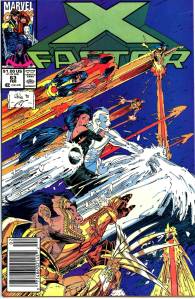
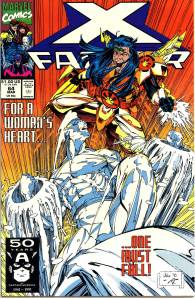
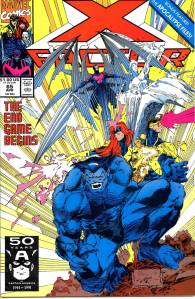
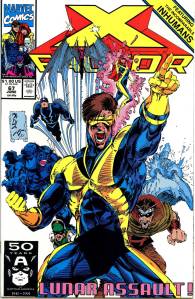
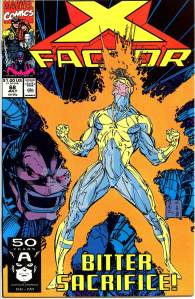
In the last major storyline of the first X-Factor series, published in early 1991, Apocalypse kidnaps Nathan Summers, sensing that he would grow up to be a powerful mutant and possible threat. X-Factor rescue Nathan from Apocalypse’s lunar base, but find him infected with a “techno-organic” virus that cannot be treated. A clan of rebels from the future, known as the Askani, send a representative to the present time to bring Nathan 2,000 years into the future to be treated. Fully grown, he returns to the 20th century as the antihero, Cable.
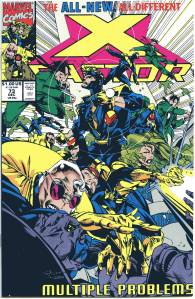
X-Factor, the X-Men, and several minor characters team up to fight the telepathic Shadow King in another crossover event, The Muir Island Saga. Afterward, the original members of X-Factor rejoin the X-Men and several characters from various X-Men-related series become founding members of a new X-Factor.
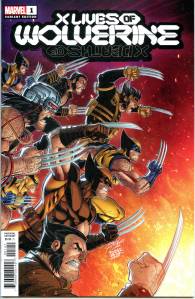
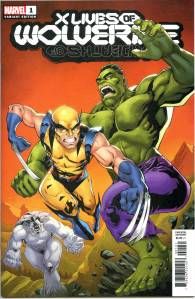
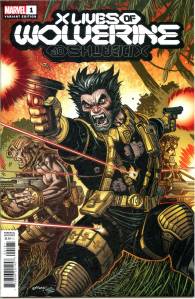
The mutant best known as Wolverine has lived many lives under many identities and in many places, but never before has the fate of the future been so entwined with the past! Fan-favorite eras of Wolverine’s saga are explored anew, along with never-before-seen episodes as Logan must travel to various points in time to prevent the death of a key figure in mutant history. But these LIVES are only one side of the story…
X Lives of Wolverine #1D Variant NM $7X Lives of Wolverine #1E Variant NM $6X Lives of Wolverine #1H Variant NM $6X Lives of Wolverine #2 NM $5X Lives of Wolverine #3 NM $5X Lives of Wolverine #4 NM $5X Lives of Wolverine #5 NM $5
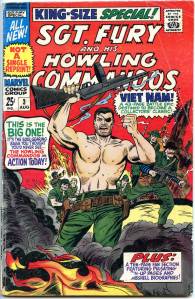
Comics-artist contemporary John Severin recalled in an interview conducted in the early 2000s that in the late 1950s, Kirby had approached him to be partners on a syndicated, newspapercomic strip “set in Europe during World War Two; the hero would be a tough, cigar-chomping sergeant with a squad of oddball GIs — sort of an adult Boy Commandos“, referring to a 1940s wartime “kid gang” comics series Kirby had co-created for DC Comics.
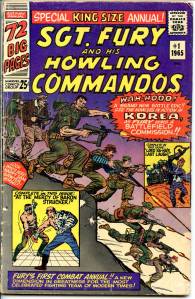
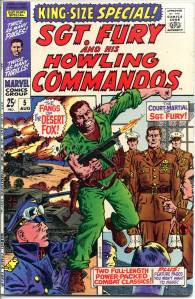
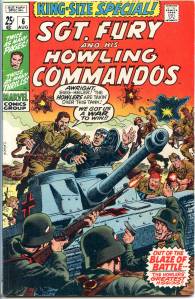
Sgt. Fury and his Howling Commandos followed an elite special unit, the First Attack Squad, nicknamed the “Howling Commandos”, which was stationed in a military base in England to fight missions primarily, but not exclusively, in the European theatre of World War II. Under Captain “Happy Sam” Sawyer, Fury was the cigar-chomping noncom who led the racially and ethnically integrated unit, unusual for the time.
Sgt. Fury and his Howling Commandos Annual #1 G-VG $9Sgt. Fury and HIs Howling Commandos King-Size Special #3 VG $12Sgt. Fury and his Howling Commandos King-Size Special #5 VG-F $8Sgt. Fury and his Howling Commandos King-Size Special #6 F $12
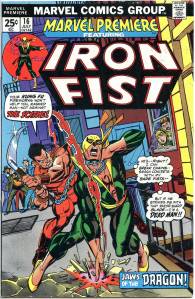
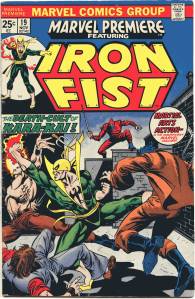
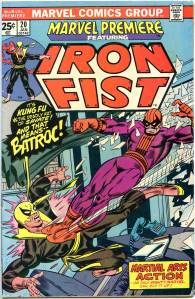
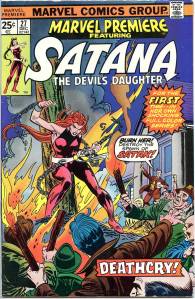
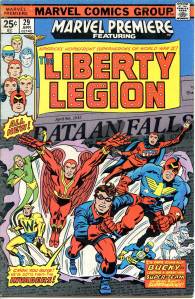
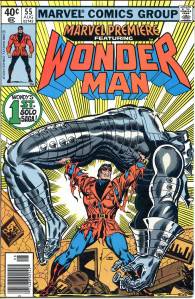
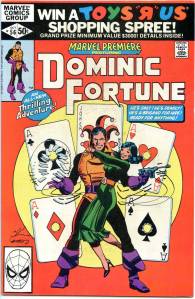
Marvel Premiere ran for 61 issues from April 1972 to August 1981. The series introduced new characters and reintroduced characters who no longer had their own titles. Writer Roy Thomas and penciler Gil Kane significantly revamped Him as the allegorical Messiah Adam Warlock in Marvel Premiere #1 (April 1972). Iron Fist first appeared in issue #15, written by Roy Thomas and drawn by Gil Kane. Other introductions include the Legion of Monsters, the Liberty Legion,Woodgod, the 3-D Man, and the second Ant-Man (Scott Lang). The series also featured the first comic book appearance of rock musician Alice Cooper. Later in the title’s run, Marvel Premiere was used to finish stories of characters who had lost their own series including the Man-Wolf in issues #45-46 and the Black Panther in issues #51-53.
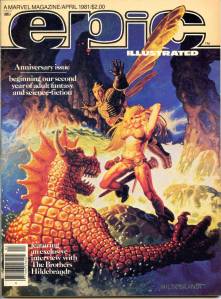
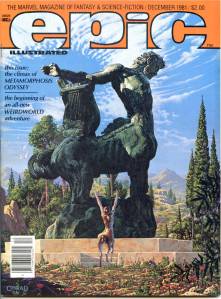
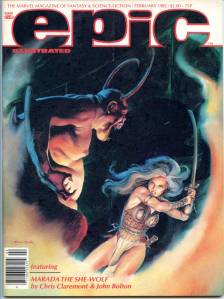
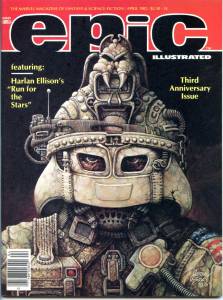
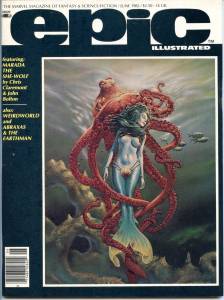
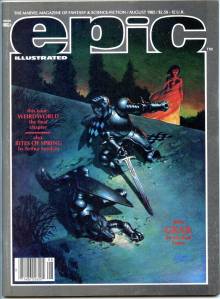
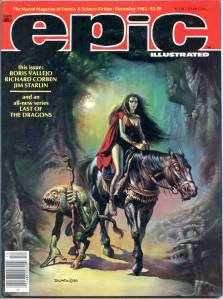
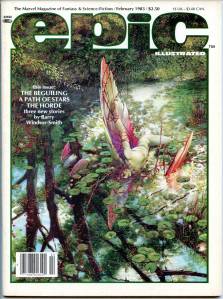
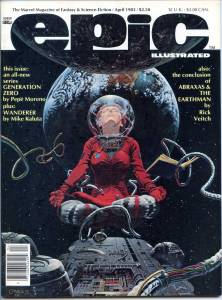
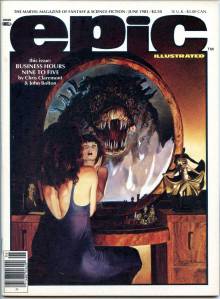
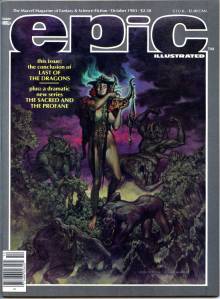
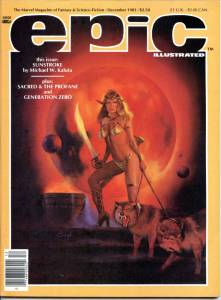
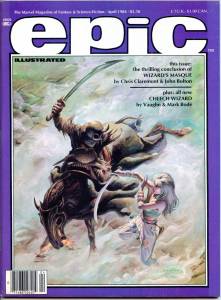
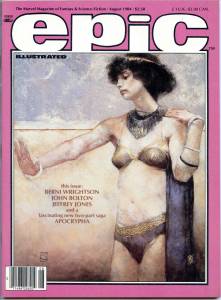
Epic Illustrated was a comics anthology in magazine format published in the United States by Marvel Comics. Similar to the US-licensed comic book magazine Heavy Metal, it allowed explicit content to be featured, unlike the traditional American comic books of that time bound by the restrictive Comics Code Authority, as well as offering its writers and artists ownership rights and royalties in place of the industry-standard work for hire contracts. The series lasted 34 issues from Spring 1980–February 1986.
A color comic-book imprint, Epic Comics, was spun off in 1982.
Epic Illustrated #5 April 1981 NM $22Epic Illustrated #9 December 1981 NM $19Epic Illustrated #10 February 1982 NM $22Epic Illustrated #11 April 1982 NM $19Epic Illustrated #12 June 1982 VF+ $17Epic Illustrated #13 August 1982 VF-NM $18Epic Illustrated #15 December 1982 NM $26Epic Illustrated #16 February 1983 NM- $24Epic Illustrated #17 April 1983 NM $18Epic Illustrated #18 June 1983 NM $18Epic Illustrated #20 October 1983 NM $18Epic Illustrated #21 December 1983 VF-NM $16Epic Illustrated #23 April 1984 NM- $17Epic Illustrated #25 August 1984 NM $18
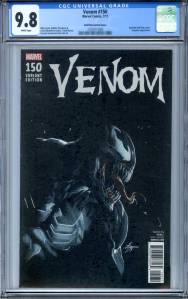
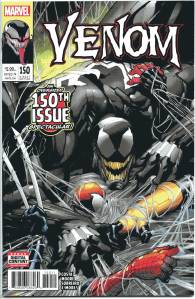
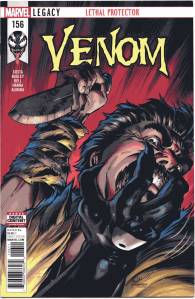
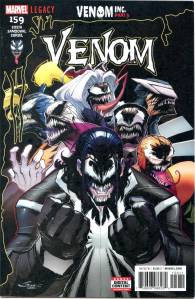
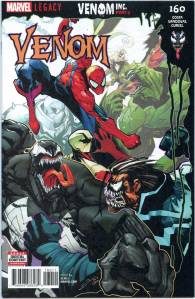
Eddie Brock and the Venom symbiote have been reunited, and they’re web-slinging their way around New York again. How was the symbiote separated from Flash Thompson, and what lies in its future now that it’s reunited with Eddie Brock?
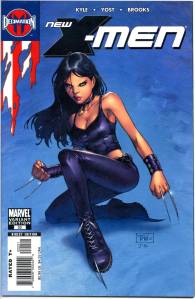
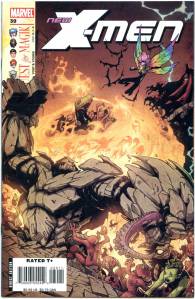
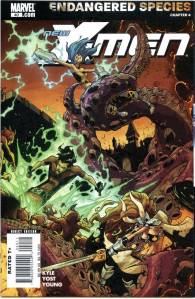
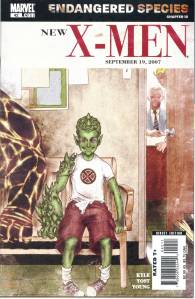
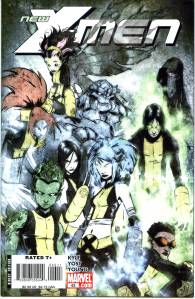
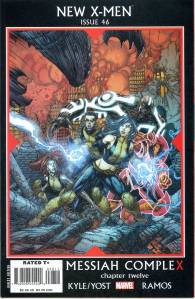
After the end of Grant Morrison‘s run on X-Men vol. 2 titled New X-Men, the title was used for a new series, New X-Men: Academy X. The title was later shortened to simply New X-Men.
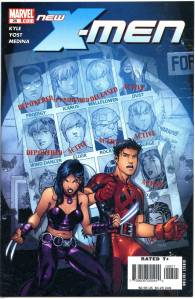
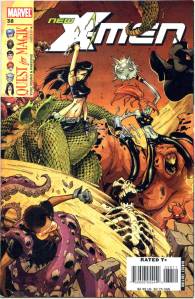
New X-Men: Academy X was launched during the X-Men ReLoad event. The Academy X subtitle was dropped from the title when the new creative team of Craig Kyle and Christopher Yost took over the series with issue #20.
Whereas the other X-Men comics mostly deal with established adult mutants, this series concentrates on the lives of young students residing at the Xavier Institute for Higher Learning as they learn to control their powers.
After the 2007 crossover X-Men: Messiah Complex, the New X-Men title was canceled and briefly relaunched as Young X-Men for 12 issues. The series was written by Marc Guggenheim. After the first arc of Young X-Men, the characters began appearing in the pages of Uncanny X-Men. With the cancellation of Young X-Men the characters were folded onto the main X-Men books, appearing most prominently in the pages of X-Men: Legacy, Wolverine and the X-Men, and most recently, in X-Men.