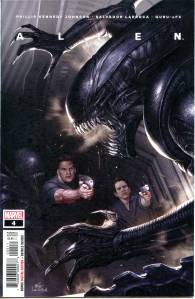
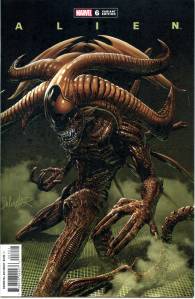
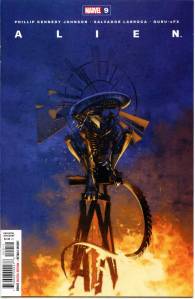
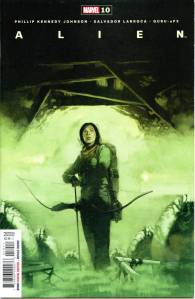
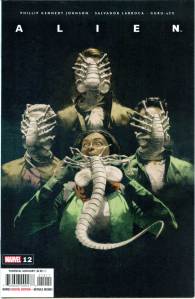
Gabriel Cruz gave his life to Weyland-Yutani–In the case of an alien attack he barely survived, almost literally! Recently retired, Cruz is trying to patch things up with his abandoned son with the help of his friend, a Bishop-model android, but his re-entry into civilian life is not going smoothly…and his encounters with the deadly Xenomorph are far from over.
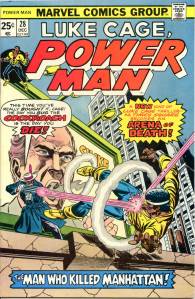
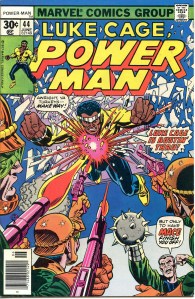
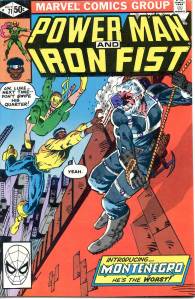
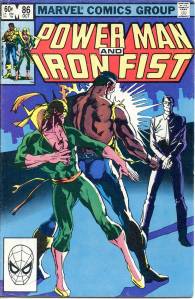
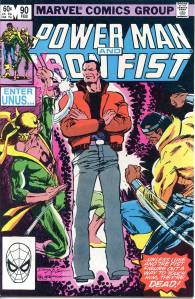
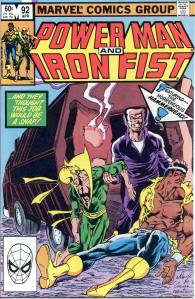
Luke Cage was created by Archie Goodwin and John Romita, Sr. shortly after Blaxploitation films emerged as a popular new genre. He debuted in his own series, Luke Cage, Hero for Hire, which was initially written by Goodwin and pencilled by George Tuska. Cage’s adventures were set in a grungier, more crime-dominated New York City than that inhabited by other Marvel superheroes of the time. The series was retitled Luke Cage, Power Man with issue #17.
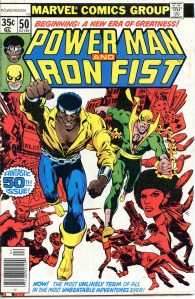
As the Blaxploitation genre’s popularity faded, Cage became unable to support his own series and was paired with another superhero whose popularity was based on a declining film genre, the martial arts hero Iron Fist, in an effort to save both characters from cancellation. Though the series title would remain Power Man in the indicia for a while longer, with issue #50 (April 1978) the cover title became Power Man and Iron Fist. It would remain thus until the series’s cancellation with issue #125 (September 1986). The series’s final writer, James Owsley, attempted to shed Cage’s Blaxploitation roots by giving him a larger vocabulary and reducing usage of his catchphrase, “Sweet Christmas!”.
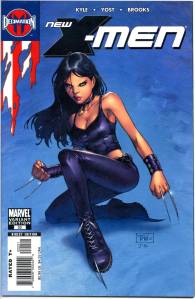
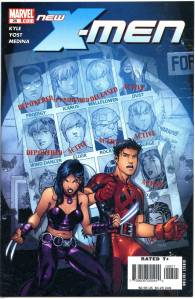
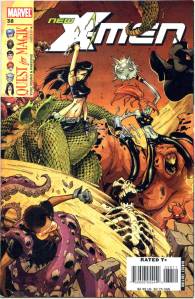
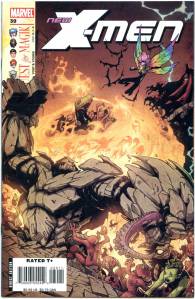
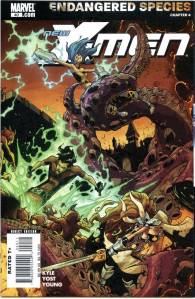
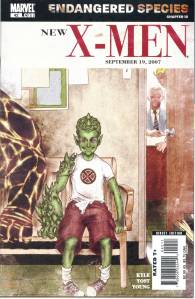
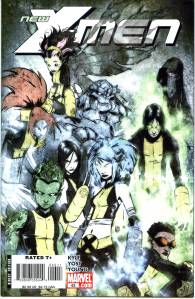
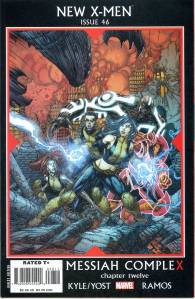
After the end of Grant Morrison‘s run on X-Men vol. 2 titled New X-Men, the title was used for a new series, New X-Men: Academy X. The title was later shortened to simply New X-Men.
New X-Men: Academy X was launched during the X-Men ReLoad event. The Academy X subtitle was dropped from the title when the new creative team of Craig Kyle and Christopher Yost took over the series with issue #20.
Whereas the other X-Men comics mostly deal with established adult mutants, this series concentrates on the lives of young students residing at the Xavier Institute for Higher Learning as they learn to control their powers.
After the 2007 crossover X-Men: Messiah Complex, the New X-Men title was canceled and briefly relaunched as Young X-Men for 12 issues. The series was written by Marc Guggenheim. After the first arc of Young X-Men, the characters began appearing in the pages of Uncanny X-Men. With the cancellation of Young X-Men the characters were folded onto the main X-Men books, appearing most prominently in the pages of X-Men: Legacy, Wolverine and the X-Men, and most recently, in X-Men.
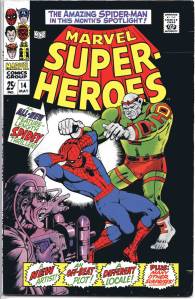
Fantasy Masterpieces, became Marvel Super-Heroes with issue #12 began showcasing a try-out feature as each issue’s lead. This encompassed solo stories of such supporting characters as Medusa of the Inhumans, as well as the debuts of Captain Marvel (#12), the Phantom Eagle (#16) and the Guardians of the Galaxy (#18). The Spider-Man story drawn by Ross Andru in issue #14 was originally planned as a fill-in issue of The Amazing Spider-Man but was used here when that title’s regular artist, John Romita Sr. recovered more quickly than anticipated from a wrist injury. Andru would become the regular artist on The Amazing Spider-Man several years later.
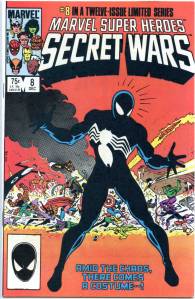
In 2011, IGN listed Secret Wars as one of the best comic book events. Their writers found the action and goofiness of the story to be enjoyable. They also highlighted the impact it had on the Marvel Universe by introducing the symbiote and new characters. In 2011, Alex Zalben of MTV News ranked Secret Wars as the second biggest comic event ever; he praised its story and lasting effect.
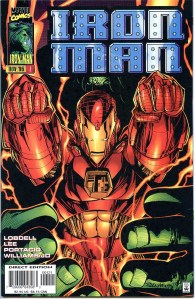
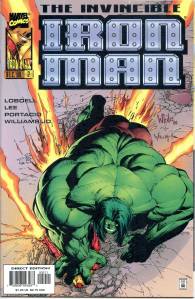
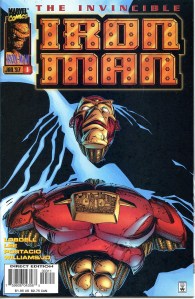
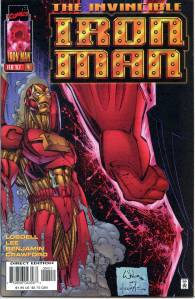
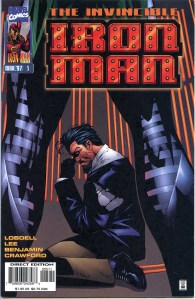
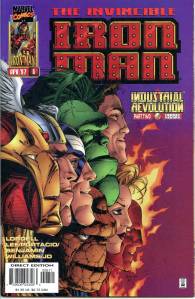
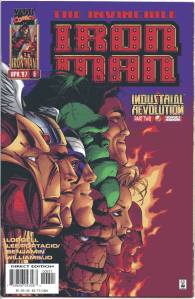
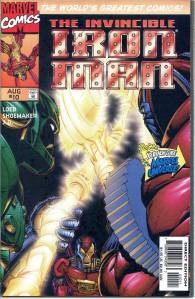
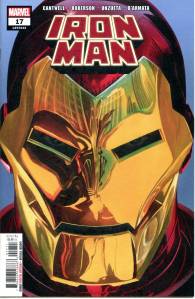
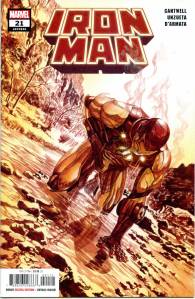
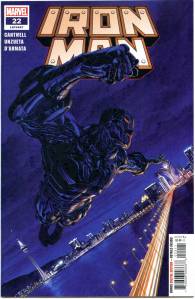
Iron Man left two lives behind when he vanished, but can he avoid his former mistakes in his new one? The armored Avenger takes on Hydra, Heralds and the Hulk – and the eyes of the Marvel Universe are upon him in the form of Loki, the Watcher and Onslaught himself! Featuring Doc Samson and… or rather as …the Abomination! Plus: Rebel O’Reilly, later of Thunderbolts fame!
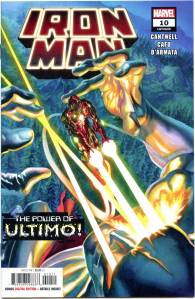
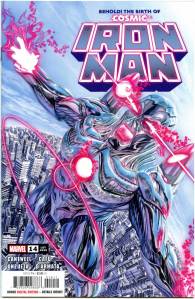
Tony Stark is looking to restart his engine. He decides he’s going back to basics, putting away his high-tech toys and high-profile image so he can get his hands dirty again. It’s time to dig into the guts of real machines, put on some old-fashioned metal and fly.
But can he really lay that Stark-sized ego down? Life isn’t that simple, something that old friends and frustrating foes are quick to point out. If you strip down a billionaire to his bolts, does he run solid or just overheat?
Tony’s going to find out once a threat to the entire universe rears its head from the past. As he suits up again, Tony remains sure of one thing: he’s still IRON MAN down to his flesh and blood core.
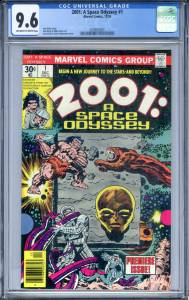
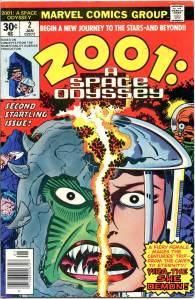
Shortly after the publication of the treasury edition, Kirby continued to explore the concepts of 2001 in a monthly comic book series of the same name, the first issue of which was dated December 1976. In this issue, Kirby followed the pattern established in the film. Once again the reader encounters a prehistoric man (“Beast-Killer”) who gains new insight upon encountering a monolith as did Moon-Watcher in the film. The scene then shifts, where a descendant of Beast-Killer is part of a space mission to explore yet another monolith. When he finds it, this monolith begins to transform the astronaut into a star child, called in the comic a “New Seed”.
Issues #1-6 of the series replay the same idea with different characters in different situations, both prehistoric and futuristic. In #7 (June 1977), the comic opens with the birth of a New Seed who then travels the galaxy witnessing the suffering that men cause each other. While the New Seed is unable or unwilling to prevent this devastation, he takes the essence of two doomed lovers and uses it to seed another planet with the potential for human life.
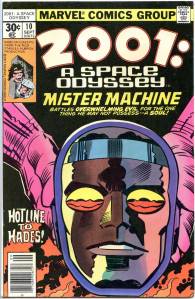
In issue #8 (July 1977), Kirby introduces Mister Machine, who is later renamed Machine Man.Mister Machine is an advanced robot designated X-51. All the other robots in the X series go on a rampage as they achieve sentience and are destroyed. X-51, supported by both the love of his creator Dr. Abel Stack and an encounter with a monolith, transcends the malfunction that destroyed his siblings. After the death of Dr. Stack, X-51 takes the name Aaron Stack and begins to blend into humanity. Issues #9 and 10, the final issues of the series, continue the story of X-51 as he flees destruction at the hands of the Army.
2001 A Space Odyssey 1 CGC 9.6 Off White to White Pages $79
Comics-artist contemporary John Severin recalled in an interview conducted in the early 2000s that in the late 1950s, Kirby had approached him to be partners on a syndicated, newspapercomic strip “set in Europe during World War Two; the hero would be a tough, cigar-chomping sergeant with a squad of oddball GIs — sort of an adult Boy Commandos“, referring to a 1940s wartime “kid gang” comics series Kirby had co-created for DC Comics.
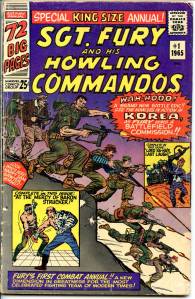
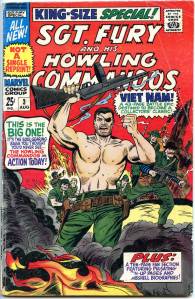
Sgt. Fury and his Howling Commandos followed an elite special unit, the First Attack Squad, nicknamed the “Howling Commandos”, which was stationed in a military base in England to fight missions primarily, but not exclusively, in the European theatre of World War II. Under Captain “Happy Sam” Sawyer, Fury was the cigar-chomping noncom who led the racially and ethnically integrated unit, unusual for the time.
Sgt. Fury and his Howling Commandos Annual #1 G-VG $9
Sgt. Fury and HIs Howling Commandos King-Size Special #3 VG $12
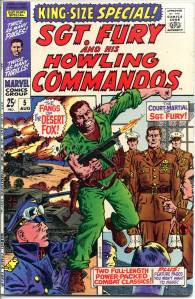
Sgt. Fury and his Howling Commandos King-Size Special #5 VG-F $8
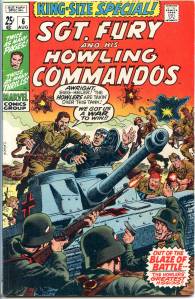
Sgt. Fury and his Howling Commandos King-Size Special #6 F $12
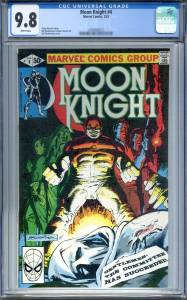
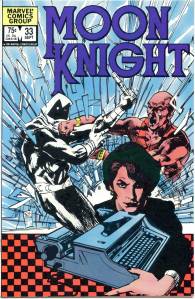
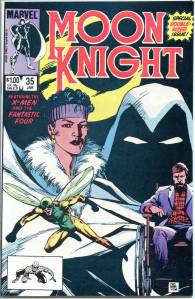
Moon Knight received his first ongoing series in 1980, with Doug Moench and Bill Sienkiewicz as its main creative team. The character received an expanded origin story in issue #1, which also introduced several recurring characters as well as recurring enemy Bushman. The series depicted several characters who doubted the moon god Khonshu was real and believed Marc Spector only experienced a hallucination while near death. It was never explained why other characters, such as Spector’s lover Marlene, concluded this when there was no other explanation for Marc’s spontaneous recovery from his wounds and a death-like state and when it was well known by this time that many gods of myth in the Marvel Universe (such as Thor and Zeus) were real, living entities from other dimensions and planets.
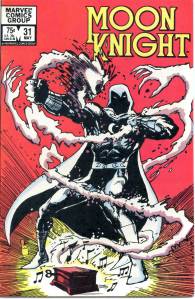
After early sales were good, Marvel made the Moon Knight series a flagship title available in comic shops starting with issue #15. The companion mini-series Moon Knight: Special Edition reprinted the Hulk and Marvel Preview Moon Knight stories in color and standard comic format, as opposed to their original magazine format. Sienkiewicz left the series after issue #30, though he continued to contribute covers until the series ended with issue #38.



















 EHT Comics