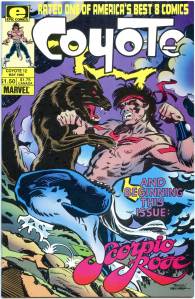
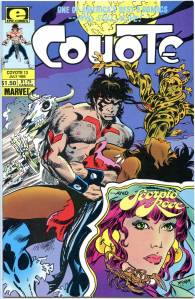
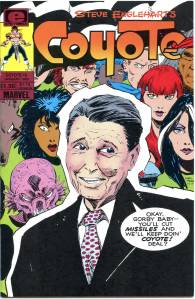
The characters first appeared in Eclipse Magazine #2-8. It would later be reprinted in a color trade paperback, I Am Coyote. Afterwards, a new comic book series started at Marvel ComicsEpic Comics line, that ran 16 issues. It was notable for the first published work of Todd McFarlane. According to Epic editor-in-chief Archie Goodwin, artist Steve Leialoha‘s departure after issue #2 caused deadline problems that the series never fully recovered from, leading to its early cancellation.
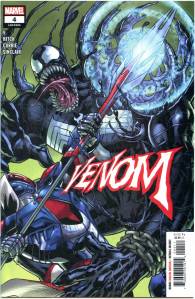
An all-new Venom from some of comics’ greatest talents! Marvel mainstay Al Ewing, who himself has just ended a character-redefining run on Immortal Hulk, is being joined by Ram V, a horror maestro all his own, to craft a mind-bending and gut-wrenching tale of symbiosis the likes of which the Marvel Universe has never seen! Aa if that wasn’t enough, they’ve been joined by Bryan Hitch, who is leaving it all on the page.
In the wake of S.H.I.E.L.D.’s collapse, an ancient and primordial evil has been awakened beneath the streets of New York. And with it, something equally evil has been awakened in that most wicked of web-slingers: Venom! The symbiote may still be a Lethal Protector of innocents in New York, but this never-before-seen threat could possibly force Venom to relinquish everything it holds dear – including its human host, Eddie Brock!
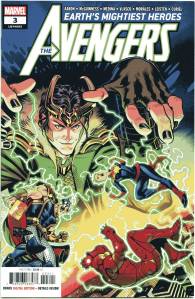
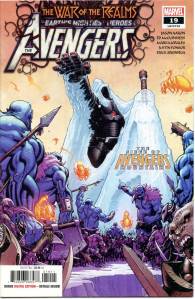
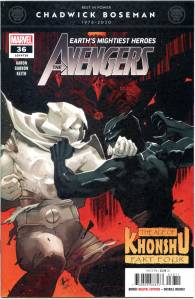
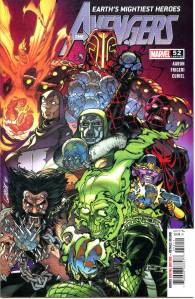
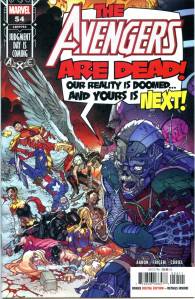
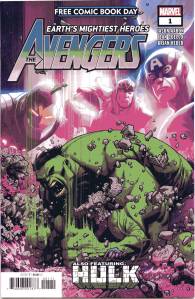
In May 2018, another volume for the series was launched as part of Marvel’s Fresh Start initiative, written by Jason Aaron and drawn by Ed McGuinness. This new volume also saw the return of the main three core members, Steve Rogers and Thor met up with Tony Stark to convince him to reassemble the group with themselves at its core. The reunion was consolidated by the machinations of Loki, who facilitated the arrival of the world-threatening Dark Celestials as a ploy to get the Avengers back in action, resulting in the participation of Black Panther who is appointment as chairperson, Captain Marvel, She-Hulk, Ghost Rider and Blade. In the reformation of the Avengers. After the Dark Celestials were defeated, the Celestials set upright the corpse of the long-time dead Progenitor in the North Pole. The Avengers refurbished the Progenitor’s corpse, transforming it into their base of operations, the Avengers Mountain.
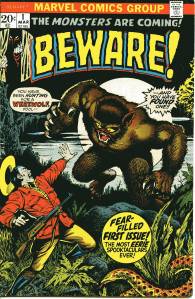
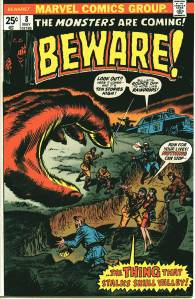
Beware was an 8 issues series that ran from March, 1973 to May, 1974. The series contained reprints of Atlas comics with new covers by Bill Everet, John Romita & Gil Kane The title continued as Tomb of Darkness with issue #9 in July of 1974.
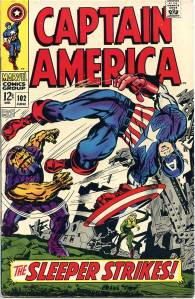
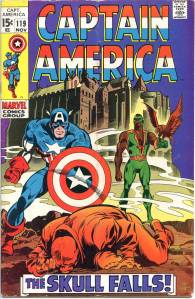
Tales of Suspense became Captain America with #100 (April 1968) This series — considered Captain America volume one by comics researchers and historians, following the 1940s Captain America Comics and its 1950s numbering continuation of Tales of Suspense — ended with #454 (Aug. 1996).
During his two years on the title, Roger Stern augmented the backgrounds of long-established Spider-Man villains, and with Romita Jr. created the mysterious supervillain the Hobgoblin in #238-239 (March–April 1983) Fans engaged with the mystery of the Hobgoblin’s secret identity, which continued throughout #244-245 and 249-251 (Sept.-Oct. 1983 and Feb.-April 1984). One lasting change was the reintroduction of Mary Jane Watson as a more serious, mature woman who becomes Peter’s confidante after she reveals that she knows his secret identity. Stern wrote “The Kid Who Collects Spider-Man” in The Amazing Spider-Man #248 (January 1984), a story which ranks among his most popular.
David Michelinie took over as writer in #290 (July 1987) that led to the marriage of Peter Parker and Mary Jane Watson in Amazing Spider-Man Annual #21. The “Kraven’s Last Hunt” storyline by writer J.M. DeMatteis and artists Mike Zeck and Bob McLeod crossed over into The Amazing Spider-Man #293 and 294. Issue #298 (March 1988) was the first Spider-Man comic to be drawn by future industry star Todd McFarlane, the first regular artist on The Amazing Spider-Man since Frenz’s departure. McFarlane revolutionized Spider-Man’s look. His depiction – large-eyed, with wiry, contorted limbs, and messy, knotted, convoluted webbing – influenced the way virtually all subsequent artists would draw the character. McFarlane’s other significant contribution to the Spider-Man canon was the design for what would become one of Spider-Man’s most wildly popular antagonists, the supervillainVenom. Issue #299 (April 1988) featured Venom’s first appearance (a last-page cameo) before his first full appearance in #300 (May 1988). The latter issue featured Spider-Man reverting to his original red-and-blue costume.
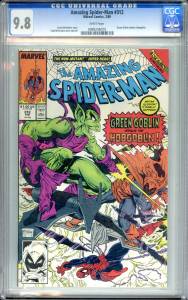
Other notable issues of the Michelinie-McFarlane era include #312 (Feb. 1989), featuring the Green Goblin vs. the Hobgoblin; and #315-317 (May–July 1989), with the return of Venom. In July 2012, Todd McFarlane’s original cover art for The Amazing Spider-Man #328 sold for a bid of $657,250, making it the most expensive American comic book art ever sold at auction.
Amazing Spider-Man #214 Newsstand CGC 9.8 White Pages $120
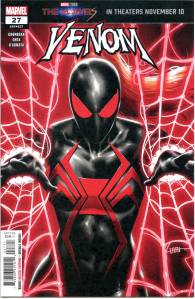
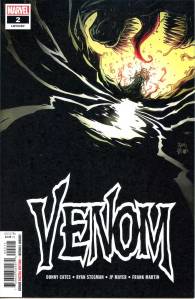
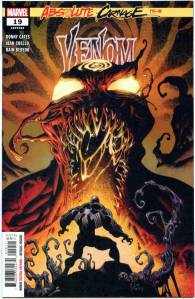
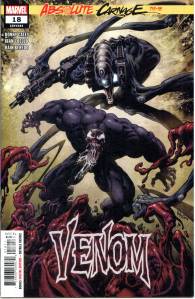
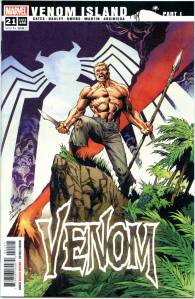
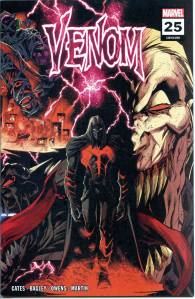
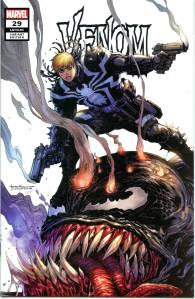
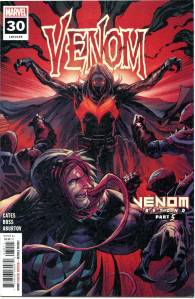
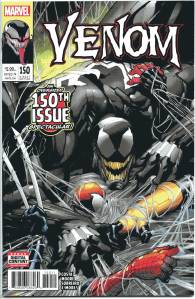
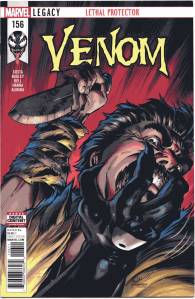
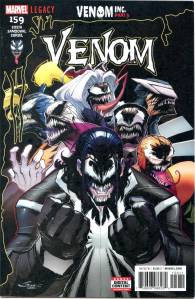
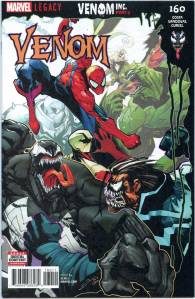
Eddie Brock and the Venom symbiote have been reunited, and they’re web-slinging their way around New York again. How was the symbiote separated from Flash Thompson, and what lies in its future now that it’s reunited with Eddie Brock?
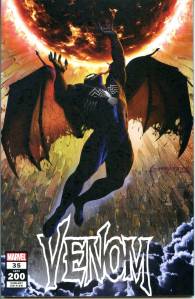
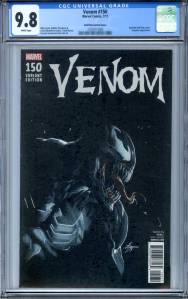
Venom 150 Dell’Otto variant CGC 9.8 White Pages $79
















 EHT Comics