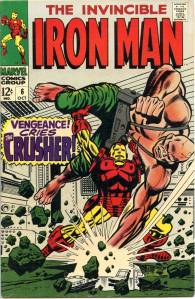
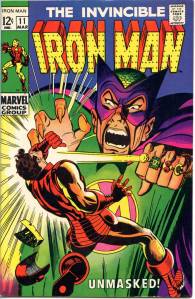
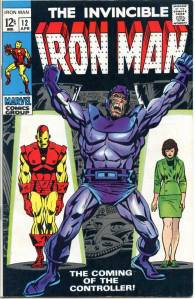
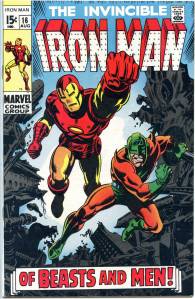
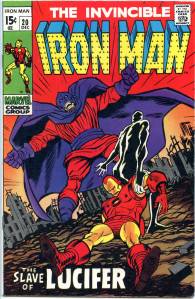
After issue #99 (March 1968), the Tales of Suspense series was renamed Captain America. An Iron Man story appeared in the one-shot comic Iron Man and Sub-Mariner (April 1968), before the “Golden Avenger”] made his solo debut with The Invincible Iron Man #1 (May 1968). The series’ indicia gives its copyright title Iron Man, while the trademarked cover logo of most issues is The Invincible Iron Man. Artist George Tuska began a decade long association with the character with Iron Man #5 (Sept. 1968). Writer Mike Friedrich and artist Jim Starlin‘s brief collaboration on the Iron Man series introduced Mentor, Starfox, and Thanos in issue #55 (Feb. 1973). Friedrich scripted a metafictional story in which Iron Man visited the San Diego Comic Convention and met several Marvel Comics writers and artists. He then wrote the multi-issue “War of the Super-Villains” storyline which ran through 1975.
Iron Man #6 VF- $45Iron Man #11 VF+ $75Iron Man #12 VF+ $129Iron Man V1 #16 FN $27Iron Man V1 #20 VF+ $49
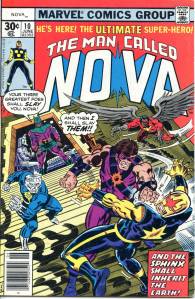
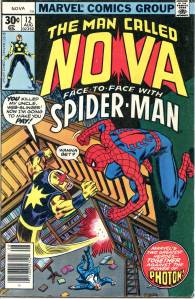
Nova was created by Marv Wolfman and Len Wein in the fanzine Super Adventures in 1966. Seven years later John Romita, Sr. tweaked the design of the character’s uniform. Nova debuted in Nova #1 in 1976, written by Wolfman and drawn by John Buscema. Wolfman intended the teenage character to be an homage to Stan Lee and Steve Ditko‘s Spider-Man, down to his humble working-class roots and alliterative alter-ego. The original Nova series, The Man Called Nova, lasted 25 issues from September 1976 to May 1979. Dangling plot lines were resolved in issues 206-214 of Fantastic Four (also by Wolfman) and issue 24 of Rom the Spaceknight. The character then disappeared into obscurity until returning as a member of the original New Warriors team debuting in The Mighty Thor #411 (December 1989), and continuing through New Warriors #1-75, Annual #1-4 (July 1990—September 1996).
Nova V1 #5 VF-NM $7Nova V1 #8 VF-NM $8Nova V1 #9 NM- $9Nova V1 #10 VF-NM $6Nova V1 #12 VF- $6Nova V1 #14 NM- $14The Man Called Nova #16 VF $6Nova V1 #17 VF-NM $6Nova V1 #20 F-VF $3
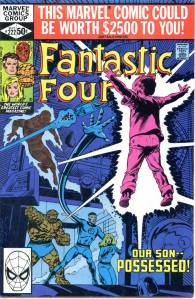
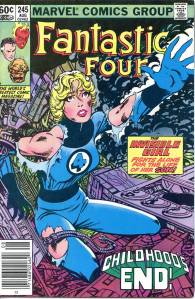
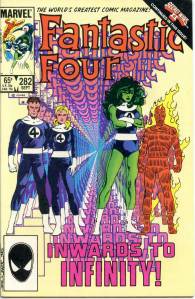
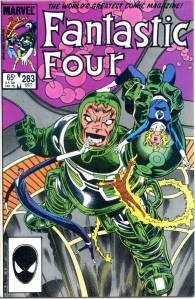
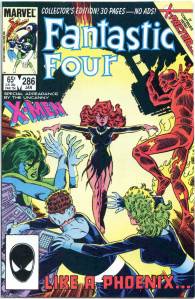
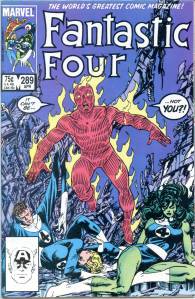
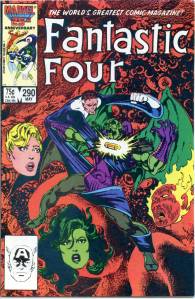
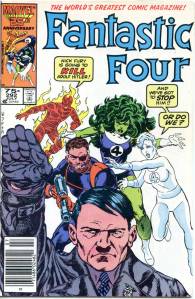
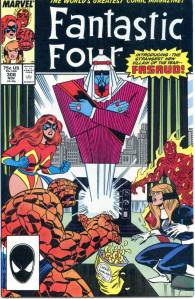
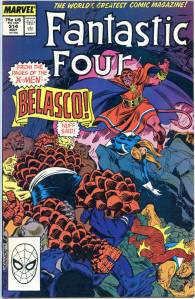
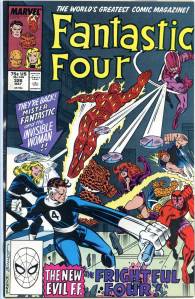
John Byrne revitalized the slumping title with his run. Originally, Byrne was slated to write with Sienkiewicz providing the art. Sienkiewicz left to do Moon Knight, and Byrne subsequently became writer, artist, and inker. Various editors were assigned to the comic; eventually Bob Budiansky became the regular editor. Byrne told Jim Shooter that he could not work with Budiansky, although they ultimately continued to work together. In 2006, Byrne said “that’s my paranoia. I look back and I think that was Shooter trying to force me off the book”. Byrne left following issue #293 (Aug. 1986) in the middle of a story arc, explaining he could not recapture the fun he had previously had on the series. One of Byrne’s changes was making the Invisible Girl into the Invisible Woman: assertive and confident. During this period, fans came to recognize that she was quite powerful, whereas previously, she had been primarily seen as a superpowered mother and wife in the tradition of television moms like those played by Donna Reed and Florence Henderson.
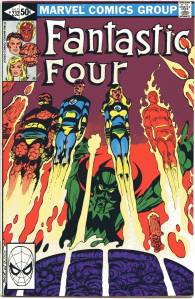
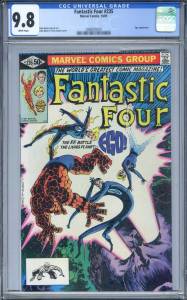
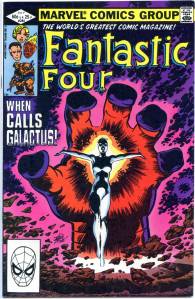
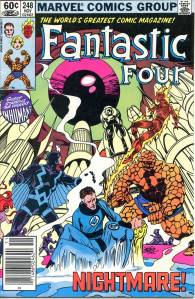
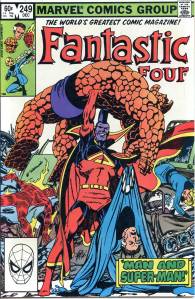
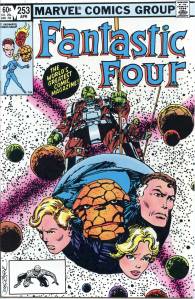
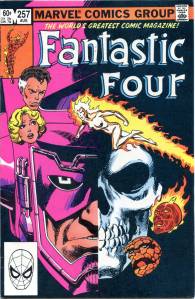
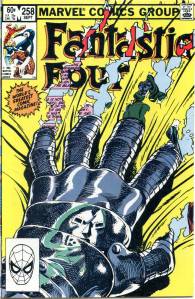
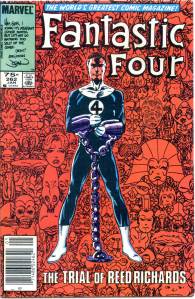
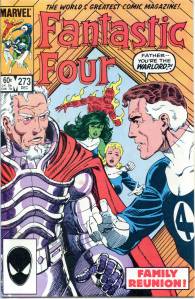
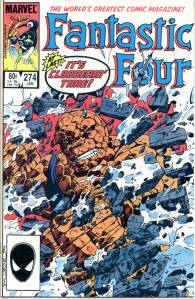
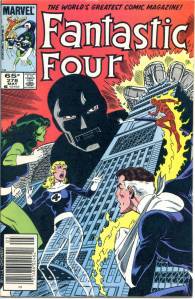
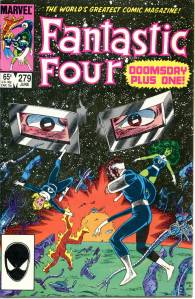
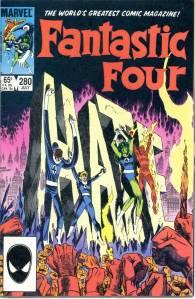
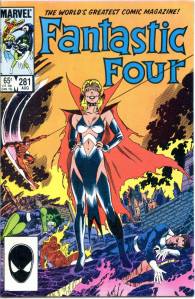
Fantastic Four #218 VF-NM $5Fantastic Four #220 VF $3Fantastic Four #222 FN+ $2Fantastic Four #232 VF-NM $9Fantastic Four #235 CGC 9.8 White Pages $89Fantastic Four #239 VF+ $3Fantastic Four #242 VF+ $3Fantastic Four #244 VF $29Fantastic Four #245 VF+$9Fantastic Four #248 Newstand VF+$4Fantastic Four #248 VF-NM $4Fantastic Four #249 Newstand VF+ $3Fantastic Four #249 VF-NM $3Fantastic Four #250 NM $6Fantastic Four #251 Newstand VF-NM $5Fantastic Four #251 VF-NM $4Fantastic Four #252 VF- $8Fantastic Four #253 Newstand VF+ $4Fantastic Four #253 VF-NM $4Fantastic Four #254 Newstand VF+ $4Fantastic Four #254 VF-NM $4Fantastic Four #256 VF+ $3Fantastic Four #257 FN+ $4Fantastic Four #258 FN $6Fantastic Four #262 Newsstand VF-NM $6Fantastic Four #273 VF-NM $4Fantastic Four #274 VF- $3Fantastic Four #277 NM- $8Fantastic Four #278 Newsstand VF-NM $7Fantastic Four #279 NM- $4Fantastic Four #280 VF $5Fantastic Four #281 VF+ $3Fantastic Four #282 VF $2Fantastic Four #283 VF $2Fantastic Four #286 Newsstand NM- $12Fantastic Four #286 NM $12Fantastic Four #289 VF $3Fantastic Four #290 VF $2Fantastic Four #292 Newsstand VF+ $9Fantastic Four #293 Newsstand VF+ $6Fantastic Four #299 VF+ $5Fantastic Four #303 VF-NM $2Fantastic Four #308 VF+ $3Fantastic Four #314 NM- $4Fantastic Four #316 VF-NM $3Fantastic Four #323 NM- $4Fantastic Four #324 VF-NM $3Fantastic Four #326 VF-NM $2
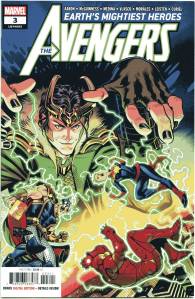
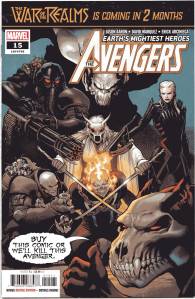
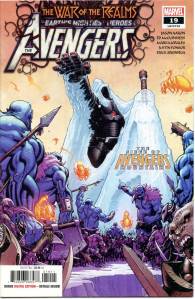
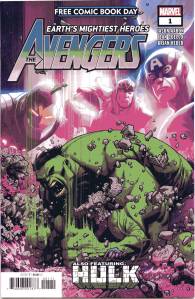
In May 2018, another volume for the series was launched as part of Marvel’s Fresh Start initiative, written by Jason Aaron and drawn by Ed McGuinness. This new volume also saw the return of the main three core members, Steve Rogers and Thor met up with Tony Stark to convince him to reassemble the group with themselves at its core. The reunion was consolidated by the machinations of Loki, who facilitated the arrival of the world-threatening Dark Celestials as a ploy to get the Avengers back in action, resulting in the participation of Black Panther who is appointment as chairperson, Captain Marvel, She-Hulk, Ghost Rider and Blade. In the reformation of the Avengers. After the Dark Celestials were defeated, the Celestials set upright the corpse of the long-time dead Progenitor in the North Pole. The Avengers refurbished the Progenitor’s corpse, transforming it into their base of operations, the Avengers Mountain.
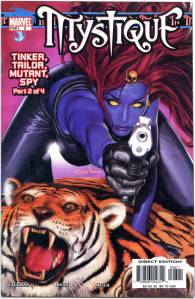
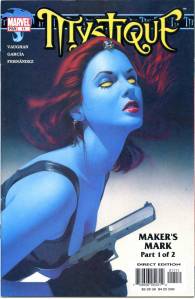
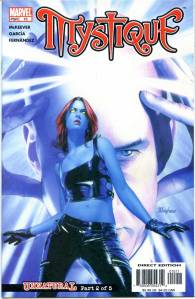
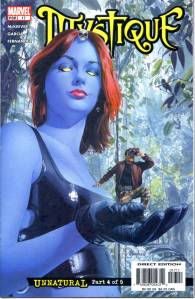
Published 2003 – 2005. Mystique the sultry mutant shapeshifter, who has stood against the X-Men in battle after battle, is offered the chance at a new life when Professor X recruits her to complete a dangerous mission in Cuba. Can this former mutant-rights terrorist who can disguise herself as anyone on the planet be trusted? Don’t let the pinup-worthy cover fool you: Mystique is a smart, engaging piece of espionage fiction that shows that the superhero story isn’t dead yet.
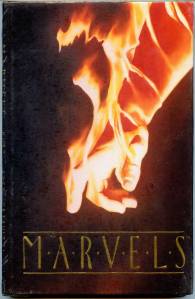
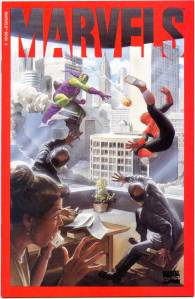
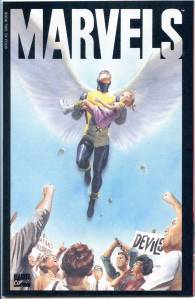
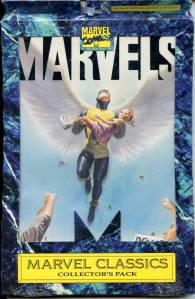
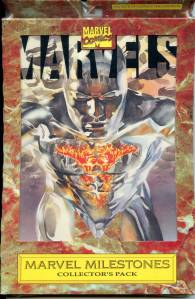
Marvels is a four-issue limited series comic book written by Kurt Busiek, painted by Alex Ross and edited by Marcus McLaurin, and published by Marvel Comics in 1994. It was collected into a limited edition hardcover signed by both Busiek and Ross (shown below).
Set from 1939 to 1974, the series examines the Marvel Universe, the collective setting of most of Marvel’s superhero series, from the perspective of an Everyman character: news photographer Phil Sheldon. The street-level series portrayed ordinary life in a world full of costumed supermen, with each issue featuring events well known to readers of Marvel comics as well as a variety of minute details and retelling the most famous events in the Marvel universe.
Marvels – Ltd. Ed. Signed and Numbered Hardcover – Sealed NM $99Marvels Ltd Ed. HC SN VF $65Marvels #0 NM $3Marvels #1 Signed and numbered NM $69Marvels #2 NM $6Marvel Classics Collector’s Pack Marvels 1-2 $15Marvel Milestones Collector’s Pack Marvels 3 – 4 $15
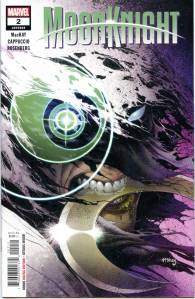
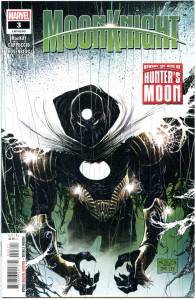
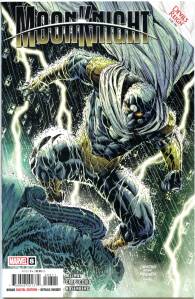
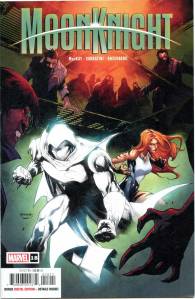
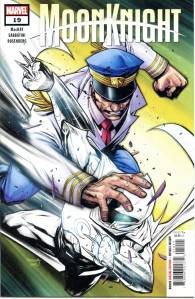
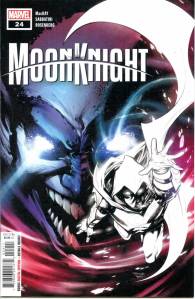
In 2021, the series Moon Knight vol. 10 launched under writer Jed MacKay, and artists Alessandro Capuccio and Rachelle Rosenberg. The new series has Marc Spector not only acting as the crimefighter Moon Knight but also (despite his Jewish background) adopting the role of high priest of “the Midnight Mission,” a congregation dedicated to Khonshu. In discussing his connection to Khonshu, Marc Spector now describes his four aspects as “the traveler”, “the pathfinder”, “the embracer”, “the defender of those who travel at night.” Once again, Marc Spector is depicted as being in regular therapy with a psychologist in order to help manage his psychological issues. The series also offers that Marc Spector may be immortal, as he has now been literally resurrected on multiple occasions and could be resurrected again in the future.
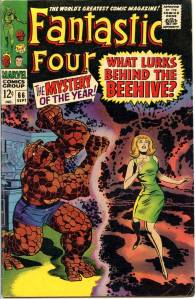
The Fantastic Four debuted in The Fantastic Four #1 (Nov. 1961), which helped to usher in a new level of realism in the medium. The Fantastic Four was the first superhero team created by writer-editor Stan Lee and artist/co-plotter Jack Kirby, who developed a collaborative approach to creating comics with this title that they would use from then on. As the first superhero team title produced by Marvel Comics, it formed a cornerstone of the company’s 1960s rise from a small division of a publishing company to a pop culture conglomerate.
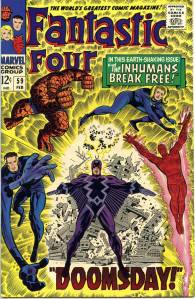
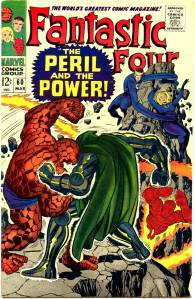
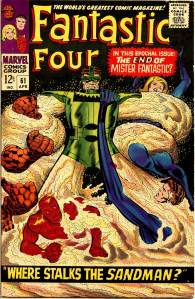
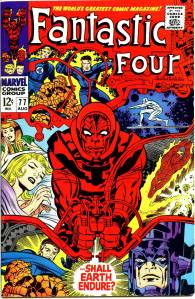
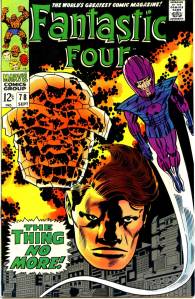
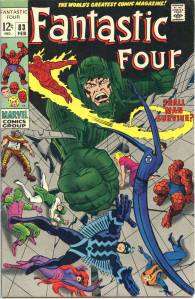
Fantastic Four #38 G $24Fantastic Four #41 FN+ $60Fantastic Four #58 CGC 8.0 White Pages $195Fantastic Four #59 VF+ $125Fantastic Four #60 VF- $74Fantastic Four #61 VF- $75Fantastic Four #66 FN $95Fantastic Four #77 VF $70Fantastic Four #78 VF+ $75Fantastic Four #83 VF- $30
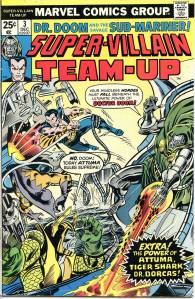
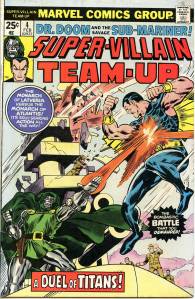
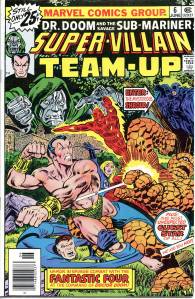
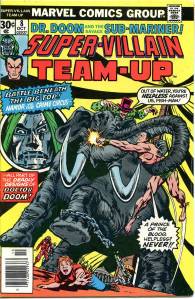
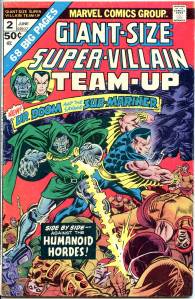
The first series started in 1975 with two giant-size issues before starting as a regular series, and was mostly bi-monthly during its existence. It initially teamed up Doctor Doom and the Sub-Mariner, who had lost his own series, from which it picked up the unresolved plots, especially that of the comatose Atlanteans. After a succession of writers and artists and a crossover with The Avengers, the plot gets resolved in issue #13 when Dr. Doom revives the Atlanteans, thus dissolving his alliance with the Sub-Mariner.
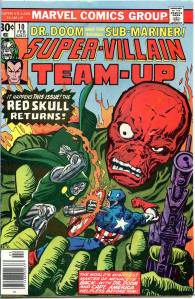
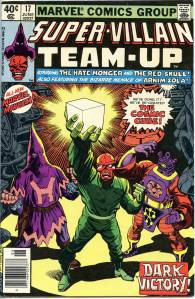
Issue #14 (Oct. 1977), which featured Magneto and Dr. Doom, was billed as the final issue of the series, and its plotline was resolved in The Champions #16. The following year, SVTU continued with issue #15 (Nov. 1978), a reprint of Astonishing Tales #4-5. Issues #16 (May 1979) and #17 (June 1980) featured the Red Skull and the Hate-Monger. The irregular publishing frequency of the final three issues was due to a legal maneuver to prevent DC Comics from trademarking the term “super-villain”.
The series saw the death of the Sub-Mariner’s 1940s sweetheart Betty Dean and the death of her murderer, Dr. Dorcas. Steve Englehart created The Shroud, a character partly inspired by Batman, shortly before he started to work for DC Comics on Detective Comics.
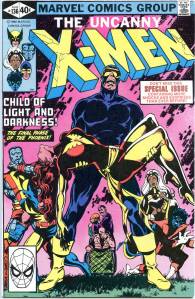
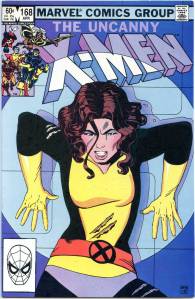
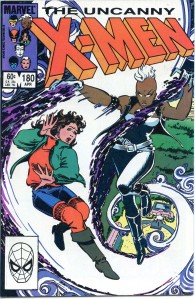
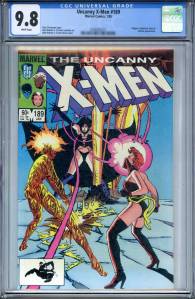
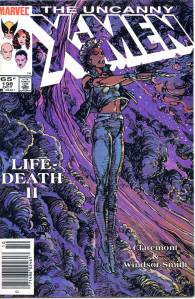
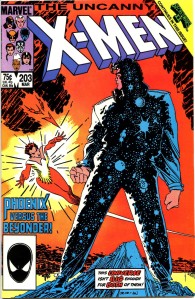
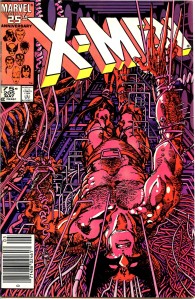
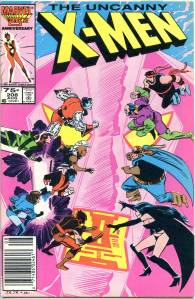
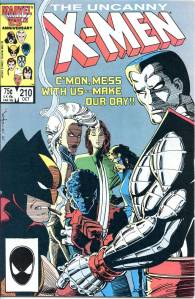
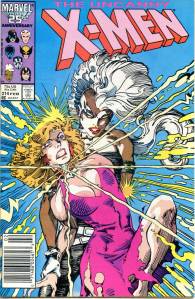
The “Dark Phoenix Saga” in 1980 led to a change in the line-up of the team, with the death of Phoenix (Jean Grey), and Cyclops leaving the team to mourn for her. Comics writers and historians Roy Thomas and Peter Sanderson observed that “‘The Dark Phoenix Saga’ is to Claremont and Byrne what ‘the Galactus Trilogy‘ is to Stan Lee and Jack Kirby. It is a landmark in Marvel history, showcasing its creators’ work at the height of their abilities.” The storyline also saw the introduction of recurring antagonists the Hellfire Club, and its Inner Circle consisting of Sebastian Shaw, Emma Frost, Harry Leland, Donald Pierce, along with Mastermind, previously a member of Magneto’s Brotherhood. The new teenage mutant Kitty Pryde was introduced in #129 (Jan. 1980) and joined the X-Men in #139. The Dazzler, a disco-singing, roller-skating mutant, was introduced in #130 (Feb. 1980), but did not join the team, instead headlining her own solo title.
A new Brotherhood of Evil Mutants, led by Mystique, was introduced in the “Days of Future Past” storyline (#141-#142, Jan–Feb 1981) in which a time-travelling Kitty Pryde tried to avert a dystopian future caused by the Brotherhood assassinating Presidential candidate Senator Robert Kelly. Byrne plotted the story wanting to depict the Sentinels as a genuine threat to the existence of the mutant race. He then left the series after #143, being replaced by a returning Cockrum, who in turn was succeeded by Paul Smith and John Romita Jr.