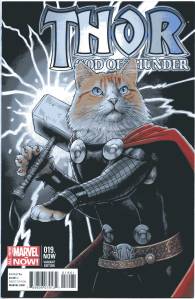
In October 2012, Thor became a regular character in Uncanny Avengers, beginning with issue #1. The following month, an ongoing series titled Thor: God of Thunder by writer Jason Aaron and artist Esad Ribić debuted as part of the Marvel NOW! relaunch.[49][50] This story arc was voted as the 8th best Thor story by Comicbook.com.
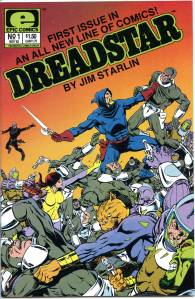
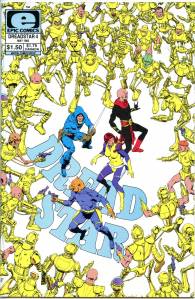
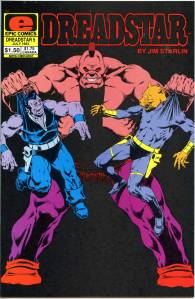
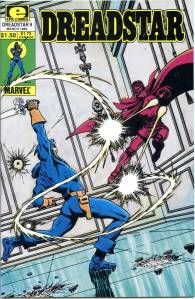
The series centered on the exploits of Vanth Dreadstar and his crew—powerful mystic Syzygy Darklock, the cybernetic telepath Willow, cat-like humanoid Oedi, and freebooter Skeevo. Vanth, newly arrived in the Empirical Galaxy after the events of Metamorphosis Odyssey, tries to live a pastoral existence on Oedi’s planet of peaceful cat-people, but his peace is disturbed by the arrival of Darklock, who wants him to get involved in the conflict between the two major forces in the galaxy, the Monarchy and the theocratical Instrumentality. Vanth refuses until the war comes to his planet, wiping out most of the population. Oedi survives and joins them; Willow and Skeevo join later, though the team is in place for the first issue.
Dreadstar takes the side of the Monarchy against the evil Lord High Papal of the Instrumentality, but his team end up becoming fugitives when the Monarchy falls, and go to great lengths to try to uncover a traitor in their midst. The transition to First Comics happened just when the traitor was about to be revealed, and the first issue published under First Comics, #27 contained this revelation.
Simon eventually took a break from being an Avenger to concentrate on his acting career. He desired to build a normal life for himself and to come to terms with who he was. In particular he wondered what kind of person he truly was and whether or not he was truly human, given his transformation into ionic energy.
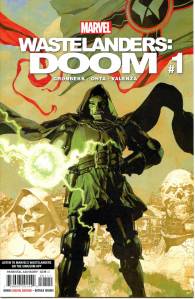
The Once and Future King! Doctor Doom helped wipe out the heroes on the Day the Villains Won, but even as he rules his domain in the Wastelands, a greater destiny calls to him. When a mysterious power blocks his oversight of a particular region, what he discovers will have ripple effects across the Wastelanders stories!
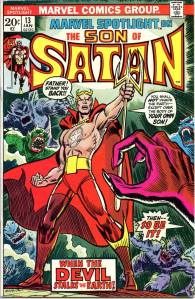
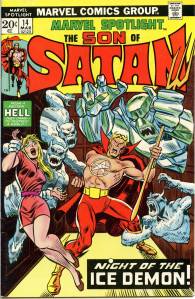
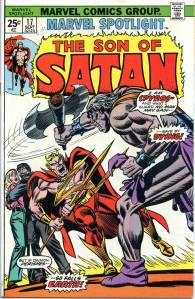
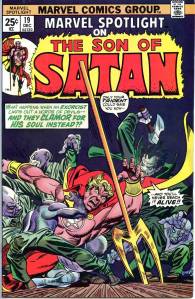
Encouraged by the success of Ghost Rider and The Tomb of Dracula, both of which starred occult characters, Stan Lee proposed a series starring Satan, to be titled The Mark of Satan. Editor Roy Thomas had reservations about this idea and suggested a series focusing on the son of Satan instead. (Due to an oversight, “The Mark of Satan” is mentioned in a blurb in Ghost Rider #1).
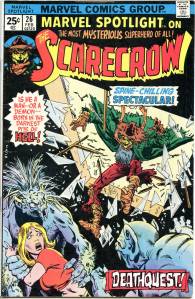
The character Daimon Hellstrom first appeared in Ghost Rider vol. 1, #1 (Sept. 1973), then was spun off into a feature, “Son of Satan”, in Marvel Spotlight #12–24 (Oct. 1973 – Oct. 1975). During the “Son of Satan” run, Marvel Spotlight was a controversial series, with numerous readers writing to object to the depictions of satanism and wiccanism as being either inaccurate or furthering the cause of evil. Nonetheless, sales were strong, prompting Marvel to launch the character into his own series, Son of Satan, written by John Warner. The character’s success faded soon after the series launch, and Son of Satan was cancelled with issue #7, though an unused fill-in was published as Son of Satan #8 (Feb. 1977).
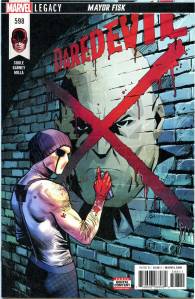
Following the release of Volume 5, Issue 28, much like with other Marvel series as part of the Marvel Legacy event, the Daredevil series official numbering was rebooted back to the original numbering which started with Issue 595 which was released on November 8, 2017, where Daredevil’s longtime nemesis the Kingpin became the Mayor of New York City and begins a campaign to make costumed vigilantes officially criminals. Although Murdock’s attempt to set up a sting operation results in his allies being arrested when the Kingpin turns this trap against him, Fisk’s legal manipulations work against him when he is attacked by the Hand, leaving Fisk in a coma and Murdock legally mayor of New York from his position as deputy mayor due to a loophole added by a prior administration that had not been amended, allowing Matt to take control of the city and release his fellow heroes to help him stop the Hand.
Talbot Engineering Inc. is under new management – and its brilliant chief scientist, Batya Zahn, will do just about anything to get her family off the icy moon where they’ve been conducting research on water conservation. But there’s more than glacial springs to find in this forgotten corner of the galaxy. When they discover an extraordinary organism buried in the ice, it doesn’t take long for tensions to heat up. What is hidden in the snow comes forth in the thaw – and no one will be welcoming this spring. But Zahn is not willing to give up her work to this unexpected threat without a fight, no matter what horrors emerge from the ice in the black of night.
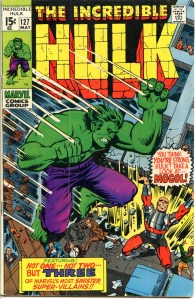
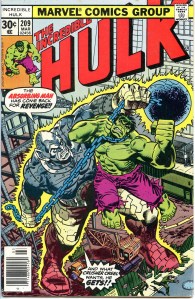
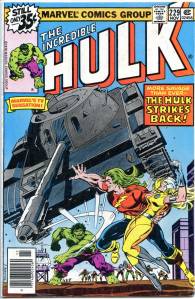
The 1970s saw Banner and Betty nearly marry in The Incredible Hulk #124 (Feb. 1970).Betty ultimately married Talbot in issue #158 (Dec. 1972).The Hulk also traveled to other dimensions, one of which had him meet empress Jarella, who used magic to bring Banner’s intelligence to the Hulk, and came to love him. It was during this period that the Hulk helped to form the Defenders.
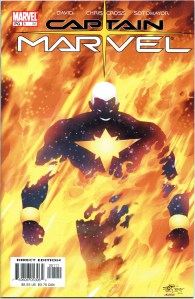
The third Captain Marvel is Genis-Vell, who first appeared in Silver Surfer Annual #6 (1993) using the codename of “Legacy”. The character is the genetically-engineered son of Mar-Vell and his lover Elysius, created from the late Mar-Vell’s cell samples and artificially aged to physical, if not emotional, maturity. Genis, like his father, wears the Nega-Bands, possesses Cosmic Awareness, and is, for a time, bonded with Rick Jones. Although the pair do not get along at first, they eventually become good friends. Genis goes insane and threatens to destroy the universe.
After dying and resurrecting himself—with the secret aid of Baron Helmut Zemo—Genis-Vell joins the Thunderbolts under the name Photon. However, in accelerating his resurrection, Zemo links Genis to the ends of time, causing a degenerative effect on the universe. To prevent the inevitable destruction of all existence, Zemo scatters pieces of Genis-Vell’s body through time and the Darkforce Dimension.





























 EHT Comics