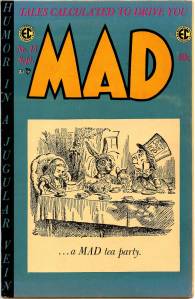
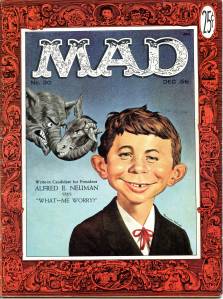
MAD is an American humor magazine founded in 1952 by editor Harvey Kurtzman and publisher William Gaines, launched as a comic book before it became a magazine. It was widely imitated and influential, affecting satirical media as well as the cultural landscape of the 20th century, with editor Al Feldstein increasing readership to more than two million during its 1974 circulation peak. As of January 2017, Mad has published 544 regular issues, as well as hundreds of reprint “Specials,” original material paperbacks, compilation books and other print projects.
mad #15 FN+ $150Mad #30 (1956) 1st Full Alfred E. Neuman cover FN-VF $195Mad #30 FN-VF $195 back cover
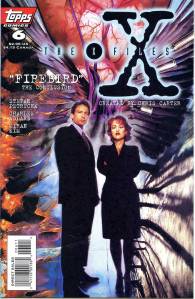
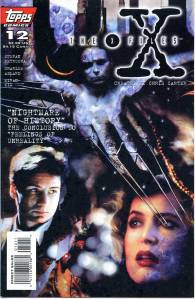
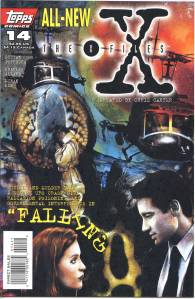
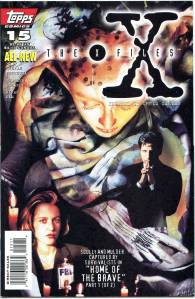
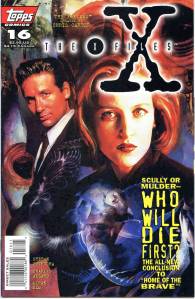
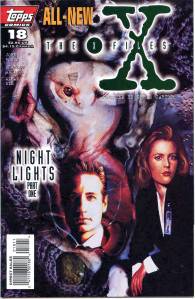
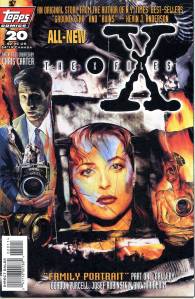
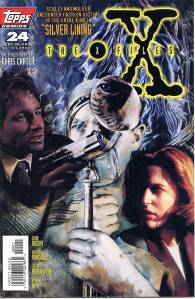
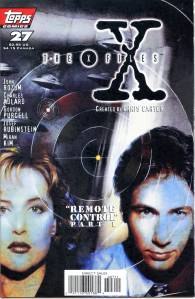
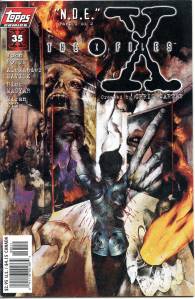
X-Files was originally published by Topps Comics and ran for 41 issues from January 1995 to September 1998, coinciding with the second through fifth seasons of the television program.
In 1996, Topps published X-Files #0, an adaptation of the pilot episode, in order to test the market for a series adapting the episodes of the X-Files TV series. The issue was successful, and X-Files Season One ran for nine issues (August 1997 – July 1998). The series’s name was provisional, and Topps in fact intended to adapt every episode, but never got as far as season two. The series was written by Roy Thomas, who would create a first draft for each issue by working off of the episode’s script, then watch the actual episode and modify his work to account for changes made on the set.
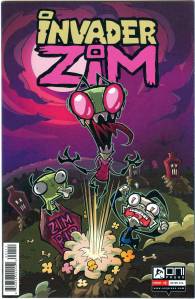
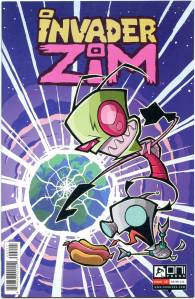
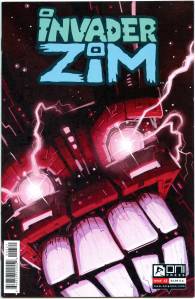
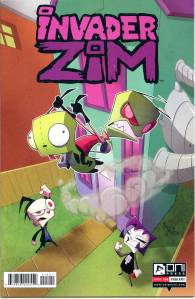
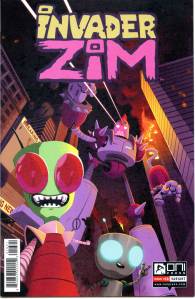
On February 20, 2015, Oni Press announced that they would be releasing an official Comic Book series based on Invader Zim, in collaboration with Jhonen Vasquez and Nickelodeon. Jhonen Vasquez said: “I’m always confused when people say how much they miss Invader Zim because the show never stopped running in my head, and then I remember everyone else isn’t in my head”. A pre-issue 0 was released on May 23, 2015 as a zine and foreshadow to the comic book series. The first issue was released on July 8, 2015, and since then most issues are released on a monthly basis.
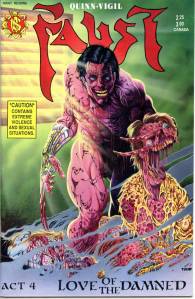
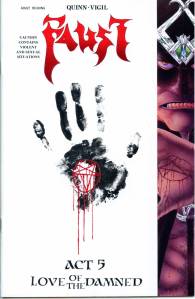
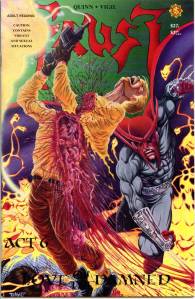
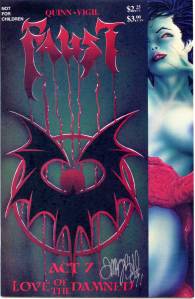
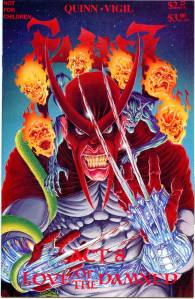
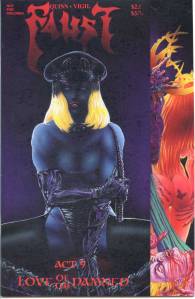
Alongside contemporaries Watchmen, The Crow, and The Dark Knight Returns, Faust was credited with popularizing the “deconstructed superheroes” genre and the notion that “comics aren’t just for kids.” One of the bestselling independent comics of the era, Faust issue 1 sold over 100,000 copies with later issues averaging 50,000 sales per issue, most of which sold through several printings and editions.
The series features strong graphic violence and sexual situations. The main series is known as Faust: Love of The Damned and debuted in 1988, with new issues published irregularly, roughly once a year, or sometimes every two years. David Quinn completed a script in 1996 (when writing the proposal to sell the film). The gap between issues grew wider with time. Issue 13 was published in 2005. It then took seven years for the authors to deliver the two last issues, 14 and 15, which concluded the story 25 years after the first episode.
Faust #4 1st Print VF+ $9Faust #5 2nd Print NM $7Faust #6 VF+ $5Faust #7 NM $12Faust #7 Signed by Tim Vigil VF+$9Faust #8 VF+ $5Faust #9 VF-NM $9
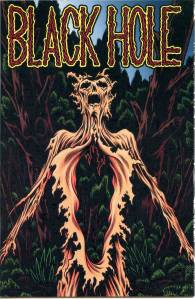
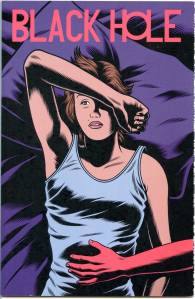
Set in the suburbs of Seattle during the 1970s, the story follows a group of teenagers who contract a mysterious sexually transmitted disease referred to as “the Bug, which causes them to develop bizarre unique physical mutations and subsequently become social outcasts, many of them running away from home to live in the nearby woodland.
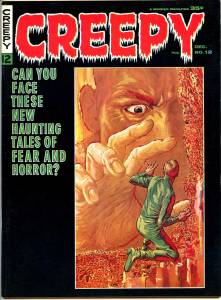
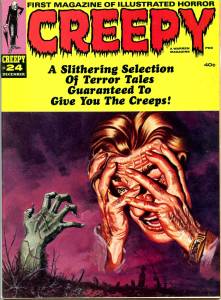
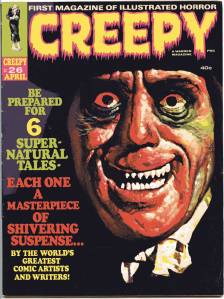
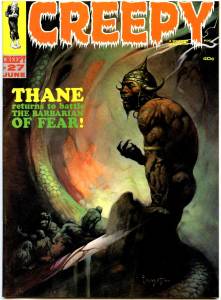
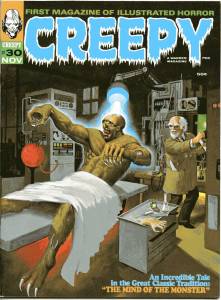
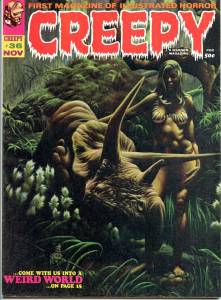
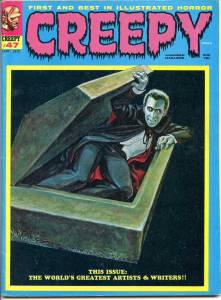
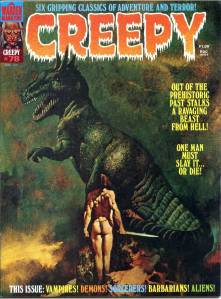
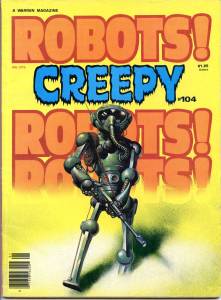
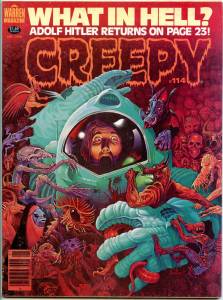
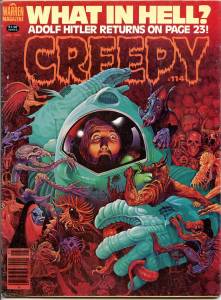
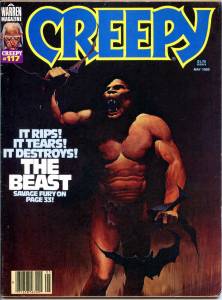
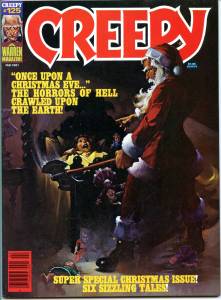
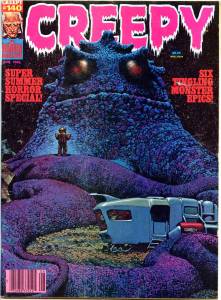
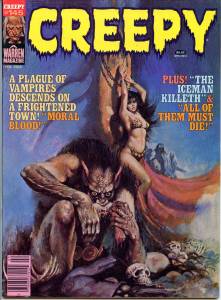
Creepy was an American horror-comics magazine launched by Warren Publishing in 1964. Like Mad, it was a black-and-white newsstand publication in a magazine format and thus did not require the approval or seal of the Comics Code Authority. The anthology magazine was initially published quarterly but later went bimonthly. Each issue’s stories were introduced by the host character, Uncle Creepy. Its sister publications were Eerie and Vampirella.
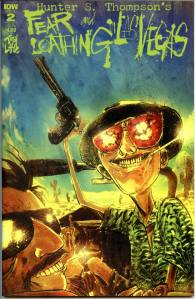
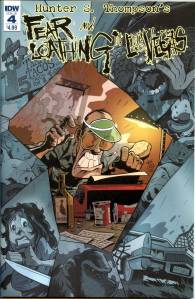
“What were we doing out here…? What was the meaning of this trip? Did I actually have a big red convertible out there on the street? Was I just roaming around these Mint Hotel escalators in a drug frenzy of some kind, or had I really come out here to Las Vegas to work on a story?” — Hunter S. Thompson, Fear and Loathing in Las Vegas
Fear and Lothing in Las Vegas #2 Variant NM $39Fear and Lothing in Las Vegas #4 NM $22
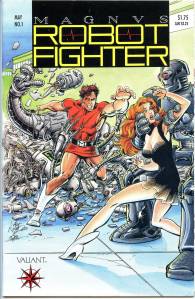
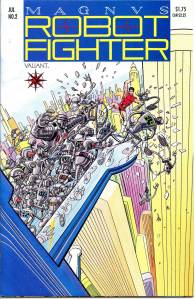
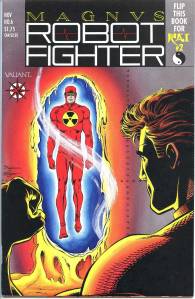
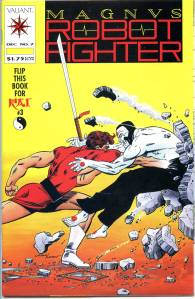
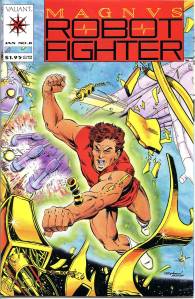
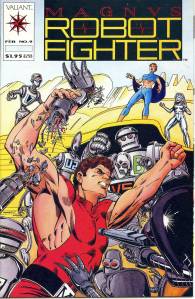
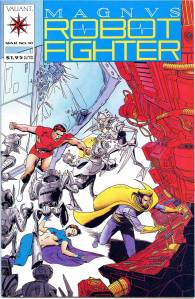
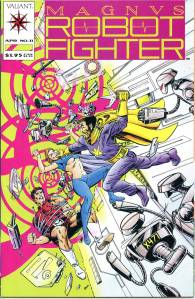
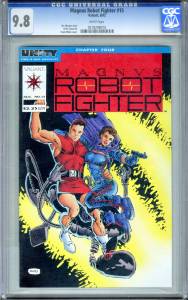
In 1991, Jim Shooter obtained rights to three Gold Key characters: Doctor Solar, Man of the Atom; Turok, Son of Stone; and Magnus, Robot Fighter. He intended to use those characters to launch his new comic book line, Valiant Comics. Several months later, the company launched Magnus, Robot Fighter.
The series began where the original one left off. The artists took great care to replicate the setting and trappings of the original stories. But as the new series progressed, it began to deviate from the original concept.The term “Freewills” appeared in the Valiant run, introducing the concept that the rogue robots seen previously were not simply the product of random malfunctions, but were the result of a common phenomenon which allowed robots to become sentient. While some of them are malevolent, others merely want to be free. It was also learned that 1A is a freewill. With Magnus’s help, a colony of benevolent Freewills is established called the “Steel Nation.” At the same time, Magnus becomes disgusted with North Am’s elite. He journeys to the lower levels of North Am and befriends a group of social outcasts known as Gophs.
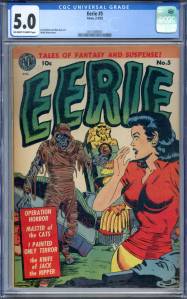
In 1951, Eerie #1, cover-dated May/June 1951, was published by Avon and saw a run of seventeen issues. The first issue of Eerie reprinted “The Strange Case of Henpecked Harry” from one-shot Eerie of 1947 as “The Subway Horror”, and issue 12 printed a Dracula story based on the Bram Stoker novel. Several covers featured large-breasted women in bondage. Artists Joe Orlando and Wallace Wood were associated with the series. The title saw a run of seventeen issues, ceasing publication with its August/September 1954 issue. Eerie then morphed into Strange Worlds with #18, October/November 1954.
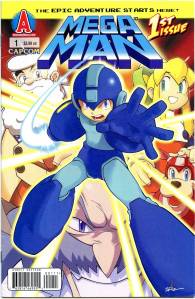
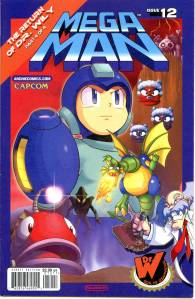
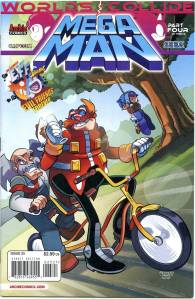
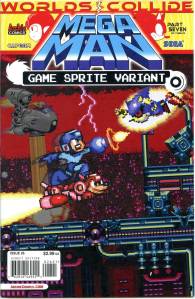
Mega Man is a comic series based on the video game series of the same name by Capcom produced by Archie Comics which was announced at New York Comic Con 2010. The series began publication in April 2011 with Ian Flynn, who has written many stories for Archie’s Sonic the Hedgehog series, involved with the production. The series has proved highly successful, and in 2013 a crossover took place between the Mega Man and Sonic series, under the title “Worlds Collide“. The series does not follow the events of the games in exact order, including an adaptation of the Japanese exclusive game Super Adventure Rockman between those of Mega Man 2 and Mega Man 3. The series later included a few stories set in the time of the Mega Man X series. The popularity of Worlds Collide subsequently led to a second crossover with the Sonic series, Worlds Unite. The series was put into an “indefinite hiatus” after issue 55, concluding with setup for an adaptation of Mega Man 4.
Mega Man #1 VF- $19Mega Man #12 VF- $6Mega Man #13 VF-NM $6Mega Man #25 VF- $9Mega Man #26 VF $19