Mike Allred followed up Dead Air with his similarly titled works Graphique Musique (1990) and Grafik Muzik (Caliber Comics 1990-1991), in which he set out the style that he was to become known for with his most famous character, Madman.

Mike Allred followed up Dead Air with his similarly titled works Graphique Musique (1990) and Grafik Muzik (Caliber Comics 1990-1991), in which he set out the style that he was to become known for with his most famous character, Madman.
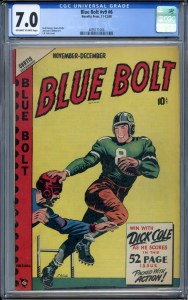
After college football star Fred Parrish is struck by lightning during practice he boards a plane in order to seek help. This plane is struck by a second lightning bolt, causing the plane to crash. Finding himself underground, Parrish is found by a scientist named Bertoff who heals him using an experimental radium treatment. This treatment gives Parrish super powers. Using his powers and a lightning gun given to him by Bertoff, Parrish takes up the name the Blue Bolt and battles the underground forces of his arch-enemy, the evil Green Sorceress.
After a year, the Blue Bolt discovers that World War II has started. He journeys back to the surface to fight against the Nazis.
After the war, Blue Bolt becomes a pilot for Glimpses, the picture magazine, and works with daring photographer Snap Doodle.
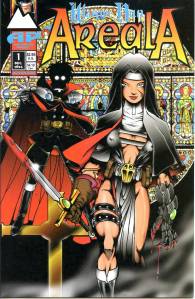
Warrior Nun Areala is a manga-style American comic book character created by Ben Dunn and published by Antarctic Press, first appearing in Warrior Nun Areala Vol. 1 #1 in December 1994. The story revolves around Sister Shannon Masters, a Joan of Arc like heroine of the Order of the Cruciform Sword, a fictional military order of Warrior Nuns and Magic Priests in service of the Catholic Church. The order was created in 1066 when a Valkyrie named Auria renounced her pagan ways and turned to Jesus Christ for salvation; ever since then, Auria, now Areala, has chosen an avatar every generation to carry on the mission. In modern times, this has grown to a world spanning organization in the service of the Catholic Church with the current Areala, Sister Shannon Masters as the best and brightest. With her friends beside her, Sister Shannon has led the forces of good against those of evil, ever serving the Lord with faith and humility.
Johnny the Homicidal Maniac (often abbreviated JtHM) is the first comic book by Jhonen Vasquez. The series tells the story of a young man named Johnny C. as he explores the psychological and possibly supernatural forces which compel him to commit a string of murders with which he always seems to get away. JtHM began as a comic strip in the 1990s, then ran under alternative comics publisher Slave Labor Graphics as a limited series of seven issues. The series produced two spin-offs: Squee! and I Feel Sick.
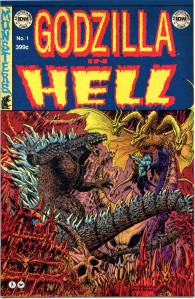
Godzilla’s battle with the legions of hell is to be told by multiple artists and writers, with James Stokoe, Matt Frank, Bob Eggleton, and Dave Wachter each working on an issue.
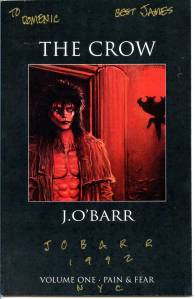
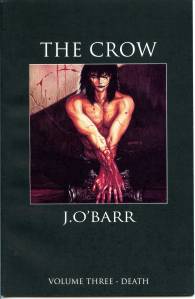
The Crow was created by James O’Barr. The series was originally written by O’Barr as a means of dealing with the death of his girlfriend at the hands of a drunk driver. It was later published by Caliber Comics in 1989, becoming an underground success, and later adapted into a film of the same name in 1994. Three film sequels, a television series and numerous books and comic books have also been subsequently produced.
The story revolves around an unfortunate young man named Eric. He and his fiancée, Shelly, are assaulted by a gang of street thugs after their car breaks down. Eric is shot in the head and is paralyzed, and can only watch as Shelly is savagely beaten and raped. They are then left for dead on the side of the road.
He is resurrected by a crow and seeks vengeance on the murderers, methodically stalking and killing them. When not on the hunt, Eric stays in the house he shared with Shelly, spending most of his time there lost in memories of her. Her absence is torture for him; he is in emotional pain, even engaging in self-mutilation by cutting himself.
The crow acts as both guide and goad for Eric, giving him information that helps him in his quest but also chastising him for dwelling on Shelly’s death, seeing his pining as useless self-indulgence that distracts him from his purpose.


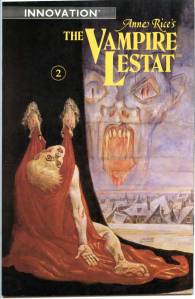
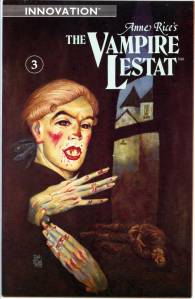
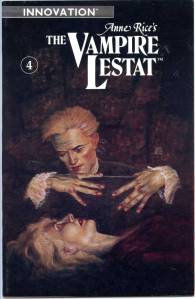
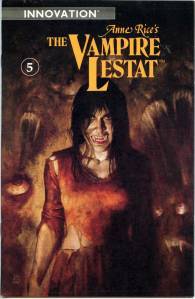
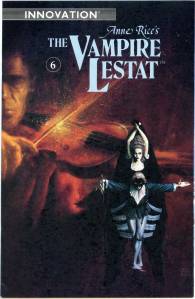
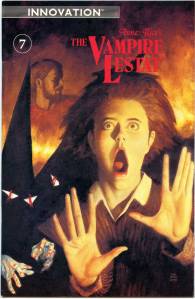
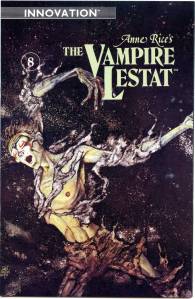
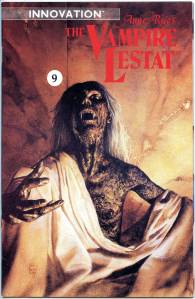
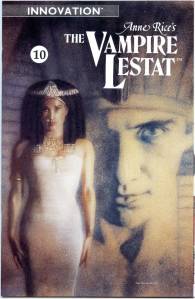
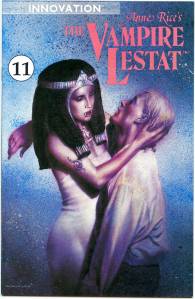
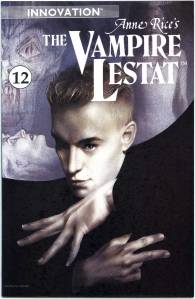
The Vampire Lestat was adapted into a comic and released as a 12-part miniseries by Innovation Comics in 1990 and 1991. The comic, which was formally titled Anne Rice’s The Vampire Lestat and featured Daerick Gross and Mike Okamoto as lead artists, had a script adapted from the novel by Rice and Faye Perozich. In 1991 the entire series was published as a graphic novel by Ballantine.
Wizard launched in July 1991. With issue #7, the magazine switched to glossy paper and color printing. Wizard strongly supported new publishers Valiant Comics and Image Comics, heavily promoting their new releases.
With its high-end production values and embodiment of the comic speculator boom, Wizard was an instant hit, with a monthly circulation of more than 100,000 copies.
The magazine also spawned several ongoing magazines dedicated to similar interests such as ToyFare for toys and action figures, Inquest Gamer for collectible game cards, Anime Insider for anime and manga, and Toy Wishes for mainstream toy enthusiasts.


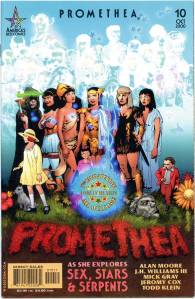
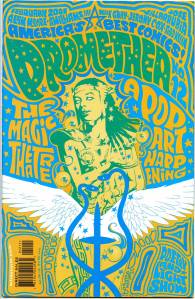
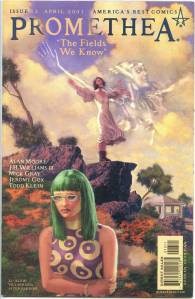
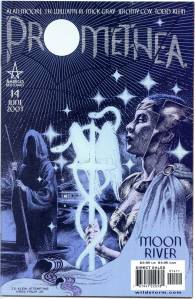
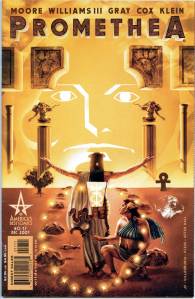
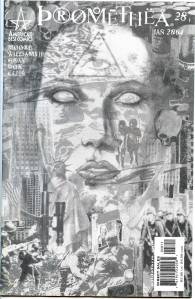
Promethea is created by Alan Moore, J. H. Williams III and Mick Gray, published by America’s Best Comics/WildStorm.
It tells the story of Sophie Bangs, a college student from an alternate futuristic New York City in 1999, who embodies the powerful entity known as Promethea whose task it is to bring the Apocalypse.
Originally published as 32 issues from 1999 to 2005, the series has been re-published into five graphic novels and one hard-back issue. Moore weaves in elements of magic and mysticism along with superhero mythology and action, spirituality and the afterlife (in particular the Tree of Life) and science-fiction. Promethea includes wide-ranging experimentation with visual styles and art.






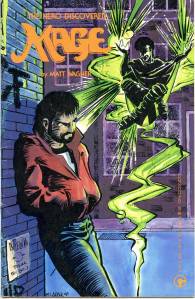
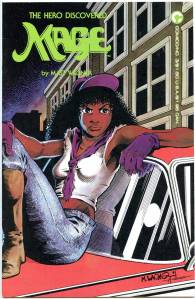
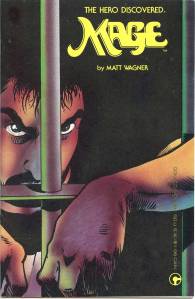
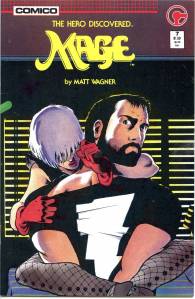
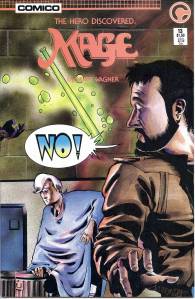
The Hero Discovered follows Kevin Matchstick, an alienated young man who meets a wizard called Mirth and discovers that he, among other things, possesses both a magic baseball bat and superhuman abilities. In the course of the comic, he defeats the nefarious plans of a being called the Umbra Sprite. He ultimately discovers that Mirth is Merlin, the baseball bat is Excalibur, and he is, in some ambiguous way, King Arthur. All the chapter titles are lines from Shakespeare’s Hamlet.