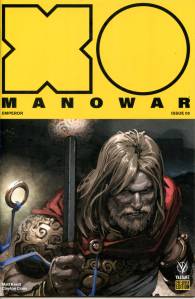
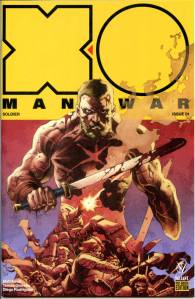
X-O Manowar V4 (2017)

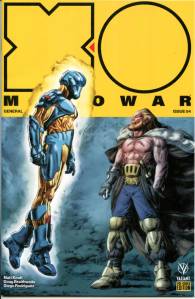
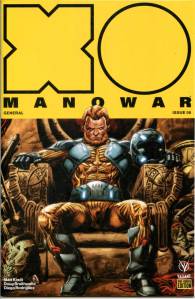
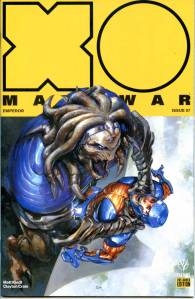
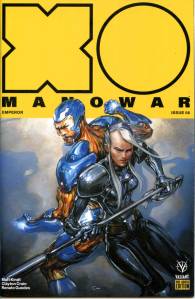
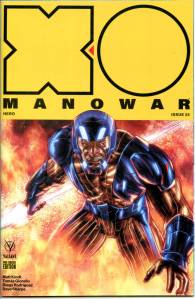
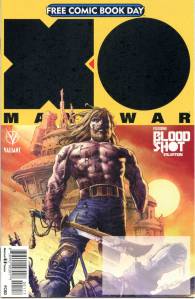
Born under the oppressive thumb of the Roman Empire, Aric of Dacia learned warfare at an early age. It was amid such violence that he was abducted by an alien race. Forced into slavery, he survived where others perished. His escape would come from bonding with a weapon of immeasurable power: the X-O Manowar armor. With it, he returned to Earth…only to find himself stranded in the modern day.

But that was a lifetime ago.

Now, far from home on a strange and primitive new world, Aric has begun a new life. Liberated from his past, he tends to his crops. Free from war. Free from violence. Free from the armor.

But the machinery of death marches his way once again. Conscripted into an alien army and thrown into an unforgiving conflict, the fury inside him finds voice as he is forced to embrace the armor once more. With it, he will decimate armies, topple empires and incite interplanetary warfare as he rises from SOLDIER to GENERAL to EMPEROR to VISIGOTH. They wanted a weapon. He will give them war!
The Lone Ranger (1954)

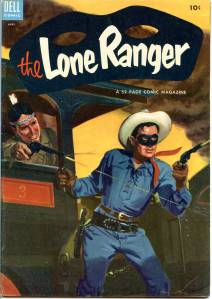
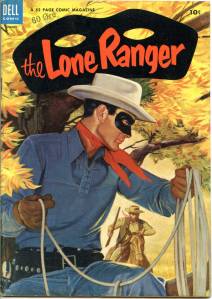
In 1948, Western Publishing, with its publishing partner Dell Comics, launched a comic book series which lasted 145 issues. This originally consisted of reprints from the newspaper strips (as had all previous comic book appearances of the character in various titles from David McKay Publications and from Dell). However, new stories by writer Paul S. Newman and artist Tom Gill began with issue #38 (August 1951). Some original content was presented as early as #7 (January 1949), but these were non-Lone Ranger fillers. Newman and Gill produced the series until its final issue, #145 (July 1962).

Tonto got his own spin-off title in 1951, which lasted 31 issues. Such was the Ranger’s popularity at the time that even his horse Silver had a comic book, The Lone Ranger’s Famous Horse Hi-Yo Silver, starting in 1952 and running 34 issues; writer Gaylord DuBois wrote and developed Silver as a hero in his own right. In addition, Dell also published three big Lone Ranger annuals, as well as an adaptation of the 1956 theatrical film.

The Dell series came to an end in 1962. Later that same year, Western Publishing ended its publishing partnership with Dell Comics and started up its own comic book imprint, Gold Key Comics. The new imprint launched its own Lone Ranger title in 1964. Initially reprinting material from the Dell run, original content did not begin until issue #22 in 1975, and the magazine itself folded with #28 in 1977. Additionally, Hemmets Journal AB published a three-part Swedish Lone Ranger story the same year.

Jughead V3 (2015)

Jughead, was released in October 2015 as part of Archie Comics’ New Riverdale. It is written by Chip Zdarsky with artwork by Erica Henderson. Derek Charm took over as regular artist starting with issue #7.

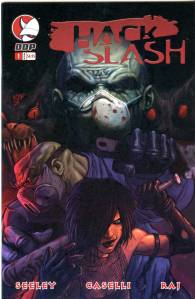
Hack/Slash (2004)

Hack/Slash is a series, launched from several one shots of the same name, published by Image Comics (previously by Devil’s Due Publishing). The series was created by writer and sometime penciller Tim Seeley. The series follows horror victim Cassie Hack as she strikes back at the monsters who prey upon teenagers. These monsters are known as “slashers”, and are a mix of original villains and crossover appearances, such as the appearance of Re-Animator (from Herbert West–Reanimator) in Volume 1.

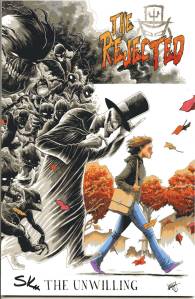
The Rejected (2019)

Billy is hounded, bullied and abused. He wants nothing more than a loving family… but it doesn’t seem to be in the cards for him. That hate. That dejection. It calls out in Billy’s voice and, this time, something answered. The Rejected, led by Mr. Teeth, offer Billy otherworldly protection and a place in the family. The shadowy beings allow Billy to take his revenge on anyone that maligned him. Billy has to be careful, though. The Rejected can make your desires come true… but at what price? This graphic novel is the brainchild of writer Stan Konopka and artist Corey Christian Anderson.

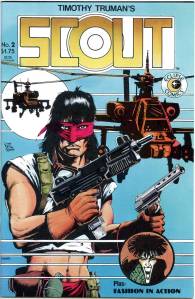
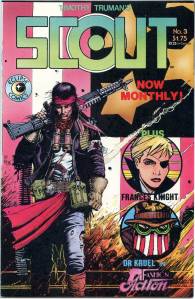
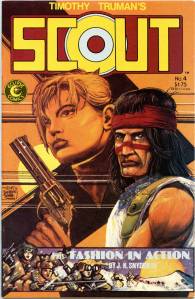
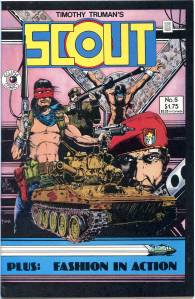
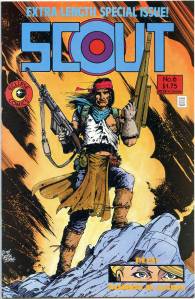
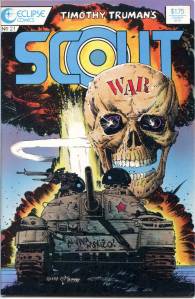
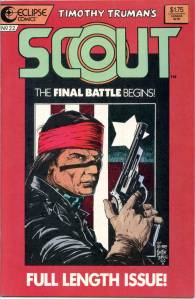
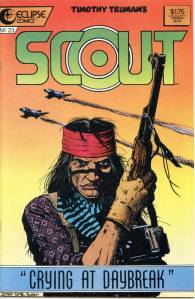
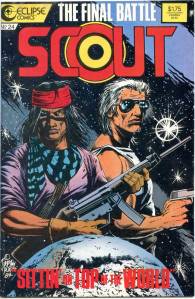
Scout (1985)

The story stars a Native American Apache named Emanuel Santana. The setting of the series is a dystopian United States that has become a Third World country. Twenty-four issues of the first series were published.

After the series ended, a short comic featuring Santana’s marriage ceremony was published inside Timothy Truman’s first album release entitled Marauder by his band The Dixie Pistols.

Two mini-series were published that ‘bridged the gap’ between the two Scout series: New America and Swords of Texas, each four issues long. While Truman oversaw them, others (including Ben Dunn) wrote and drew them. A one-shot ‘Scout Handbook’ was also published.

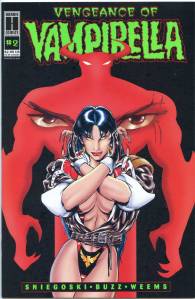
Vengeance of Vampirella (1990’s)

Upon Warren’s bankruptcy shortly afterward, Harris Publications acquired the company assets at auction in August 1983, although legal murkiness and a 1999 lawsuit by Warren publisher James Warren resulted in his re-acquisition of the rights to sister publications Creepy and Eerie. Harris Comics published Vampirella stories in various series and miniseries from 1991 to 2007. Harris also published Vampirella #113, a one-issue continuation of the original series, containing solely reprinted stories, in 1988.

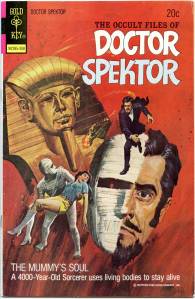
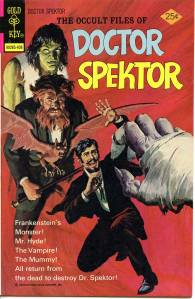
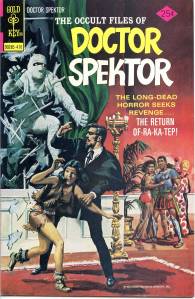
The Occult Files of Doctor Spektor (1970’s)

After his first appearance in a 10-page story in Mystery Comics Digest #5, Dr. Spektor was spun off into his own title, The Occult Files of Doctor Spektor. The series ran for 24 issues (May 1973 – February 1977). His final original story appeared in one issue of Gold Key Spotlight (#8, August 1977). Jesse Santos replaced Spiegle as artist on the series, and remained there for the entire run.

Dr. Spektor appeared in all four issues of Gold Key’s Spine-Tingling Tales (1975–76), where he provided linking narration for some of the stories within. (These stories were reprints from Mystery Comics Digest that dealt with characters who later appeared in his title). He also had stories he narrated in Mystery Comics Digest #10, #11, #12, and #21, and articles in Golden Comics Digest #25, #26, and #33.

Under the Whitman Comics name, issue #25 was released in May 1982. It reprinted issue #1, but with a line-art cover instead of the original painted cover.

In 2014, Dynamite Entertainment released a new version of “Doctor Spektor”, written by Mark Waid and drawn by Greg Pak, as part of the company’s revival of several Gold Key characters (which also included Magnus, Robot Fighter, Dr. Solar and Turok)

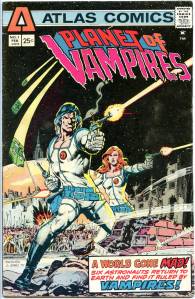
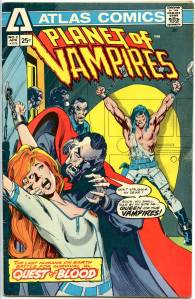
Planet of the Vampires (1975)

In the far-off era of 2010 AD, astronauts return from space to find Earth ruled by technological geniuses who live on human blood. They join the primitive resistance fighters who dwell outside the domed cities. Part of the short-lived Atlas science fiction line from former Marvel publisher Martin Goodman.


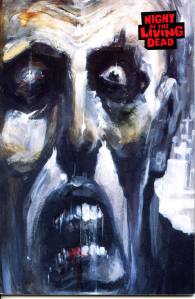
Night of the Living Dead – FantaCo (1991)

Black and white art by Carlos Kastro with Eric Meheu. Original story by George Romero. Adaptation by Tom Skulan and Eric Stanway. “There coming to get you Barbara!”