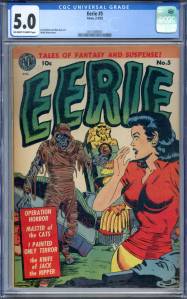
In 1951, Eerie #1, cover-dated May/June 1951, was published by Avon and saw a run of seventeen issues. The first issue of Eerie reprinted “The Strange Case of Henpecked Harry” from one-shot Eerie of 1947 as “The Subway Horror”, and issue 12 printed a Dracula story based on the Bram Stoker novel. Several covers featured large-breasted women in bondage. Artists Joe Orlando and Wallace Wood were associated with the series. The title saw a run of seventeen issues, ceasing publication with its August/September 1954 issue. Eerie then morphed into Strange Worlds with #18, October/November 1954.
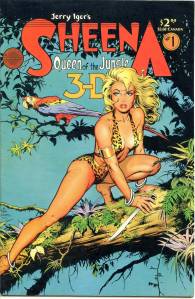
The first issue of Blackthorne’s long-running 3-D series, featuring Jerry Igers classic jungle princess, hero of pulps, comics, and the big and small screens. Absent from comics for almost three decades, this presents some of her 1950s adventures in 3-D format, including one by legendary good-girl artist Matt Baker. But the main draw for many fans will be the stunning cover by beloved artist (and Rocketeer creator) Dave Stevens. Also featuring an introduction by creator Jerry Iger, a Snarzan the Ape spoof from Great Comics (1941) #1, and a Congo King story with art by legendary good-girl artist Matt Baker. Heroine in the Jungle; Sargasso of Lost Safaris; Snarzan the Ape in Mein Kemp Von Der Chungle; Congo King; Spoor of the Dancing Skeletons. 32 pages, B&W with 3-D effects.
Madman first appeared as Frank Einstien in Creatures of the Id and Grafik Muzik published in 1990, but it wasn’t until March 1992 that the first Madman miniseries debuted from Tundra Publishing. The series gained further recognition with its move to Dark Horse Comics in April 1994, where it was relaunched as Madman Comics and went on to be nominated for several Harvey Awards. Madman Comics ran for 20 issues and ended in 2000. From 2007–2009, Image Comics published Madman: Atomic Comics for 17 issues.
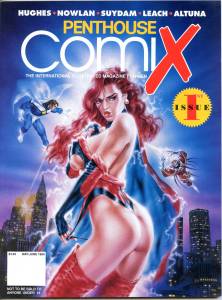
Penthouse Comix began as a series of short segments in Penthouse Magazine. After 3 of these sections were printed (featuring artwork by Adam Hughes, Kevin Nowlan and Garry Leach), publisher Bob Guccione dictated that Penthouse Comix become its own stand-alone magazine, something which he envisioned competing in both US and European magazine markets. Guccione agreed to a budget that was designed to cherry pick art talent from both American comic book companies and non-US publishers and this resulted in Penthouse Comix offering a per-page rate among the highest ever paid to freelance comic book artists.
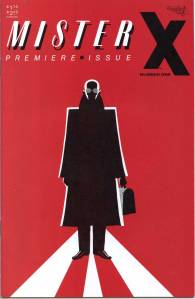
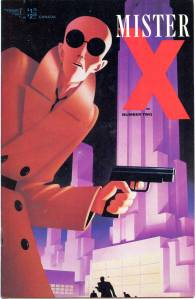
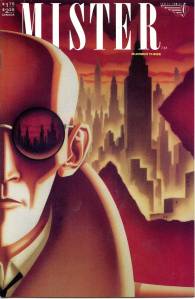
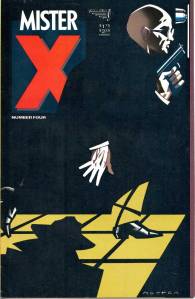
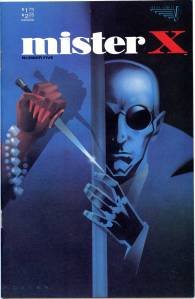
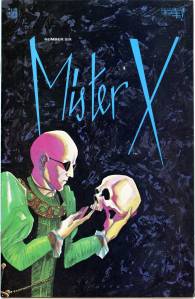
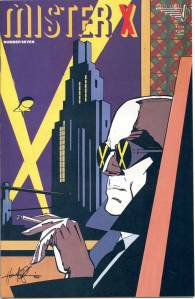
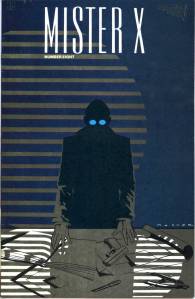
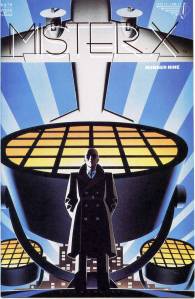
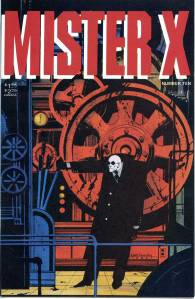
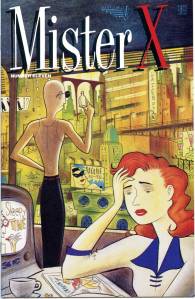
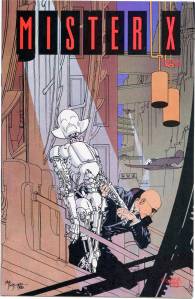
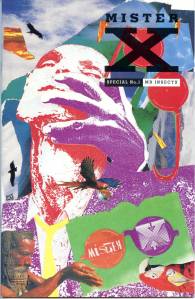
Created by album and book cover designer Dean Motter, Mister X was developed for a year in close collaboration with comic artist and illustrator Paul Rivoche, whose series of poster illustrations stirred up great interest in the project. The series published early work by comic artists who would later emerge as important alternative cartoonists, including Jaime Hernandez, Gilbert Hernandez, Mario Hernandez, Seth, Shane Oakley and D’Israeli.
A highly successful promotional campaign with posters and ads followed for the next year, while Motter and Rivoche struggled to produce an actual issue of Mister X. When Rivoche quit, Vortex Comics president Bill Marks became more skeptical than ever that Motter would be able to produce the series on time, and decided to turn the work over to the Hernandez brothers. The first four issues were written and illustrated by Jaime and Gilbert Hernandez, with additional writing by Mario Hernandez. The Hernandez brothers quit over payment delays from Vortex. Issues 5 through 14 of the series were then written by Motter, with issues 6 through 13 illustrated by Seth.
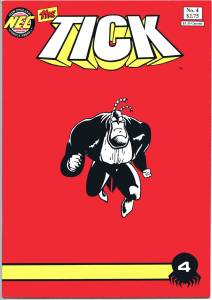
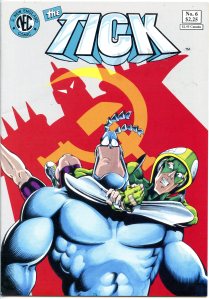
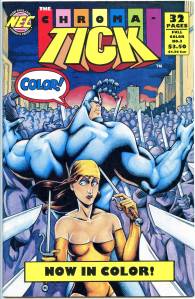
The Tick was created by cartoonist Ben Edlund in 1986 as a newsletter mascot for the New England Comics chain of Boston area comic stores. He is an absurdist spoof of comic booksuperheroes. After its creation, the character spun off into an independent comic book series in 1988, and gained mainstream popularity through an animated TV series on Fox in 1994. A short-lived live-action TV series, video game, and various merchandise have also been based on the character. IGN‘s list of the Top 100 Comic Book Heroes of All Time ranked The Tick as #57.
The Tick Special Edition #1 VF-NM #2252 of 5000 $399
The Tick Special Edition #2 NM- #1622 of 5000 $150
This 2-part mini-series focuses on the events hinted at in Wizards of the Coast’s Fallen Empire cards. All the drama and tragedy caused by the coming ice age will be dramatically told by the editorial team that brought you the hit Shadow Mage and Ice Age Armada series. The story takes place between the Urza/Mishra war set forth in Antiquities and the story now being told in Ice Age. The plot is officially sanctioned by Wizards of the Coast and makes an excellent precursor to the Ice Age mini-series.
Magic the Gathering – Fallen Empires #1 polybagged with Booster Pack NM $24
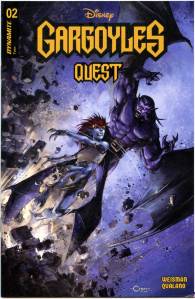
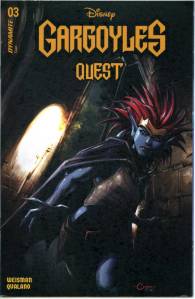
Thwarted in her earlier attempt to gain control of the ancient magical artifacts known as the Original Keys to Power, the evil DEMONA has set her sights on three New Keys that will give her the ability to make any human in her vicinity into her willing puppet. All that stands between Demona and world domination are Goliath and the Manhattan Clan. But despite their best efforts, Demona always seems to be a step ahead, gathering one Key after another. And once she has them all, the entire human race had better beware!
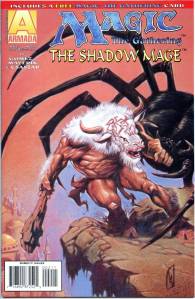
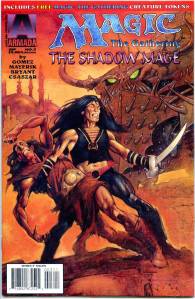
This is the first in a series of limited series relating just one of the epic sagas set on Dominia, the world of Magic: The Gathering! The Shadow Mage tells the story of young Jared, a boy who is rescued from a spectacular battle and then cared for by a lowly Spellsquire. The old man spends years preparing Jared to take vengeance on the immensely powerful Planewalker who slew his father.
Magic the Gathering – The Shadow Mage #1 NM Polybagged with card $19
Magic the Gathering – The Shadow Mage #2 NM with card $9
Magic the Gathering – The Shadow Mage #3 NM Polybagged with tokens $9
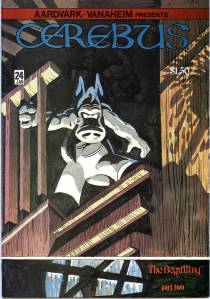
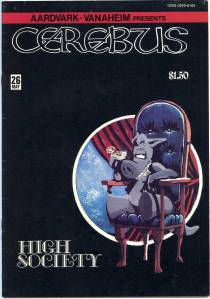
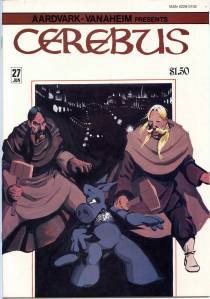
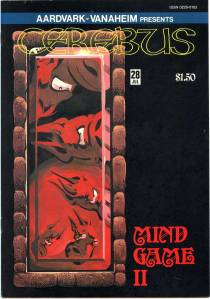
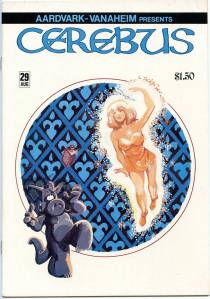
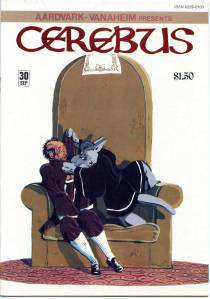
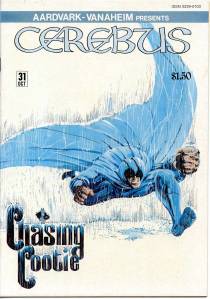
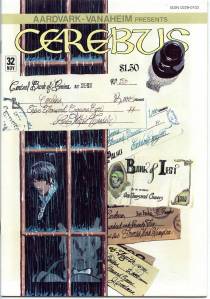
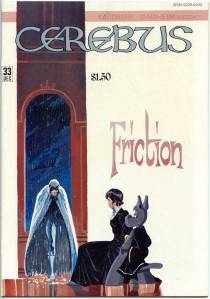
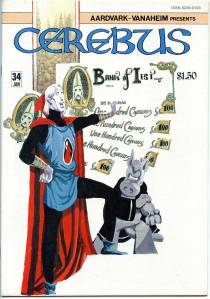
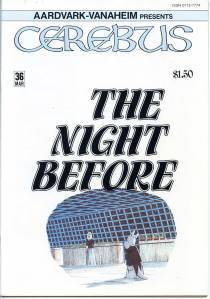
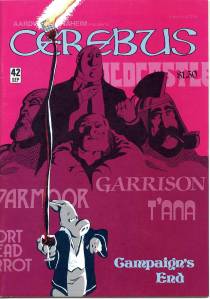
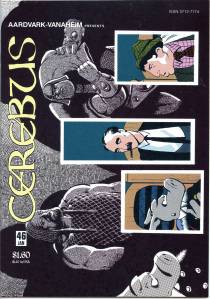
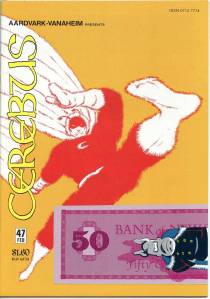
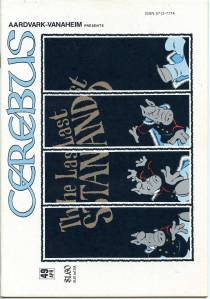
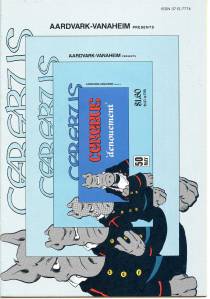
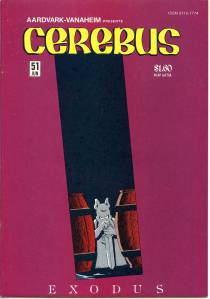
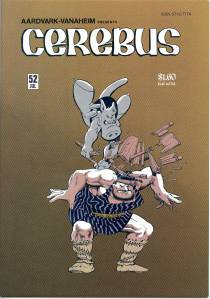
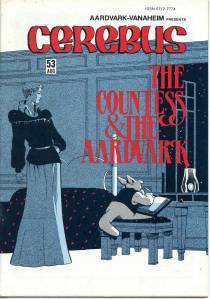
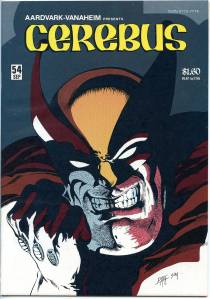
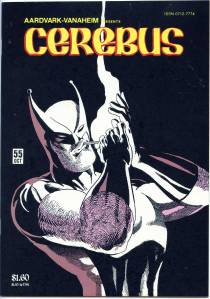
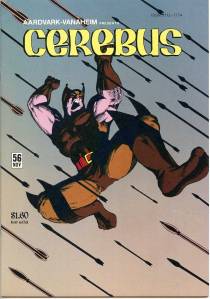
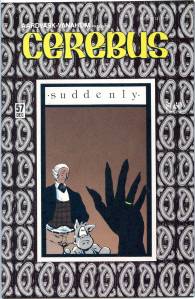
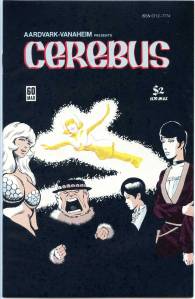
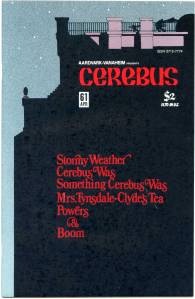
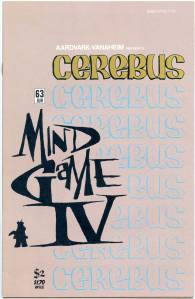
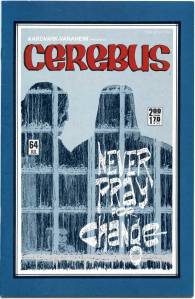
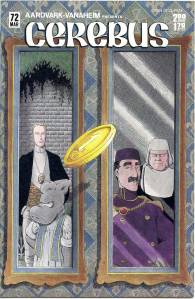
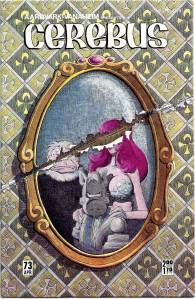
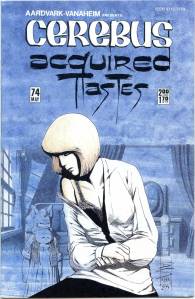
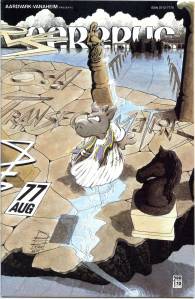
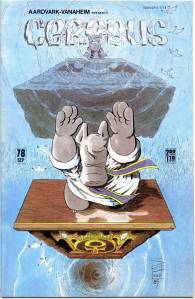
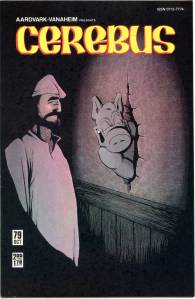
Cerebus the Aardvarkis a series created by Canadian cartoonist Dave Sim, which ran from December 1977 until March 2004. The title character of the 300-issue series was an anthropomorphic aardvark who takes on a number of roles throughout the series—barbarian, prime minister and Pope among them. The series stands out for its experimentation in form and content, and for the dexterity of its artwork, especially after background artist Gerhard joined in with the 65th issue. As the series progressed, it increasingly became a platform for Sim’s controversial beliefs.
The 6000-page story is a challenge to summarize. Beginning as a parody of sword and sorcery comics, it moved into seemingly any topic Sim wished to explore — power and politics, religion and spirituality, gender issues, and more. It progressively became more serious and ambitious than its parodic roots — what has come to be dubbed “Cerebus Syndrome“. Sim announced early on that the series would end with the death of the title character. The story has a large cast of characters, many of which began as parodies of characters from comic books and popular culture.
Starting with the High Society storyline, the series became divided into self-contained “novels”, which form parts of the overall story. The ten “novels” of the series have been collected in 16 books, known as “Cerebus phonebooks” for their resemblance to telephone directories. At a time when the series was about 70% completed, celebrated comic book writer Alan Moore wrote, “Cerebus, as if I need to say so, is still to comic books what Hydrogen is to the Periodic Table.”




























 EHT Comics