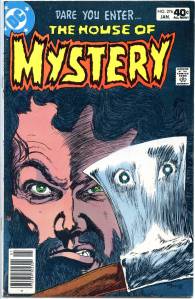
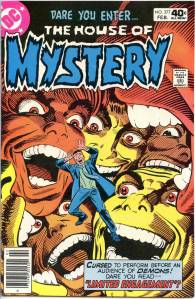
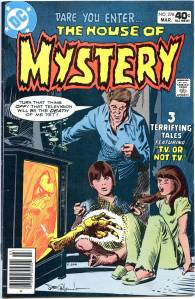
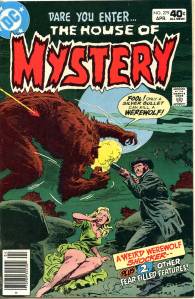
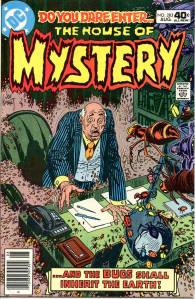
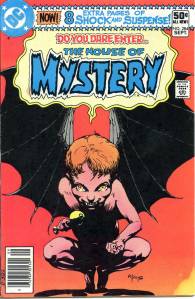
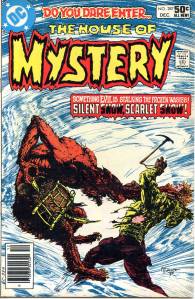
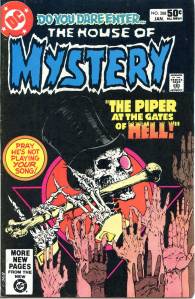
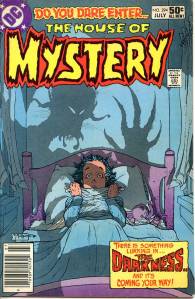
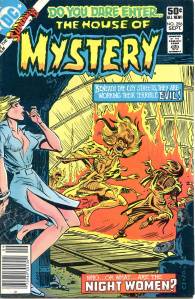
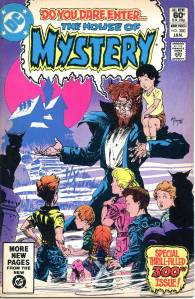
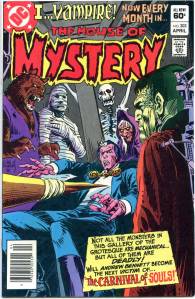
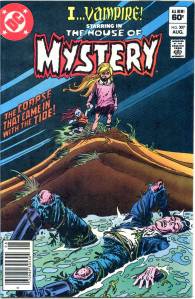
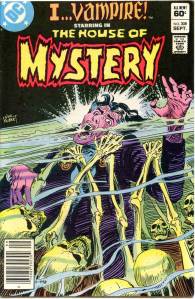
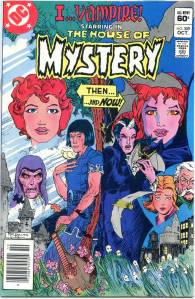
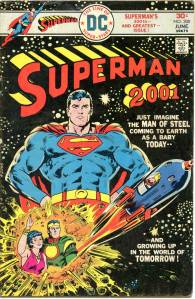
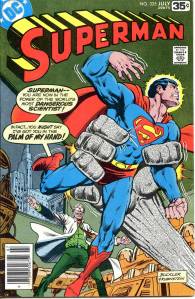
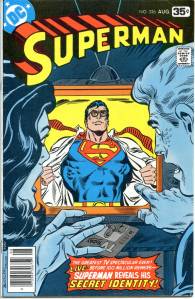
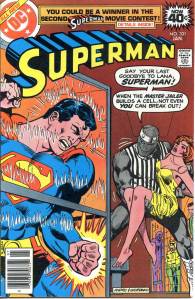
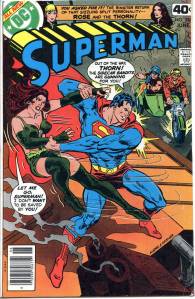
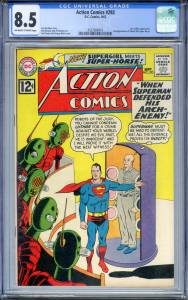
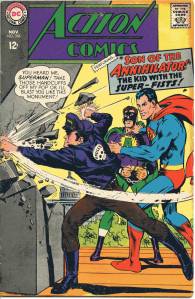
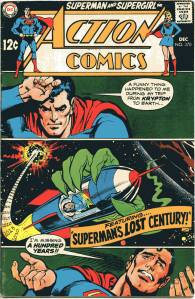
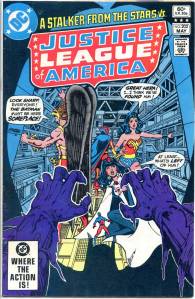
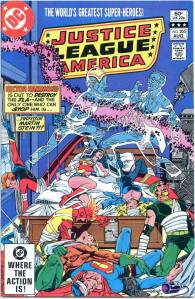
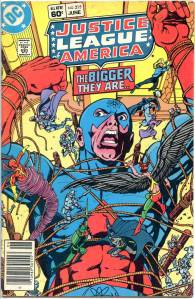
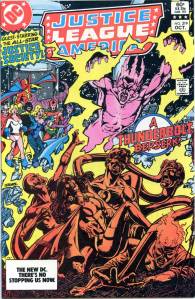
Karen Berger became editor of the series with #292 (May 1981), her first for DC Comics. Under Berger, the series experimented with long-form storylines in the popular I…Vampire serial created by writer J. M. DeMatteis. “I… Vampire” revolved around the heroic vampire, Andrew Bennett, who sought to defeat his nemesis and former lover Mary, the Queen of Blood. This series began in #290 (March 1981) and would last until #319 (August 1983), two issues before the title ended with #321 (October 1983).
House of Mystery #276 VF- $5House of Mystery #277 NM- $18House of Mystery #278 FN+ $4The House of Mystery #279 VF $6The House of Mystery #283 FN-VF $5The House of Mystery #284 VG-FN$4The House of Mystery #287 VF- $5The House of Mystery #288 VF- $6The House of Mystery #294 FN-VF $5The House of Mystery #296 FN-VF $5The House of Mystery #298 VF- $5The House of Mystery #300 VF- $15The House of Mystery #301 VF $9House of Mystery #303 VF+ $8House of Mystery #307 VF- $6House of Mystery #308 FN-VF $5House of Mystery #309 VF- $6
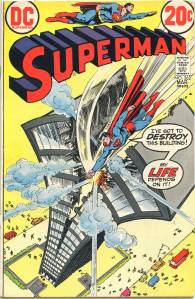
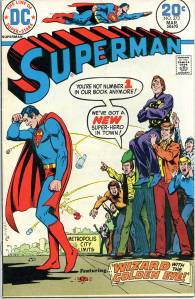
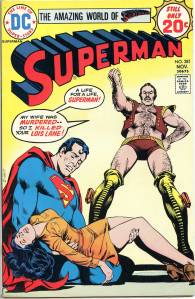
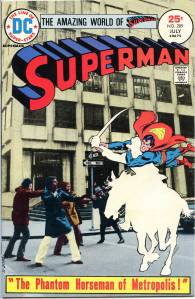
The early 1970s were a time of change for the Man of Steel. As Clark Kent shifted from being a newspaper reporter to a TV newscaster, his alter ego saw the destruction of all remaining Kryptonite on Earth! This period also featured many new villains, including Terra-Man, and the dramatic reintroductions of such foes as Lex Luthor — in green and purple armor!
In the view of comics historian Les Daniels, artist Curt Swan became the definitive artist of Superman in the early 1960s with a “new look” to the character that replaced Wayne Boring’s version. Bizarro World first appeared in the story “The World of Bizarros!” in issue #262 (April 1960). Writer Jim Shooter created the villain the Parasite in Action Comics #340 (Aug. 1966).
Action Comics #280 CGC 7.0 Off-White to White Pages $149Action Comics #292 CGC 8.5 Off White – White Pages $195Action Comics #356 VG $6Action Comics #359 VF+ $50Action Comics #370 FN $16Action Comics #383 GD+ $6
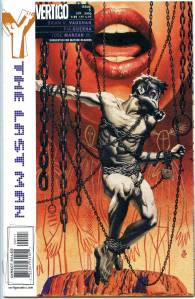
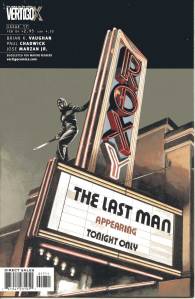
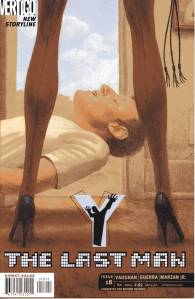
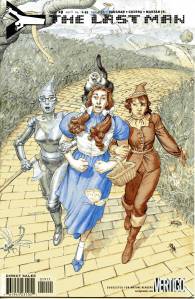
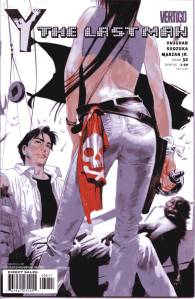
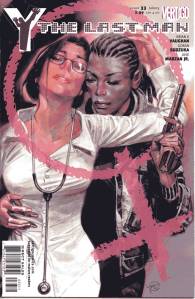
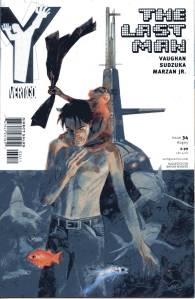
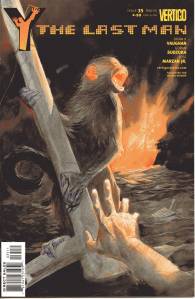
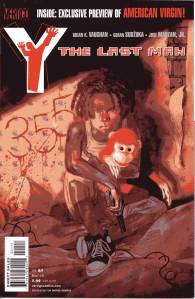
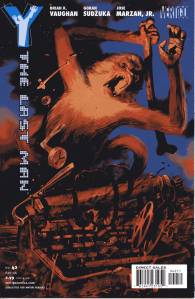
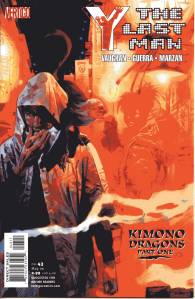
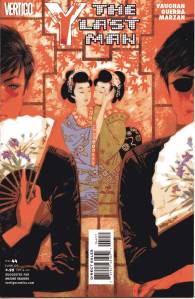
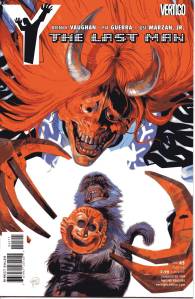
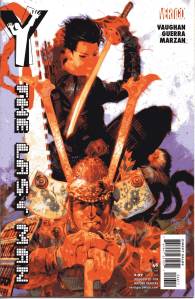
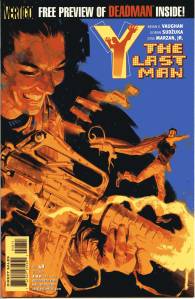
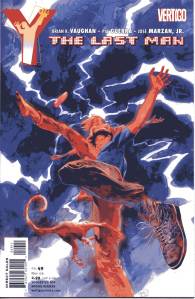
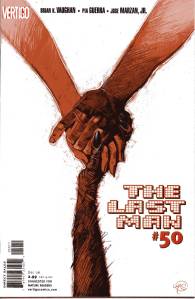
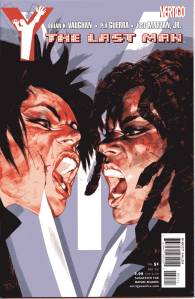
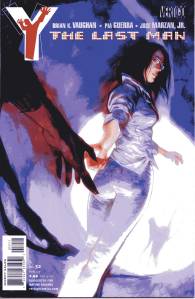
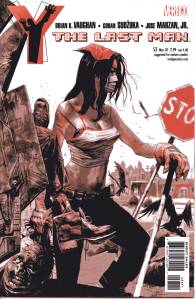
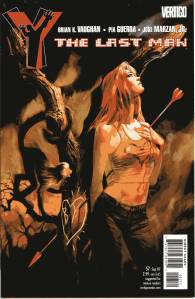
Y The Last Man #5 NM $10Y The Last Man #17 NM $4Y The Last Man #18 NM $4Y The Last Man #19 NM $5Y The Last Man #20 NM $4Y The Last Man #21 NM $4Y The Last Man #22 NM $4Y The Last Man #23 NM $5Y The Last Man #24 NM $4Y The Last Man #25 NM $4Y The Last Man #26 NM $5Y The Last Man #27 NM $4Y The Last Man #28 NM $4Y The Last Man #29 NM $4Y The Last Man #30 NM $4Y The Last Man #31 VF-NM $3Y The Last Man #32 NM $4Y The Last Man #33 NM $4Y The Last Man #34 NM $4Y The Last Man #35 NM $4Y The Last Man #36 NM $4Y The Last Man #37 NM $6Y The Last Man #38 NM $4Y The Last Man #39 NM $4Y The Last Man #40 NM $4Y The Last Man #41 NM $4Y The Last Man #42 NM $4Y The Last Man #43 NM $4Y The Last Man #44 NM $4Y The Last Man #45 NM $4Y The Last Man #46 VF-NM $2Y The Last Man #47 NM $4Y The Last Man #48 NM $4Y The Last Man #49 NM $4Y The Last Man #50 NM $4Y The Last Man #51 NM $4Y The Last Man #52 NM- $3Y The Last Man #53 NM- $3Y The Last Man #57 VF-NM $2
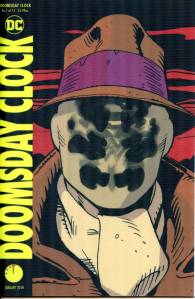
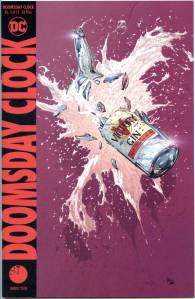
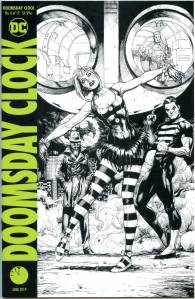
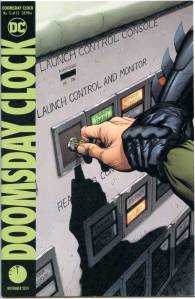
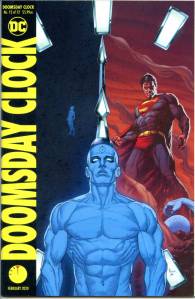
Doomsday Clock is part of the DC Rebirth initiative, and it continues the narrative that was established with the 2016 one-shot DC Universe: Rebirth Special, the 2017 crossover event “The Button” and other related stories. It is a follow-up to the 1986–1987 miniseries Watchmen by Alan Moore, Dave Gibbons and John Higgins, and it introduces that story’s characters into the DC Universe, alongside a few original characters created for the book. Although Dan DiDio (then DC’s co-publisher) confirmed that it is a sequel to that miniseries, Johns originally declined to characterize it as such, viewing it as a standalone story, saying, “It is something else. It is Watchmen colliding with the DC Universe.”
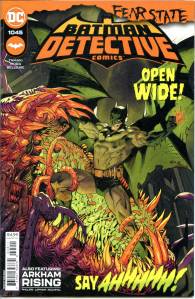
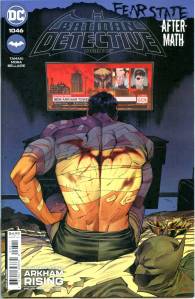
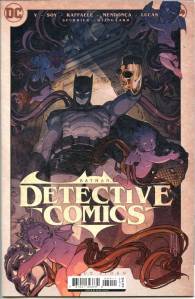
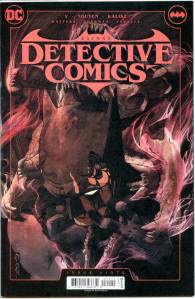
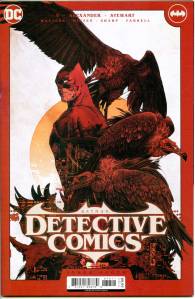
The next regular writer after James Tynion IV was Peter Tomasi who began on the series with issue #994, published December 2018. Tomasi’s run as writer continued for two years until issue #1033, published December 2020.
On March 27, 2019, DC Comics released the series’ 1,000th issue, marking the second American comic book in history to reach that milestone after Action Comics in 2018. The issue, which coincided with Batman’s 80th anniversary, is an anthology featuring several stories from a variety of different creative teams.
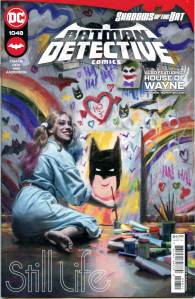
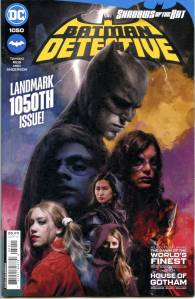
Writer Mariko Tamaki began on the series with issue #1034 as part of the Infinite Frontier line-wide relaunch. In April 2022, it was announced that Ram V and Rafael Albuquerque would serve as the new creative team starting with issue #1062.
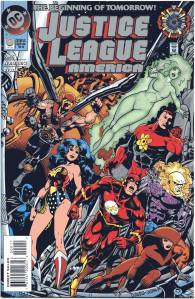
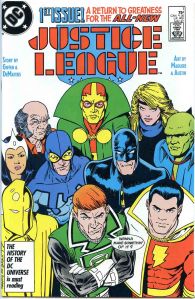
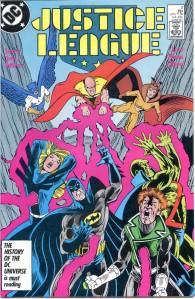
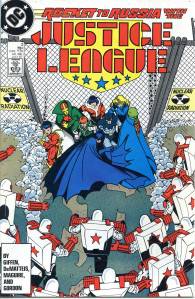
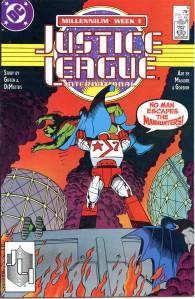
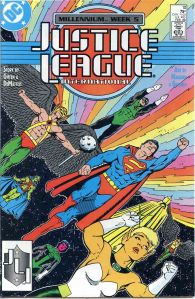
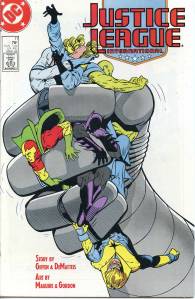
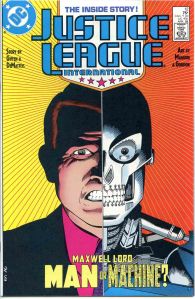
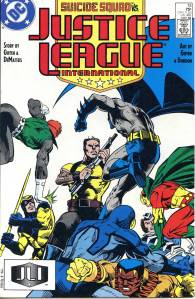
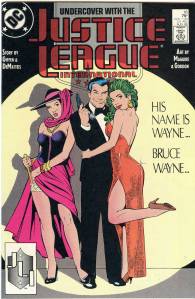
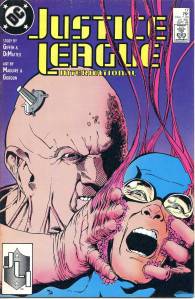
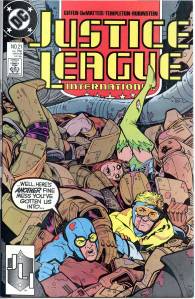
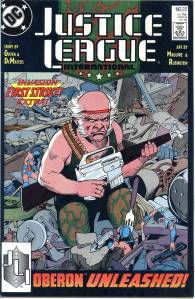
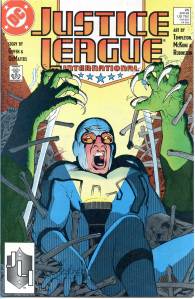
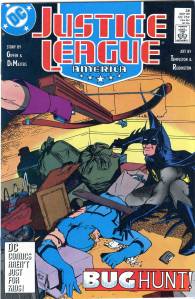
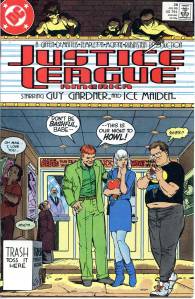
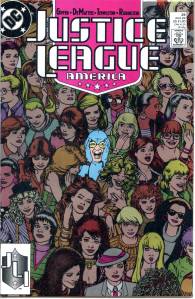
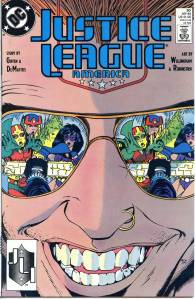
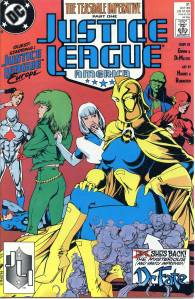
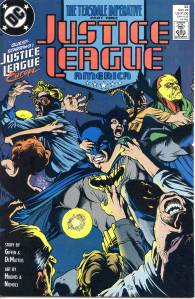
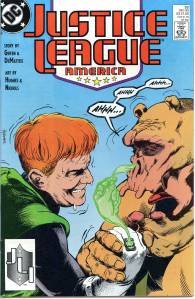
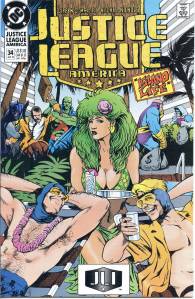
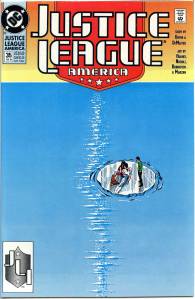
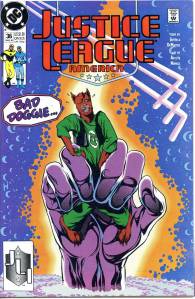
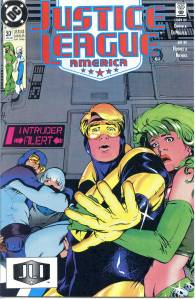
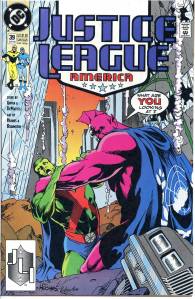
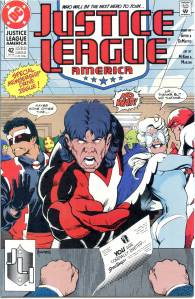
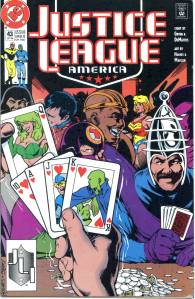
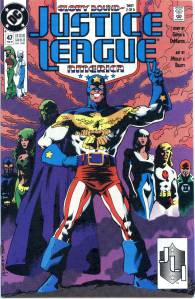
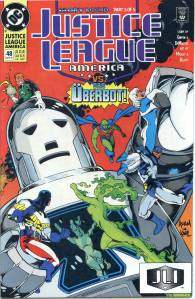
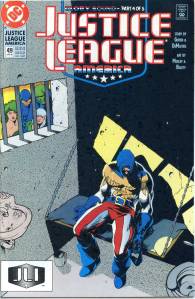
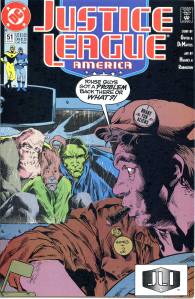
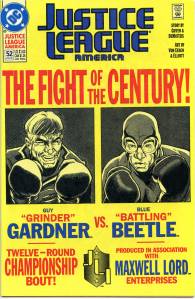
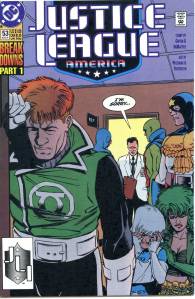
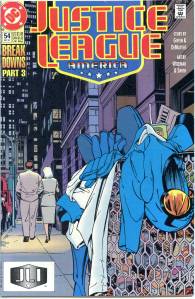
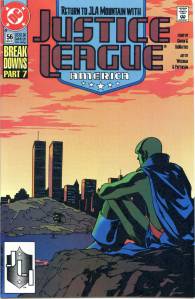
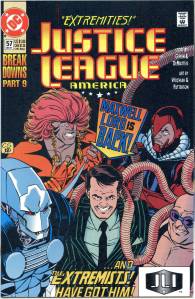
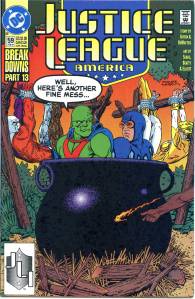
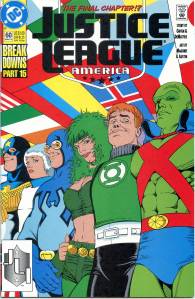
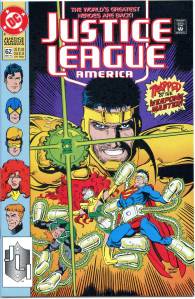
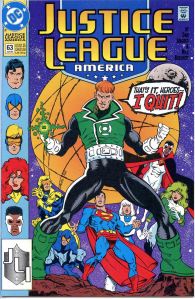
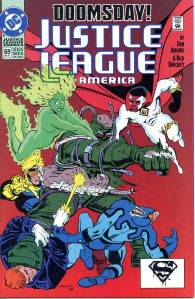
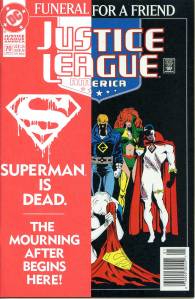
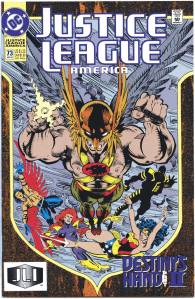
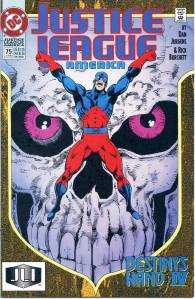
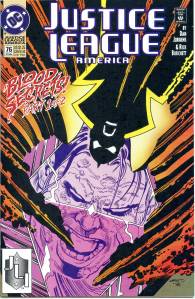
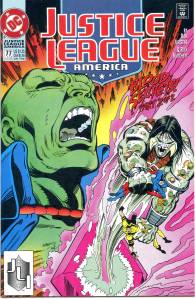
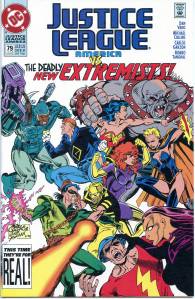
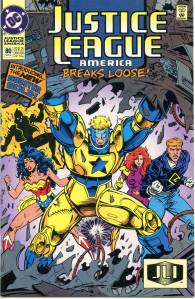
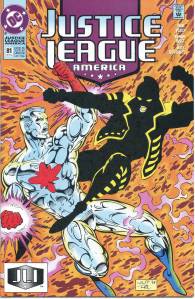
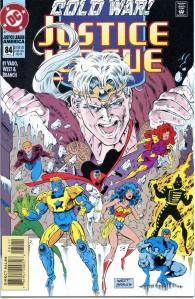
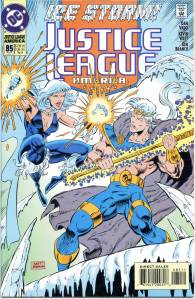
The 1986 company-wide crossover “Legends” concluded with the formation of a new Justice League. The new team was dubbed “Justice League” then “Justice League International” (JLI) and was given a mandate with less of an American focus. The new series, written by Keith Giffen and J. M. DeMatteis with art by Kevin Maguire (and later Adam Hughes), added quirky humor to the team’s stories. In this incarnation, the membership consisted partly of heroes from Earths that, prior to their merging in the Crisis on Infinite Earths, were separate. The Giffen/DeMatteis team worked on Justice League for five years and closed out their run with the “Breakdowns” storyline in 1991 and 1992. The series’ humorous tone and high level of characterization proved very popular.
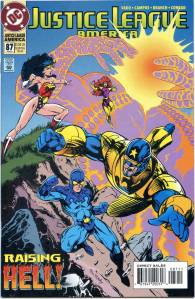
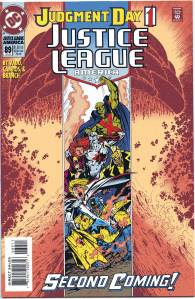
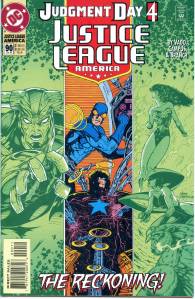
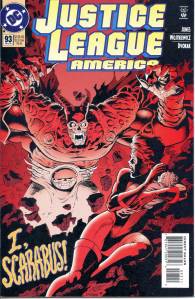
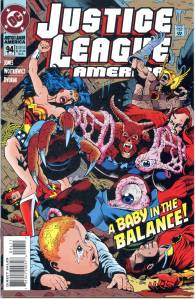
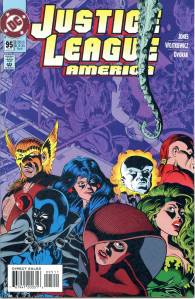
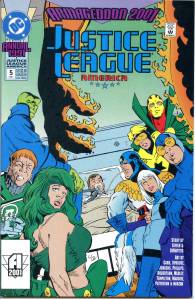
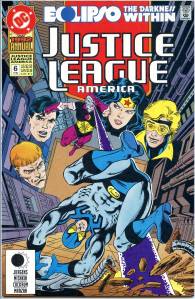
Justice League #0 NM- $3Justice League #1 VF+ $8Justice League #2 NM- $5Justice League #2 VF+ $3Justice League #3 NM $6Justice League #5 VF+ $4Justice League #6 VF+ $3Justice League #9 NM- $3Justice League #10 NM $4Justice League #11 NM $4Justice League #12 NM $4Justice League #13 NM $4Justice League #16 NM $4Justice League #17 NM- $3Justice League #18 NM $26Justice League #19 NM $14Justice League #20 NM $9Justice League #21 NM $6Justice League #22 NM $4Justice League #23 NM $4Justice League #24 NM $4Justice League #25 NM $4Justice League #26 NM $4Justice League #27 NM $4Justice League #28 NM $4Justice League #29 NM $4Justice League #30 NM- $3Justice League #31 NM $9Justice League #32 NM $5Justice League #33 NM $4Justice League #34 NM $6Justice League #35 NM $4Justice League #36 NM $4Justice League #37 NM $4Justice League #38 NM $4Justice League #39 NM $4Justice League #40 NM $5Justice League #41 NM $4Justice League #42 NM $4Justice League #43 NM $4Justice League #47 NM $4Justice League #48 NM $4Justice League #49 NM $4Justice League #50 NM $4Justice League #51 NM- $3Justice League #52 NM- $3Justice League #53 NM $4Justice League #54 NM $4Justice League #56 NM $5Justice League #57 NM $4Justice League #59 NM $4Justice League #60 NM $4Justice League #61 NM $5Justice League #62 NM $4Justice League #63 NM $4Justice League #64 NM $4Justice League #65 NM $4Justice League #66 NM $4Justice League #67 NM $4Justice League #69 NM $9Justice League #70 NM $4Justice League #71 NM $3Justice League #73 NM $4Justice League #75 NM $4Justice League #76 NM $5Justice League #77 NM- $4Justice League #79 NM $4Justice League #80 NM $4Justice League #81 NM $4Justice League #84 NM $4Justice League America #85 NM $4Justice League America #87 NM $4Justice League #89 NM $4Justice League America #90 NM $4Justice League #92 NM $3Justice League America #93 NM $5Justice League America #94 NM $4Justice League America #95 NM $4Justice League Annual #5 NM $4Justice League Annual #6 NM $4Justice League Annual #7 NM $4
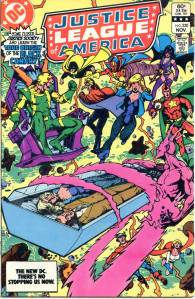
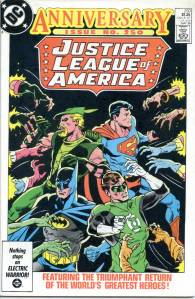
In the early 80’s, George Pérez, Don Heck, and Rich Buckler would rotate as artist on the title. The double-sized anniversary issue #200 (March 1982) was a “jam” featuring a story written by Conway, a framing sequence drawn by Pérez, and chapters drawn by Pat Broderick, Jim Aparo, Dick Giordano, Gil Kane, Carmine Infantino, Brian Bolland, and Joe Kubert. Bolland’s chapter gave the artist his “first stab at drawing Batman.” Pérez would leave the title with issue #200 to concentrate on The New Teen Titans although he would contribute covers to the JLAthrough issue #220 (November 1983). The 1982 team-up with the Justice Society in issues #207–209 crossed over with All-Star Squadron #14–15. A Justice League story by Gerry Conway and Rich Buckler originally intended for publication as an issue of All-New Collectors’ Edition saw print in Justice League of America #210–212 (January–March 1983).
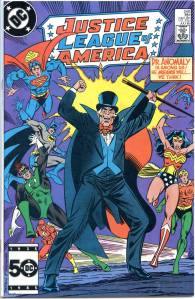
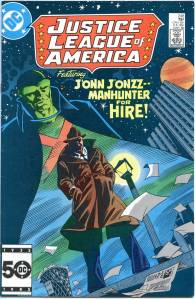
Seeking to capitalize on the popularity of their other team books, which focused upon heroes in their late teens/early 20s, Gerry Conway and artist Chuck Patton revamped the Justice League series. After most of the original heroes fail to help fend off an invasion of Martians, Aquaman dissolves the League and rewrites its charter to allow only heroes who will devote their full-time to the roster. The new team initially consists of Aquaman, Zatanna, Martian Manhunter, Elongated Man, the Vixen, and a trio of teenage heroes Gypsy, Steel, and Vibe. Aquaman leaves the team after a year, due to resolving marital problems, and his role as leader is assumed by the Martian Manhunter.
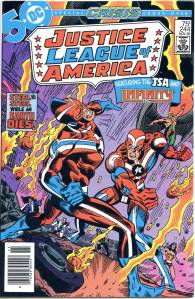
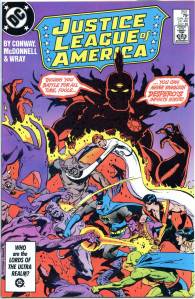
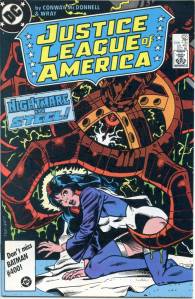
The final storyline for the original Justice League of America series (#258–261), by writer J. M. DeMatteis and artist Luke McDonnell, concludes with the murders of Vibe and Steel at the hands of robots created by long-time League nemesis Professor Ivo, and the resignations of Vixen, Gypsy, and the Elongated Man during the events of DC’s Legends miniseries, which sees the team disband.
Justice League of America #178 VF $5Justice League of America V1 #182 FN+ $4Justice League of America V1 #183 FN $5Justice League of America V1 #185 FN- $3Justice League of America V1 #189 VG $5Justice League of America V1 #194 FN- $3Justice League of America #198 Newsstand VF $6Justice League of America #198 F $3Justice League of America #200 VF- $9Justice League of America V1 #200 FN $4Justice League of America V1 #201 FN $3Justice League of America #206 VF- $4Justice League of America V1 #207 FN $3Justice League of America #202 F $3Justice League of America #203 F $3Justice League of America #205 VF+ $6Justice League of America #209 NM $9Justice League of America #210 NM- $7Justice League of America #211 VF $5Justice League of America #213 VF- $4Justice League of America V1 #213 FN $3Justice League of America #214 VF $4Justice League of America V1 #215 FN-VF $5Justice League of America #215 Newsstand F $3Justice League of America #217 NM $9Justice League of America #218 VF $4Justice League of America #219 NM- $8Justice League of America #220 VF-NM $7Justice League of America #226 VF-NM $7Justice League of America #232 VF- $3Justice League of America #227 Newsstand VF- $3Justice League of America #240 NM- $8Justice League of America #242 NM $9Justice League of America #244 NM- $5Justice League of America #248 VF $3Justice League of Amerca #250 VF $9Justice League of America #251 VF+ $5Justice League of America #252 NM- $6Justice League of America #252 VF+ $4Justice League of America #252 VF $3Justice League of America #253 NM $7Justice League of America #254 VF $3Justice League of America #255 VF+ $5Justice League of America #255 Newsstand F-VF $2Justice League of America #261 VF+ $8Justice League of America #261 VF $5
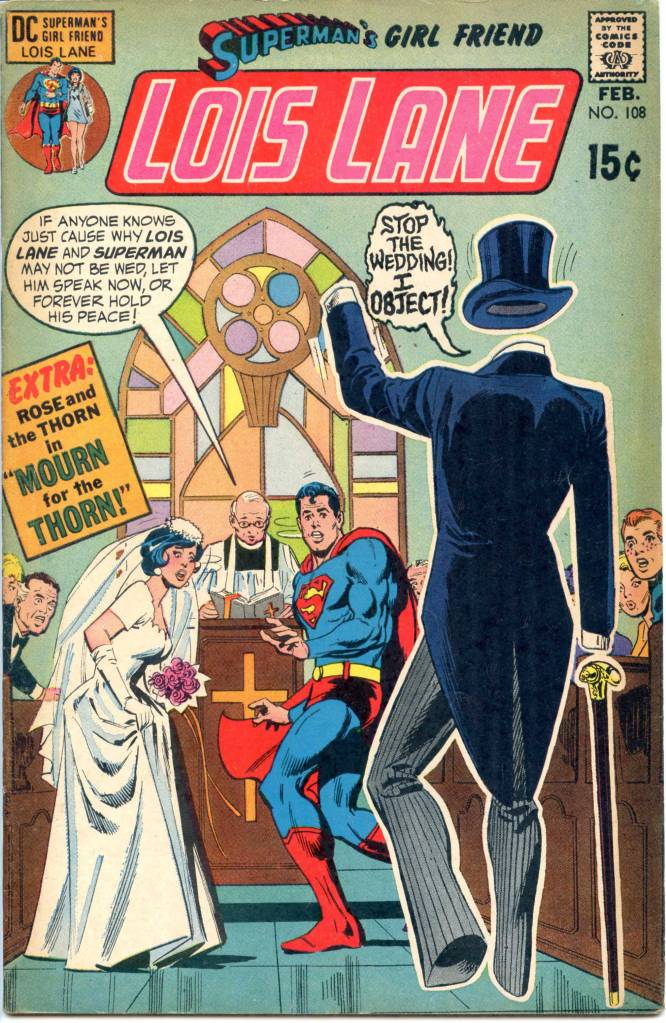
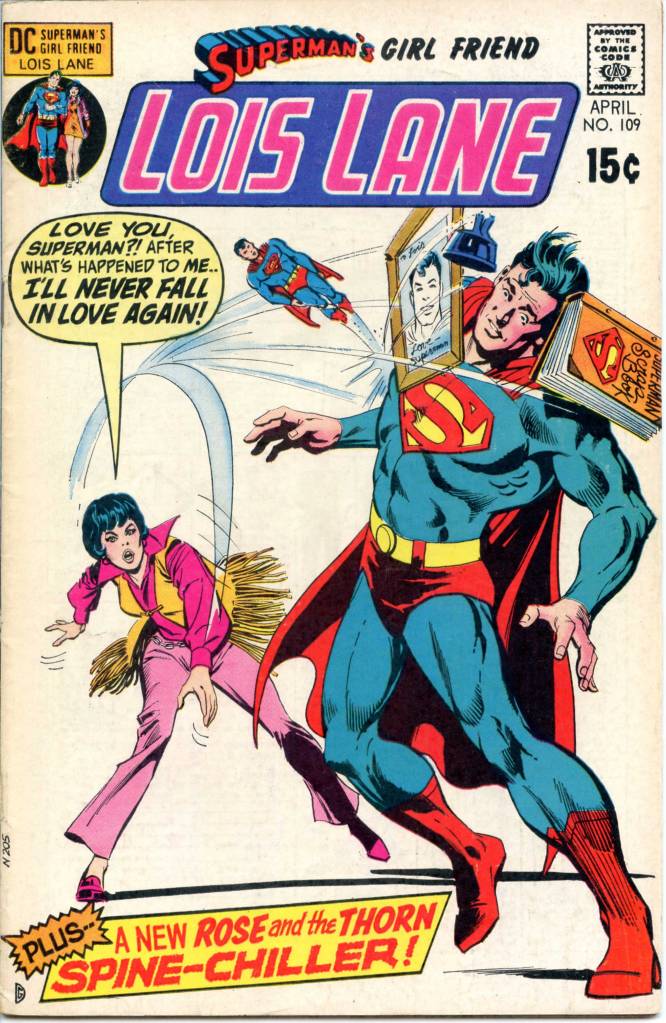
By the 1970s, the stories began to reflect growing social awareness: Lois became less fixated on romance and more on current issues. In the controversial story “I Am Curious (Black)!” in #106 (November 1970), Lois uses a machine that allows her to experience racism firsthand as an African American woman. The series saw the debut of the Silver Age heroine “Rose & The Thorn” in a backup feature that ran from #105 (October 1970) through #130 (April 1973). Editor E. Nelson Bridwell had several characters and plot concepts from Jack Kirby‘s “Fourth World” appear in issues #111–119 (July 1971 – February 1972). Lois’ sister, Lucy Lane, was believed to have died in issue #120 (March 1972) but the character was later revived.
In 1974, the title ended, as Superman’s Pal Jimmy Olsen had earlier that year. Both would be merged into The Superman Family, which chronologically continued from the elder title, premiering with issue #164 (April–May 1974). The release of the last issue of Superman’s Girl Friend, Lois Lane was delayed for several months due to a nationwide paper shortage.
Supermans Girl Friend Lois Lane #108 FN $8Supermans Girl Friend Lois Lane #109 FN+ $9
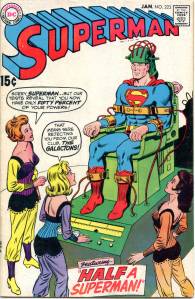
In the view of comics historian Les Daniels, artist Curt Swan became the definitive artist of Superman in the early 1960s with a “new look” to the character that replaced Wayne Boring’s version. Writer Jim Shooter and Swan crafted the story “Superman’s Race With the Flash!” in Superman #199 (Aug. 1967) which featured the first race between the Flash and Superman, two characters known for their super-speed powers. Another Silver Age first is the “Death of Superman,” from 1961’s Superman #149, by Jerry Siegel, Curt Swan and Sheldon Moldoff. The Silver Age was a fantastic period for Superman fans, giving us characters such as Braniac, Bizzaro, Titano, Supergirl and The Legion of Superheroes.
Superman #190 CGC 9.4 Off-White to White Pages $379Superman #208 VF+ $50Superman #210 VF- $30