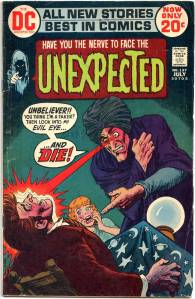
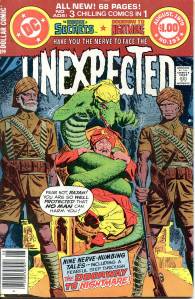
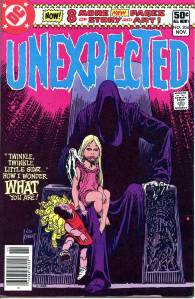
In 1979, The Unexpected converted to the Dollar Comics format and incorporated House of Secrets and The Witching Hour. Each “Unexpected” story would always include the word in its last panel. After the merge, this was only true of the Unexpected section; there would then be complete, ad-free issues of The Witching Hour, hosted by its witches, and The House of Secrets, hosted by Abel. The Witching Hour feature was alternated with Doorway to Nightmare starring Madame Xanadu, which appeared in issues #190, 192, 194, and 195.
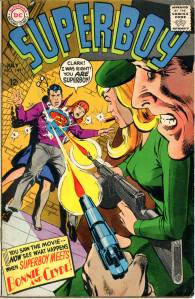
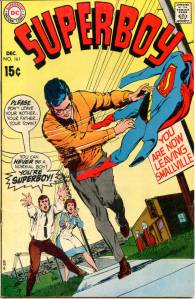
Four years after his debut, Superboy became only the sixth DC superhero to receive his own comic book when Superboy #1 (March–April 1949) was published. The series became the first new DC superhero title to succeed since World War II. Superboy saw the debuts of the first Superbaby story, (about Clark’s adventures as a super-powered toddler), and of Clark’s two closest friends: Lana Lang, who also serves as a romantic interest for Superboy; and Pete Ross, who later discovers and helps protect Clark’s secret identity. Other notable stories to appear in Superboy include the story of the first Bizarro and the first appearances of Legion of Super-Heroes members Mon-El and Ultra Boy.
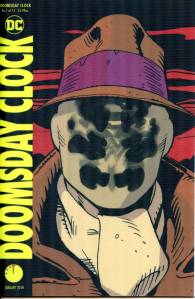
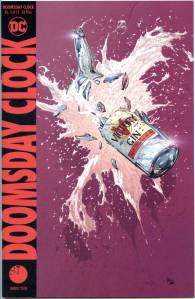
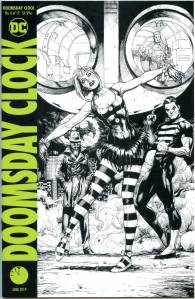
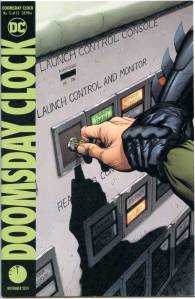
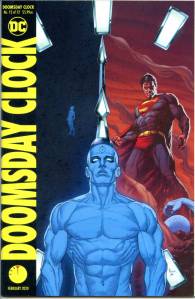
Doomsday Clock is part of the DC Rebirth initiative, and it continues the narrative that was established with the 2016 one-shot DC Universe: Rebirth Special, the 2017 crossover event “The Button” and other related stories. It is a follow-up to the 1986–1987 miniseries Watchmen by Alan Moore, Dave Gibbons and John Higgins, and it introduces that story’s characters into the DC Universe, alongside a few original characters created for the book. Although Dan DiDio (then DC’s co-publisher) confirmed that it is a sequel to that miniseries, Johns originally declined to characterize it as such, viewing it as a standalone story, saying, “It is something else. It is Watchmen colliding with the DC Universe.”
The Unkillables were a group of villains trying to survive the Anti-Living and were first led by Vandal Savage until his death. They later escaped to Bludhaven where the heroes led by Jim Gordon joined them.
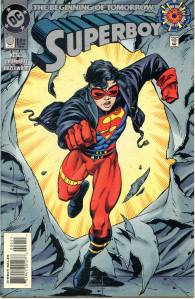
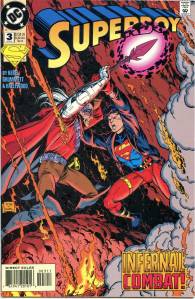
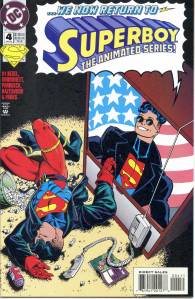
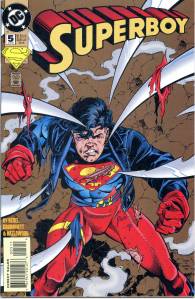
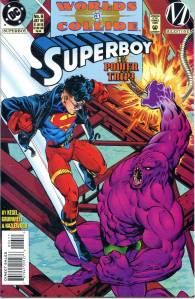
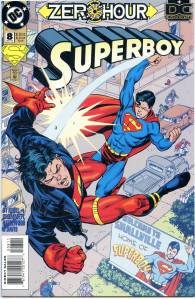
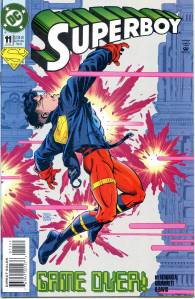
This series featured the clone of Superman and his adventures as part of Cadmus. In Superboy (vol. 4) #1 (February 1994), the new Superboy settled in Hawaii with his supporting cast, becoming Hawaii’s resident superhero for the next four years until Superboy (vol. 4) #48 (February 1998). Starting in Superboy (vol. 4) #56 (November 1998), Superboy returned “home” when he began working for Cadmus. In Superboy (vol. 4) #59 (February 1999), Superman gave Superboy the Kryptonian name of Kon-El. After leaving Cadmus and living on his own for a brief time in Metropolis, Kon-El went to live with Jonathan and Martha Kent in Smallville, where he adopted a secret identity as their nephew (and Clark’s cousin) Conner Kent.
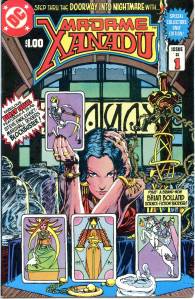
Step thru the doorway into nightmare with Madame Xanadu in the 25-page “Dance For Two Demons.” Script by Steve Englehart, art by Marshall Rogers. Madame Xanadu centerfold by Michael W. Kaluta. Plus: A disease that transforms and corrupts is explored in the 7-page science fiction tale “Falling Down to Heaven…” Script by J.M. DeMatteis, art by Brian Bolland. Cover by Michael W. Kaluta.
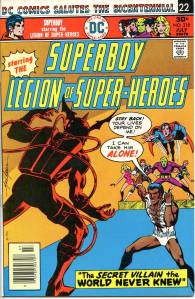
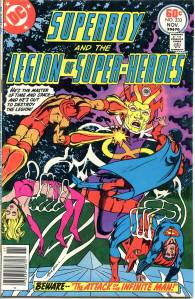
Superboy became Superboy starring the Legion of Super-Heroes with issue #197 (August 1973). Crafted by Bates and Cockrum, the feature proved popular and saw such events as the wedding of Bouncing Boy and Duo Damsel in Superboy #200 (Feb 1974). Cockrum was replaced on art by Mike Grell as of issue #203 (August 1974) which featured the death of Invisible Kid. With #231 (September 1977), the book’s title officially changed to Superboy and the Legion of Super-Heroes and also became a “giant-size” title. At this point, the book was written by longtime fan Paul Levitz and drawn by James Sherman, although Gerry Conway frequently wrote as well. Saturn Girl and Lightning Lad were married in All-New Collectors’ Edition #C-55 (1978), a treasury-sized special written by Levitz and drawn by Grell. In #241–245 (July–December 1978) Levitz and Sherman (and then Joe Staton) produced what was at that time the most ambitious Legion storyline: “Earthwar“, a galactic war between the United Planets and the Khunds, with several other villains lurking in the background. During this period, Karate Kid was spun off into his own 20th Century-based self-titled series, which lasted 15 issues. Levitz left the book, to be replaced full-time by Gerry Conway.
Superboy departed from the Legion due to a plot of a villain, and the book was renamed simply Legion of Super-Heroes starting with issue #259 (January 1980). Editor Jack C. Harris hired Steve Ditko as guest artist on several issues, a decision which garnered a mixed reaction from the title’s readership. Jimmy Janes became the regular artist in a lengthy tale by Conway (and later Roy Thomas) involving Ultra Boy’s disappearance during a mission, and his long odyssey to rejoin the team. This story told the tale of the Legionnaire Reflecto (only glimpsed during the “Adult Legion” stories in Adventure Comics), featured villainy by the Time Trapper and Grimbor the Chainsman, and saw Superboy rejoin the team.
Superboy and the Legion of Super-Heroes #204 FN $5
Superboy and the Legion of Super-heroes #218 VF- $5
Superboy and the Legion of Super-heroes #219 NM- $12
Superboy and the Legion of Super-Heroes #233 VF $6
Superboy and the Legion of Super-Heroes #237 VF+ $8
Superboy and the Legion of Super-Heroes #245 VF+ $7
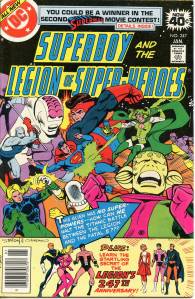
Superboy and the Legion of Super-Heroes #247 VF+ $7
Superboy and the Legion of Super-Heroes #250 VF-NM $8
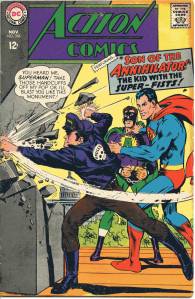
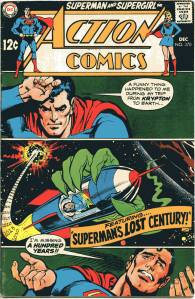
In the view of comics historian Les Daniels, artist Curt Swan became the definitive artist of Superman in the early 1960s with a “new look” to the character that replaced Wayne Boring’s version. Bizarro World first appeared in the story “The World of Bizarros!” in issue #262 (April 1960). Writer Jim Shooter created the villain the Parasite in Action Comics #340 (Aug. 1966).
Action Comics #280 CGC 7.0 Off-White to White Pages $149
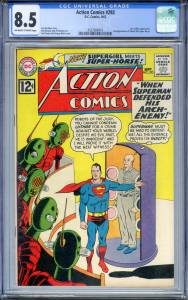
Action Comics #292 CGC 8.5 Off White – White Pages $195
The JSA remained inactive for some time after the events of “Zero Hour“, but the surviving members (the Flash, Wildcat, and Alan Scott, (now going by the name Sentinel) have remained active throughout the DC Universe, having been placed as reserve JLI members, as evidenced in Justice League Europe #50.
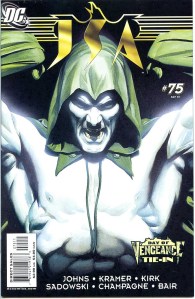
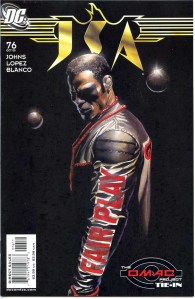
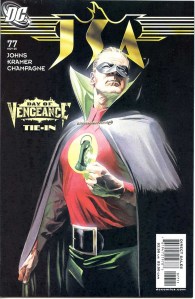
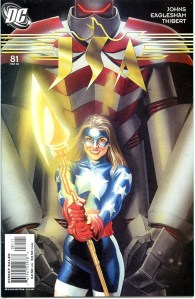
The Justice Society was revived as a monthly series called JSA in 1999 which mixed the few remaining original members with younger counterparts. This incarnation of the team focused on the theme of generational legacy and of carrying on the heroic example established by their predecessors. The series was launched by James Robinson and David S. Goyer. Goyer later co-wrote the series with Geoff Johns, who continued to write the series solo after Goyer’s departure. The series featured the art of Stephen Sadowski, Leonard Kirk, and Don Kramer, among others. It featured a story by Pulitzer Prize winner Michael Chabon.
During the events of Infinite Crisis, some of the surviving Golden Age characters, such as Wildcat and the Flash, are transported to the new “Earth-Two”, as created by Alexander Luthor, and seem to recall the existence of the original one, albeit vaguely.







































 EHT Comics