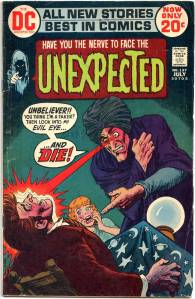
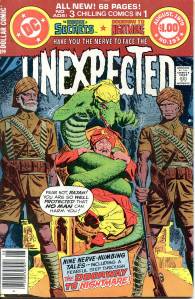
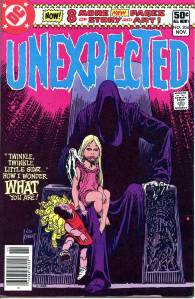
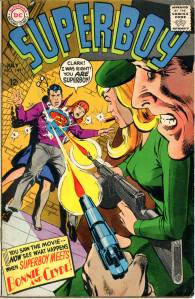
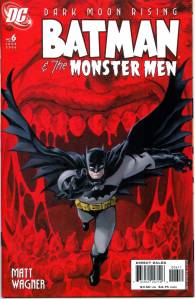
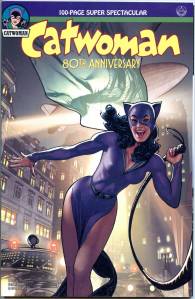
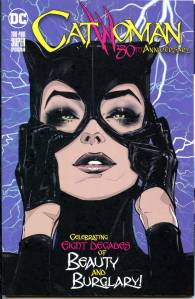
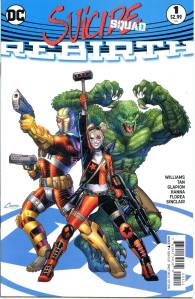
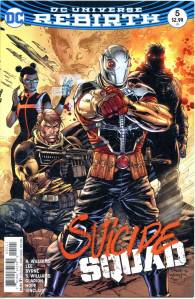
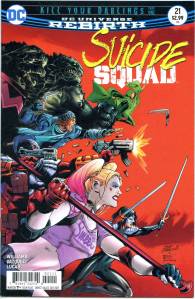
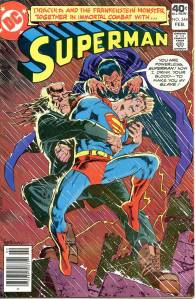
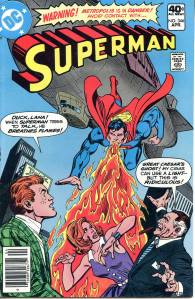
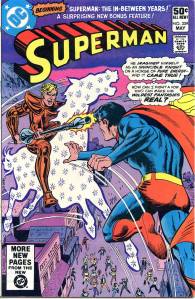
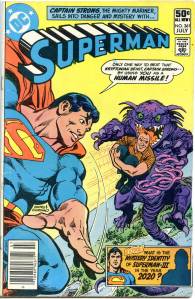
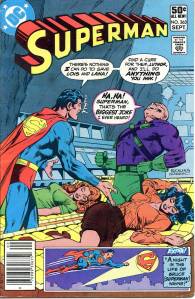
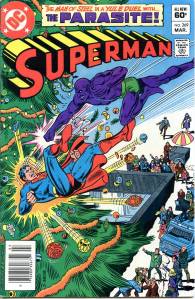
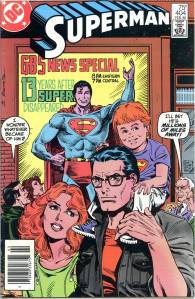
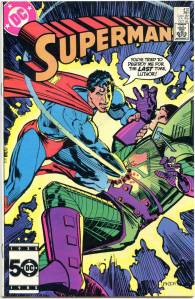
Lobo starred in his own DC title for 64 issues, from 1993 to 1999. Lobo was first introduced as a hardened villain in the 1980s, but soon fell out of use with writers. He remained in limbo until his revival as an anti-hero biker with his own comic in the early 1990s. Writers attempted to use Lobo as a parody of the 1990s trend towards “grim and gritty” superhero stories, epitomized by such Marvel Comics characters as Cable, Wolverine, and Punisher, but he was instead enthusiastically accepted by fans of the trend. This popularity led to the character having a much higher profile in DC Comics stories from then on, as well as starring roles in various series in the decades since.
Category: DC
Aquaman (Silver Age)
Aquaman, published by DC Comics was created by Paul Norris and Mort Weisinger. The character debuted in More Fun Comics #73 (November 1941). Initially a backup feature in DC’s anthology titles, Aquaman later starred in several volumes of a solo title. During the late 1950s and 1960s superhero-revival period known as the Silver Age, he was a founding member of the Justice League of America. In the 1990s Modern Age, Aquaman’s character became more serious than in most previous interpretations, with storylines depicting the weight of his role as king of Atlantis.
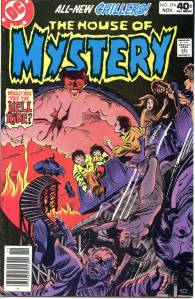
Later accounts reconciled both facets of the character, casting Aquaman as serious and brooding, saddled with an ill reputation, and struggling to find a true role and purpose beyond his public side as a deposed king and a fallen hero.
Before Watchmen: Minutemen (2012)
Hollis Mason, the original Nite Owl, recounts his exploits with The Minutemen during the 1940s, while in the midst of his retirement, he faces opposition to the publication of his tell-all autobiography, Under the Hood in the early 1960s. Although it heavily retconned certain characters’ backstories by suggesting that a large part of Under the Hood was dirty lies and cover ups, it debuted to positive reviews.
Batman Catwoman (2021)
The comic was originally going to be canon, but James Tynion IV, who took over the writing duties on Batman (Volume 3) from Tom King, said that Batman/Catwoman was moving away from the “bounds of continuity” per his understanding and it would have no effect on the main Batman title.
King later stated it was a standalone series and was his version of how Batman and Catwoman’s ending should be. He also hoped it would lead to “breaking the mold” in DC about Batman’s status quo. The series follows the duo’s romance through multiple eras, unlike the current Prime Earth continuity.
Batman (1990’s)
The 1993 “Knightfall” story arc introduced a new villain, Bane, who critically injures Batman. Jean-Paul Valley, known as Azrael, is called upon to wear the Batsuit during Bruce Wayne’s convalescence. Writers Doug Moench,Chuck Dixon, and Alan Grant worked on the Batman titles during “Knightfall”, and would also contribute to other Batman crossovers throughout the 1990s. 1998’s “Cataclysm” storyline served as the precursor to 1999’s “No Man’s Land“, a year-long storyline that ran through all the Batman-related titles dealing with the effects of an earthquake-ravaged Gotham City. At the conclusion of “No Man’s Land”, O’Neil stepped down as editor and was replaced by Bob Schreck.
Fables (2002)
Fables was a series published by DC Comics‘s Vertigo imprint beginning in 2002. The series deals with various people from fairy tales and folklore – referring to themselves as “Fables” – who have been forced out of their Homelands by “The Adversary” who has conquered the realm. The Fables have traveled to our world and formed a clandestine community in New York City known as Fabletown. Fables who are unable to blend in with human society (such as monsters and anthropomorphic animals) live at “the Farm” in upstate New York.
Supergirl: Woman of Tomorrow (2021)
Kara Zor-El has seen some epic adventures over the years, but finds her life without meaning or purpose. Here she is, a young woman who saw her planet destroyed and was sent to Earth to protect a baby cousin who ended up not needing her. What was it all for? Wherever she goes, people only see her through the lens of Superman’s fame. Just when Supergirl thinks she’s had enough, everything changes. An alien girl seeks her out for a vicious mission. Her world has been destroyed, and the bad guys responsible are still out there. She wants revenge, and if Supergirl doesn’t help her, she’ll do it herself, whatever the cost. Now a Kryptonian, a dog, and an angry, heartbroken child head out into space on a journey that will shake them to their very core.
OMAC (1974)
OMAC (Buddy Blank) was created in 1974 by Jack Kirby and published by DC Comics. The character was created towards the end of Kirby’s contract with the publisher, following the cancellation of his New Gods series and was reportedly developed strictly due to Kirby needing to fill his contractual quota of 15 pages a week. As envisioned by Kirby, OMAC is essentially Captain America set in the future, an idea Kirby had toyed with some years earlier while at Marvel Comics, but had never realized.
Set in the near future (“The World That’s Coming”), OMAC is a corporate nobody named Buddy Blank who is changed via a “computer-hormonal operation done by remote control” by an A.I. satellite called Brother Eye into the super-powered One-Man Army Corps (OMAC).
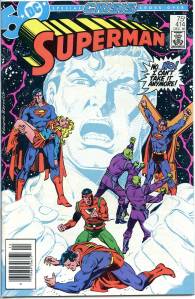
Superman V2 (1987)
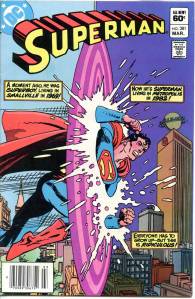
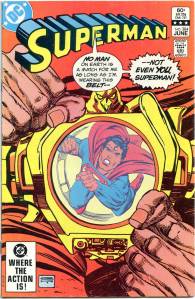
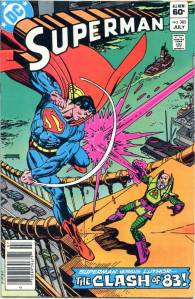
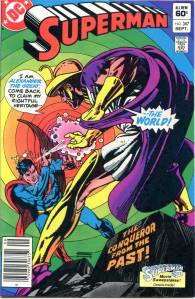
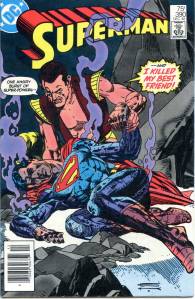
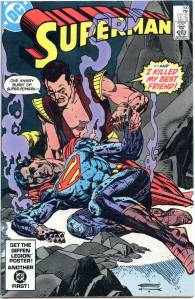
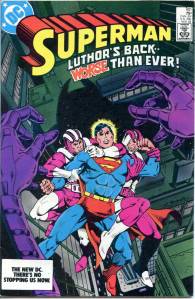
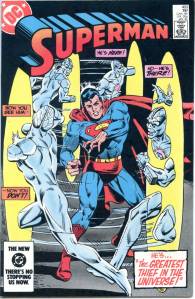
This series was launched after John Byrne revamped the Superman character in 1986 in The Man of Steel limited series, introducing the post-Crisis on Infinite Earths version of the Superman character.
After that limited series, Action Comics returned to publication and Superman vol. 2, #1 was published. The original Superman series (volume 1) became The Adventures of Superman starting with issue #424. Superman vol. 2 continued publishing until April 2006 at which point DC restored The Adventures of Superman to its original title and canceled the second Superman series.
Beware the Creeper (1968)
Following his debut in Showcase, the Creeper was given his own series Beware the Creeper, written by Dennis O’Neil; Steve Ditko plotted the first issue. It lasted six issues Most pitted him against a chameleonic villain called Proteus, whose true identity was revealed just before his violent death in the final issue.