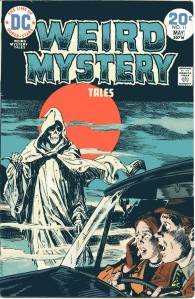
The Weird Mystery Tales ongoing series was launched in July–August 1972 and was originally hosted by Destiny. The hosting role was gradually taken over by Eve, who fully assumed the title with issue #15 (December 1974–January 1975). The title’s name was partially inspired by the sales success of Weird War Tales and Weird Western Tales. Early issues printed material by Jack Kirby that had been intended for his black-and-white, magazine-size DC comic series, Spirit World, which lasted only one issue. These stories featured Dr. E. Leopold Maas as host, sometimes with an appended hosting segment by Destiny.
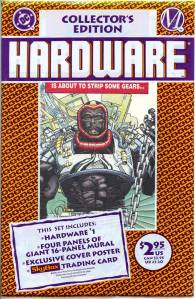
Curtis “Curt” Metcalf is a genius inventor who, in his Hardware identity, uses a variety of high-tech gadgets to fight organised crime. A central irony of the series (of which Metcalf is fully aware) is that Metcalf’s employer, respected businessman Edwin Alva—who provides the resources Metcalf uses to create Hardware’s hardware—is secretly the crime boss whom Hardware is trying to bring down.
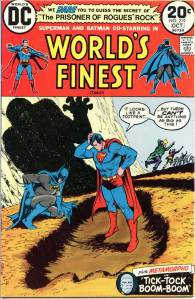
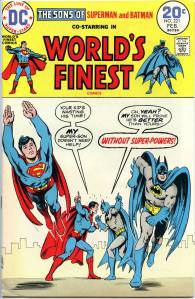
World’s Finest featured Superman and Batman team-ups until issue #197. Noted Batman artist Neal Adams first drew the character in an interior story in “The Superman-Batman Revenge Squads” in issue #175 (May 1968). The title briefly featured Superman teaming with heroes other than Batman in the early 1970s beginning with issue #198 (November 1970). That issue featured the first part of a two-issue team-up with the Flash. The series reverted to Superman and Batman team-ups after issue #214, initially with a unique twist, featuring the children they might one day have, Superman Jr. and Batman Jr. These characters, billed as the Super-Sons, were co-created by writer Bob Haney and artist Dick Dillin in issue #215 (January 1973).
DC Special Series was an umbrella title for one-shots and special issues published by DC Comics between 1977 and 1981. Each issue featured a different character and was often in a different format than the issue before it. DC Special Series was published in four different formats: Dollar Comics, 48 page giants, digests, and treasury editions. Neither the umbrella title nor the numbering system appear on the cover; the title “DC Special Series” appeared only on the first page in the indicia. Most issues featured new material, but eight issues were reprints of previously published material.
DC Special Series #7 FN+ $6
DC Special Series #8 FN-VF $10
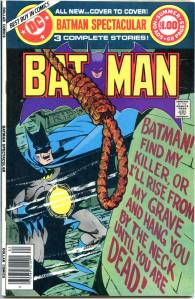
DC Special Series #15 -Batman Spectacular F-VF $19
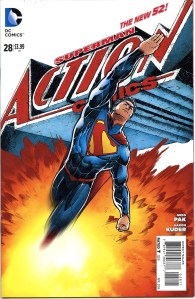
As with all of the books associated with the DC relaunch, Clark Kent appears to be about five years younger than the previous incarnation of the character (where it would focus on the early days of Superman’s career, whereas the main series would focus on the present). Superheroes at large have appeared only in the past five years, and are viewed with at best, suspicion, and at worst, outright hostility. The storyline in Action Comics takes place about a year before the events of Justice League #1, and was referred to by DC Co-Publisher Dan DiDio as “DC Universe Year Zero” while JL operates as “Year One.” The Man of Steel is not yet trusted by the citizens of Metropolis and wears a basic costume consisting of a caped T-shirt, jeans and work boots.
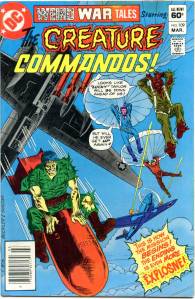
The original title ran for 12 years and 124 issues. It was an anthology series that told war stories with horror, mystery, fantasy and science fiction elements. Changes in the Comics Code Authority made the use of horror elements possible. The first seven issues were reprinted material. Each issue beginning with issue #8 was hosted by Death, usually depicted as a skeleton dressed in a different military uniform each issue. The title’s name was inspired by editor Joe Orlando.Walt Simonson‘s first professional published comic book work appeared in Weird War Tales #10 (January 1973).Roger McKenzie and Frank Miller‘s first collaboration was on a two-page story published in Weird War Tales #68 (October 1978). Recurring characters began to appear late in the series run, notably the G.I. Robot, and the return of “The War that Time Forgot” which originally ran in Star Spangled War Stories. Writer J. M. DeMatteis and penciler Pat Broderick created the Creature Commandos in Weird War Tales #93 (November 1980).
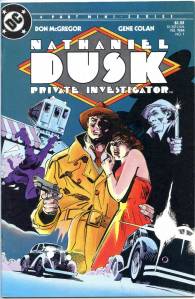
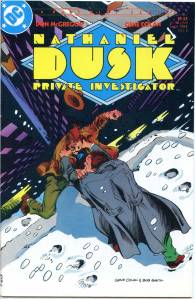
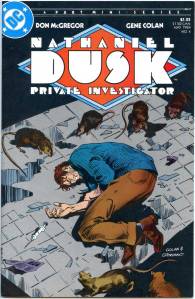
Nathaniel Dusk is a private investigator from New York City whose adventures in the 1930s are portrayed in the stories. He served in the United States armed forces in World War I and was hired by the New York City police force. Dusk fell deeply in love with Joyce Gulino, a beautiful young saleswoman with two children, Jennie and Anthony. Gulino’s ex-husband was a gangster named Joseph Costilino. Costilino later killed his family.
The 2017-2019 miniseries Doomsday Clock, by Geoff Johns and Gary Frank features Nathaniel Dusk in the DC Universe as a noir film character portrayed by a fictional actor named Carver Colman. Colman plays a key role in the story.
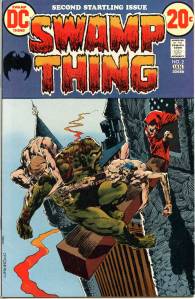
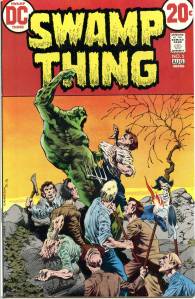
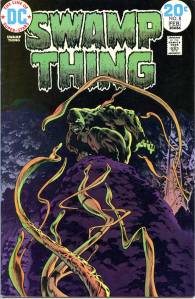
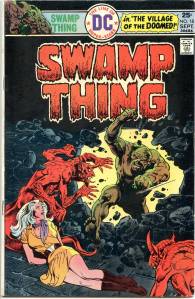
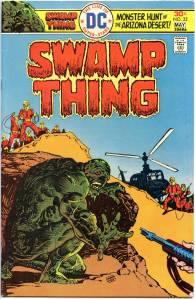
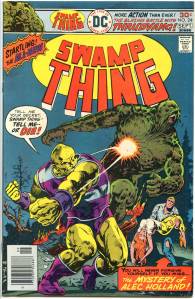
The Swamp Thing character first appeared in House of Secrets #92 (June–July 1971). After the success of the short story in the House of Secrets comic, the original creators were asked to write an ongoing series, depicting a more heroic, more contemporary creature. InSwamp Thing #1 (October–November 1972) Wein and Wrightson updated the time frame to the 1970s and featured a new version character: Alec Holland, a scientist working in the Louisiana swamps on a secret bio-restorative formula “that can make forests out of deserts”. Holland is killed by a bomb planted by agents of the mysterious Mr. E (Nathan Ellery), who wants the formula. Splashed with burning chemicals in the massive fire, Holland runs from the lab and falls into the muck-filled swamp, after which a creature resembling a humanoid plant appears. Roy Thomas and Gerry Conway, who co-created Man-Thing for Marvel Comics a year and a half earlier, thought that this origin was too similar to that of their character, and Wein himself had written a Man-Thing story that was published with a June 1972 cover date, but he refused to change the origin in spite of some cajoling by Conway, who was his roommate at the time. Marvel, however, never took the issue to court, realizing the similarity of both characters to The Heap.
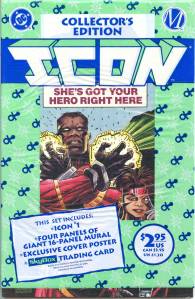
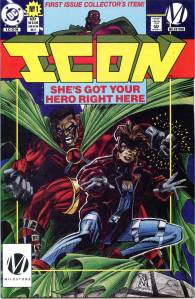
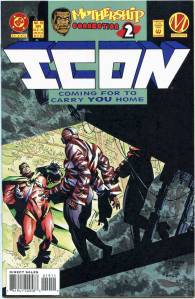
Icon is one of the headline characters introduced by Milestone Media in the 1990s. A being from another planet, he has taken on the form of an African American man, but has abilities such as flight, super-strength, and invulnerability. He uses these in partnership with Rocket, a human teenager using his alien technology, to protect the people of the fictional city of Dakota.
















 EHT Comics