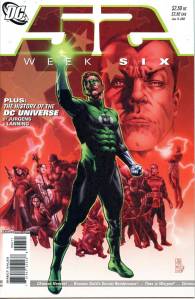
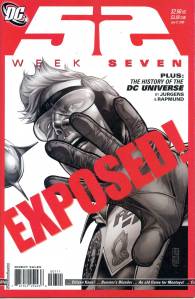
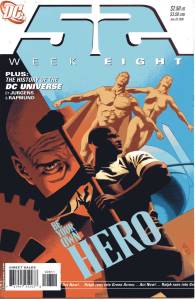
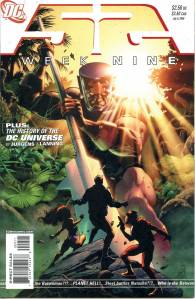
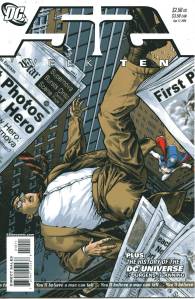
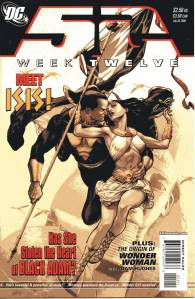
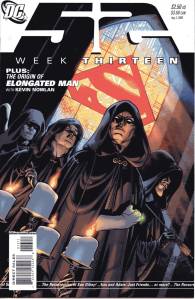
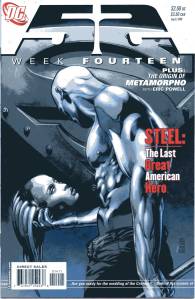
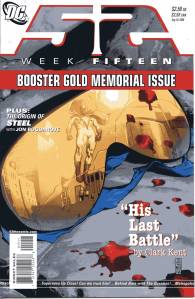
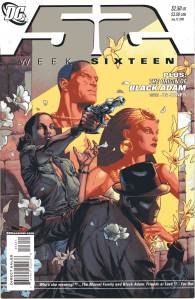
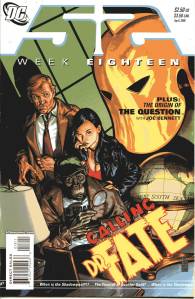
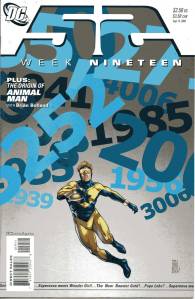
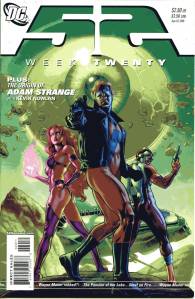
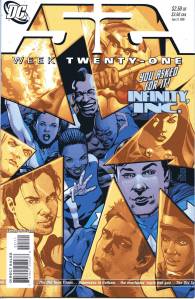
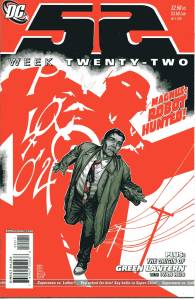
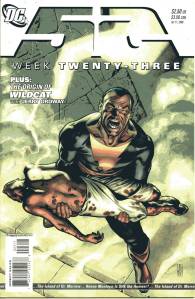
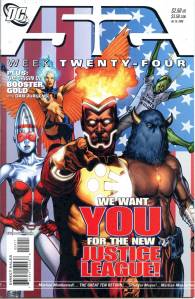
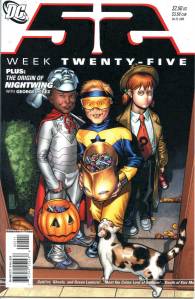
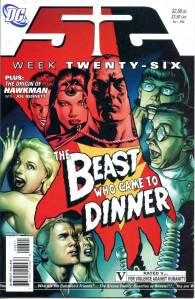
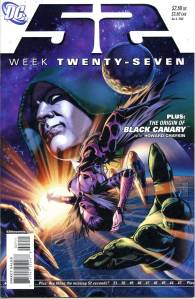
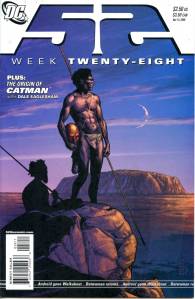
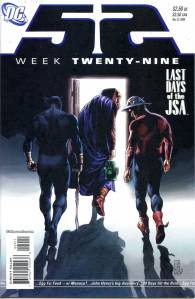
52 consists of 52 issues, published weekly for one year, each issue detailing an actual week chronicling the events that took place during the missing year after the end of Infinite Crisis. The series covers much of the DC Universe, and several characters whose disparate stories interconnect. The story is directly followed by the weekly limited series Countdown to Final Crisis. It was the first weekly series published by DC Comics since the short-lived anthology Action Comics Weekly in 1988–1989.
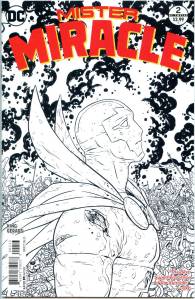
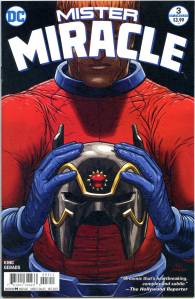
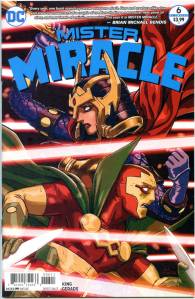
Something has gone horribly wrong with the perfect life that Scott and his wife, Big Barda, have made for themselves on Earth. With war raging between their homeworlds of Apokolips and New Genesis, Scott’s cruel adoptive father, Darkseid, seems to have finally found the Anti-Life Equation–the weapon that will give him total victory.
As the mountains of bodies on both sides grow ever higher, only Mister Miracle can stop the slaughter and restore peace. But the terrible power of the Anti-Life Equation may already be at work in his own mind, warping his reality and shattering the fragile happiness he’s found with the woman he loves.
Is death the trap that’s been waiting for him all along? Or is it life itself? And what price will Scott Free have to pay to learn the answer?
When superhero comics became popular again in the mid-1960s in what is now called the “Silver Age of Comic Books“, Fawcett was unable to revive Captain Marvel, having agreed to never publish the character again as part of their 1953 settlement. Looking for new properties to introduce to the DC Comics line, DC publisher Carmine Infantino decided to bring the Captain Marvel property back into print. On June 16, 1972, DC entered into an agreement with Fawcett to license the Captain Marvel and Marvel Family characters. Because Marvel Comics had by this time established Captain Marvel as a comic book trademark for their own character, created and first published in 1967, DC published their book under the name Shazam! Infantino attempted to give the Shazam! book the subtitle The Original Captain Marvel, but a cease and desist letter from Marvel Comics forced them to change the subtitle to The World’s Mightiest Mortal, starting with Shazam! #15 (December 1974). As all subsequent toys and other merchandise featuring the character have also been required to use the “Shazam!” label with little to no mention of the name “Captain Marvel”, the title became so linked to Captain Marvel that many people took to identifying the character as “Shazam” instead of “Captain Marvel”
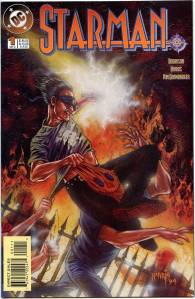
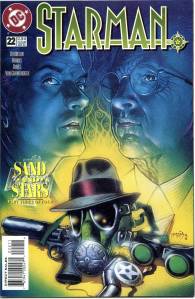
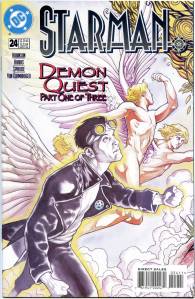
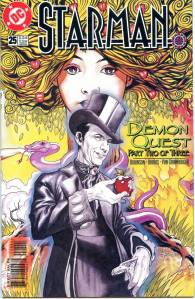
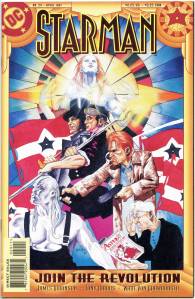
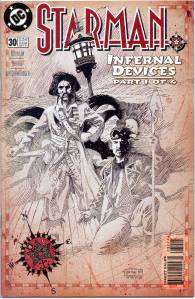
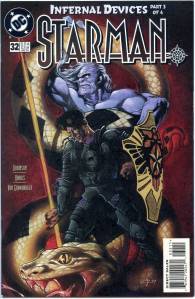
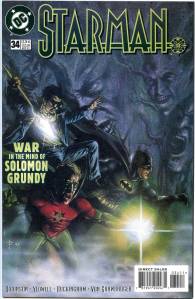
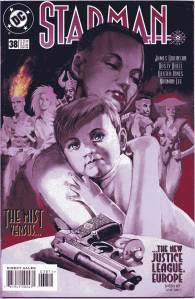
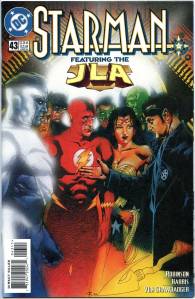
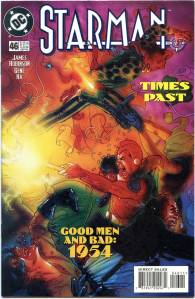
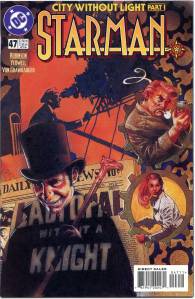
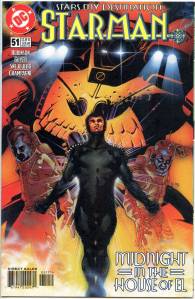
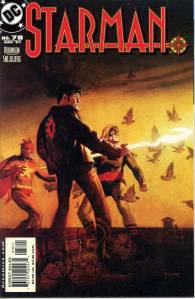
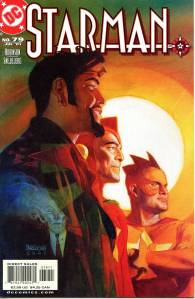
In Zero Hour: Crisis in Time #1 (September 1994), writer James Robinson and artist Tony Harris introduced Jack Knight, the son of the first Starman. He wields a cosmically-powered staff, but refuses to wear a costume, instead preferring a T-shirt, leather jacket (with star emblem on the back), a Cracker Jack prize sheriff’s star,and light-shielding tank goggles. Jack briefly joined the JSA, but soon retired at the end of the Starman series, passing along his cosmic rod to the JSA’s young heroine, Stargirl. He starred in this critically acclaimed series from 1994 until 2001.
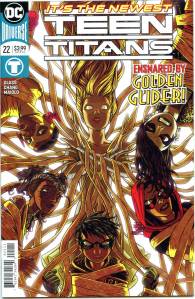
The June 2016 DC Rebirth relaunch established two Titans teams: the Titans, with Nightwing, The Flash (Wally West), Lilith, Arsenal, Donna Troy, the Bumblebee and Tempest; and the Teen Titans, consisting of Damian Wayne as Robin, Wallace West as Kid Flash, Jackson Hyde as Aqualad, Beast Boy, Starfire and Raven. Titans writer Dan Abnett confirmed in an interview with Newsarama that Titans characters the Hawk and the Dove, the Herald, Gnarrk and others would be appearing in the new series as well. After the Lazarus Contract event, Wallace West is fired from the Teen Titans and joins Defiance, Deathstroke’s version of the Titans. However, Wallace returns to the Teen Titans in issue #14. In Super Sons #7, Superboy (Jonathan Samuel Kent) acts as a temporary member.
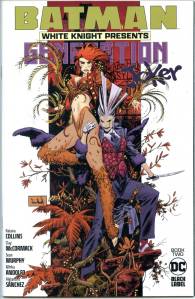
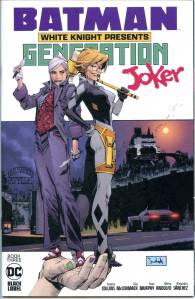
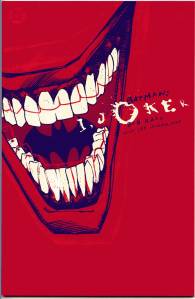
When the rebellious twins run away in a stolen Batmobile, only Joker Jack Napier’s quickly fading hologram has any hope of getting them home safely and keeping them out of the family business. But a life of crime isn’t the only temptation young Bryce and Jackie are facing: the kids uncover a dark secret that could bring their dad back to life for good!
With a wild array of Batman’s former enemies and allies on their tails, will the kids succeed in reviving the Dark Knight’s greatest foe?
Batman – White Knight Presents – Generation Joker #1 NM $5
Batman – White Knight Presents – Generation Joker #2 NM $5
Batman – White Knight Presents – Generation Joker #3 NM $5
Batman-Spawn: War Devil is a 1994 graphic novel published by DC Comics and written by Doug Moench, Alan Grant, and Chuck Dixon. This is one of two such crossovers between the two characters published that year (the other being Spawn/Batman). A third meeting between the two characters, to be titled Spawn/Batman: Inner Demons and pitting Batman and Spawn against the Joker and Clown, was planned but never made.
In 2009, writer Geoff Johns and artist Ethan Van Sciver created The Flash: Rebirth, a 6-issue miniseries bringing Barry Allen back to a leading role in the DC Universe as the Flash, much in the same vein as Green Lantern: Rebirth. When asked what Flashes would appear in the series, Johns and Van Sciver said, “All of them.”
An Elseworlds tale! In the year 2083, the legend of the Batman sparks a strange and deadly religion based on the Dark Knight. As the annual death race between the religion’s leader and a group of sacrificial “lambs” surgically altered to resemble Batman’s greatest foes approaches, one would-be Joker tries to break the cycle and become the true inheritor of the heroic mantle of the Bat.
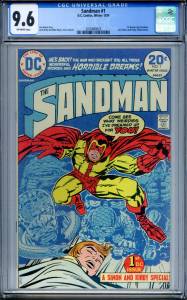
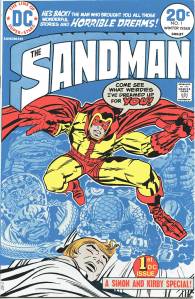
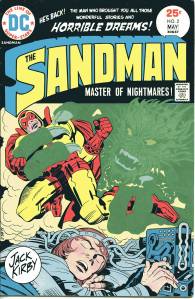
The Sandman of the 1970s was created by Joe Simon and Jack Kirby. Issue #1 was intended as a one-shot, but five more issues and an additional story followed. After the first issue, the stories were written by Michael Fleisher. The second and third issues were illustrated by Ernie Chua. Inks were by Kirby, Mike Royer and, in the sixth issue, Wally Wood. All covers were by Kirby, and the fourth issue noted his return to the interior artwork on the cover.
This Sandman was originally intended to be the actual Sandman of popular myth, “eternal and immortal”, despite his superhero-like appearance and adventures. The Sandman is assisted by two living nightmares named Brute and Glob, whom he releases from domed cells with the help of a magic whistle. They are nuisances who beg for release, who are intent on hand-to-hand combat, but are implied to be relatively harmless and well-intentioned once freed. Using security monitoring devices, the Sandman can enter the “Dream Stream” or the “Reality Stream” (in which he acts like the superhero he looks like), and he carries a pouch of dream dust with which he can cause anyone to sleep and dream. The Sandman’s main task is protecting children from nightmare monsters within their dreams, especially one young boy named Jed, who lives with his grandfather, Ezra Paulsen, as well as to ensure that children have an appropriate level of nightmares rather than dealing with such anxieties in real life.