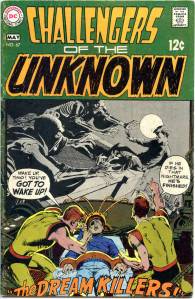
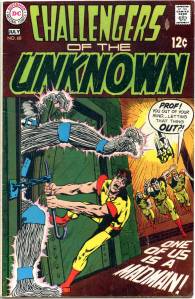
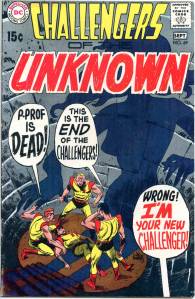
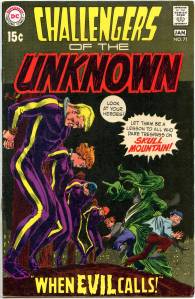
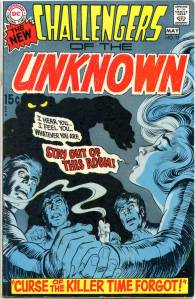
The Challengers of the Unknown is a fictional group of adventurers appearing in comic books published by DC Comics. The quartet of adventurers explored paranormal occurrences while facing several fantastic menaces. The characters were created by Joe Simon and JJack Kirby during the end of their company, Mainline Comics. Following the end of the Challengers comic, DC has revived the characters in different incarnations over the years. Some have claimed that Kirby reworked the basic concept of the series with Stan Lee in 1961 to create The Fantastic Four, the first creation that marked the rise of Marvel Comics.
Challengers of the Unknown #67 FN- $9Challengers of the Unknown #68 FN+ $14Challengers of the Unknown #69 FN-VF $12Challengers of the Unknown #71 VF- $14Challengers of the Unknown #73 VF- $14
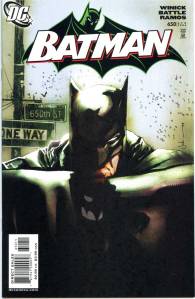
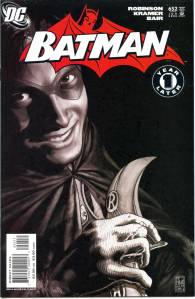
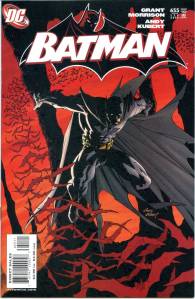
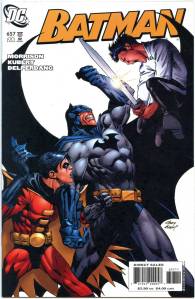
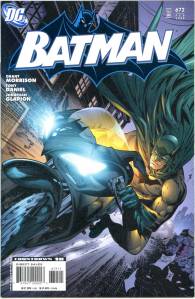
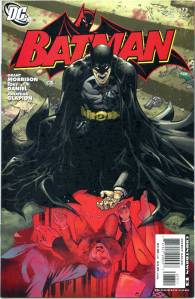
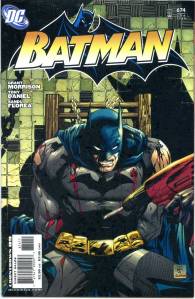
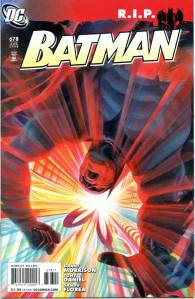
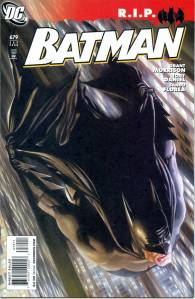
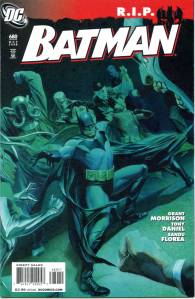
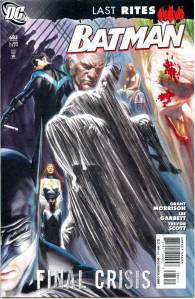
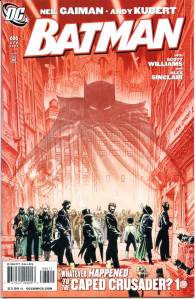
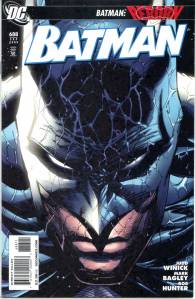
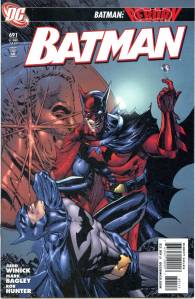
Starting in 2006, the regular writers on Batman and Detective Comics were Grant Morrison and Paul Dini, with Grant Morrison reincorporating controversial elements of Batman lore (most notably, the science fiction themed storylines of the 1950s Batman comics, which Morrison revised as hallucinations Batman suffered under the influence of various mind-bending gases and extensive sensory deprivation training) into the character. Morrison’s run climaxed with “Batman R.I.P.”, which brought Batman up against the villainous “Black Glove” organization, which sought to drive Batman into madness. “Batman R.I.P.” segued into Final Crisis (also written by Morrison), which saw the apparent death of Batman at the hands of Darkseid. In the 2009 miniseries Batman: Battle for the Cowl, Wayne’s former protégé Dick Grayson becomes the new Batman, and Wayne’s son Damian becomes the new Robin. In June 2009, Judd Winick returned to writing Batman, while Grant Morrison was given his own series, titled Batman and Robin.
In 2019, Robert Venditti took over from Snyder, relaunching the title, taking place before Snyder’s run and after Metal.
In addition, two more Justice League titles were released. A new volume of Justice League Dark featuring a team led by Wonder Woman and John Constantine. The other, Justice League Odyssey, features Cyborg, Starfire, Green Lantern (Jessica Cruz), Azrael, and Darkseid as they search for answers in the Ghost Sector in one of Brainiac‘s old starships.
Following Dark Nights: Death Metal, Endless Winter and the beginning of Infinite Frontier, Brian Michael Bendis and David Marquez took over the reins of Justice League from Issue 59. While Superman, Batman, Aquaman, and Hawkgirl remained on the team, the team also includes Green Arrow, Black Canary, Black Adam, Queen Hippolyta and Naomi. It also include a Backstory for Justice League Dark.
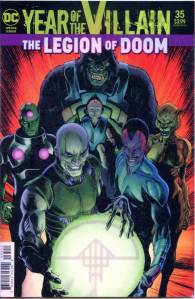
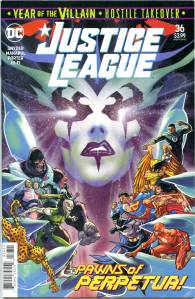
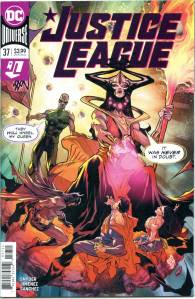
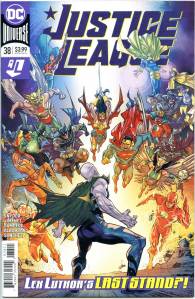
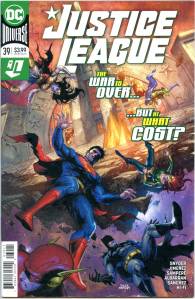
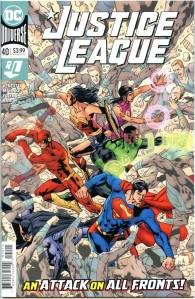
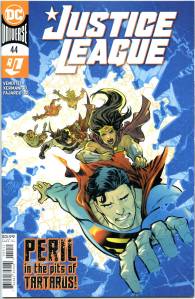
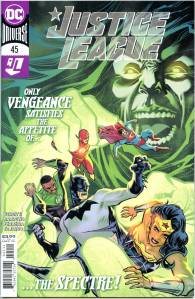
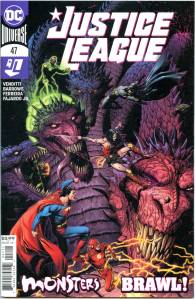
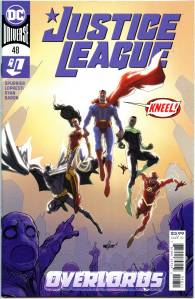
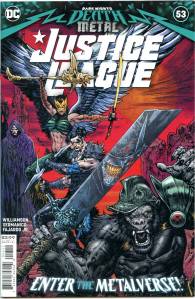
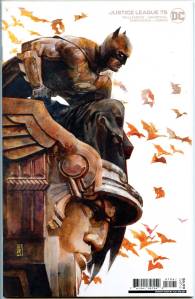
Justice League #35 NM $4Justice League #36 NM $4Justice League #37 NM $4Justice League #38 NM $4Justice League# 39 NM $4Justice League #40 NM $4Justice League V4 #44 NM $4Justice League V4 #45 NM $4Justice League V4 #47 NM $4Justice League V4 #48 NM $4Justice League V4 #53 NM $4Justice League V4 #75 Variant NM $7
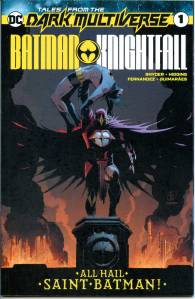
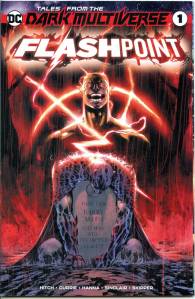
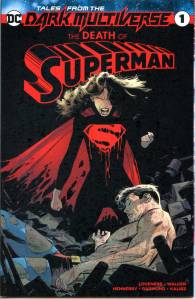
Tales from the Dark Multiverse is an American superhero/anthology comic book limited series published by DC Comics, beginning on October 16, 2019. The series takes some of the most famous events in the DC Universe and puts a twist on them.
Following the Source Wall being shattered at the end of Dark Nights: Metal, the mysterious watcher known as Tempus Fuginaut (introduced in Sideways) begins trying to recruit several “heroes” from across the Dark Multiverse in the wake of a coming crisis.
Tales from the Dark Multiverse – Batman Knightfall NM $6Tales from the Multiverse – Crisis on Infinite Earths NM $6Tales from the Dark Multiverse – Flashpoint NM $6Tales from the Dark Multiverse – Batman Hush NM $6Tales From the Dark Multiverse Infinite Crisis #1 NM $6Tales from the Dark Multiverse – Dark Nights Metal NM $6Tales From the Dark Multiverse The Death of Superman #1 NM $6Tales from the Dark Multiverse – Wonder Woman War of the Gods NM $6
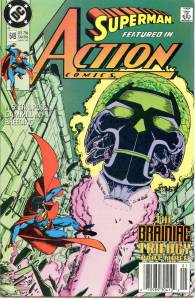
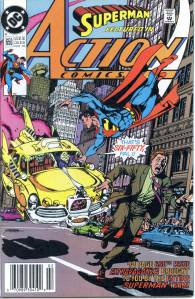
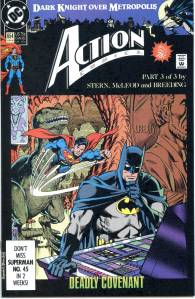
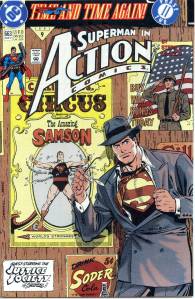
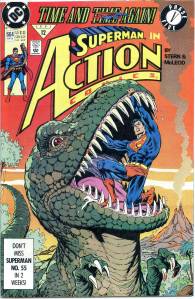
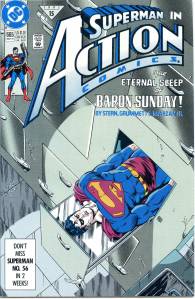
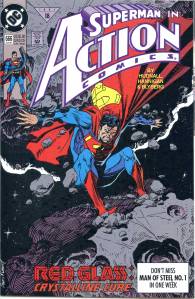
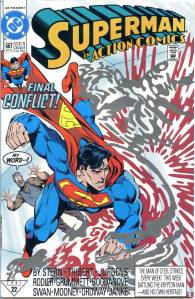
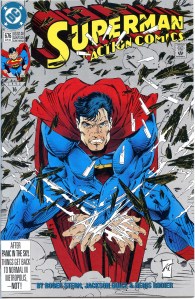
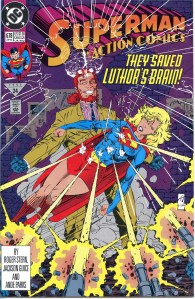
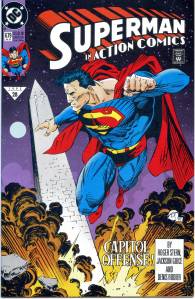
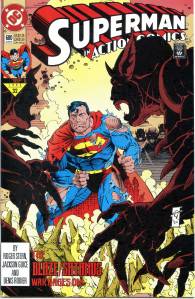
Action Comics Weekly lasted until the beginning of March 1989 and after a short break, issue #643 (July 1989) brought the title back onto a monthly schedule. Writer/artist George Pérez took over the title and was joined by scripter Roger Stern the following month.
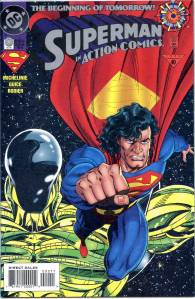
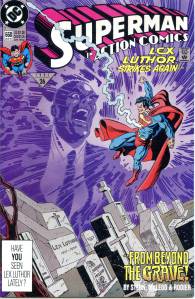
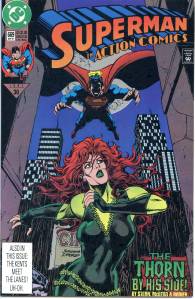
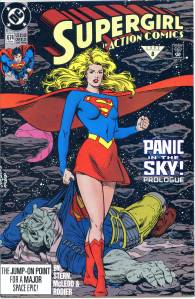
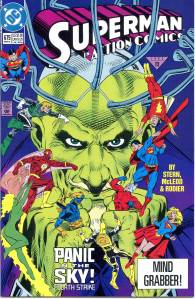
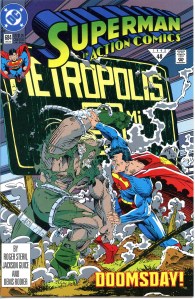
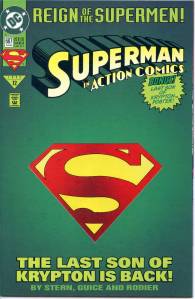
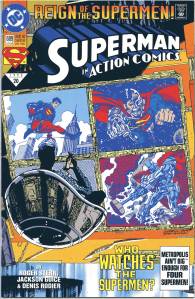
As writer of the series, Stern contributed to such storylines as “Panic in the Sky” and “The Death of Superman“. He created the Eradicator in Action Comics Annual #2 and later incorporated the character into the “Reign of the Supermen” story arc beginning in The Adventures of Superman#500. The Eradicator then took over Action Comics as “the Last Son of Krypton” in issue #687 (June 1993).
Stern wrote the 1991 story wherein Clark Kent finally revealed his identity as Superman to Lois Lane.
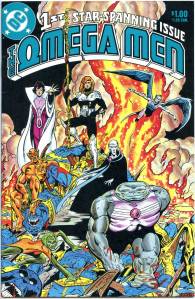
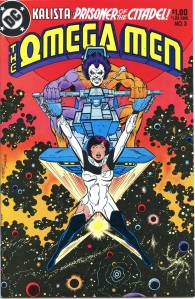
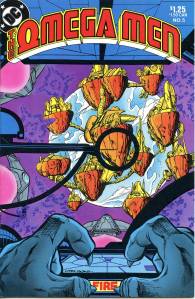
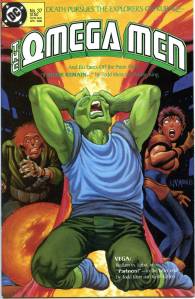
The Omega Men are a team of extraterrestrial superheroes who have appeared in various comic book series published by DC Comics. They first appeared in Green Lantern#141 (June 1981), and were created by Marv Wolfman and Joe Staton.
After appearances in Green Lantern, Action Comics and The New Teen Titans, the Omega Men were featured in their own comics series which ran for 38 issues from April 1983 to May 1986. During its run, writer Roger Slifer and artist Keith Giffen created the mercenary anti-hero Lobo.
The Omega Men were assembled as a group of renegades and representatives of conquered Vegan worlds to fight Citadelian aggression. Pre-Infinite Crisis the team was based on the planet Kuraq. The Omega Men are important peacekeepers in their sector because the Green Lantern Corps is not allowed into Vegan space, due to a long standing agreement with the Psions.
Omega Men V1 #1 VF-NM $3Omega Men #3 NM $120Omega Men #5 NM $9Omega Men #10 NM $14Omega Men #37 NM $14
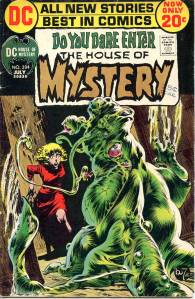
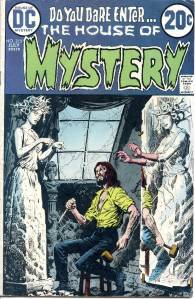
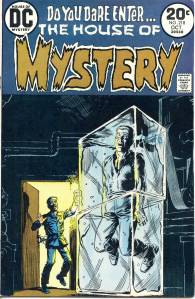
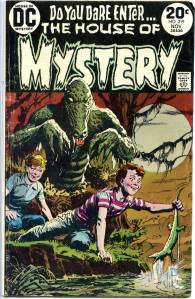
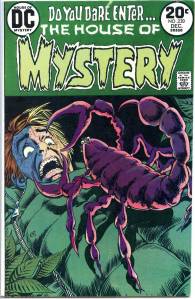
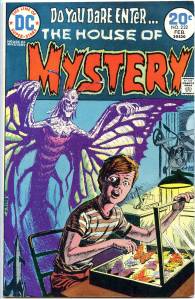
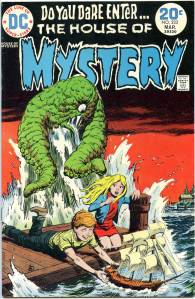
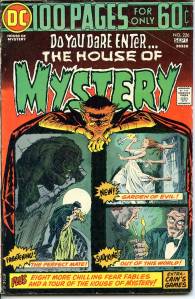
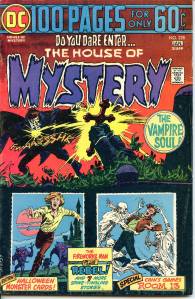
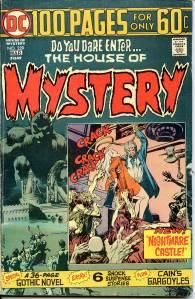
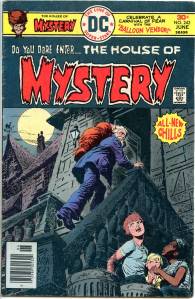
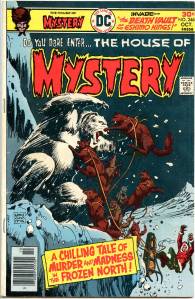
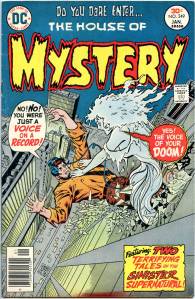
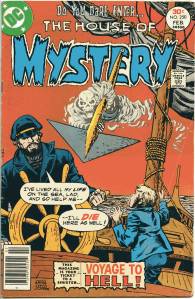
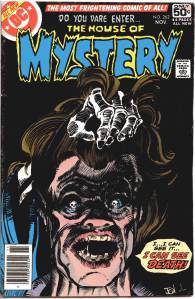
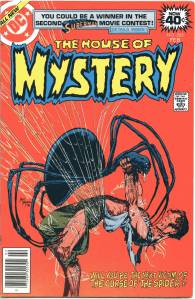
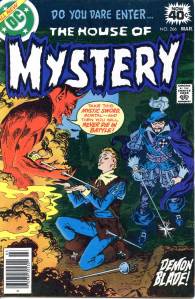
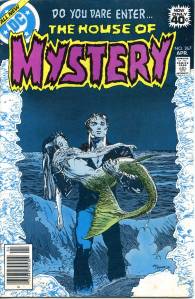
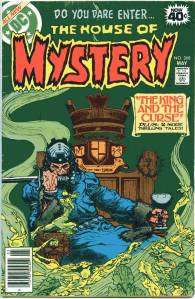
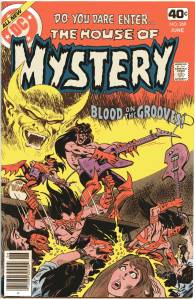
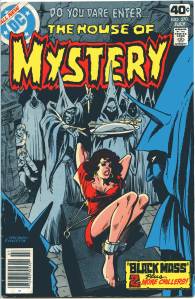
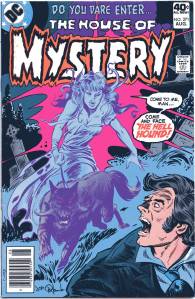
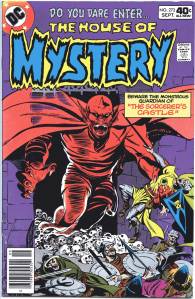
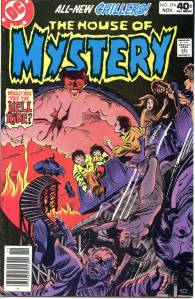
With issue #174, EC Comics veteran Joe Orlando was hired by DC to take over as editor of House of Mystery. As the Comics Code Authority was now being challenged by both DC and Marvel over content restrictions, the series returned to its overt horror themes. The first issue under Orlando would be a reprint issue of old horror/suspense stories, as the new direction would truly begin with #175 (July–August 1968). The issue would introduce a new figure to the series, Cain, the “able care taker” of the House of Mystery who would introduce nearly all stories that would run in the series before its cancellation. Cain would also host the spin-off humor series Plop! and later become a recurring character in Blue Devil and The Sandman.
Artist Bernie Wrightson‘s first professional comic work was the story “The Man Who Murdered Himself” which appeared in issue #179 (March–April 1969)
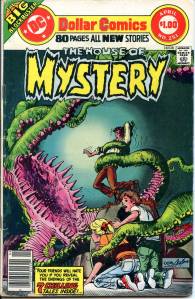
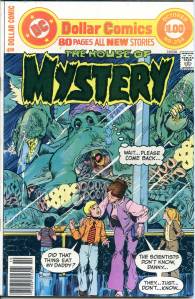
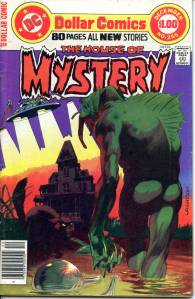
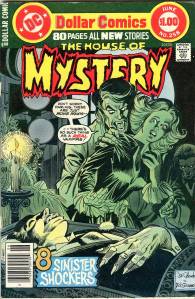
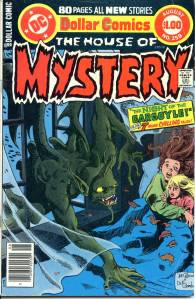
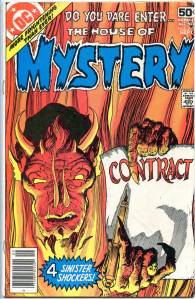
House of Mystery was in the Dollar Comics format for issues #251 (March–April 1977) to #259 (July–August 1978). House of Mystery featured stories by writers T. Casey Brennan (#260, 267, 268 and 274) and Scott Edelman (#257, 258, 260, 264, 266, 270, 272, 273). Orlando’s tenure as editor ended with #257 (March–April 1978).
House of Mystery #199 VG+ $14House of Mystery #204 FN $18House of Mystery #209 FN $24House of Mystery #215 FN+ $14House of Mystery #218 FN-VF $16House of Mystery #219 VG $8House of Mystery #220 FN+ $12House of Mystery #222 VF- $12House of Mystery #223 VF- $12House of Mystery #224 VG+ $14House of Mystery #226 VG+ $14House of Mystery #228 FN+ $24House of Mystery #229 FN $19House of Mystery #240 FN-VF $13House of Mystery #242 VG-FN $10House of Mystery #244 FN-VF $15House of Mystery #246 VG-FN $10House of Mystery #249 VG $5House of Mystery #250 FN-VF $10The House of Mystery #251 FN $11The House of Mystery #252 FN+ $12The House of Mystery #254 VF $16The House of Mystery #255 FN- $8House of Mystery #258 VF- $16The House of Mystery #259 FN+ $10House of Mystery #260 VG+ $7House of Mystery #262 FN $8House of Mystery #263 VF $6House of Mystery #265 FN- $6House of Mystery #266 VF-NM $10House of Mystery #267 VF+ $8House of Mystery #268 VG-FN $5House of Mystery #269 VF- $5House of Mystery #270 FN $6House of Mystery #271 VF- $5House of Mystery #272 FN $5House of Mystery #273 VF-NM $12House of Mystery #274 VF $6
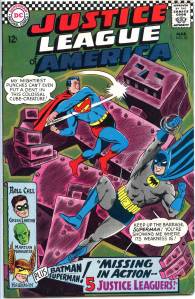
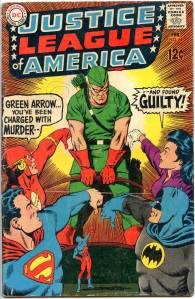
The initial Justice League lineup included seven of DC Comics’ superheroes who were regularly published at that time: Superman, Batman, Aquaman, Flash, Green Lantern, Martian Manhunter, and Wonder Woman. Rarely featured in most of the stories, Superman and Batman did not even appear on the cover most of the time. Three of DC’s other surviving or revived characters, Green Arrow,the Atom, and Hawkman were added to the roster over the next four years.
The title’s early success was indirectly responsible for the creation of the Fantastic Four. In his autobiography Stan Lee relates how in 1961, during a round of golf, DC publisher Jack Liebowitz mentioned to Marvel-Timely owner Martin Goodman how well DC’s new book (Justice League) was selling. Later that day Goodman, a publishing trend-follower aware of the JLA’s strong sales, told Lee, his comics editor, to come up with a team of superheroes for Marvel.
Justice League of America #45 VG $10Justice League of America #50 FN+ $18Justice League of America #52 FN $12Justice League of America #69 VG- $8
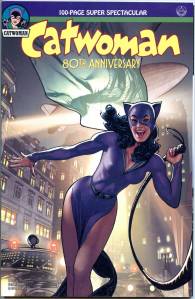
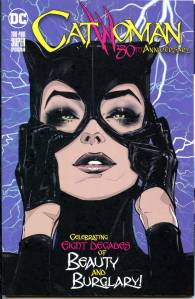
Our gal Catwoman turns 80 (and looking very good, if we meow say), and DC is celebrating with nothing less than with a huge soiree, invite only, packed with creators who mean the most to her and to whom she means the most! Stories featured in this 100-page spectacular include a tail-sorry, tale-that takes place at the end of the Brubaker/Stewart Catwoman run, in honor of artist Darwyn Cooke. Plus, Catwoman is caught by an exotic cat collector, runs into a wannabe thief trying to prove himself as her apprentice, encounters a mystery involving memorabilia from alternate continuities, and of course some Bat/Cat fun.





















































 EHT Comics