The 2016 DC Comics title relaunch Rebirth incorporates several elements (such as the costume, the setting and some characters) from the Supergirl television series. The DC Rebirth initiative undid the New 52’s modern recreations, bringing DC’s heroes back to their more classic iterations. Supergirl’s new series (Volume 7) was titled Supergirl: Rebirth, written by Steven Orlando. The first arc was pencilled by Brian Ching, who also redesigned Supergirl’s costume in reference to a more classic look.
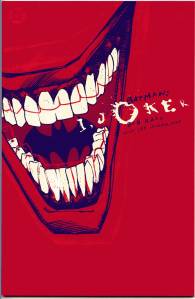
An Elseworlds tale! In the year 2083, the legend of the Batman sparks a strange and deadly religion based on the Dark Knight. As the annual death race between the religion’s leader and a group of sacrificial “lambs” surgically altered to resemble Batman’s greatest foes approaches, one would-be Joker tries to break the cycle and become the true inheritor of the heroic mantle of the Bat.
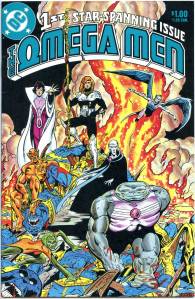
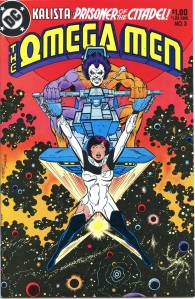
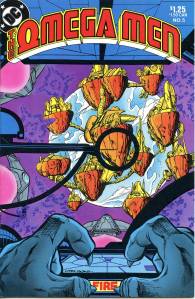
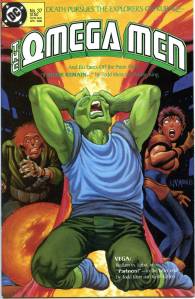
The Omega Men are a team of extraterrestrial superheroes who have appeared in various comic book series published by DC Comics. They first appeared in Green Lantern#141 (June 1981), and were created by Marv Wolfman and Joe Staton.
After appearances in Green Lantern, Action Comics and The New Teen Titans, the Omega Men were featured in their own comics series which ran for 38 issues from April 1983 to May 1986. During its run, writer Roger Slifer and artist Keith Giffen created the mercenary anti-hero Lobo.
The Omega Men were assembled as a group of renegades and representatives of conquered Vegan worlds to fight Citadelian aggression. Pre-Infinite Crisis the team was based on the planet Kuraq. The Omega Men are important peacekeepers in their sector because the Green Lantern Corps is not allowed into Vegan space, due to a long standing agreement with the Psions.
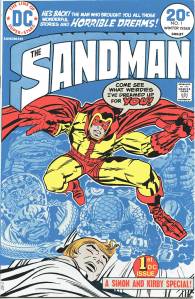
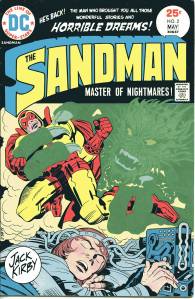
The Sandman of the 1970s was created by Joe Simon and Jack Kirby. Issue #1 was intended as a one-shot, but five more issues and an additional story followed. After the first issue, the stories were written by Michael Fleisher. The second and third issues were illustrated by Ernie Chua. Inks were by Kirby, Mike Royer and, in the sixth issue, Wally Wood. All covers were by Kirby, and the fourth issue noted his return to the interior artwork on the cover.
This Sandman was originally intended to be the actual Sandman of popular myth, “eternal and immortal”, despite his superhero-like appearance and adventures. The Sandman is assisted by two living nightmares named Brute and Glob, whom he releases from domed cells with the help of a magic whistle. They are nuisances who beg for release, who are intent on hand-to-hand combat, but are implied to be relatively harmless and well-intentioned once freed. Using security monitoring devices, the Sandman can enter the “Dream Stream” or the “Reality Stream” (in which he acts like the superhero he looks like), and he carries a pouch of dream dust with which he can cause anyone to sleep and dream. The Sandman’s main task is protecting children from nightmare monsters within their dreams, especially one young boy named Jed, who lives with his grandfather, Ezra Paulsen, as well as to ensure that children have an appropriate level of nightmares rather than dealing with such anxieties in real life.
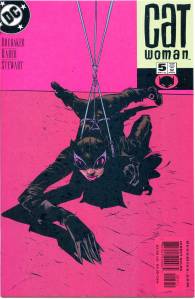
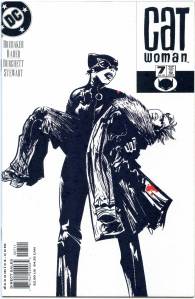
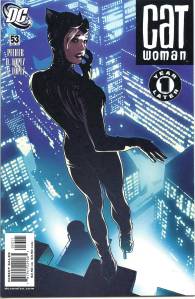
In the Detective Comics #759–762 (August–November 2001) backup storyline “Trail of the Catwoman”, by writer Ed Brubaker and artist Darwyn Cooke, private detective Slam Bradley attempts to find out what really happened to Selina Kyle. This storyline leads in to the Catwoman series of late 2001 (written by Brubaker initially with Cooke, later joined by artist Cameron Stewart). In this series, Selina Kyle, joined by new supporting cast members Holly and Slam Bradley (a character from the early Golden Age DC Comics), becomes protector of the residents of Gotham’s East End, while still carrying out an ambitious career as a cat burglar.
A bold new chapter for the greatest superhero of all time begins here as writer Brian Michael Bendis and artist Ivan Reis begin their run on the all-new SUPERMAN! The fallout from the Man of Steel miniseries has Clark Kent looking at the world through new eyes…with new ideas about what Superman could and should do for the city of Metropolis and the planet Earth. His first job? Getting the planet back out of the Phantom Zone!
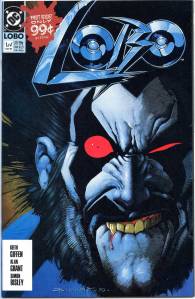
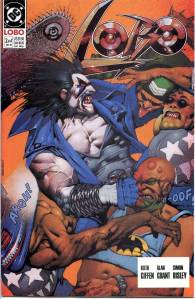
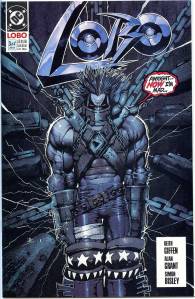
In 1990, he appeared in his four-issue own miniseries, Lobo: The Last Czarnian, plotted by Giffen, written by Alan Grant and with art by Simon Bisley, which changed his origin story: he became the last Czarnian after violently killing every other member of the species. That miniseries led to many subsequent miniseries and specials.
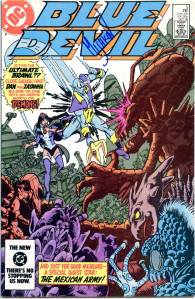
Blue Devil (Dan Cassidy) first appeared in a special insert published in Fury of Firestorm #24 (June 1984). That story led directly into Blue Devil #1, also cover dated June 1984. He was created by Dan Mishkin, Gary Cohn, and Paris Cullins. The Blue Devil comic book ran for 32 issues with Blue Devil later appearing as a regular character in Shadowpact that ran for 25 issues.
Dan Cassidy was working as a stuntman and special effects specialist in Hollywood when he created the Blue Devil full body suit, complete with a built in exoskeleton, specifically designed for the Blue Devil movie being produced by Verner Brothers Studios.
During filming on The Blue Devil, the demon Nebiros was accidentally unleashed from within an ancient temple and, thinking Cassidy was an actual demon, tried to drain his demonic powers with blasts of magic. Instead, the blasts permanently bonded the suit to Cassidy. This unnatural fusion of magic and technology caused Cassidy to experience unusual events and draw the attention of otherworldly beings, a condition known in occult circles as a “weirdness magnet”.
After four issues as The Dark Mansion Of Forbidden Love, the romance angle was abandoned and the title changed to Forbidden Tales of Dark Mansion. Very much in the same vein as House of Mystery and House of Secrets, Forbidden Tales of Dark Mansion was “hosted” by Charity (the character debuted in issue #7).
The character of Charity later became part of the supporting cast in the Starman series and at some point after the last issue married the policeman Mason O’Dare and is pregnant with his child.
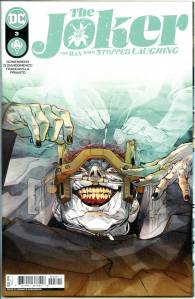
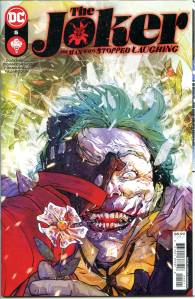
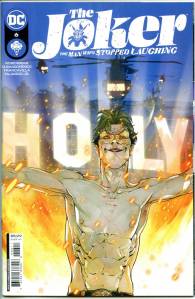
The world once again holds its breath as The Joker strikes again! But how far is he willing to go this time? From the twisted minds of Matthew Rosenberg (Task Force Z, What’s the Furthest Place from Here?) and Carmine Di Giandomenico (Batman: The Knight) comes a violent, mind-bending new series that picks up from the cataclysmic end of The Joker and follows the mayhem across the United States. With the Clown Prince of Crime setting out on his most bizarre caper yet, will a fan-favorite vigilante be able to prevent certain tragedy? Or is he in on the joke?















 EHT Comics