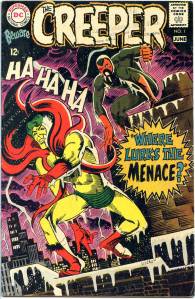
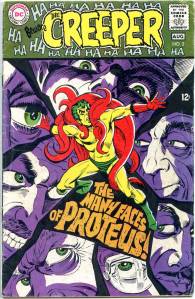
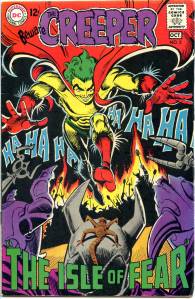
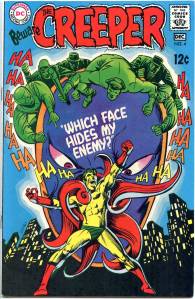
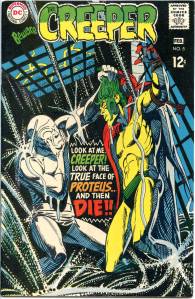
Following his debut in Showcase, the Creeper was given his own series Beware the Creeper, written by Dennis O’Neil; Steve Ditko plotted the first issue. It lasted six issues Most pitted him against a chameleonic villain called Proteus, whose true identity was revealed just before his violent death in the final issue.
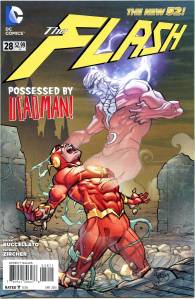
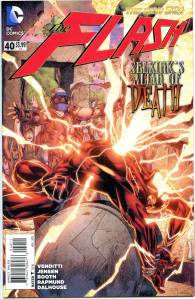
In September 2011, The New 52 rebooted DC’s continuity. In this new timeline, DC Comics relaunched The Flash with issue #1, with writing and art handled by Francis Manapul and Brian Buccellato. As with all of the titles associated with the DC relaunch, Barry Allen appears to be about five years younger than the previous incarnation of the character. Superheroes at large have appeared only in the past five years, and are viewed with at best, suspicion, and at worst, outright hostility. In this new continuity, Barry’s marriage to Iris West never took place, and he is instead in a relationship with longtime co-worker Patty Spivot. In this new series, the Flash draws deeper into the Speed Force, enhancing his mental abilities while still trying to get a full grasp on his powers, which he doesn’t yet exert total control over.
As revealed in issue #0 of this series, Barry Allen’s father was placed in prison for the murder of his mother. While the evidence seems to indicate his father’s guilt, Barry makes proving his father’s innocence a priority. The murder occurred shortly after Barry returned victorious from a school spelling bee, and Barry placed the trophy he won on his mother’s grave in her memory. Barry is also part of the main cast of the relaunched Justice League series, making his debut in the series’ second issue.
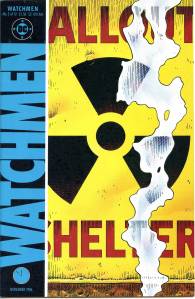
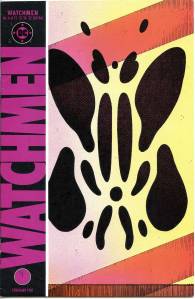
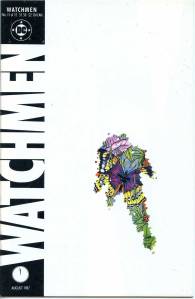
The series was created by a British collaboration consisting of writer Alan Moore, artist Dave Gibbons, and coloristJohn Higgins. Watchmen originated from a story proposal Moore submitted to DC featuring superhero characters that the company had acquired from Charlton Comics. As Moore’s proposed story would have left many of the characters unusable for future stories, managing editor Dick Giordano convinced Moore to create original characters instead.
Moore used the story as a means to reflect contemporary anxieties and to deconstruct and parody the superhero concept. Watchmen depicts an alternate history where superheroes emerged in the 1940s and 1960s and their presence changed history so that the United States won the Vietnam War and the Watergate scandal was never exposed. In 1985, the country is edging toward World War III with the Soviet Union, freelance costumed vigilantes have been outlawed and most former superheroes are in retirement or working for the government. The story focuses on the personal development and moral struggles of the protagonists as an investigation into the murder of a government-sponsored superhero pulls them out of retirement.
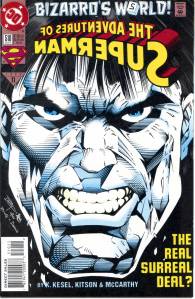
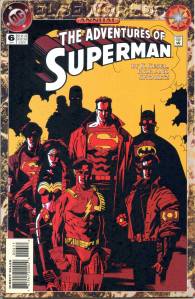
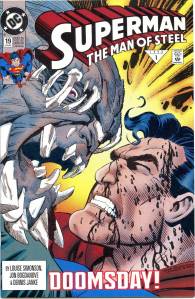
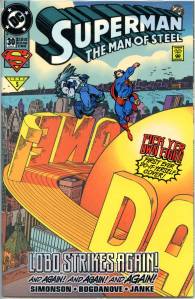
Writer/artist Dan Jurgens worked on the title from 1989–1991. Hank Henshaw, a character who would later become the Cyborg Superman, first appeared in issue #466 (May 1990). By the late 1980s, the plots of the Superman books were often linked. To coordinate the storyline and sequence of event, from January 1991 to January 2002, “triangle numbers” (or “shield numbers”) appeared on the cover of each Superman comic book. During these years, the Superman storylines ran with the story continuing through the titles Superman, Action Comics and later in two further series, Superman: The Man of Steel and Superman: The Man of Tomorrow.
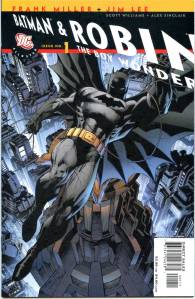
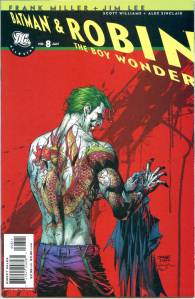
All Star Batman & Robin the Boy Wonder is an American comic book series written by Frank Miller and penciled by Jim Lee. It was published by DC Comics, with a sporadic schedule, between 2005[1] and 2008. The series was to be rebooted under the title Dark Knight: Boy Wonder in 2011, when both Miller and Lee were to finish the last six issues. The series retells the origin story of Dick Grayson, who became Batman‘s sidekick Robin.
This was the first series to be launched in 2005 under DC’s All Starimprint. These series are helmed by renowned writers and artists in the American comic book industry and attempt to retell some of the history of prominent DC Universe characters, but outside of DC Universe continuity, and not be restricted by it, in order to appeal to new and returning readers. Each title under the All Star imprint is set in its own continuity and separate universe.[2] According to Miller, the series takes place in the same continuity as Miller’s other Batman-related works, such as The Dark Knight Returns.
Since its initial publication, Miller’s writing of All Star Batman has consistently received an overwhelmingly negative critical response, though Lee’s artwork has been praised.
Created and designed by Jack Kirby, The New Gods first appeared in February 1971 in New Gods #1.
Kirby’s production assistant of the time, Mark Evanier, remarked that: “Folks forget but the New Gods saga was intended to be a limited series … There was no intention that these characters would go on forever. After Jack’s books started getting good sales figures, DC demanded that we keep them going and use guest stars like Deadman, which we were very much against doing. So Kirby had this novel he was forever stuck in the middle of – he could never get to the last chapter. … You can spot the issues where Jack kind of gave up trying to advance the story of Darkseid and Orion and was marking time. If those books had been intended from the start to run indefinitely, they would have been done very differently.”
New Gods #1 marks the first appearance of Orion, Highfather, and Metron, among others.
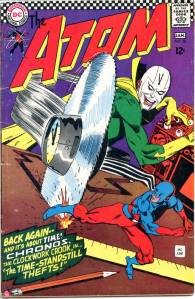
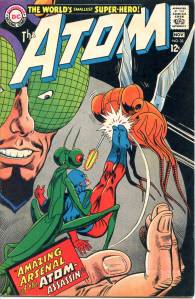
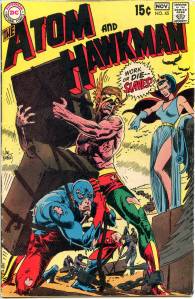
The Atom introduced in Showcase #34 (1961) is physicist and university professor Dr. Raymond Palmer, Ph.D. (He was named for real-life science fiction writer Raymond A. Palmer, who was himself quite short.) After stumbling onto a mass of white dwarf star matter that had fallen to Earth, he fashioned a lens which allowed him to shrink down to subatomic size. Originally, his size and molecular density abilities derived from the white dwarf star material of his costume, controlled by mechanisms in his belt, and later by controls in the palms of his gloves. Much later, he gained the innate equivalent powers within his own body. After the events of Identity Crisis, Ray shrank himself to microscopic size and disappeared. Finding him became a major theme of the Countdown year long series and crossover event.
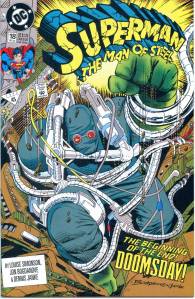
Beginning an all-new monthly Superman title. Over a year ago, Superman fought the urge to become the Krypton Man…now the Krypton Man is born anew from the Earth’s fiery sun, where the Man of Steel buried the mysterious Kryptonian Eradicator! In the wake of the rebirth of his nemesis, Earth’s yellow sun begins turning red – causing natural disasters planetwide!
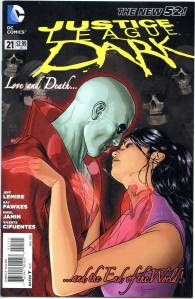
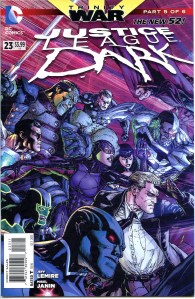
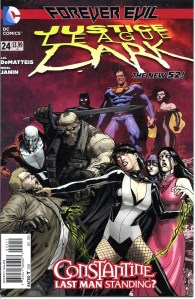
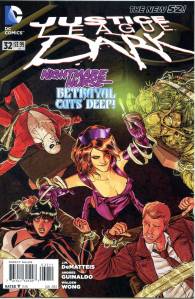
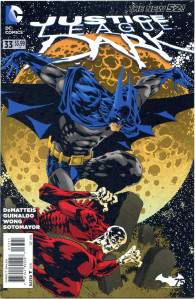
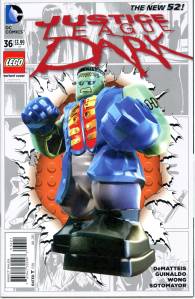
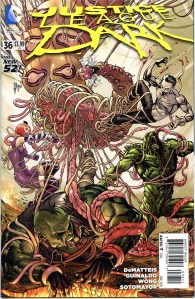
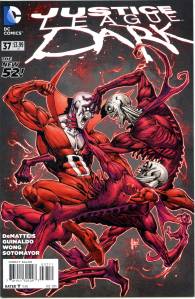
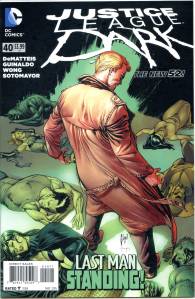
Justice League Dark was announced on May 31, 2011 as a First Wave title of The New 52The title and team was created by Peter Milligan, with art by Mikel Janín. The title launched on September 28, 2011. The title brought several of DC Comics’ occult and offbeat characters, something which had been a trait of sister imprint Vertigo, back into the main DC Universe following Vertigo’s editorial change to publish purely new, creator owned content.
V for Vendetta is a graphic novel written by Alan Moore and illustrated by David Lloyd (with additional art by Tony Weare), published by DC Comics. The story depicts a dystopian and post-apocalyptic near-future history version of the United Kingdom in the 1990s, preceded by a nuclear war in the 1980s, which has left much of the world destroyed. The fascist Norsefire party has exterminated its opponents in concentration camps and rules the country as a police state. The comics follow its titular character and protagonist, V, an anarchist revolutionary dressed in a Guy Fawkes mask, as he begins an elaborate and theatrical revolutionist campaign to murder his former captors, bring down the government and convince the people to rule themselves, while inspiring a young woman, Evey Hammond, to be his protégé.



















 EHT Comics