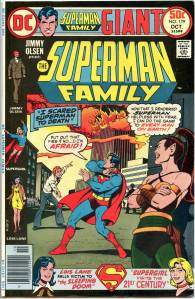
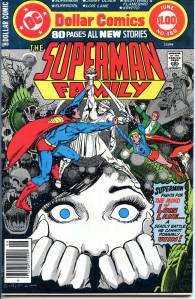
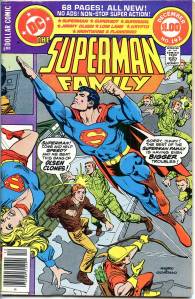
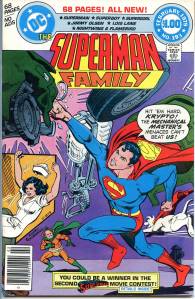
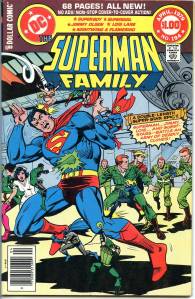
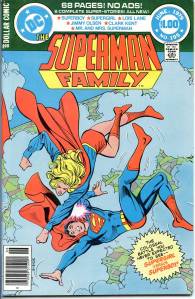
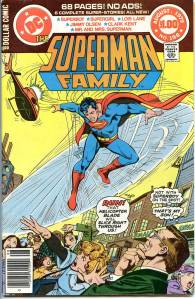
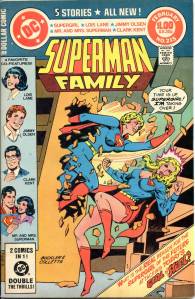
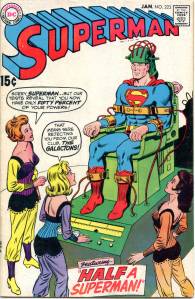
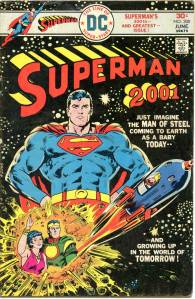
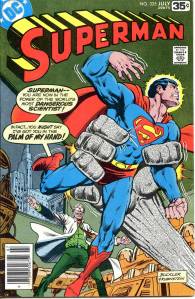
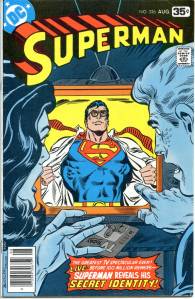
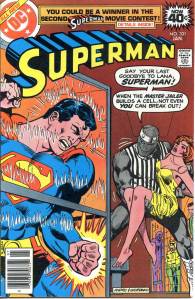
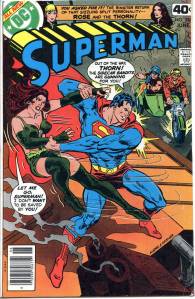
The Superman Family, was a DC Comics series which ran from 1974 to 1982 featuring stories starring supporting characters in the Superman comics. The Superman Family was an amalgamation of the titles Superman’s Girl Friend, Lois Lane and Superman’s Pal Jimmy Olsen, along with the first series of Supergirl. The first issue, #164, took its numbering from Jimmy Olsen, which had reached issue #163 and thus had the most issues published. Lois Lane ended at #137, while the newly launched Supergirl book had only made it to #10.
Superman Family #172 F-VF $14Superman Family #179 F-VF $9Superman Family #189 VF+ $10Superman Family #191 VF+ $7Superman Family #192 F+ $5Superman Family #193 VF+ $7Superman Family #194 VF+ $7Superman Family #195 VF $6Superman Family #196 VF+ $7Superman Family #197 VF+ $7Superman Family #200 VF $7Superman Family #205 NM $14Superman Family #207 VF-NM $8Superman Family #209 NM- $10Superman Family #210 VF-NM $8Superman Family #212 NM- $12Superman Family #212 VF $10Superman Family #215 VF- $12Superman Family #216 NM $14Superman Family #216 VF-NM $9Superman Family #222 VF-NM $9
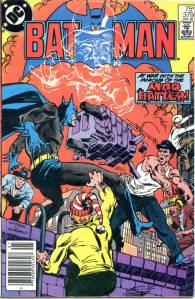
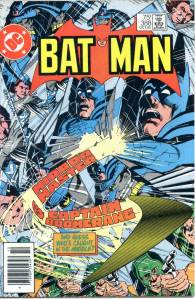
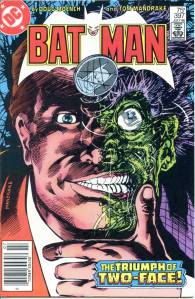
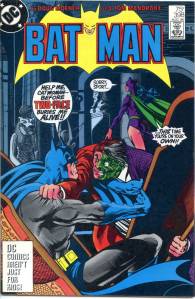
Frank Miller‘s limited series The Dark Knight Returns (February–June 1986), which tells the story of a 55-year old Batman coming out of retirement in a possible future, reinvigorated the character. The Dark Knight Returns was a financial success and has since become one of the medium’s most noted touchstones. The series also sparked a major resurgence in the character’s popularity.
That year Dennis O’Neil took over as editor of the Batman titles and set the template for the portrayal of Batman following DC’s status quo-altering miniseries Crisis on Infinite Earths. O’Neil operated under the assumption that he was hired to revamp the character and as a result tried to instill a different tone in the books than had gone before. One outcome of this new approach was the “Year One” storyline in Batman #404–407 (February–May 1987), in which Frank Miller and artist David Mazzucchelli redefined the character’s origins. Writer Alan Moore and artist Brian Bolland continued this dark trend with 1988’s 48-page one-shotBatman: The Killing Joke, in which the Joker, attempting to drive Commissioner Gordon insane, cripples Gordon’s daughter Barbara, and then kidnaps and tortures the commissioner, physically and psychologically.
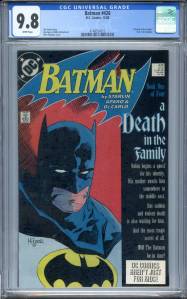
The Batman comics garnered major attention in 1988 when DC Comics created a 900 number for readers to call to vote on whether Jason Todd, the second Robin, lived or died. Voters decided in favor of Jason’s death by a narrow margin of 28 votes (see Batman: A Death in the Family). The following year saw the release of Tim Burton‘s Batman feature film, which firmly brought the character back to the public’s attention, grossing millions of dollars at the box office, and millions more in merchandising.
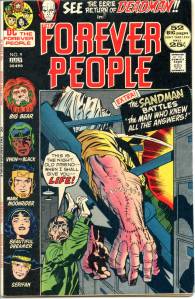
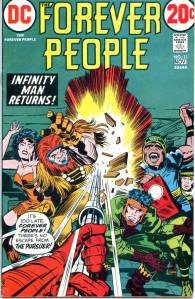
The Forever People are a fictional group of extraterrestrial superheroes published by DC Comics. They first appeared in Forever People #1 (February–March 1971), and were created by Jack Kirby as part of his “Fourth World” epic.
The Forever People lasted eleven issues. They mainly fought Darkseid’s forces such as Glorious Godfrey in issue #3. Issues #9 and 10 guest-starred Deadman; according to writer/artist Jack Kirby‘s assistant Mark Evanier, “We were ordered to put Deadman into New Gods, but we slipped him into Forever People instead, where he was a little less obtrusive. Jack didn’t like the character and didn’t want to do it. He didn’t feel he should be doing someone else’s character. … He doesn’t want to trample on someone else’s vision. Carmine [Infantino, DC Comics publisher and Deadman’s co-creator] said the character hadn’t sold and he wanted the Kirby touch on it.”
Forever People #2 VF $24Forever People #5 VF+ $25Forever People #7 VF+ $25Forever People #8 VF+ $29Forever People #9 FN+ $6Forever People #11 FN+ $5
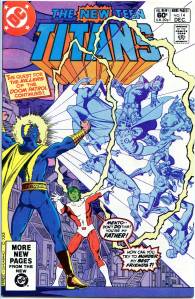
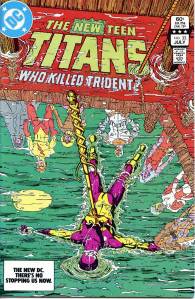
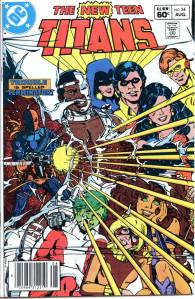
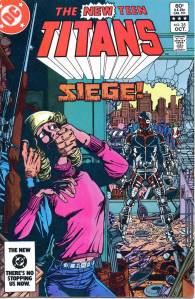
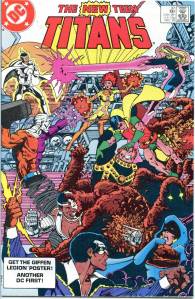
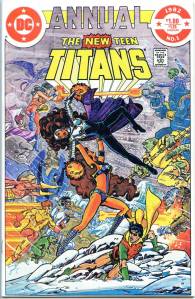
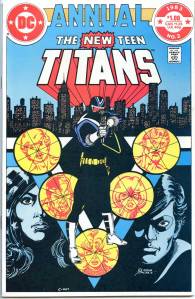
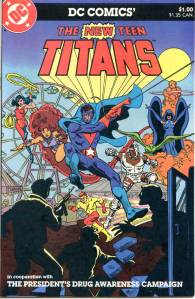
In 1980, Teen Titans relaunched as The New Teen Titans, aging the characters to young adulthood. Original members Robin, Wonder Girl and Kid Flash were joined by new characters Cyborg, Starfire and Raven, as well as the former Doom Patrol member Beast Boy, as Changeling. The group had several encounters with the original Titans of Greek mythology, particularly Hyperion.
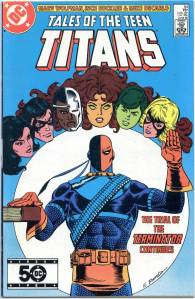
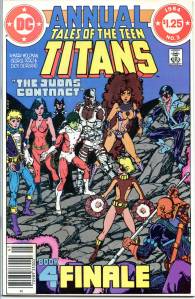
The team’s adversaries included Deathstroke the Terminator, a mercenary who takes a contract to kill the Titans to fulfill a job his son had been unable to complete. This led to perhaps the most notable Titans storyline of the era. 1984’s “The Judas Contract,” in Tales of the Teen Titans #42-44 and Teen Titans Annual #3 featured a psychopathic girl named Terra with the power to manipulate earth and all earth-related materials. She infiltrates the Titans in order to destroy them. “The Judas Contract” won the Comics Buyer’s Guide Fan Award for “Favorite Comic Book Story” of 1984, and was later reprinted as a standalone trade paperback in 1988. Robin adopts the identity of Nightwing, while Wally West gives up his Kid Flash persona and quits the Titans. It also featured the introduction of a new member in Jericho, Deathstroke’s other son.
New Teen Titans V1 #14 NM- $4New Teen Titans V1 #33 NM- $3New Teen Titans #34 VF+ $3New Teen Titans V1 #35 NM- $3New Teen Titans V1 #36 VF-NM $3New Teen Titans V1 #37 NM $5New Teen Titans V1 #40 NM- $3Tales of the Teen Titans #54 VF- $4New Teen Titans V1 Annual #1 NM $5New Teen Titans V1 Annual #2 NM $29Tales of the Teen Titans Annual #3 VF $6New Teen Titans 1983 Drug Awareness Campaign NM $5
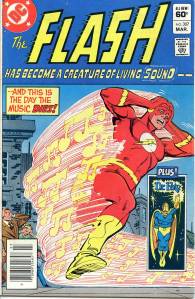
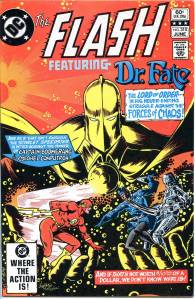
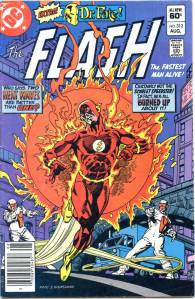
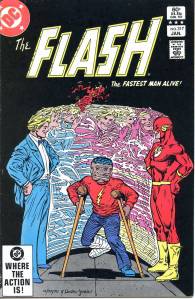
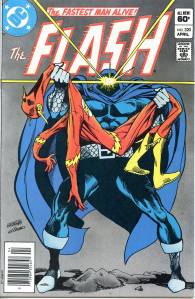
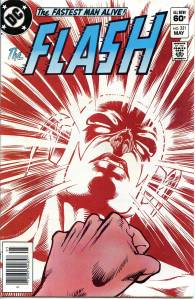
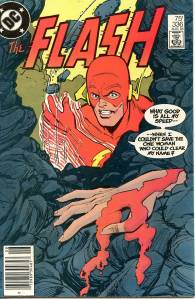
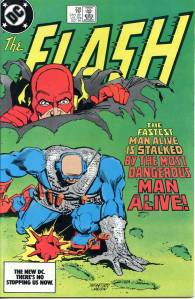
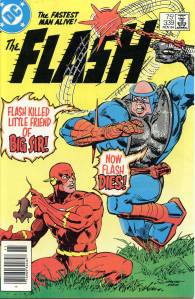
Barry Allen’s adventures continued in his own title until the event of Crisis on Infinite Earths. The Flash ended as a series with issue #350. Allen’s life had become considerably confused in the early 1980s, and DC elected to end his adventures and pass the mantle on to another character. Allen died heroically in Crisis on Infinite Earths #8 (1985). Thanks to his ability to travel through time, he would continue to appear occasionally in the years to come.
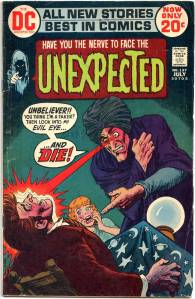
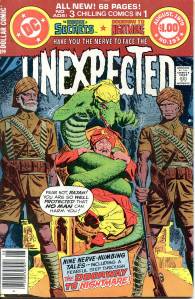
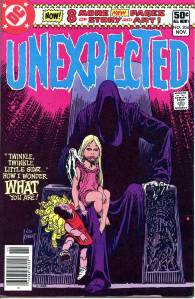
In 1979, The Unexpected converted to the Dollar Comics format and incorporated House of Secrets and The Witching Hour. Each “Unexpected” story would always include the word in its last panel. After the merge, this was only true of the Unexpected section; there would then be complete, ad-free issues of The Witching Hour, hosted by its witches, and The House of Secrets, hosted by Abel. The Witching Hour feature was alternated with Doorway to Nightmare starring Madame Xanadu, which appeared in issues #190, 192, 194, and 195.
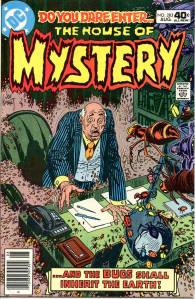
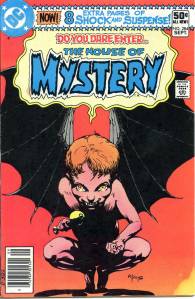
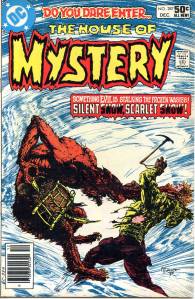
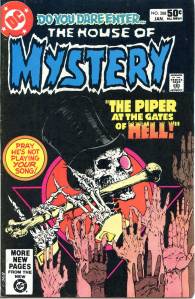
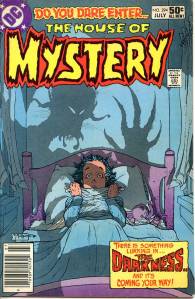
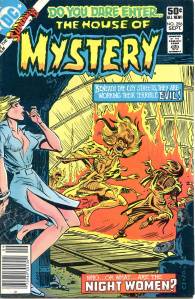
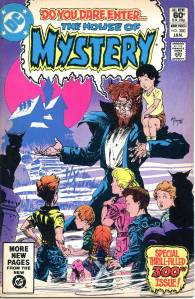
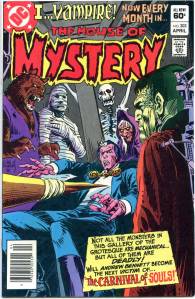
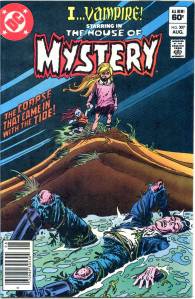
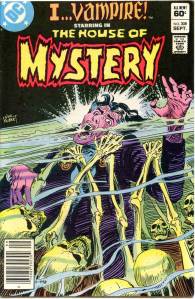
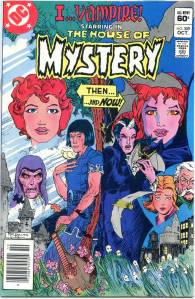
Karen Berger became editor of the series with #292 (May 1981), her first for DC Comics. Under Berger, the series experimented with long-form storylines in the popular I…Vampire serial created by writer J. M. DeMatteis. “I… Vampire” revolved around the heroic vampire, Andrew Bennett, who sought to defeat his nemesis and former lover Mary, the Queen of Blood. This series began in #290 (March 1981) and would last until #319 (August 1983), two issues before the title ended with #321 (October 1983).
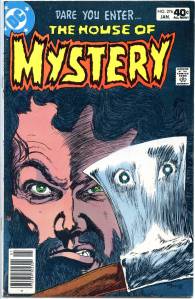
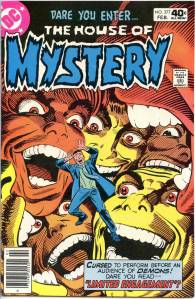
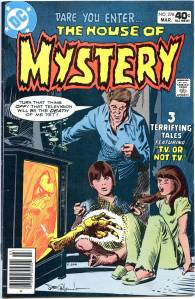
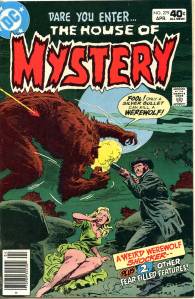
House of Mystery #276 VF- $5House of Mystery #277 NM- $18House of Mystery #278 FN+ $4The House of Mystery #279 VF $6The House of Mystery #283 FN-VF $5The House of Mystery #284 VG-FN$4The House of Mystery #287 VF- $5The House of Mystery #288 VF- $6The House of Mystery #294 FN-VF $5The House of Mystery #296 FN-VF $5The House of Mystery #298 VF- $5The House of Mystery #300 VF- $15The House of Mystery #301 VF $9House of Mystery #303 VF+ $8House of Mystery #307 VF- $6House of Mystery #308 FN-VF $5House of Mystery #309 VF- $6
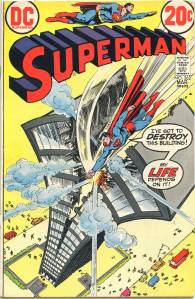
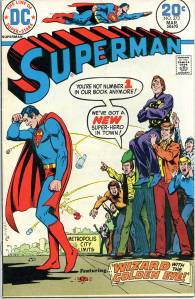
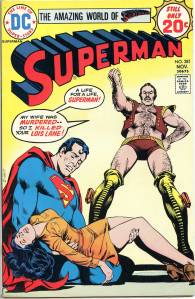
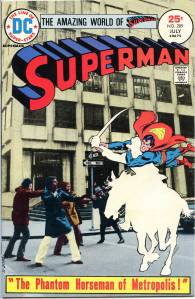
The early 1970s were a time of change for the Man of Steel. As Clark Kent shifted from being a newspaper reporter to a TV newscaster, his alter ego saw the destruction of all remaining Kryptonite on Earth! This period also featured many new villains, including Terra-Man, and the dramatic reintroductions of such foes as Lex Luthor — in green and purple armor!
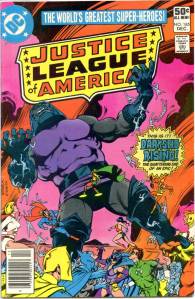
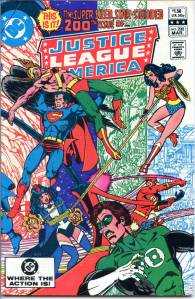
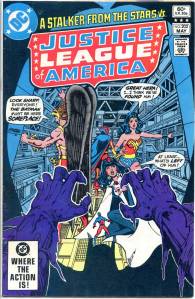
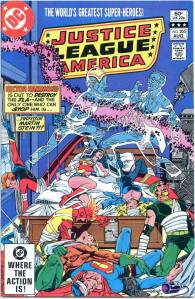
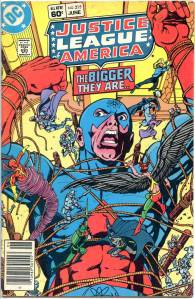
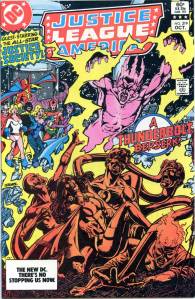
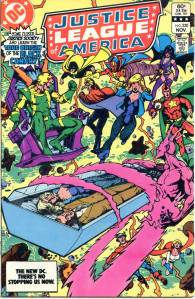
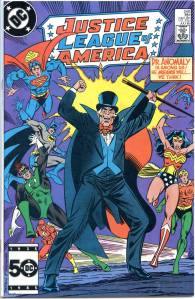
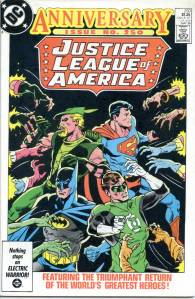
In the early 80’s, George Pérez, Don Heck, and Rich Buckler would rotate as artist on the title. The double-sized anniversary issue #200 (March 1982) was a “jam” featuring a story written by Conway, a framing sequence drawn by Pérez, and chapters drawn by Pat Broderick, Jim Aparo, Dick Giordano, Gil Kane, Carmine Infantino, Brian Bolland, and Joe Kubert. Bolland’s chapter gave the artist his “first stab at drawing Batman.” Pérez would leave the title with issue #200 to concentrate on The New Teen Titans although he would contribute covers to the JLAthrough issue #220 (November 1983). The 1982 team-up with the Justice Society in issues #207–209 crossed over with All-Star Squadron #14–15. A Justice League story by Gerry Conway and Rich Buckler originally intended for publication as an issue of All-New Collectors’ Edition saw print in Justice League of America #210–212 (January–March 1983).
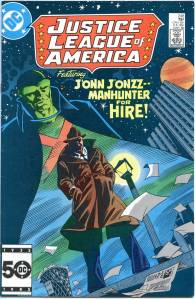
Seeking to capitalize on the popularity of their other team books, which focused upon heroes in their late teens/early 20s, Gerry Conway and artist Chuck Patton revamped the Justice League series. After most of the original heroes fail to help fend off an invasion of Martians, Aquaman dissolves the League and rewrites its charter to allow only heroes who will devote their full-time to the roster. The new team initially consists of Aquaman, Zatanna, Martian Manhunter, Elongated Man, the Vixen, and a trio of teenage heroes Gypsy, Steel, and Vibe. Aquaman leaves the team after a year, due to resolving marital problems, and his role as leader is assumed by the Martian Manhunter.
The final storyline for the original Justice League of America series (#258–261), by writer J. M. DeMatteis and artist Luke McDonnell, concludes with the murders of Vibe and Steel at the hands of robots created by long-time League nemesis Professor Ivo, and the resignations of Vixen, Gypsy, and the Elongated Man during the events of DC’s Legends miniseries, which sees the team disband.
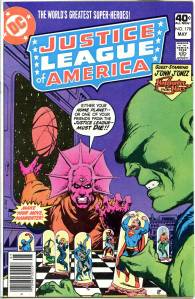
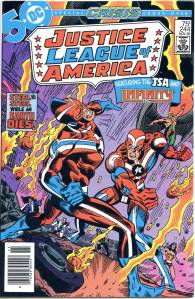
Justice League of America #178 VF $5Justice League of America V1 #182 FN+ $4Justice League of America V1 #183 FN $5Justice League of America V1 #185 FN- $3Justice League of America V1 #189 VG $5Justice League of America V1 #194 FN- $3Justice League of America #198 Newsstand VF $6Justice League of America #198 F $3Justice League of America #200 VF- $9Justice League of America V1 #200 FN $4Justice League of America V1 #201 FN $3Justice League of America #206 VF- $4Justice League of America V1 #207 FN $3Justice League of America #202 F $3Justice League of America #203 F $3Justice League of America #205 VF+ $6Justice League of America #209 NM $9Justice League of America #210 NM- $7Justice League of America #211 VF $5Justice League of America #213 VF- $4Justice League of America V1 #213 FN $3Justice League of America #214 VF $4Justice League of America V1 #215 FN-VF $5Justice League of America #215 Newsstand F $3Justice League of America #217 NM $9Justice League of America #218 VF $4Justice League of America #219 NM- $8Justice League of America #220 VF-NM $7Justice League of America #226 VF-NM $7Justice League of America #232 VF- $3Justice League of America #227 Newsstand VF- $3Justice League of America #240 NM- $8Justice League of America #242 NM $9Justice League of America #244 NM- $5Justice League of America #248 VF $3Justice League of Amerca #250 VF $9Justice League of America #251 VF+ $5Justice League of America #252 NM- $6Justice League of America #252 VF+ $4Justice League of America #252 VF $3Justice League of America #253 NM $7Justice League of America #254 VF $3Justice League of America #255 VF+ $5Justice League of America #255 Newsstand F-VF $2Justice League of America #261 VF+ $8Justice League of America #261 VF $5
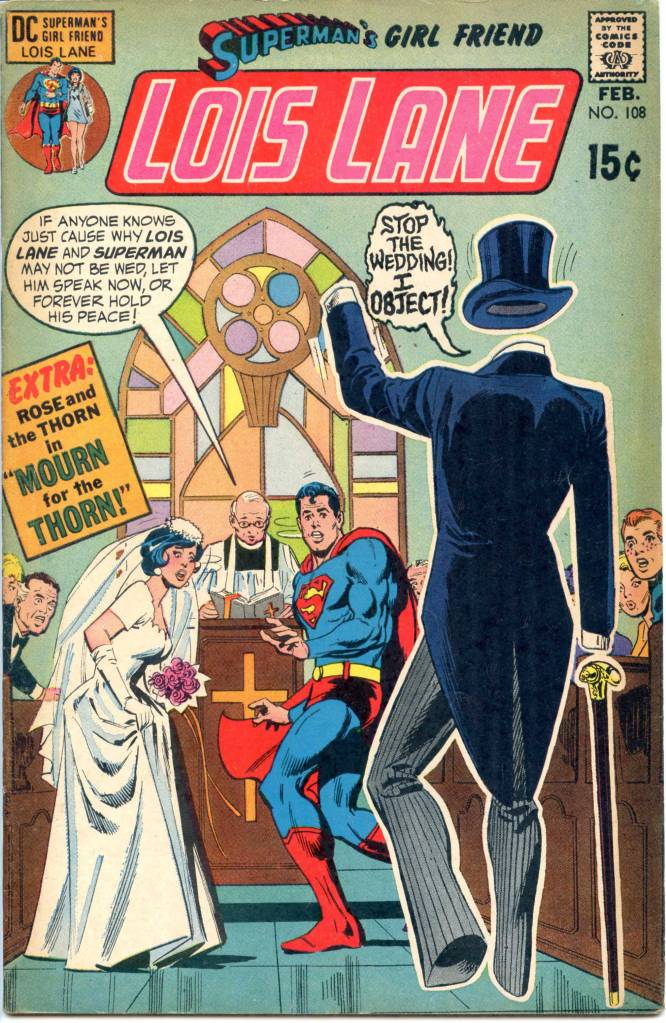
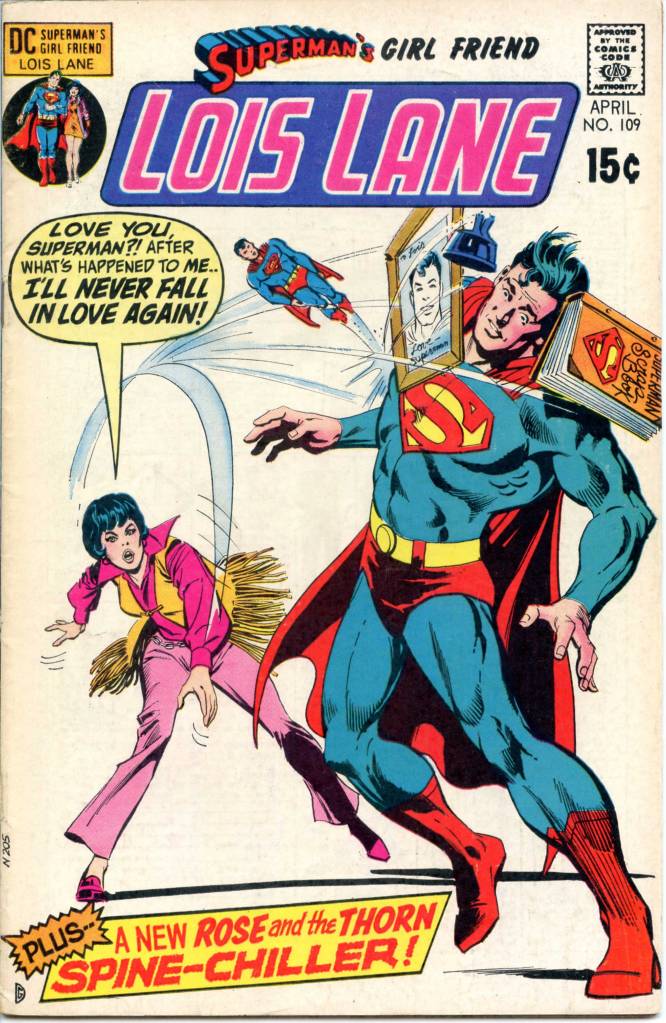
By the 1970s, the stories began to reflect growing social awareness: Lois became less fixated on romance and more on current issues. In the controversial story “I Am Curious (Black)!” in #106 (November 1970), Lois uses a machine that allows her to experience racism firsthand as an African American woman. The series saw the debut of the Silver Age heroine “Rose & The Thorn” in a backup feature that ran from #105 (October 1970) through #130 (April 1973). Editor E. Nelson Bridwell had several characters and plot concepts from Jack Kirby‘s “Fourth World” appear in issues #111–119 (July 1971 – February 1972). Lois’ sister, Lucy Lane, was believed to have died in issue #120 (March 1972) but the character was later revived.
In 1974, the title ended, as Superman’s Pal Jimmy Olsen had earlier that year. Both would be merged into The Superman Family, which chronologically continued from the elder title, premiering with issue #164 (April–May 1974). The release of the last issue of Superman’s Girl Friend, Lois Lane was delayed for several months due to a nationwide paper shortage.
Supermans Girl Friend Lois Lane #108 FN $8Supermans Girl Friend Lois Lane #109 FN+ $9