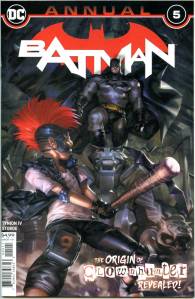
“Dark Nights: Death Metal” is the sequel to 2017’s Dark Nights: Metal and concludes Scott Snyder‘s run in DC Comics; he stated “Everything is coming back, we want to pay it forward. The Omega Titans, Barbatos, the Forge, it’s all coming back. Everything you read, our goal is to reward. All of it culminates in like a year in like a “Metal” event.”[1] “Death Metal” not only concludes the three-year spanning Dark Multiverse narrative that began with “Dark Nights: Metal”, but will bring an end to the New 52 and DC Rebirth continuities that began with 2011’s “Flashpoint” storyline.
In April 2020 during an interview on DC Daily, Snyder assured that the purpose of “Death Metal” is to unify every storyline from mainline DC Universe comic books, including the standalone stories
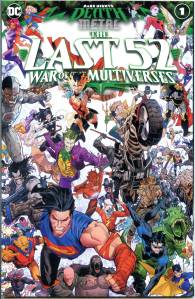
Dark Nights Death Metal – The Last 52 War of the Multiverses #1 NM $7
Dark Nights – Death Metal – Legends of the Dark Knights #1 NM $7
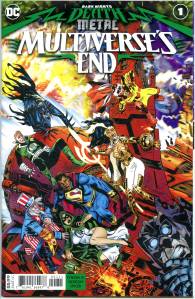
Dark Nights – Death Metal – Multiverse’s End #1 NM $6
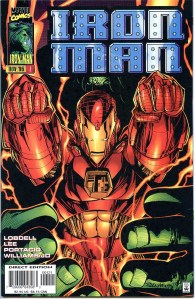
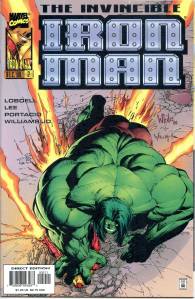
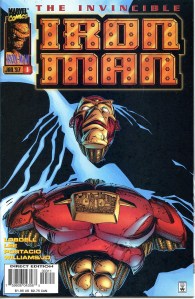
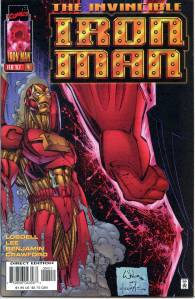
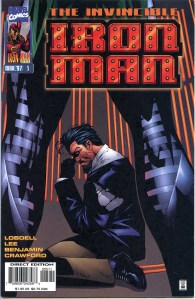
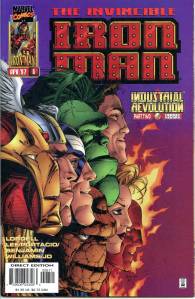
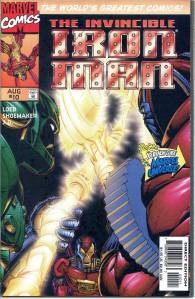
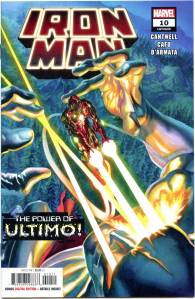
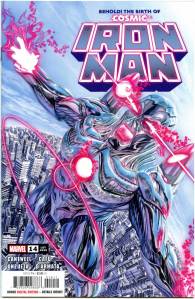
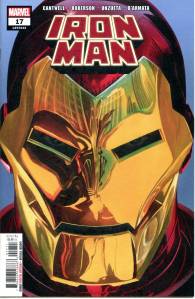
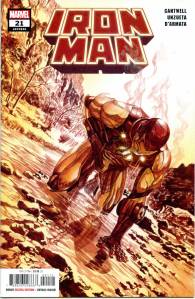
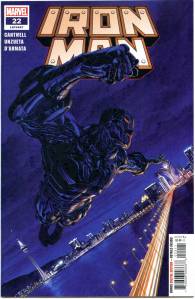
Iron Man left two lives behind when he vanished, but can he avoid his former mistakes in his new one? The armored Avenger takes on Hydra, Heralds and the Hulk – and the eyes of the Marvel Universe are upon him in the form of Loki, the Watcher and Onslaught himself! Featuring Doc Samson and… or rather as …the Abomination! Plus: Rebel O’Reilly, later of Thunderbolts fame!
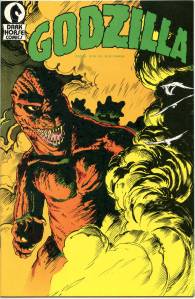
In 1987, Dark Horse Comics acquired the rights to Godzilla and for the next 12 years published various comic books and trade paperbacks based on the character. These ran the gamut from back-up stories in anthology titles, to one-shots, to miniseries, to an ongoing series, as well as various reprints in the trade paperback format.
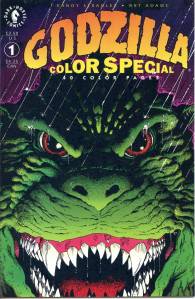
In 1992, an illustration of Godzilla (provided by Arthur Adams) was published in San Diego Comic Con Comics #1. Also that same year the one-shot issue Godzilla Color Special #1 was published. It would be reprinted as simply Dark Horse Classics: Godzilla #1 in 1998.
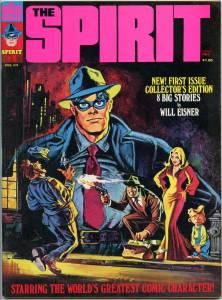
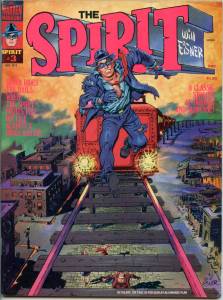
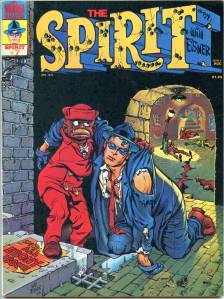
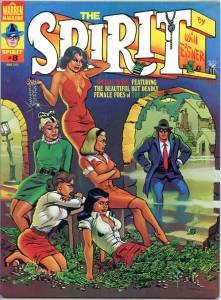
From 1974 to 1976, James Warren‘s Warren Publishing published 16 issues of The Spirit (also known as The Spirit Magazine), a large black-and-white magazine consisting of reprints with original covers (primarily by Eisner), concluding with a separate 1975 color issue, The Spirit Special, which includes an afterword by Bill DuBay. Kitchen Sink picked up the series beginning in 1977 with issue 17, eventually concluding with issue 41 (June 1983). Issue 30 of the Kitchen Sink series (July 1981) features “The Spirit Jam“, with a script from Eisner and a few penciled pages, plus contributions from 50 artists, including Fred Hembeck, Trina Robbins, Steve Leialoha, Frank Miller, Harvey Kurtzman, Howard Cruse, Brian Bolland, Bill Sienkiewicz, John Byrne, and Richard Corben.
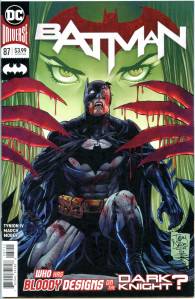
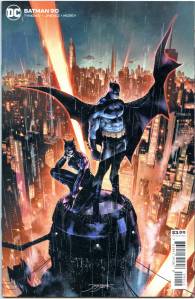
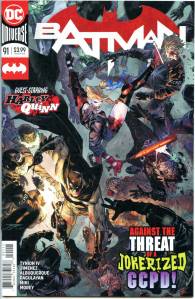
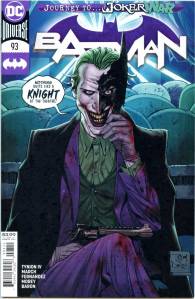
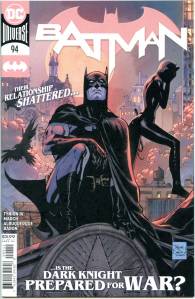
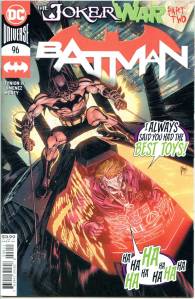
DC Comics ended the DC Rebirth branding in December 2017, opting to include everything under a larger DC Universe banner and naming. The continuity established by DC Rebirth continues across DC’s comic book titles, including volume 1 of Detective Comics and volume 3 of Batman.
Tony Stark is looking to restart his engine. He decides he’s going back to basics, putting away his high-tech toys and high-profile image so he can get his hands dirty again. It’s time to dig into the guts of real machines, put on some old-fashioned metal and fly.
But can he really lay that Stark-sized ego down? Life isn’t that simple, something that old friends and frustrating foes are quick to point out. If you strip down a billionaire to his bolts, does he run solid or just overheat?
Tony’s going to find out once a threat to the entire universe rears its head from the past. As he suits up again, Tony remains sure of one thing: he’s still IRON MAN down to his flesh and blood core.
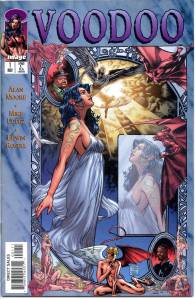
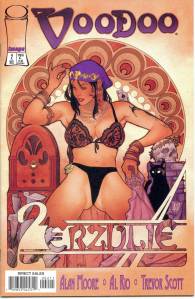
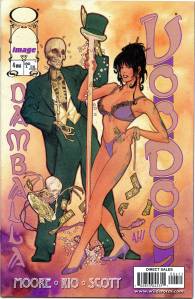
When former WildCATs member Voodoo decides to return to her roots, she reaches a crossroads in New Orleans. The nice gentleman who offers to get her a job as an exotic dancer isn’t quite what he seems…but then again, neither is Priscilla.
The title was the first to feature Neal Adams‘ version of Batman, generating fan interest that led to Adams’ style defining the modern Batman image to this day. In addition, Adams updated Green Arrow‘s visual appearance by designing a new costume for the character in issue #85 (Aug.–Sept 1969). The primary artist for the second half of the run was Jim Aparo, starting with #98 (October–November 1971). Haney frequently disregarded continuity by scripting stories which contradicted DC’s canon or by writing major heroes in an out-of-character fashion. Issue #100 (Feb.–March 1972) featured Batman and “4 Famous Co-Stars” (Green Lantern, Green Arrow, Black Canary, and Robin) in a story by Haney and Aparo. Issues #112 (April–May 1974) to #117 (Feb.–March 1975) of the series were in the 100 Page Super Spectacular format.
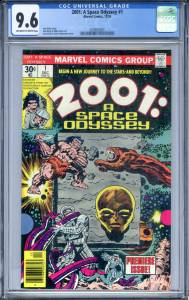
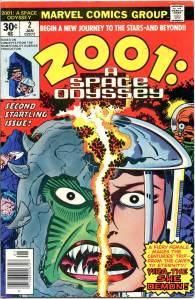
Shortly after the publication of the treasury edition, Kirby continued to explore the concepts of 2001 in a monthly comic book series of the same name, the first issue of which was dated December 1976. In this issue, Kirby followed the pattern established in the film. Once again the reader encounters a prehistoric man (“Beast-Killer”) who gains new insight upon encountering a monolith as did Moon-Watcher in the film. The scene then shifts, where a descendant of Beast-Killer is part of a space mission to explore yet another monolith. When he finds it, this monolith begins to transform the astronaut into a star child, called in the comic a “New Seed”.
Issues #1-6 of the series replay the same idea with different characters in different situations, both prehistoric and futuristic. In #7 (June 1977), the comic opens with the birth of a New Seed who then travels the galaxy witnessing the suffering that men cause each other. While the New Seed is unable or unwilling to prevent this devastation, he takes the essence of two doomed lovers and uses it to seed another planet with the potential for human life.
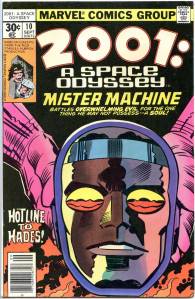
In issue #8 (July 1977), Kirby introduces Mister Machine, who is later renamed Machine Man.Mister Machine is an advanced robot designated X-51. All the other robots in the X series go on a rampage as they achieve sentience and are destroyed. X-51, supported by both the love of his creator Dr. Abel Stack and an encounter with a monolith, transcends the malfunction that destroyed his siblings. After the death of Dr. Stack, X-51 takes the name Aaron Stack and begins to blend into humanity. Issues #9 and 10, the final issues of the series, continue the story of X-51 as he flees destruction at the hands of the Army.
2001 A Space Odyssey 1 CGC 9.6 Off White to White Pages $79
In this Dark Horse’s comic series, Thoth-Amon was finally given an origin. Thoth-Amon, the dark wizard began life as young Thoth, a street thief in Memphia, stealing for his father to barely earn a living with perpetual beatings the only sign of affection his father gave. The only person Thoth cared for was his sister, whom he vowed to take away from the cruel city one day.




























 EHT Comics