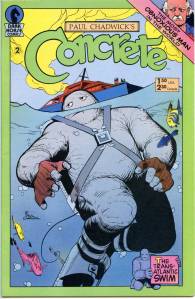
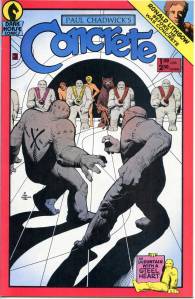
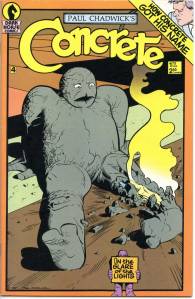
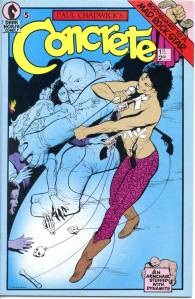
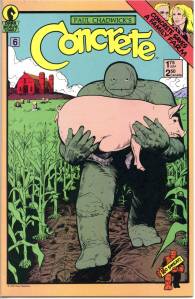
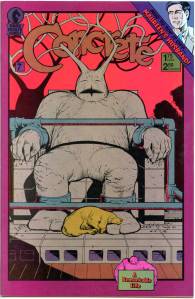
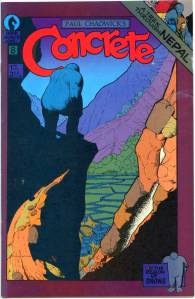
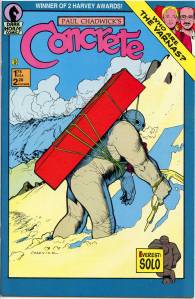
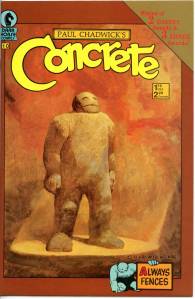
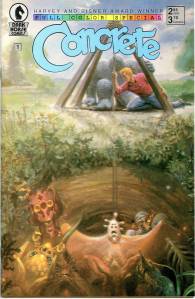
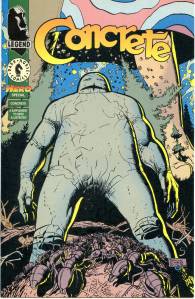
The series focuses on the life of Concrete, formerly Ron Lithgow, whose brain was involuntarily transplanted by aliens into a hulking artificial body which is made up of a substance that closely resembles concrete.
As part of the back-story, he eventually escaped and made contact with the US Senator he worked for as a speechwriter. After a prolonged period of scientific tests and examinations, he was allowed to live on his own with the cover story that he was a cyborg constructed by the government.
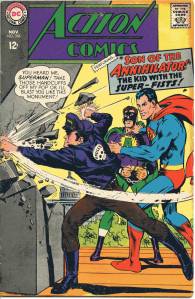
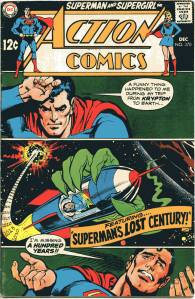
In the view of comics historian Les Daniels, artist Curt Swan became the definitive artist of Superman in the early 1960s with a “new look” to the character that replaced Wayne Boring’s version. Bizarro World first appeared in the story “The World of Bizarros!” in issue #262 (April 1960). Writer Jim Shooter created the villain the Parasite in Action Comics #340 (Aug. 1966).
Action Comics #280 CGC 7.0 Off-White to White Pages $149
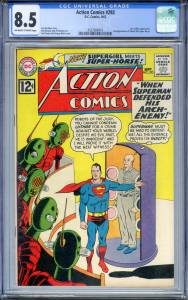
Action Comics #292 CGC 8.5 Off White – White Pages $195
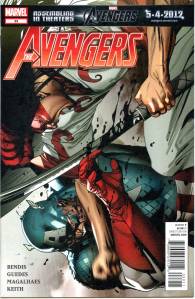
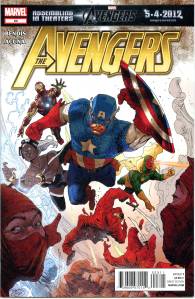
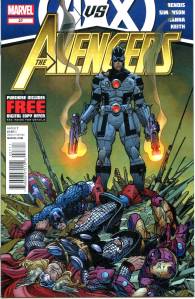
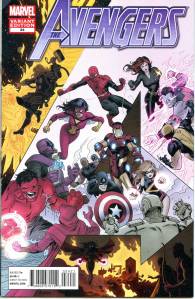
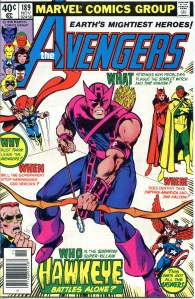
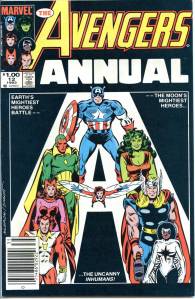
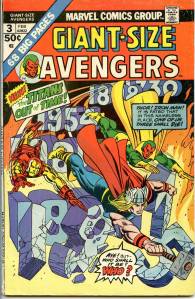
Iron Man, Thor and Captain America have been the Avengers’ heart and soul since the team’s earliest days. But in the wreckage of Asgard, they find themselves squabbling over old wounds. As unstable magics cast the heroes-at-odds into the scattered Nine Realms, they quickly realize the world in which they’re trapped is not how it should be. Can they come together and put it right? Then, as the three heroes re-forge the Avengers with the likes of Hawkeye, Spider-Man, Wolverine and Spider-Woman, Kang returns from the future bearing ill tidings of a force so powerful even he can’t conquer it!
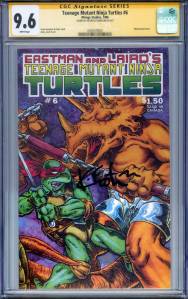
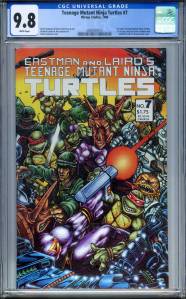
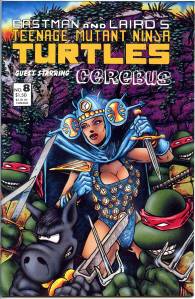
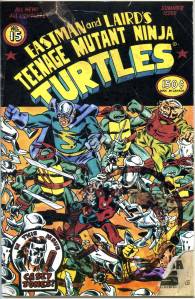
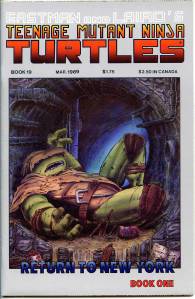
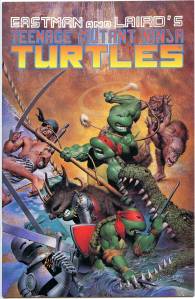
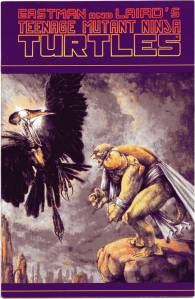
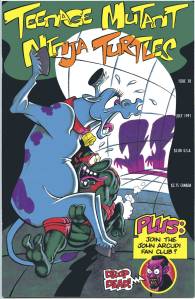
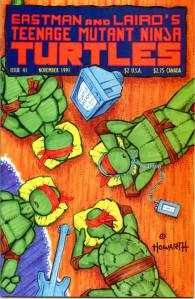
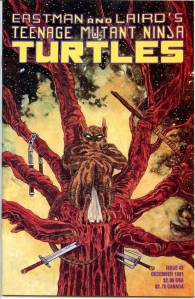
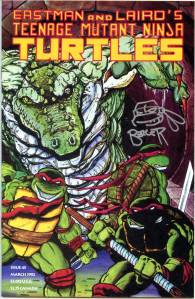
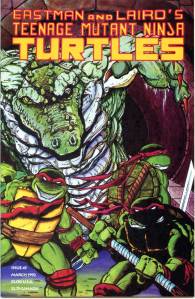
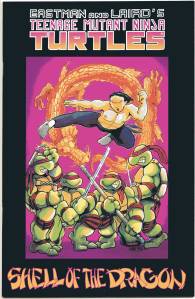
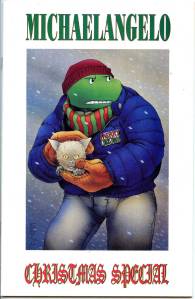
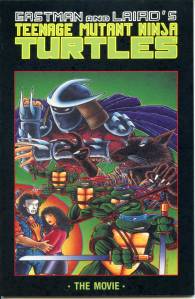
The Teenage Mutant Ninja Turtles was first published by Mirage Studios in 1984 in Dover, New Hampshire. The concept arose from a humorous drawing sketched out by Kevin Eastman during a casual evening of brainstorming and bad television with Peter Laird. Using money from a tax refund, together with a loan from Eastman’s uncle, the young artists self-published a single-issue comic intended to parody four of the most popular comics of the early 1980s: Marvel Comics’ Daredevil and New Mutants, Dave Sim’s Cerebus, and Frank Miller’s Ronin. The TMNTcomic series has been published in various incarnations by various comic book companies since 1984.
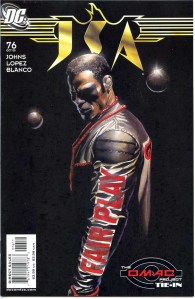
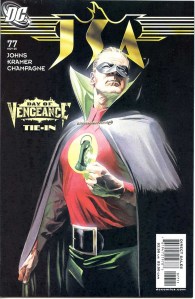
The JSA remained inactive for some time after the events of “Zero Hour“, but the surviving members (the Flash, Wildcat, and Alan Scott, (now going by the name Sentinel) have remained active throughout the DC Universe, having been placed as reserve JLI members, as evidenced in Justice League Europe #50.
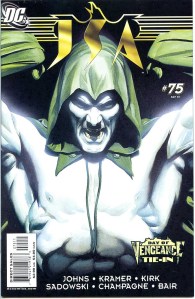
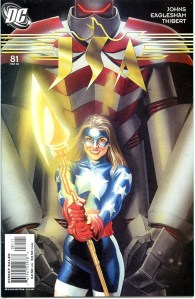
The Justice Society was revived as a monthly series called JSA in 1999 which mixed the few remaining original members with younger counterparts. This incarnation of the team focused on the theme of generational legacy and of carrying on the heroic example established by their predecessors. The series was launched by James Robinson and David S. Goyer. Goyer later co-wrote the series with Geoff Johns, who continued to write the series solo after Goyer’s departure. The series featured the art of Stephen Sadowski, Leonard Kirk, and Don Kramer, among others. It featured a story by Pulitzer Prize winner Michael Chabon.
During the events of Infinite Crisis, some of the surviving Golden Age characters, such as Wildcat and the Flash, are transported to the new “Earth-Two”, as created by Alexander Luthor, and seem to recall the existence of the original one, albeit vaguely.
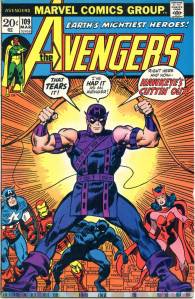
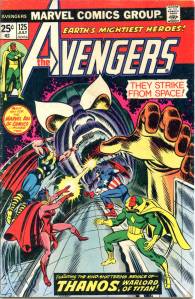
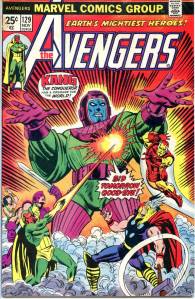
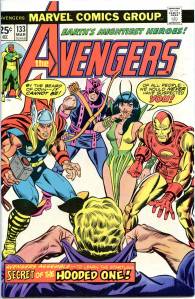
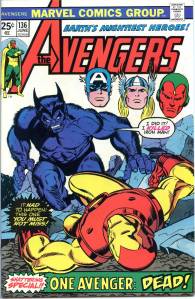
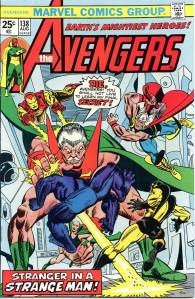
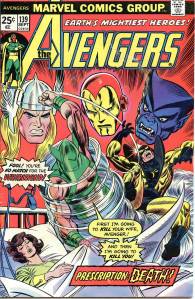
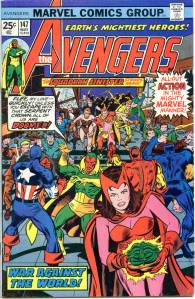
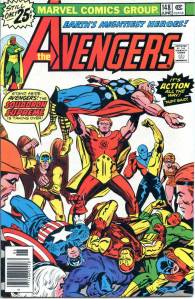
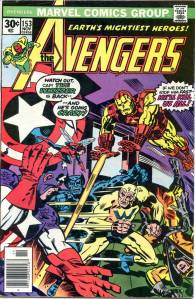
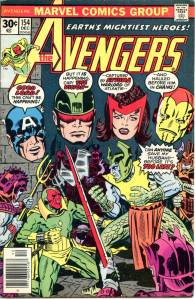
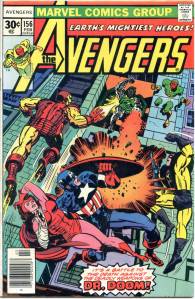
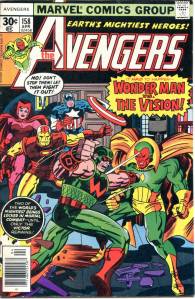
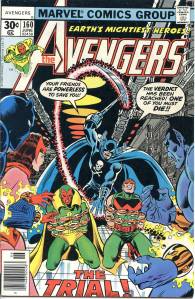
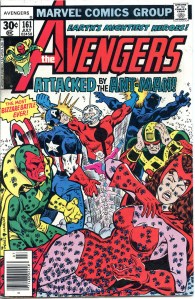
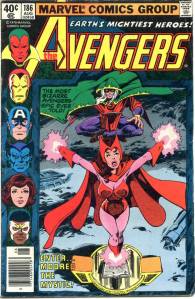
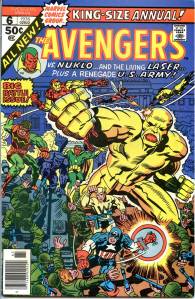
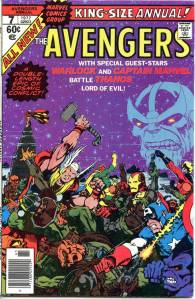
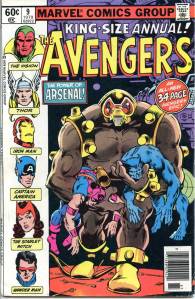
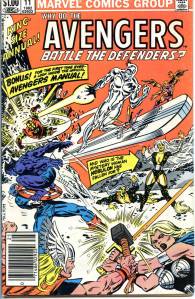
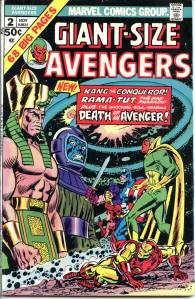
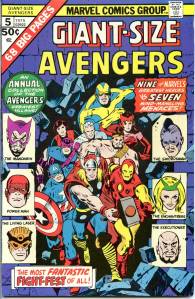
During the summer of 1973, Englehart and artists Bob Brown and Sal Buscema produced “The Avengers-Defenders Clash” storyline which crossed over between the two team titles. “The Celestial Madonna” arc linked Mantis’ origins to the very beginnings of the Kree-Skrull conflict in a time-spanning adventure involving Kang the Conqueror,and Immortus, who were past and future versions of each other.Mantis was revealed to be the Celestial Madonna,who was destined to give birth to a being that would save the universe.It was revealed that the Vision’s body had only been appropriated, and not created by Ultron, and that it originally belonged to the 1940s Human Torch. With his origins clear to him, the Vision proposed to the Scarlet Witch. The “Celestial Madonna” saga ended with their wedding, presided over by Immortus. The Beast and Moondragon joined the team soon after. George Pérez became the title’s artist with issue #141 (Nov. 1975) which saw the start of a seven-part story featuring the Squadron Supreme and the Serpent Crown. In 2010, Comics Bulletin ranked Englehart’s run on The Avengers eighth on its list of the “Top 10 1970s Marvels”.
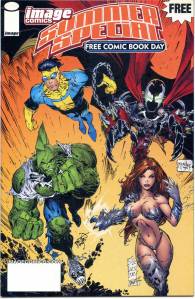
Cover by Todd McFarlane, Erik Larsen, Marc Silvestri and BATT. Free Comic Book Day 2004. Contains: “The Curse of Spawn”, “Witchblade First Strike” by Robert Place Napton with art by Francis Manapul, “Invincible” by Robert Kirkman with art by Ryan Ottley, “Savage Dragon Power Shortage” by Erik Larson.
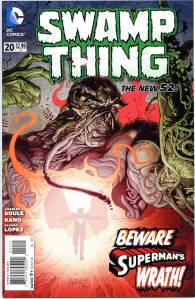
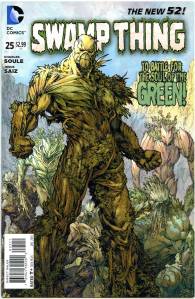
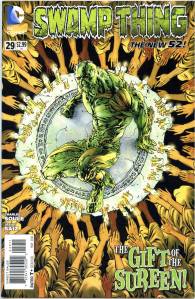
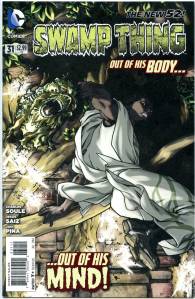
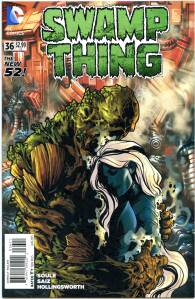
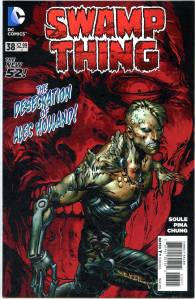
Swamp Thing (Volume 5) is one of “The New 52” ongoing series published after Flashpoint. It tells the story of Alec Holland‘s transformation into Swamp Thing following his resurrection from death.
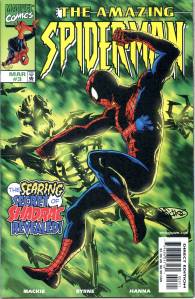
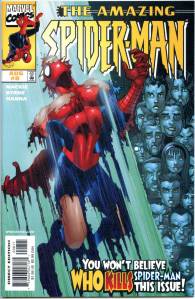
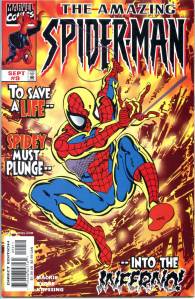
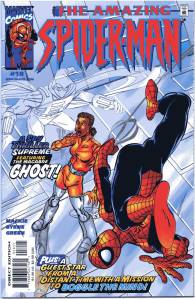
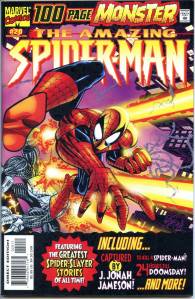
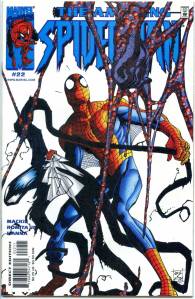
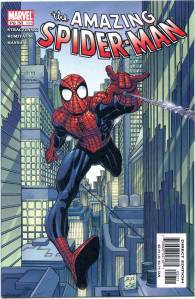
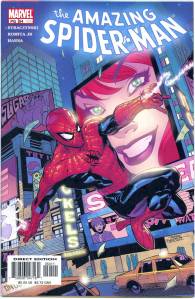
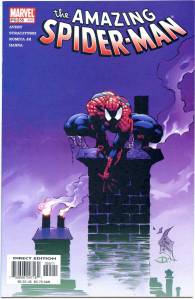
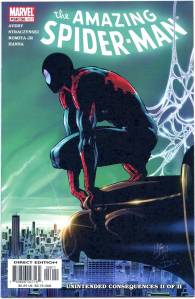
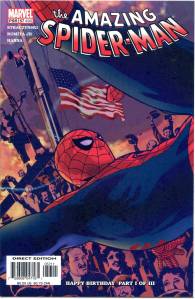
Marvel began The Amazing Spider-Man anew with (vol. 2) #1 (Jan. 1999). Howard Mackie wrote the first 29 issues. The relaunch included the Sandman being regressed to his criminal ways and the “death” of Mary Jane, which was ultimately reversed. Other elements included the introduction of a new Spider-Woman (who was spun off into her own short-lived series) and references to John Byrne’s miniseries Spider-Man: Chapter One, which was launched at the same time as the reboot. Byrne also penciled issues #1–18 (from 1999 to 2000) and wrote #13–14, John Romita Jr. took his place soon after in October 2000. Mackie’s run ended with The Amazing Spider-Man Annual 2001, which saw the return of Mary Jane, who then left Parker upon reuniting with him.
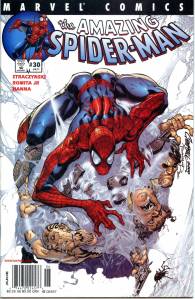
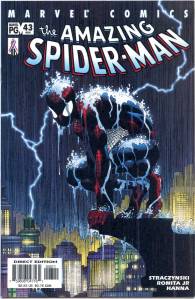
With issue #30 (June 2001), J. Michael Straczynski took over as writer and oversaw additional storylines – most notably his lengthy “Spider-Totem” arc, which raised the issue of whether Spider-Man’s powers were magic-based, rather than as the result of a radioactive spider’s bite. Additionally, Straczynski resurrected the plot point of Aunt May discovering her nephew was Spider-Man, and returned Mary Jane, with the couple reuniting in The Amazing Spider-Man (vol. 2) #50. Straczynski gave Spider-Man a new profession, having Parker teach at his former high school.
Issue #30 began a dual numbering system, with the original series numbering (#471) returned and placed alongside the volume two number on the cover. Other longtime, rebooted Marvel Comics titles, including Fantastic Four, likewise were given the dual numbering around this time. After (vol. 2) #58 (Nov. 2003), the title reverted completely to its original numbering for issue #500 (Dec. 2003). Mike Deodato, Jr. penciled the series from mid-2004 until 2006.
Hellboy: The Wild Huntlimited series was originally released from December 2008 through November 2009 , also numbered (on the inside front cover) as issues 37 through 44 of the continuing Hellboy series. The storyline delves into Irish and Arthurian legend, reprising several characters first introduced in Hellboy short story “The Corpse”. As with Hellboy stories generally, it was published by Dark Horse Comics.
















































 EHT Comics