Legends served mainly as a launching pad for several new comic series, including the latter-day Flash title, Keith Giffen and J. M. DeMatteis‘ comedy/action take on the Justice League, and the villain-based black ops Suicide Squad. The series also saw the post-Crisis introduction into the DC Universe of Captain Marvel (who was spun off in the miniseries Shazam!: The New Beginning) as well as Wonder Woman, who had been rebooted by DC Comics at the same time Legends was being published.
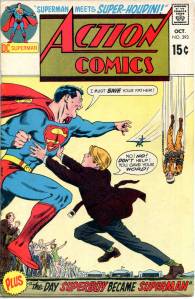
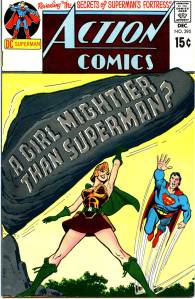
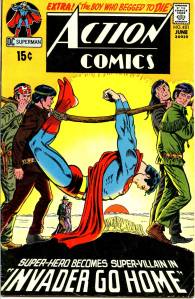
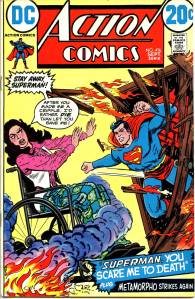
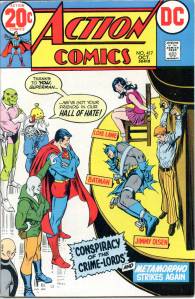
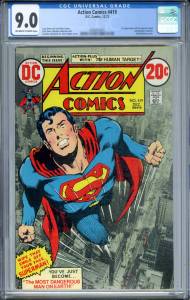
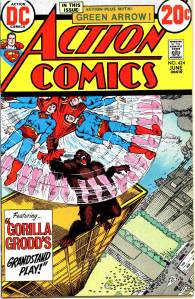
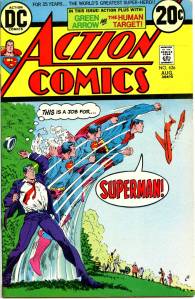
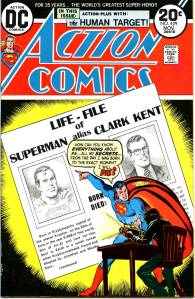
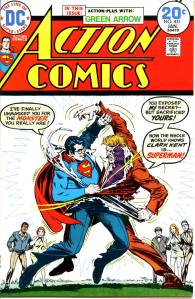
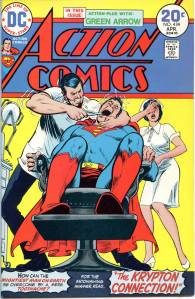
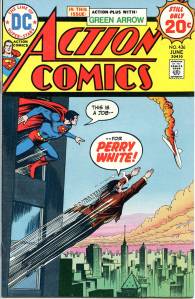
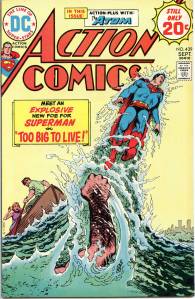
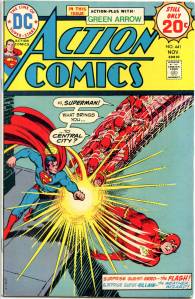
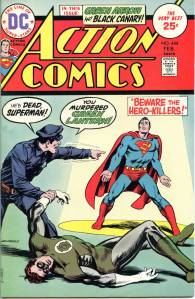
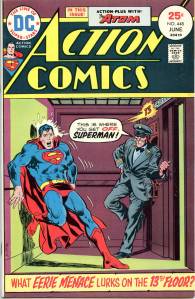
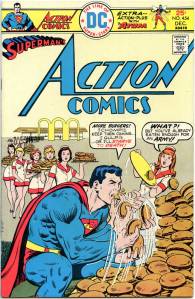
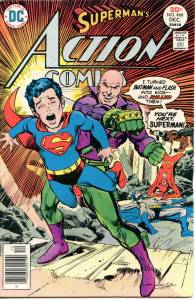
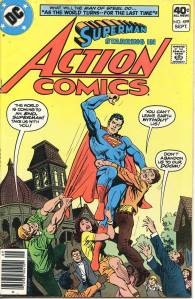
Mort Weisinger retired from DC in 1970 and his final issue of Action Comics was issue #392 (September 1970). Murray Boltinoff became the title’s editor until issue #418. Metamorpho was the backup feature in issues #413-418 after which the character had a brief run as the backup in World’s Finest Comics. Julius Schwartz became the editor of the series with issue #419 (December 1972) which also introduced the Human Target by Len Wein and Carmine Infantino in the back-up feature. Green Arrow became a backup feature in #421 and ran through #458, initially rotating with the Human Target and the Atom. Between issues #423 (April 1973) and #424 (June 1973), the series jumped ahead by one month due to DC’s decision to change the cover dates of its publishing line.
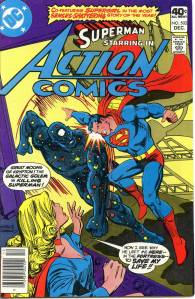
A new version of the Toyman was created by Cary Bates and Curt Swan in issue #432 (February 1974). Martin Pasko wrote issue #500 (October 1979) which featured a history of the Superman canon as it existed at the time and was published in the Dollar Comics format.
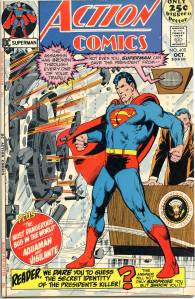
Action Comics #393 FN $6
Action Comics #395 NM- $20
Action Comics #396 FN- $5
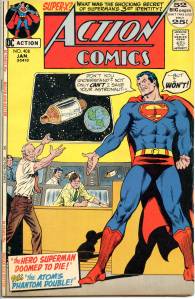
Action Comics #401 VF $18
Action Comics #404 VG-FN $9
Action Comics #405 VF+ $28
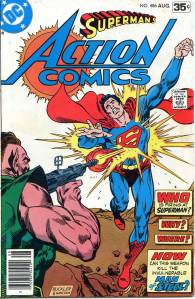
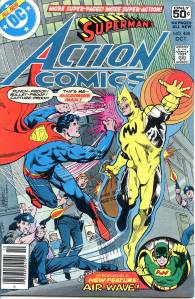
Action Comics #408 VF- $28
Action Comics #410 VG $7
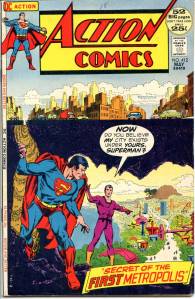
Action Comic #412 FN $4
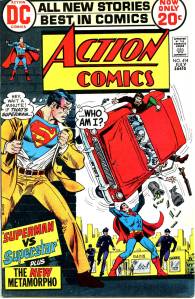
Action Comics #414 NM- $10
Action Comics #416 NM- $10
Action Comics #417 FN-VFN $8
Action Comics #419 CGC 9.0 Off-White to White Pages $249
The series was launched with an April 1985 cover dated issue by writer Louise Simonson and penciller Greg LaRocque and featured the return of Spider-Man’s alien black costume, which attempted to rebond with Peter Parker. Peter managed to rid himself of the costume again using church bells and the alien was presumed to have died after that. The first issue featured a cover painting by artist Charles Vess.
In issue #18 (September 1986), Peter Parker is pushed in front of an oncoming train. He thinks to himself that this should not have happened, as his spider-sense would have warned him of the danger. Writer David Michelinie has said that he wrote this as the first “teaser” appearance of the characterVenom, whom he was planning to introduce at a later date. Venom is an amalgam of reporter Eddie Brock and the alien costume. The costume could nullify Spider-Man’s spider-sense, and this was the first clue of a puzzle that Michelinie was planning to weave to introduce Venom.
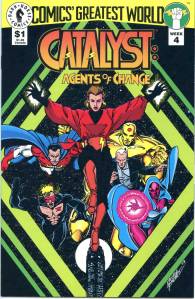
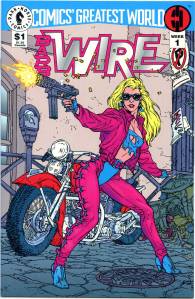
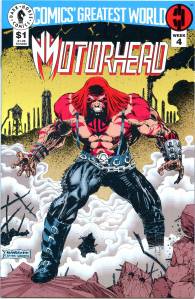
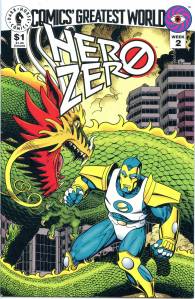
Comics’ Greatest World was created by Team CGW. Originally conceived in 1990, it took three years for the line to be released, which led to an industry-wide perception that it was created to capitalize on the speculator mania of the early 1990s. When the mania ended, most of the titles were canceled. Ghost, one of the imprint’s more unorthodox titles, managed to survive the longest. It was canceled twice, first in early 1998, before being revived later that year and canceled again after a run of just less than two years.
All Comics’ Greatest World titles took place in a shared universe. Most of the action centered on four cities in a slightly skewed version of America: Arcadia, Golden City, Steel Harbor, and the Cinnibar Flats area of Nevada, home of an interdimensional rift called the “Vortex”.
The series started off with a story in Dark Horse Comics before kicking off in four weekly limited series, introducing the cities and characters. These were followed by several short-lived series, one-shots, and mini-series. Only a few titles lasted very long.
Around April 1995, the imprint was renamed “Dark Horse Heroes”. With the name change, the use of the city logos was also dropped.
Comics Greatest World – Arcadia NM $8
Comics Greatest World – Cinnabar Flats NM $8
Comics Greatest World – Golden City NM $8
Comics Greatest World – Steel Harbor NM $8
Comics’ Greatest World Arcadia Week #1 X Limited Edition NM $6
Comics’ Greatest World Arcadia Week #1 X NM $4
Comics’ Greatest World Arcadia Week #2 Pit Bulls NM $2
Comics’ Greatest World Arcadia Week #3 Ghost NM $3
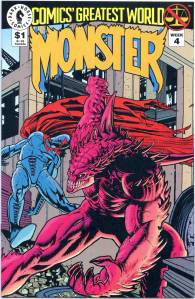
Comics’ Greatest World Arcadia Week #4 Monster NM $2
Comics Greatest World Golden City Week #1 Rebel Limited Edition NM $6
Comics Greatest World Golden City Week #1 Rebel NM $2
Comics Greatest World Golden City Week #2 Mecha NM $2
Comics Greatest World Golden City Week #3 Titan NM $2
Comics Greatest World Golden City Week #4 Catalyst NM $2
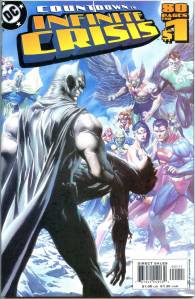
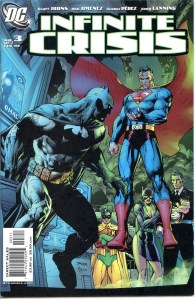
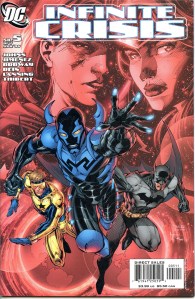
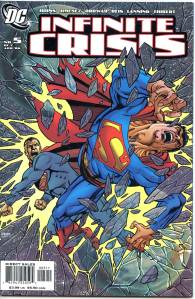
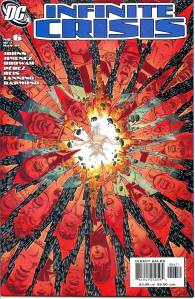
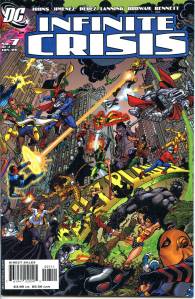
“Infinite Crisis” is a 2005–2006 comic book storyline published by DC Comics, consisting of an eponymous, seven-issue comic booklimited series written by Geoff Johns and illustrated by Phil Jimenez, George Pérez, Ivan Reis, and Jerry Ordway, and a number of tie-in books. The main miniseries debuted in October 2005, and each issue was released with two variant covers: one by Pérez, and one by Jim Lee and Sandra Hope.
The series storyline was a sequel to DC’s 1985 limited series Crisis on Infinite Earths, which “rebooted” much of the DC continuity in an effort to fix 50 years of contradictory character history. It revisited characters and concepts from that earlier Crisis, including the existence of DC’s Multiverse. Some of the characters featured were alternate versions of comic icons such as an alternate Superman named Kal-L, who came from a parallel universe called Earth-Two. A major theme was the nature of heroism, contrasting the often dark and conflicted modern-day heroes with memories of “lighter” and ostensibly more noble and collegial heroes of American comic books’ earlier days.
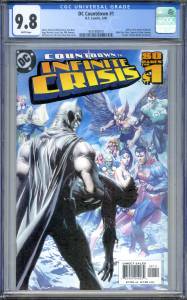
Countdown to Infinite Crisis 1 CGC 9.8 White Pages $45
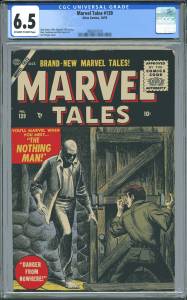
The first Marvel Tales was the direct continuation of the superhero anthology Marvel Mystery Comics, published by Marvel Comics‘ initial iteration, Timely Comics. This series ran through issue #92 (cover-dated June 1949). Beginning with issue #93 (Aug. 1949), it became Marvel Tales, an anthology of horror, fantasy, and science fiction stories. The bulk of this series was published under the company name Atlas Comics.
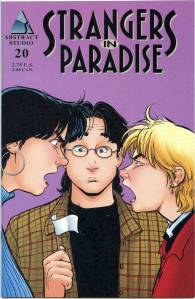
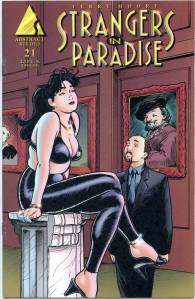
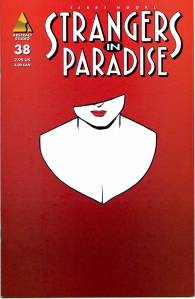
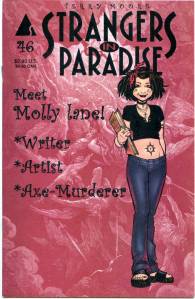
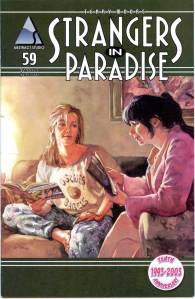
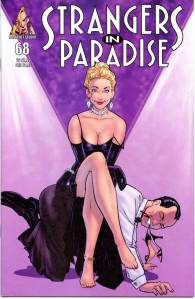
Strangers in Paradise is the entertaining and poignant look at the relationship of two young women and the twists and turns that life throws at them. Francine and Katchoo are high-school best friends who are reunited when Francine comes back to town after years away from her hometown. David is their new friend entangled in their complicated lives. From creepy ex-boyfriends and insensitive bosses to the reality of AIDS and underworld prostitution, you never know what will come up next – but you can always count on laughing and crying at the same time.
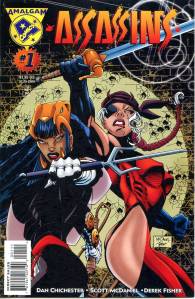
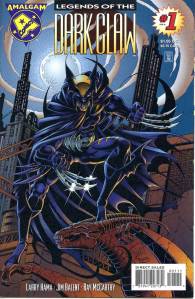
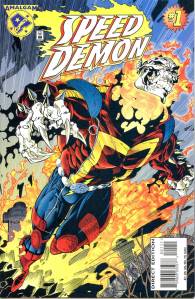
On two separate occasions – April 1996 and June 1997 – Marvel and DC co-published issues under the Amalgam Comics imprint. The issues were presented as if the imprint had existed for decades, with stories and editorial comments referring to a fictional history stretching back to the Golden Age of Comics, including retcons and reboots. For example, they referred to Secret Crisis of the Infinity Hour (an amalgamation of Marvel’s Secret Wars, DC’s Crisis on Infinite Earths, Marvel’s The Infinity Gauntlet, and DC’s Zero Hour), which featured the well-known cover of Crisis on Infinite Earths #7, but with Super-Soldier holding his sidekick’s body, instead of Superman holding Supergirl. Several issues included fake letter columns to provide the illusion of background to the stories, with the “fans'” hometowns formed by amalgamating the names of existing cities.
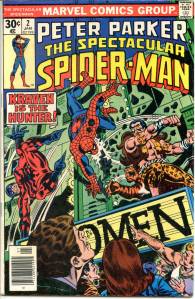
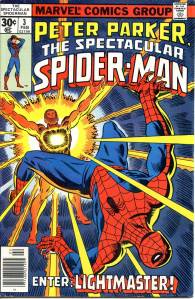
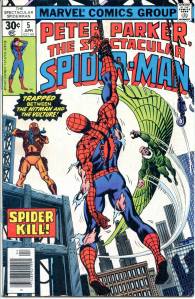
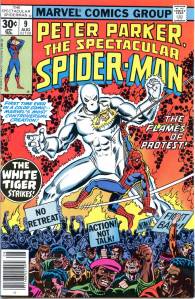
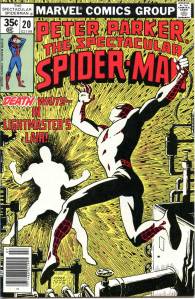
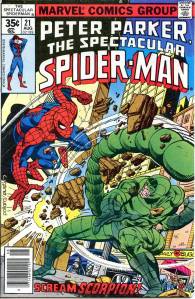
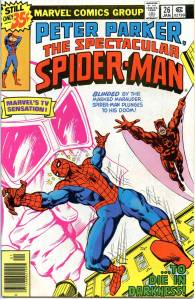
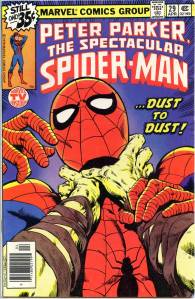
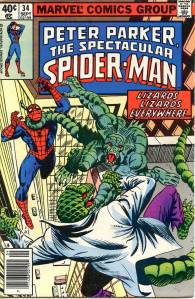
Peter Parker, The Spectacular Spider-Man debuted on December 1976. Shortened to simply The Spectacular Spider-Man with #134 (Jan. 1988), this was the second Amazing Spider-Man monthly comic-book spin-off series, after Marvel Team-Up, which also featured Spider-Man. The monthly title ran 264 issues (including a #-1 issue) until November 1998.
The series was launched by writer/editor Gerry Conway and artist Sal Buscema and Mike Esposito. Buscema drew the title until mid-1978. After Buscema’s departure, a succession of artists (including Mike Zeck, Jim Mooney, Ed Hannigan and Greg LaRocque) penciled the series for approximately five years. Frank Miller, who would later become the artist on Daredevil, first drew the character in Peter Parker, The Spectacular Spider-Man #27.










































 EHT Comics