Action Comics (1980’s)

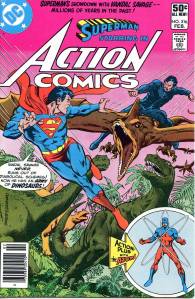
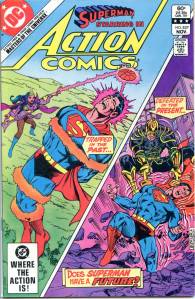
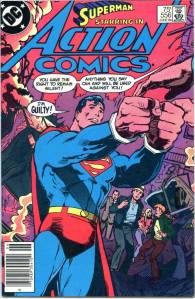
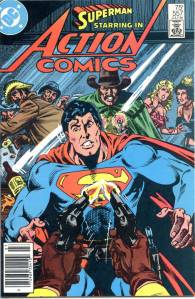
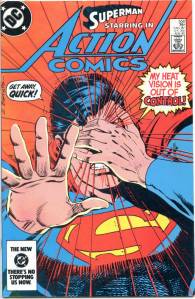
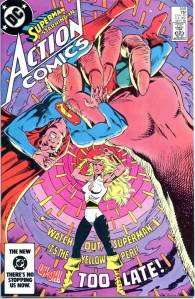
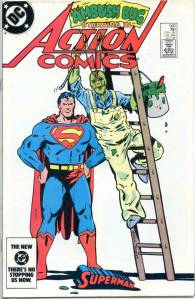
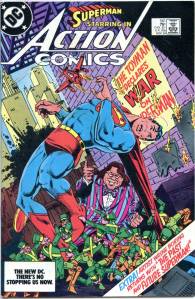
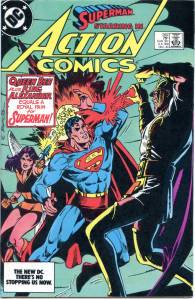
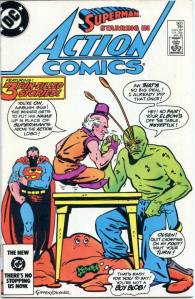
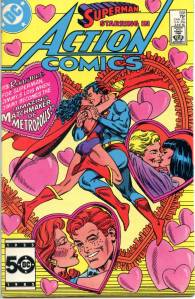
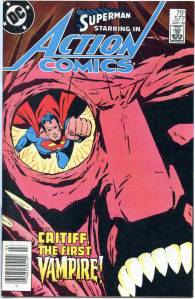
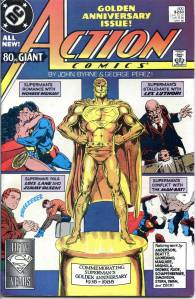
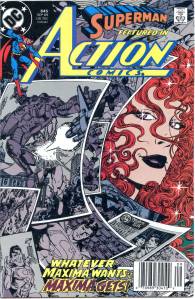
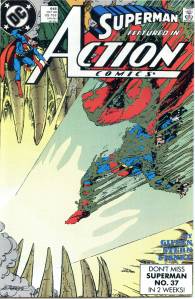
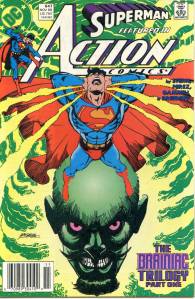
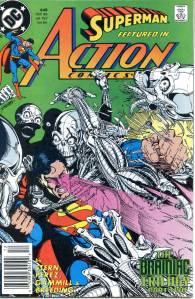
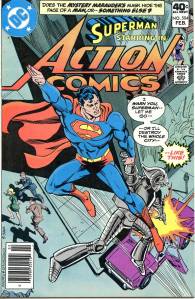
The superheroine Vixen made her first appearance in Action Comics #521 (July 1981). To mark the 45th anniversary of the series, Lex Luthor and Brainiac were both given an updated appearance in issue #544 (June 1983). Lex Luthor dons his war suit for the first time in the story “Luthor Unleashed!” and Brainiac’s appearance changes from the familiar green-skinned android to the metal skeletal-like robot in the story “Rebirth!”. Schwartz ended his run as editor of the series with issue #583 (September 1986) which featured the second part of the “Whatever Happened to the Man of Tomorrow?” story by Alan Moore and Curt Swan.

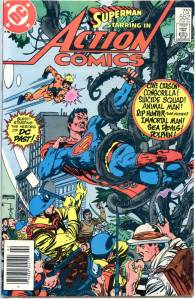
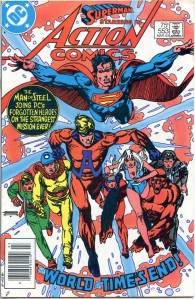
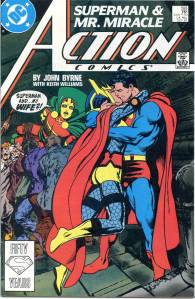
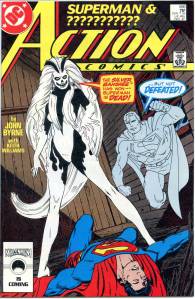
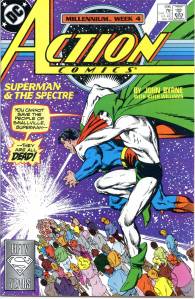
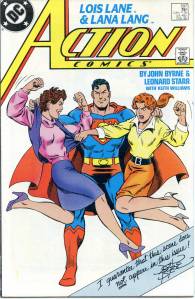
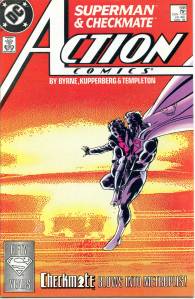
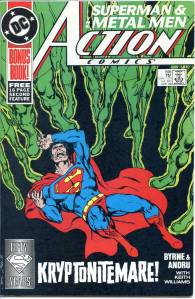
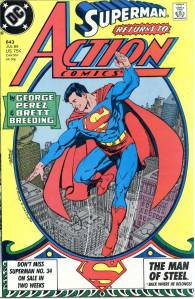
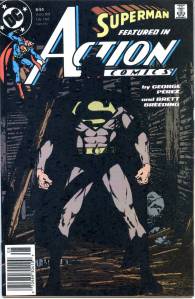
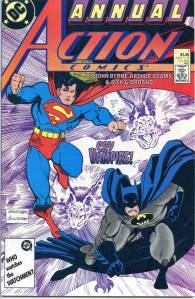
Following the events of Crisis on Infinite Earths, writer/artist John Byrne relaunched the Superman franchise in The Man of Steel limited series in 1986. Action Comics became a team-up title with issue #584 (January 1987).  The first Action Comics Annual was published in 1987 and featured Superman teaming with Batman in a story written by Byrne and drawn by Arthur Adams. A DC Comics Bonus Book was included in issue #599 (April 1988).

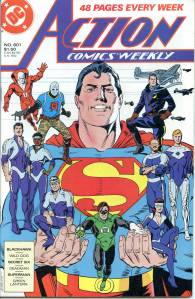
From May 24, 1988 – March 14, 1989, the publication frequency was changed to weekly, the title changed to Action Comics Weekly, and the series became an anthology. Prior to its launch, DC cancelled its ongoing Green Lantern Corps title, and made Green Lantern and his adventures exclusive to Action Comics Weekly.
Tales of Suspense (Silver Age)

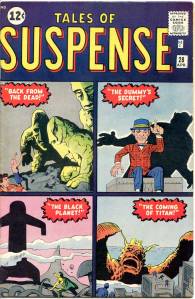
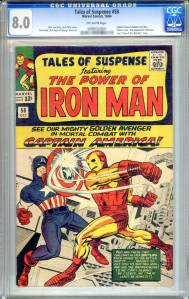
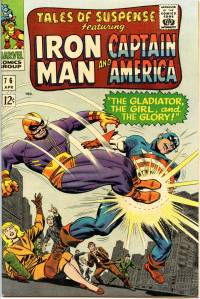
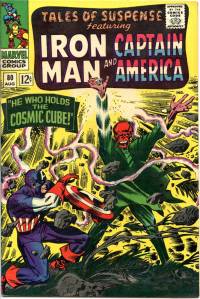
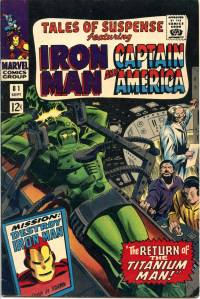
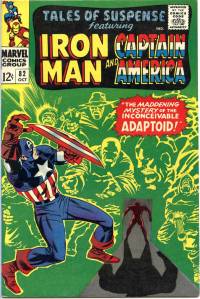
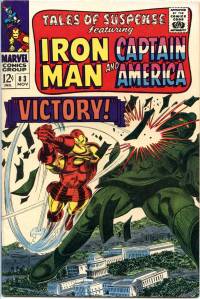
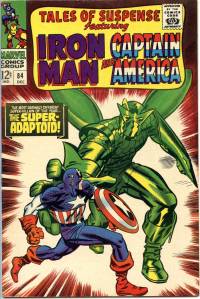
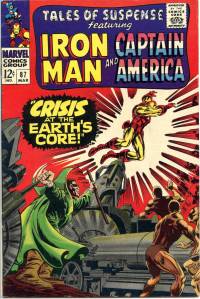
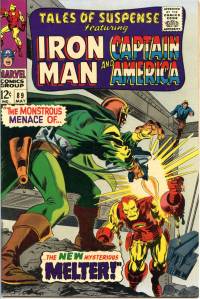
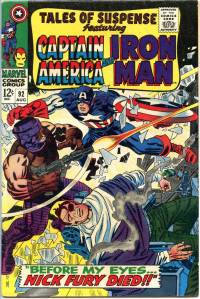
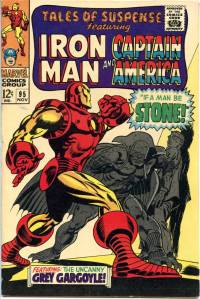
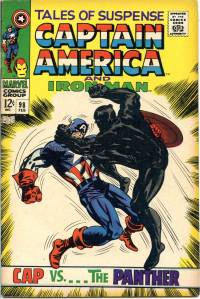
Tales of Suspense, Issue #39 (March 1963) introduced the superhero Iron Man, created by editor and plotter Lee, scripter Lieber, and artists Heck and Jack Kirby. He starred in generally 13-page but occasionally 18-page adventures, with the rest of Tales of Suspense devoted to the anthological science fiction and fantasy stories the comic normally ran.
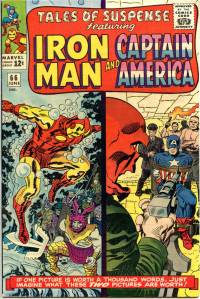
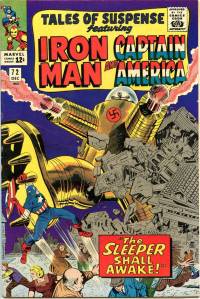
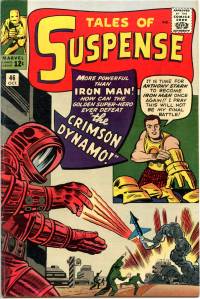
After debuting with bulky gray armor, Iron Man was redesigned with similar but golden armor in his second story (issue #40, April 1963). The first iteration of the modern, sleek red-and-golden armor appeared in #48 (Dec. 1963), drawn by Ditko (though whether he or Kirby, singly or in collaboration, designed it, is uncertain). From #53-58 (May-Oct. 1964), the cover logo was “Tales of Suspense featuring The Power of Iron Man”. Two months before the debut of the sorcerer-hero Doctor Strange, Lee, Kirby and scripter Robert Bernstein, under the pseudonym “R. Berns”, introduced a same-name criminal scientist and Ph.D., Carl Strange. Making his sole appearance in the Iron Man story “The Stronghold of Dr. Strange” in Tales of Suspense #41 (May 1963), the character gained mental powers in a freak lightning strike. The Mandarin debuted in issue #50 (Feb. 1964) and would become one of Iron Man’s major enemies. The Black Widow first appeared in #52 (April 1964) and Hawkeye followed five issues later.
Aliens: Stronghold (1994)

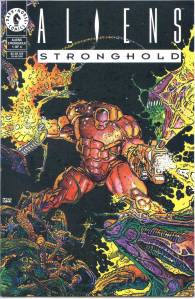
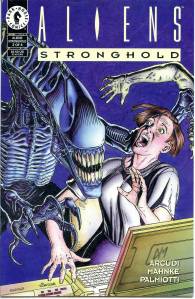
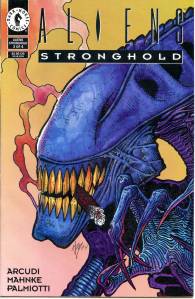
On an apparently routine supply run, Philip and Joy Strunk deliver a shipment of synthetic photo receptors to Caspar Nordling, biotechnologist for Grant Corporation. When the Strunks discover that Nordling’s experiments have exceeded Stanislaw Mayakovsky’s work (as seen in Aliens: Hive), they realize that there’s more to Nordling — and the Aliens — than meets the eye.

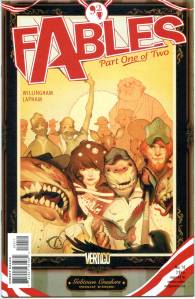
Fables (2002)

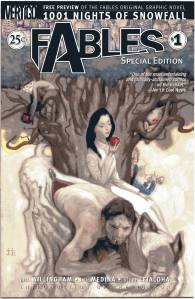
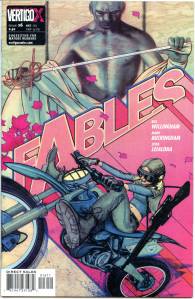
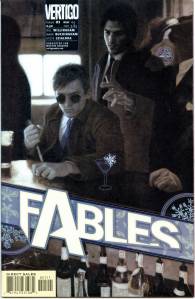
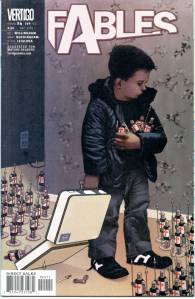
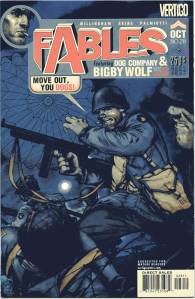
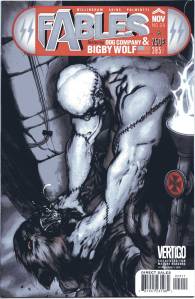
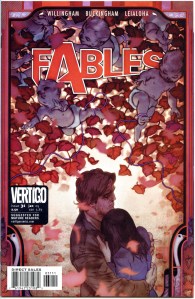
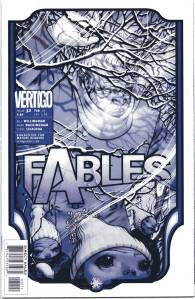
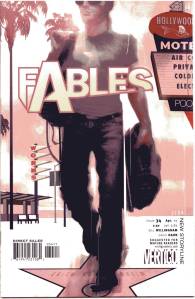
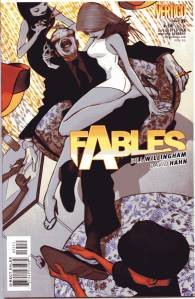
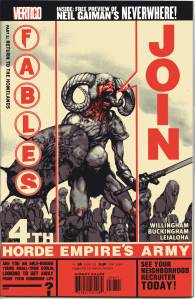
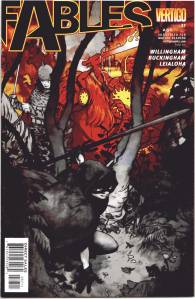
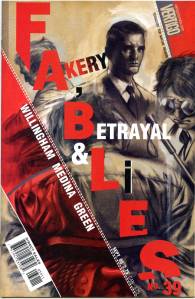
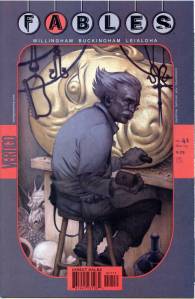
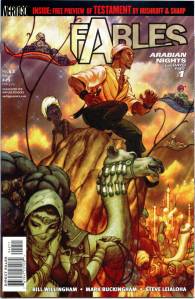
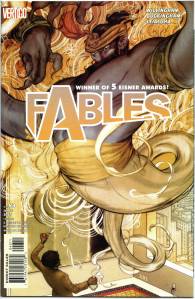
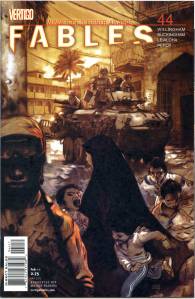
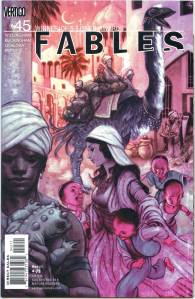
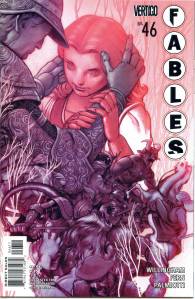
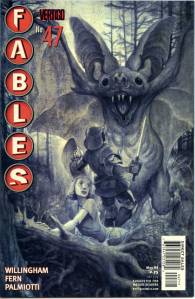
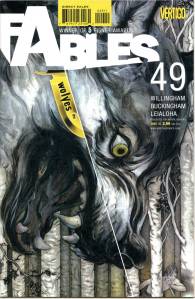
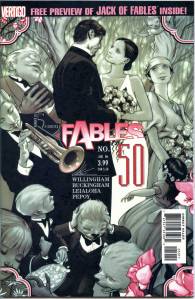
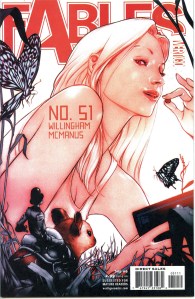
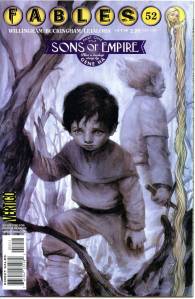
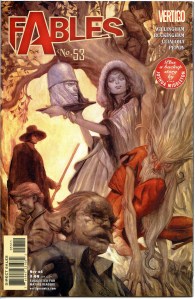
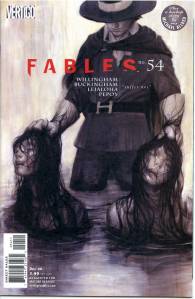
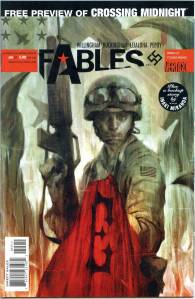
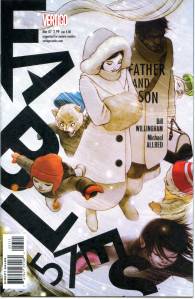
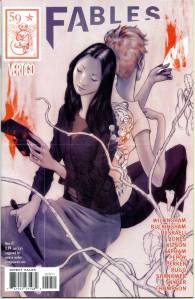
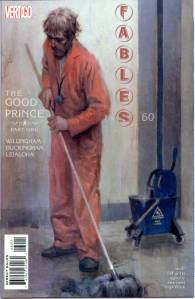
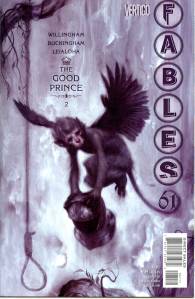
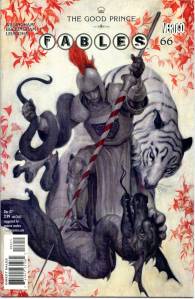
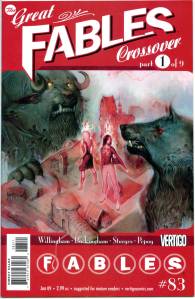
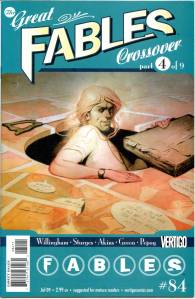
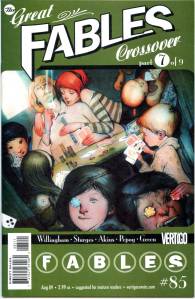
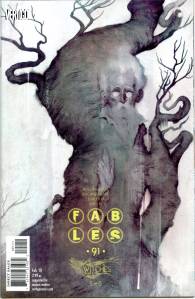
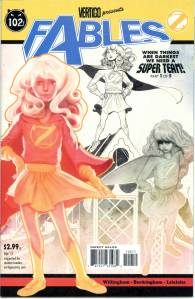
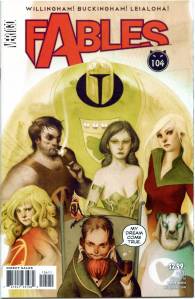
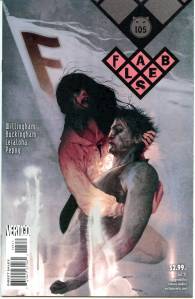
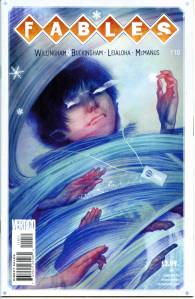
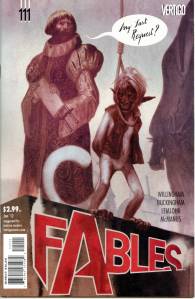
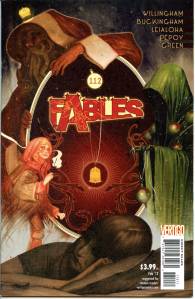
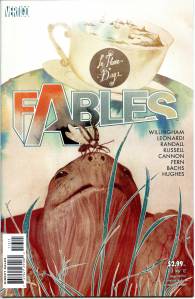
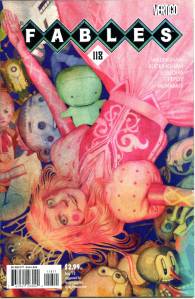
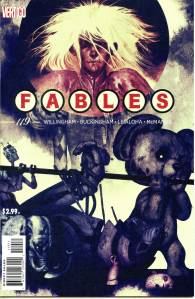
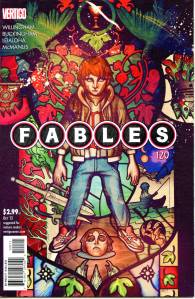
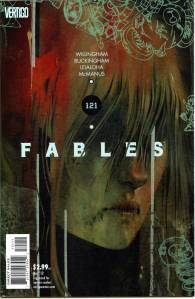
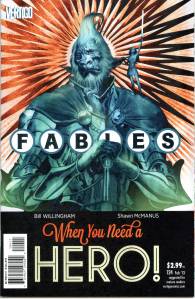
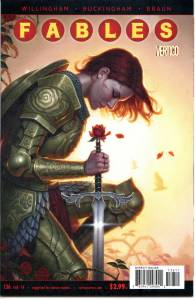
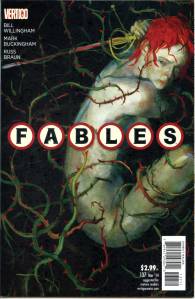
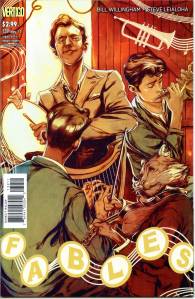
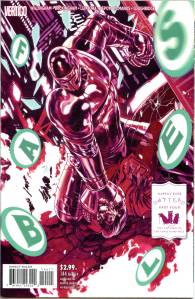
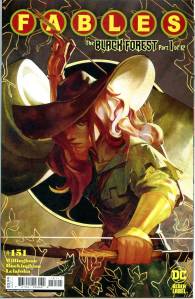
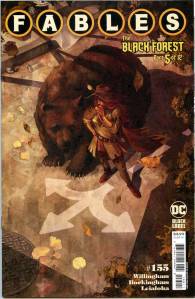
Fables was a series published by DC Comics‘s Vertigo imprint beginning in 2002. The series deals with various people from fairy tales and folklore – referring to themselves as “Fables” – who have been forced out of their Homelands by “The Adversary” who has conquered the realm. The Fables have traveled to our world and formed a clandestine community in New York City known as Fabletown. Fables who are unable to blend in with human society (such as monsters and anthropomorphic animals) live at “the Farm” in upstate New York.

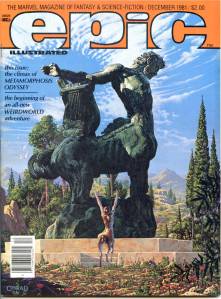
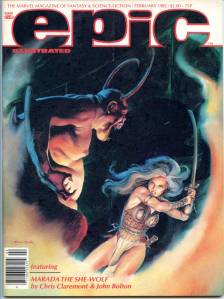
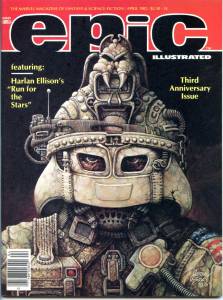
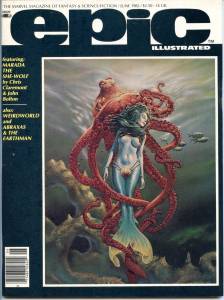
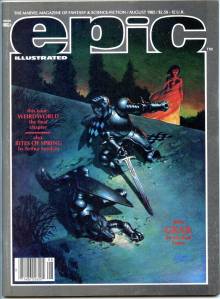
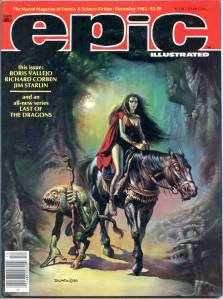
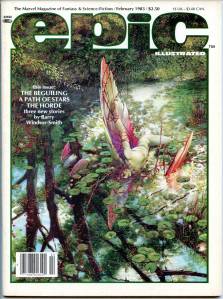
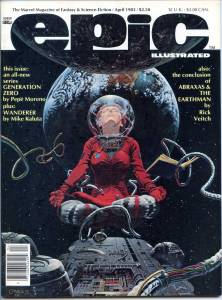
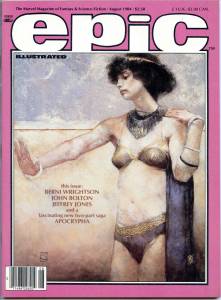
Epic Illustrated (1980)

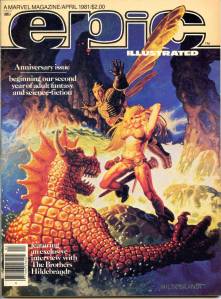
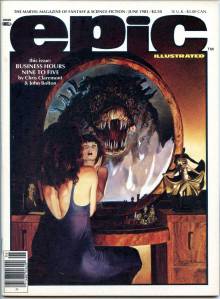
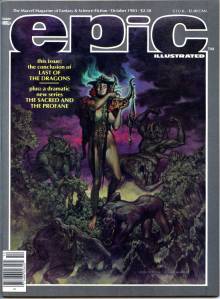
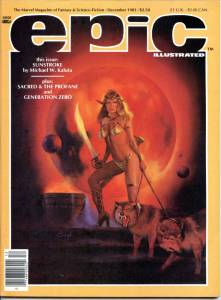
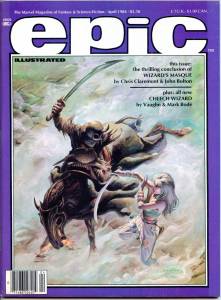
Epic Illustrated was a comics anthology in magazine format published in the United States by Marvel Comics. Similar to the US-licensed comic book magazine Heavy Metal, it allowed explicit content to be featured, unlike the traditional American comic books of that time bound by the restrictive Comics Code Authority, as well as offering its writers and artists ownership rights and royalties in place of the industry-standard work for hire contracts. The series lasted 34 issues from Spring 1980–February 1986.

A color comic-book imprint, Epic Comics, was spun off in 1982.

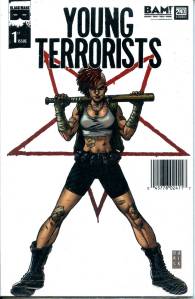
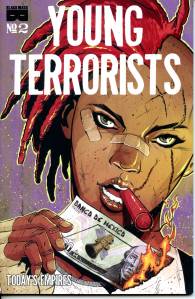
Young Terrorists (2015)

What if “The Smoking Man” from X-Files was a real person, and his daughter found out what he did for a living? The daughter of an assassinated globalist kingpin breaks out of an internment camp and leads her fellow escaped prisoners in a battle against an elitist conspiracy of shadow governments, megabanks, and military juntas in this edgy and subversive thriller that channels Fight Club by way of Girl With The Dragon Tattoo.

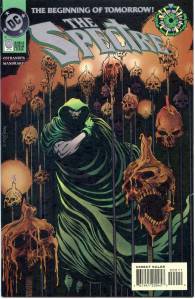
The Spectre V3 (1992)

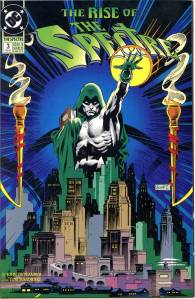
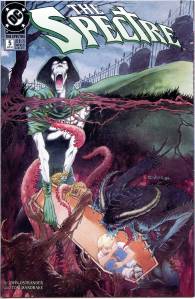
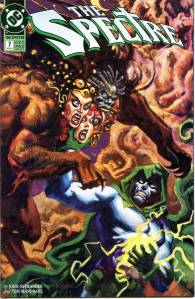
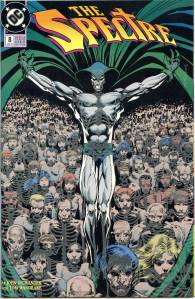
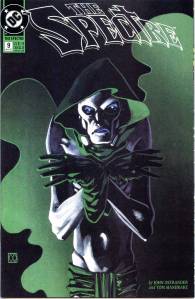
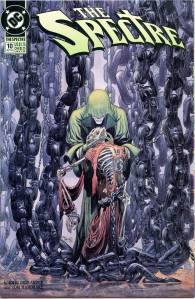
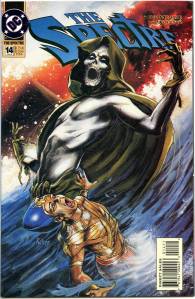
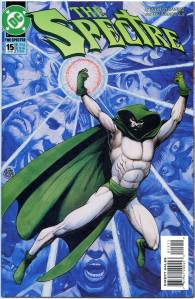
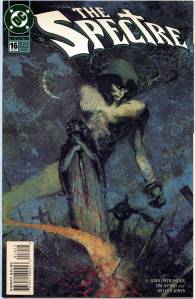
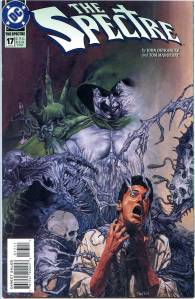
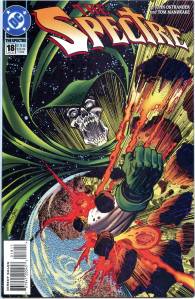
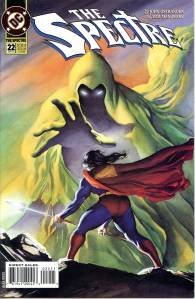
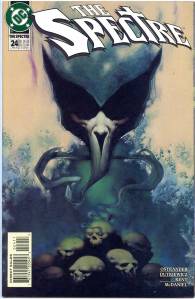
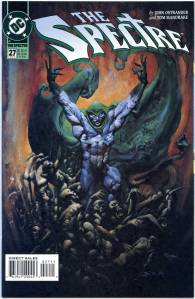
In 1992, the Spectre was again given his own series, this time written by writer and former theology student John Ostrander, who chose to re-examine the Spectre in his aspects as both the embodied Avenging Wrath of the Murdered Dead and as a brutal 1930s policeman.

Ostrander placed the Spectre in complex, morally-ambiguous situations that posed certain ethical questions, one example being: What vengeance should be wrought upon a woman who killed her abusive husband in his sleep?

Ostrander also added several new concepts into the Spectre’s history: He revealed that the Spectre was meant to exist as the embodiment of the Wrath of God, and Jim Corrigan was but the latest human spirit assigned to guide him while he existed on Earth. It was also shown that the Spectre was a fallen angel named Aztar who had participated in Lucifer‘s rebellion, but then repented, and that serving as the embodiment of God’s anger was its penance.

Furthermore, the Spectre was not the first embodiment of God’s anger, but was the replacement for the previously-minor DC character Eclipso. Ostrander chose to portray this as a distinction between the Spectre’s pursuit of vengeance and Eclipso’s pursuit of revenge. In a historical context, Eclipso was responsible for the biblical Flood, while the Spectre was the Angel of Death who slew the firstborn Egyptian children. Spectre and Eclipso have battled numerous times through history but neither entity can be fully destroyed.

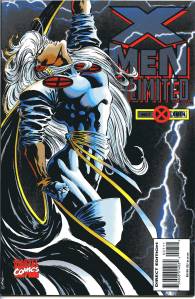
X-Men Unlimited V1 (1990’s)

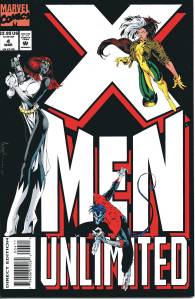
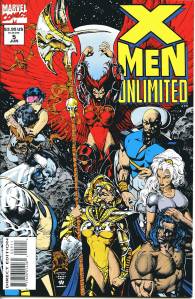
This title allowed new and lesser-known writers and artists to write and draw X-Men comics. The comics were also usually self-contained stories; with the exception of a tie-in to the Onslaught crossover. This was particularly unique during the late 1990s when most X-Men titles frequently had story arcs that were several issues long. It ran as a quarterly feature releasing four issues per year until late 2002 when it converted into a monthly title.

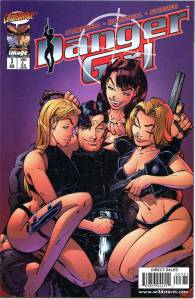
Danger Girl (1998)

Danger Girl was created by J. Scott Campbell and Andy Hartnell. The series, started in March 1998 stars an eponymous group of three sexy female secret agents—Abbey Chase, Sydney Savage and Sonya Savage—who engage in adventures in the vein of other fictional characters like Charlie’s AngelsJames Bond and Indiana Jones. They are led by a former British Secret Service Agent named Deuce and guided by teenage genius Silicon Valerie.

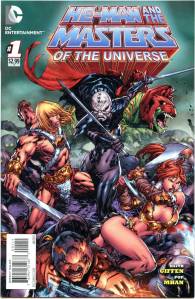
He-Man and the Masters of the Universe (2013)

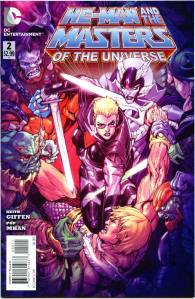
On April 24, 2013, the second volume, an ongoing series, started with the aftermath of the first volume. 19 issues were released, consisting of 3 story arcs of 6 issues and one prelude to the next ongoing series. At the start of the first arc, a celebration of the Sorceress’ life is interrupted by an invasion of the Horde, the army of Hordak himself. Leading the charge is a human woman called Despara. He-Man’s friend Teela soon recognized Despara as her forgotten childhood friend Adora, who is destined to become She-Ra, the Princess of Power.[2] The second arc, entitled “What Lies Within” (issue 7-12) sees King Randor lead He-Man, Teela, Stratos and Moss Man into Subternia to attempt to bring the Sorceress back to life. Along the way they face the reborn Snake Men. The third arc, “The Blood of Grayskull” (issues 13 to 18) explains the origin of She-Ra. The final issue, #19, features a flashback to the youth of Prince Adam and serves as a prelude to the Eternity War.