Black Knight (2015)

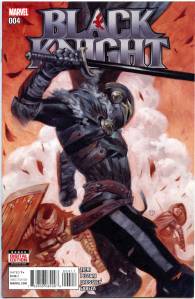
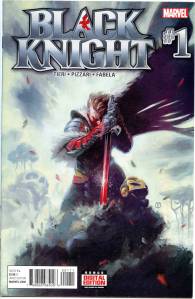
Dane Whitman is the third character to bear the Black Knight name, he was created by writer Roy ThomasJohn Verpoorten and artist George Tuska, and first appeared in The Avengers #47 (December 1967). The original Black Knight‘s descendant and the supervillain Black Knight‘s nephew, he inherited a mystical sword that carried a curse and took the Black Knight name to help restore honor, and has been a long time member of the Avengers‘ various incarnations as well as the DefendersUltraforceHeroes for Hire, and MI: 13.

The character was featured in a four-issue mini-series in 1990 and two one-shots in 1996 and 2007. Starting in 2015, he was the main character in Marvel’s All-New, All-Different Marvel ongoing Black Knight series, the first ongoing series to feature Dane Whitman as the titular character.
 

Savage Combat Tales (1975)

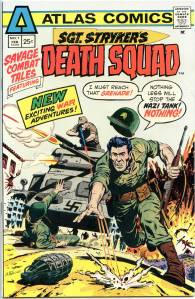
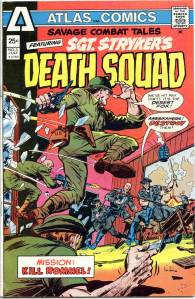
During World War II, Sgt. Stryker joins forces with a group of U.S. Army prisoners, forming the Death Squad. Also, a mercenary pilot gets his just desserts. Part of the short-lived Atlas line from former Marvel publisher Martin Goodman. Written by Archie Goodwin, with art by Al McWilliams and Jack Sparling.

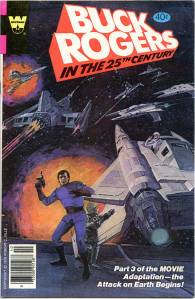
Buck Rogers in the 25th Century (1979)

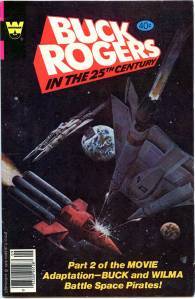
Gold Key Comics published a single issue of a Buck Rogers comic in 1964. A second series was based on the 1979 television series and was published from 1979 to 1982, first by Gold Key, then by Whitman Publishing, continuing the numbering from the 1964 single issue.

Vampirella V2 – Dynamite (2014)

The title was rebooted by Dynamite in June 2014 with Vampirella vol. 2, #1 by author Nancy Collins and art by Patrick Berkenkotter. This series lasted 13 issues.

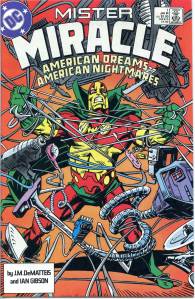
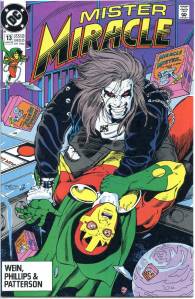
Mister Miracle V2 (1989)

Mister Miracle was revived as part of the Justice League International lineup in 1987, a one-shot special by writer Mark Evanier and artist Steve Rude was published in 1987. This special was followed by an ongoing series that began in January 1989, written by J. M. DeMatteis and drawn by Ian Gibson. Other writers who contributed to the title include Keith GiffenLen Wein, and Doug Moench. This run lasted 28 issues before cancellation in 1991. The series was largely humor-driven, per Giffen’s reimagining Scott Free, his wife Big Barda, and their friend Oberon, who pretended to be Scott’s uncle, as living in suburbia when they were not fighting evil with the Justice League.

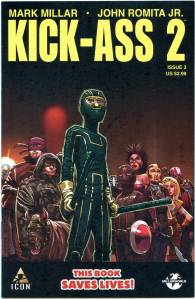
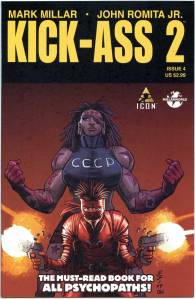
Kick-Ass 2 (2011)

By the beginning of Book Three of The Dave Lizewski Years originally titled Kick-Ass 2: Balls to the Wall, Kick-Ass is training and fighting crime in New York City. Hit-Girl meanwhile is in a state of forced retirement, having been reunited with her biological mother. Her new step-father Marcus Williams, a former ally of her father Big Daddy, seeks to reintegrate Hit-Girl back into society as a normal girl. Though she continues to train Kick-Ass, Hit-Girl reluctantly obeys her step-father’s wish for her to have a normal life.

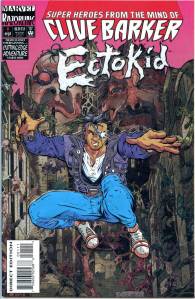
Ectokid (1993)

Ectokid is a fantasy series published by Marvel Comics‘ Razorline imprint that ran from 1993 to 1994. Created by filmmaker and horror/fantasy novelist Clive Barker as one of the imprint’s four interconnected series, it starred teenaged Dexter Mungo, the child of a mortal and a ghost, who is able to see and interact with the dangerous, interdimensional Ectosphere.

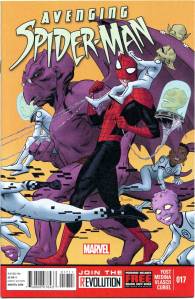
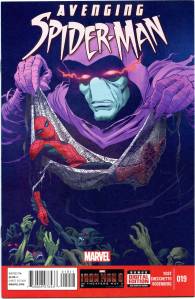
Avenging Spider-Man (2012)

The events in the story take place in the primary continuity of the mainstream Marvel Universe along with the events of The Amazing Spider-Man and later The Superior Spider-Man. This was the first ongoing series to feature Spider-Man as the main character besides The Amazing Spider-Man since the cancellation of Friendly Neighborhood Spider-Man and the second volume of Sensational Spider-Man in December 2008 following the conclusion of the “One More Day” storyline. Avenging Spider-Man has also been instrumental in Marvel’s shift towards including codes to receive free digital copies of the comic with purchased print comic books.

Monsters Unleashed (1973)


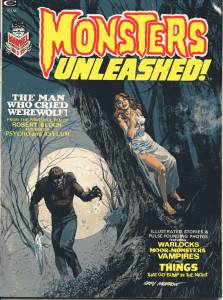
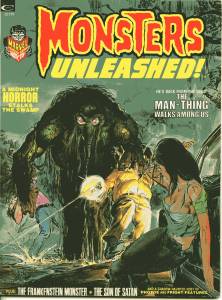
A magazine rather than a comic book, Monsters Unleashed did not fall under the purview of the comics industry’s self-censorship Comics Code Authority, allowing the title to feature stronger content — such as moderate profanity, partial nudity, and more graphic violence — than color comics of the time.


Demon Hunter (1975)

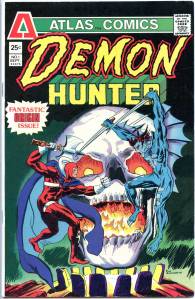
The origin of Gideon Cross, who turns against the demon cult that trained him as a killer. First and only issue of the series; creator Rich Buckler later revised the idea as Marvels Devil-Slayer. Story by Buckler and David Anthony Kraft; art and cover by Buckler.