Steed, Peel and John Drake – Silver Age

In 1968 Gold Key reprinted a couple of TV Comic Avengers strips as a one-shot comic for the US market. For trademark reasons, since Marvel had the Avengers comic trademark in the USA, the comic was titled after the featured characters, John Steed and Emma Peel.

The Avengers is a spy-fi British television series created in the 1960s. The Avengers initially focused on Dr. David Keel (Ian Hendry) and his assistant John Steed (Patrick Macnee). Hendry left after the first series and Steed became the main character, partnered with a succession of assistants. Steed’s most famous assistants were intelligent, stylish and assertive women: Cathy Gale (Honor Blackman), Emma Peel (Diana Rigg), and later Tara King (Linda Thorson). Later episodes increasingly incorporated elements of science fiction and fantasy, parody and British eccentricity. The Avengers ran from 1961 until 1969, screening as one-hour episodes its entire run.

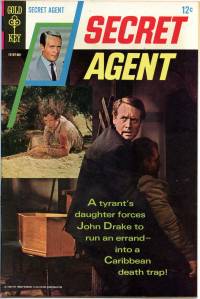
In 1966, Gold Key Comics published two issues of a Secret Agent comic book based upon the series Danger Man (titled Secret Agent in the United States), a British television series which was broadcast between 1960 and 1962, and again between 1964 and 1968. The series featured Patrick McGoohan as secret agent John Drake.

Prisoner fans frequently debate whether John Drake of Danger Man and Number Six in The Prisoner are the same person. Like John Drake, Number Six is evidently a secret agent, but one who has resigned from his job. Moreover, in the surreal Prisoner episode “The Girl Who Was Death“, Number Six meets “Potter”, John Drake’s Danger Man contact. Christopher Benjamin portrayed the character in both series.

 

Top Comics (1967)

In 1967, Gold Key reprinted a number of selected issues of their comics under the title Top Comics which were sold in plastic bags containing five comics at gas stations and various eateries. Like Dell, Gold Key was one of the few major American publishers of comic books never to display the Comics Code Authority seal on its covers.

Boris Karloff: Tales of Mystery (1963)

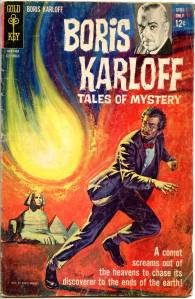
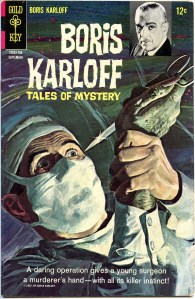
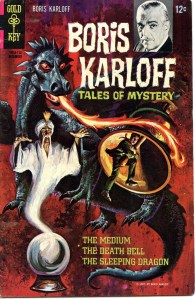
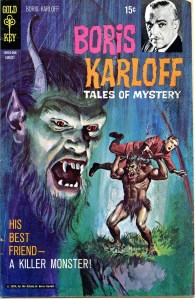
During the run of the television show Thriller, Karloff lent his name and likeness to a comic book for Gold Key Comics based upon the series. After Thriller was cancelled, the comic was retitled Boris Karloff’s Tales of Mystery. An illustrated likeness of Karloff continued to introduce each issue of this publication for nearly a decade after the real Karloff died; the comic lasted until the early 1980s. Starting in 2009, Dark Horse Comics started to reprint Tales of Mystery in a hard bound archive.
Black Magic (1950)

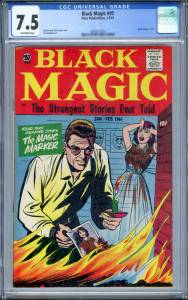
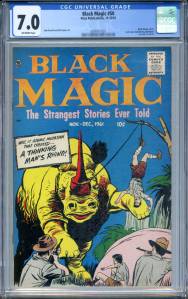
Black Magic was a horror anthology comic book series published by American company Prize Comics from 1950 to 1961. The series was packaged by the creative duo Joe Simon and Jack Kirby, and featured non-gory horror content.

After 50 issues as Black Magic, the title’s numbering continued for three more issues as the humor comic Cool Cat before being canceled.

Doctor Solar Man of the Atom – Gold Key (1962)

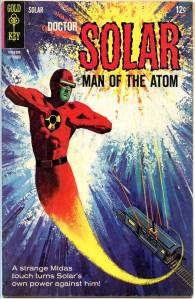
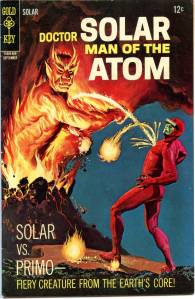
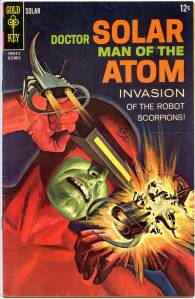
Doctor Solar premiered in issue #1 of Doctor Solar, Man of the Atom in Summer 1962 (cover date October 1962) in the first batch of comics released by Gold Key, with Solar being Gold Key’s first original character. Though Gold Key did not have as large a distribution network as Dell Comics, the Gold Key comics stood out on the newsstand shelves due to their cover art and a 12 cent price (Dell Comics sold for 15 cents). The first two issues of Solar appeared with cover paintings by Richard M. Powers; beyond the second issue the cover paintings were done by George Wilson. The interior artwork in the first several issues also had unique features: the superhero, Dr. Solar, did not have a costume until the fifth issue, rectangular word balloons and no black holding line around each panel. Following from practise of Dell Comics, and thanks to Western Publishing’s reputation of publishing other children-friendly books, Doctor Solar, Man of the Atom was able to be distributed without the Comics Code Authority symbol. The original creative team of writer Paul S. Newman and artist Bob Fujitani lasted until issue #5 when Frank Bolle took over the art work. With the exception of issue #7 written by Otto Binder, Newman wrote the comic book until issue #10 when Dick Wood took over for the remainder of the series. Other artists that contributed included Mel Crawford, Win Mortimer, Alden McWilliams (issues #20-23), Ernie Colón (issues #24-26), José Delbo (issue #27).

The Many Ghosts of Doctor Graves (1967)

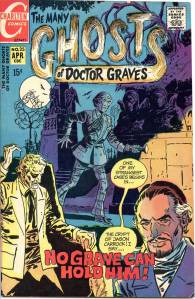
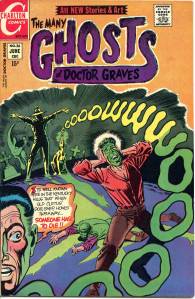
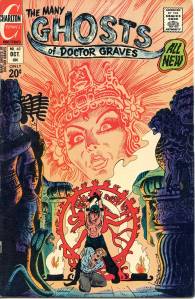
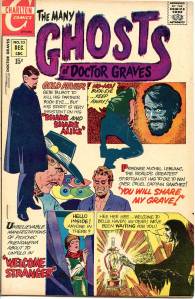
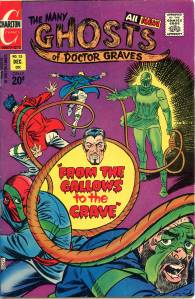
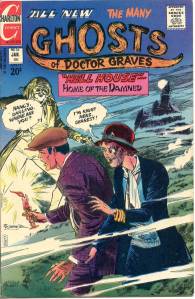
Following his introduction as Dr. M. T. Graves in Charlton Comics‘ Ghostly Tales #55 (cover-dated May 1966) in the three-page story “The Ghost Fighter” by writer-artist Ernie Bache, the character went on to host his own anthology title, The Many Ghosts of Doctor Graves. The series ran 72 issues (May 1967 – May 1982), generally published bimonthly. Following issue #60 (Jan. 1977), the title went on hiatus for seven months until issue #61 (Aug. 1977) before being canceled with #65 (May 1978). Charlton revived the title three years later with #66 (May 1981) before canceling it once more six issues later.
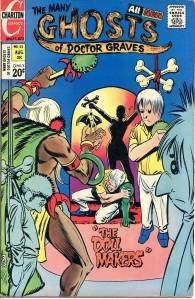
 The Many Ghosts of Doctor Graves#54 (Dec. 1973). The cover art is among the earliest professional works of John Byrne. Three additional issues consisting solely of reprints, and titled simply Dr. Graves, were published as issues #73-75 (Sept. 1985 – Jan. 1986).

Among the artists whose work appeared were Steve Ditko, following his falling-out with Marvel Comics; newcomer Jim Aparo, later to be one of Batman‘s signature artists; regular Charlton talents including Vince AlasciaPat BoyettePete MorisiRocke Mastroserio, and Charles Nicholas; and such others as Rich LarsonDon Newton and Tom Sutton. The cover of issue #54 (Dec. 1975) marks one of the earliest professional works of John Byrne.

Writers on the title included Ditko, Steve SkeatesMike Pellowski, and the prolific, generally uncredited staff writer Joe Gill.

Silver Surfer – Moebius Limited Series (1988)

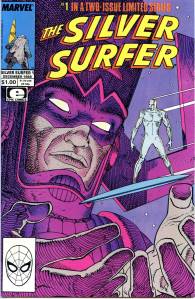
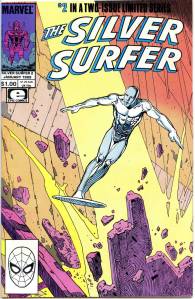
A two-issue Silver Surfer miniseries (later collected as Silver Surfer: Parable), scripted by Lee and drawn by Moebius, was published through Marvel’s Epic Comics imprint in 1988 and 1989. Because of inconsistencies with other stories, it has been argued that these stories actually feature an alternate Silver Surfer from a parallel Earth. This miniseries won the Eisner Award for best finite/limited series in 1989.

Dark Shadows V1 (1968)

The forerunner to today’s immensely popular, vampire-themed television programs and theatrical films, Dark Shadows still garners serious attention as one of the most memorable TV shows of the last forty years. First published from 1968 to 1976, the 35 Gold Key comic books featured archetypal tales of vampires, werewolves, and the supernatural.
Ripley’s Believe It or Not!

For generations, Ripley’s Believe It or Not! told tales of the bizarre and uncanny, but which “were absolutely true—believe it or not!” In doing so, Ripley has introduced readers to everything from child prodigies who composed masterpieces before they turned 12, to great islands built by people throwing pebbles off into the water over a period of several generations.

In this series, previously entitled “True War Stories,” Ripley tends to stretch the bounds of credibility. Readers who do not dispute the existence of spirits may have trouble believing these thrilling tales of ghost ships, hauntings, and other supernatural phenomena. Then again, Ripley has always known how to tell a good yarn—whether you believe it or not!

Forbidden Worlds (1951)

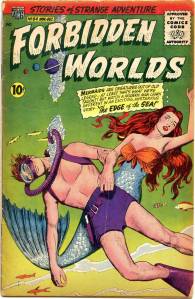
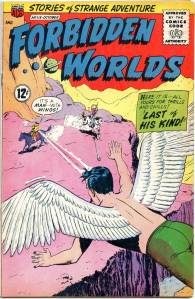
Forbidden Worlds, a 52-page comic with the initial subtitle “Exploring the Supernatural!”, debuted in October 1951. Due to pressure from the 1954 Senate subcommittee hearings on the dangers of comic books, the comic changed its title (and focus) to Young Heroes from March 1955 to June/July 1955 (publishing issues #35–37). However, in August 1955, Forbidden Worlds reappeared with (another) issue #35 and the altered subtitle “Stories of Strange Adventure”.