
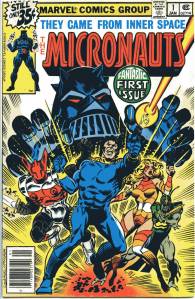
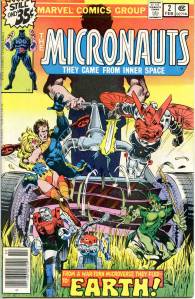
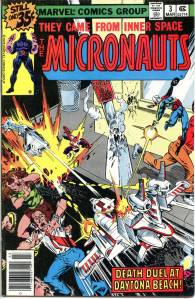
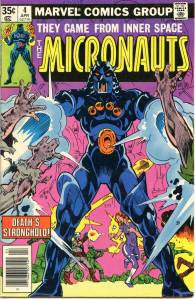
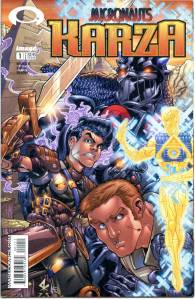
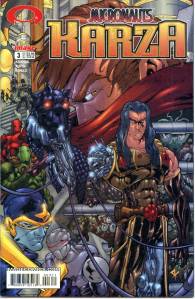
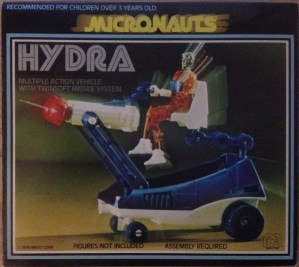
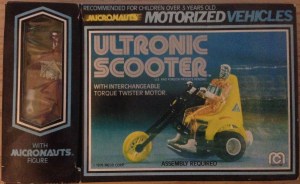
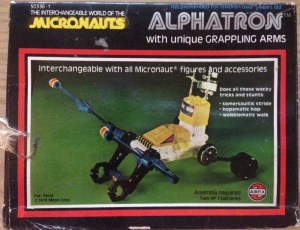
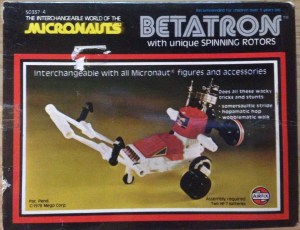
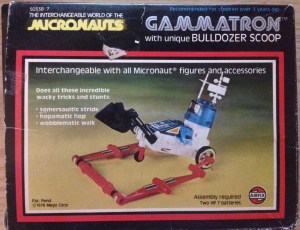
The Micronauts began life as comic book characters thanks to a fortuitous accident on Christmas 1977. Marvel Comics writer Bill Mantlo’s son Adam opened a new present, a line of the Mego Corporation‘s Micronauts action figures. Seeing the toys, Mantlo was instantly struck by inspiration to write their adventures. Convincing then Editor-in-chief Jim Shooter to get the comics license for these toys, Mantlo was hired to script their series.
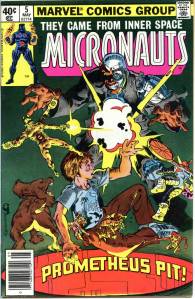
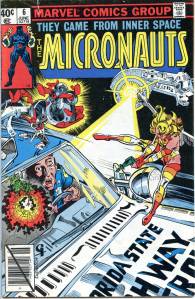
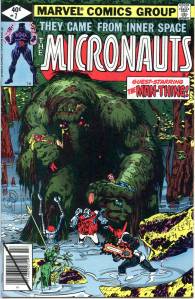
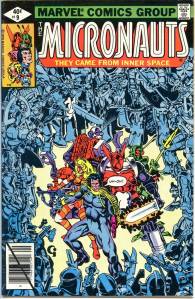
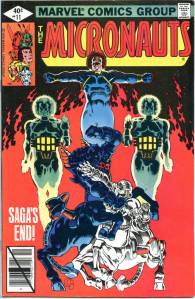
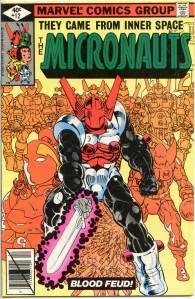
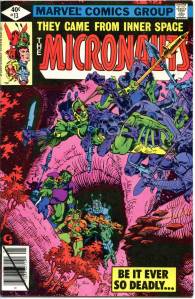
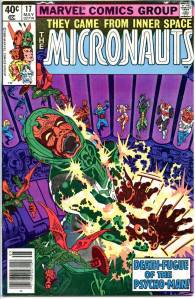
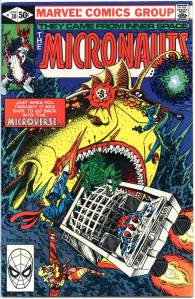
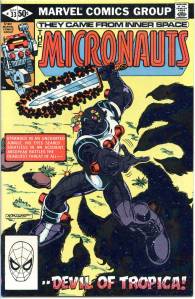
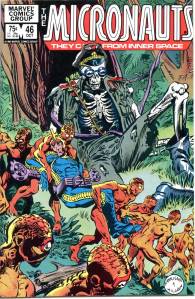
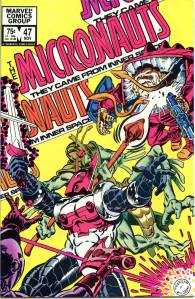
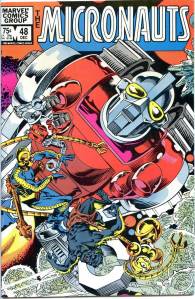
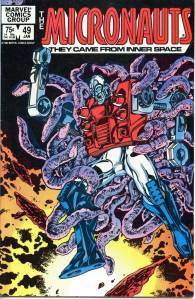
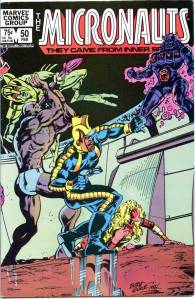
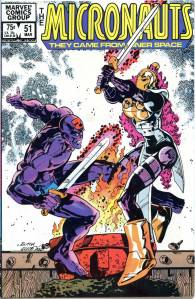
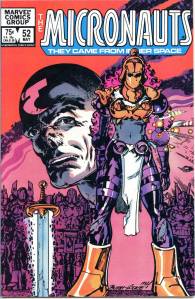
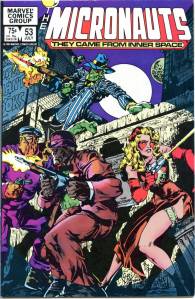
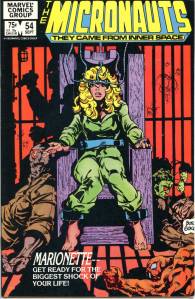
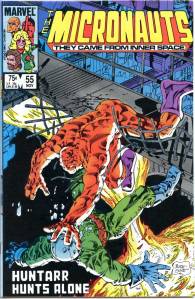
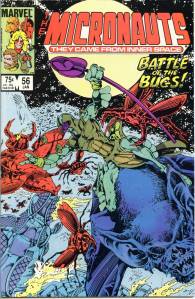
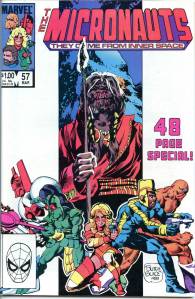
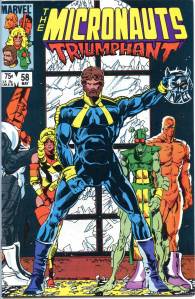
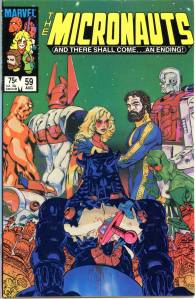
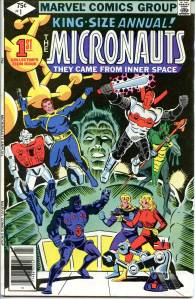
The first series of the Micronauts ran from January 1979 to August 1984 and included 59 issues and two Annuals. The series was written by Bill Mantlo and featured art by Michael Golden. Other artists on the series included Howard Chaykin, Steve Ditko, Rich Buckler, Pat Broderick, Val Mayerik, Keith Giffen, Greg LaRocque, Gil Kane, Luke McDonnell, Mike Vosburg, Butch Guice, and Kelley Jones. Micronauts, along with Moon Knight and Ka-Zar the Savage, became one of Marvel’s first ongoing series to be distributed exclusively to comic book stores beginning with issue #38 (Feb. 1982).

 EHT Comics