Ms. Marvel V2 (2006)

Ms. Marvel also plays a significant role in the 2008 storyline “Secret Invasion“, in which members of the shapeshifting alien race, the Skrulls, are revealed to have secretly infiltrated Earth by impersonating humans. She befriends Captain Marvel’s Skrull impostor and proves to him that she is not a Skrull by revealing intimate details about their life together. At the conclusion of the war with the Skrulls, Norman Osborn is placed in charge of the registered Avengers team. Refusing to serve under Osborn, Ms. Marvel flees Avengers Tower, and joins the New Avengers, becoming second-in-command. Osborn appoints former Thunderbolt member Moonstone (Karla Sofen) as the “new” Ms. Marvel to his Dark Avengers team; Moonstone wears a variation of Ms. Marvel’s original costume. Osborn engineers a battle that results in Danvers’s powers overloading, causing her apparent death. The character Moonstone takes over the title role in the ongoing Ms. Marvel series. Danvers returns with the aid of the New Avengers, a group of MODOK embryos (creations of the organization Advanced Idea Mechanics [AIM]), and a character known as the “Storyteller” and reclaims the title of Ms. Marvel from Karla Sofen.

The increased use of Carol Danvers as a prominent character in many story arcs throughout this decade eventually prompted one commentator to note that “she’s now the House of Ideas’ premier heroine”

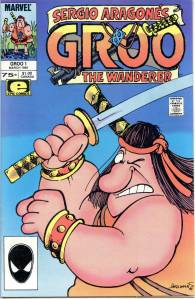
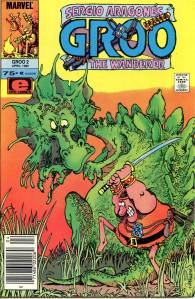
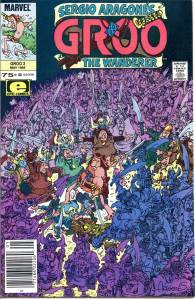
Epic Illustrated (1980)

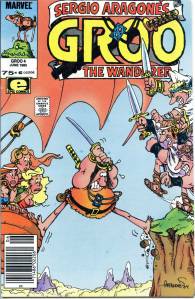
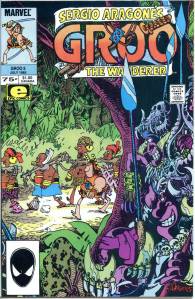
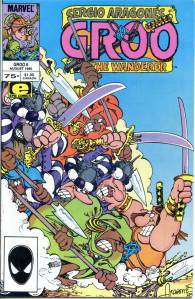
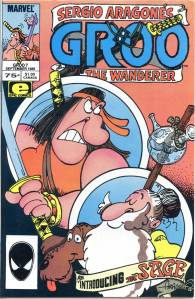
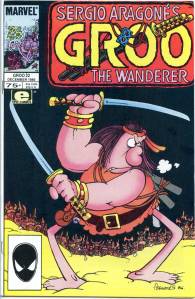
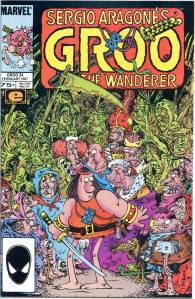
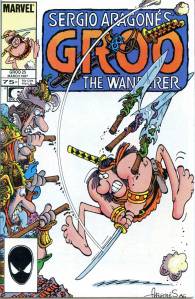
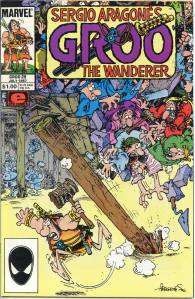
Epic Illustrated was a comics anthology in magazine format published in the United States by Marvel Comics. Similar to the US-licensed comic book magazine Heavy Metal, it allowed explicit content to be featured, unlike the traditional American comic books of that time bound by the restrictive Comics Code Authority, as well as offering its writers and artists ownership rights and royalties in place of the industry-standard work for hire contracts. The series lasted 34 issues from Spring 1980–February 1986.

A color comic-book imprint, Epic Comics, was spun off in 1982.

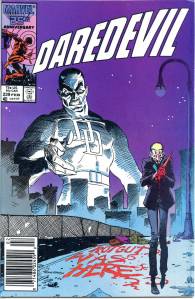
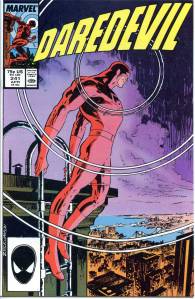
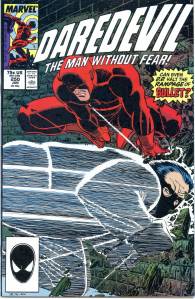
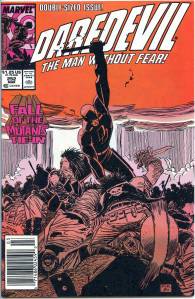
Daredevil V1 (2017)

Following the release of Volume 5, Issue 28, much like with other Marvel series as part of the Marvel Legacy event, the Daredevil series official numbering was rebooted back to the original numbering which started with Issue 595 which was released on November 8, 2017, where Daredevil’s longtime nemesis the Kingpin became the Mayor of New York City and begins a campaign to make costumed vigilantes officially criminals. Although Murdock’s attempt to set up a sting operation results in his allies being arrested when the Kingpin turns this trap against him, Fisk’s legal manipulations work against him when he is attacked by the Hand, leaving Fisk in a coma and Murdock legally mayor of New York from his position as deputy mayor due to a loophole added by a prior administration that had not been amended, allowing Matt to take control of the city and release his fellow heroes to help him stop the Hand.

Alien: Thaw (2023)

Talbot Engineering Inc. is under new management – and its brilliant chief scientist, Batya Zahn, will do just about anything to get her family off the icy moon where they’ve been conducting research on water conservation. But there’s more than glacial springs to find in this forgotten corner of the galaxy. When they discover an extraordinary organism buried in the ice, it doesn’t take long for tensions to heat up. What is hidden in the snow comes forth in the thaw – and no one will be welcoming this spring. But Zahn is not willing to give up her work to this unexpected threat without a fight, no matter what horrors emerge from the ice in the black of night.


Captain Marvel V5 (2002)

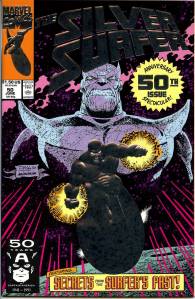
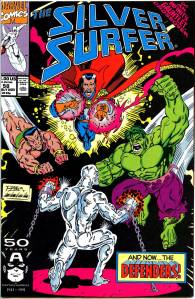
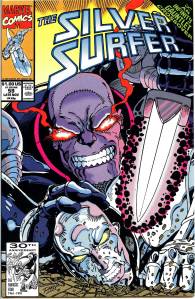
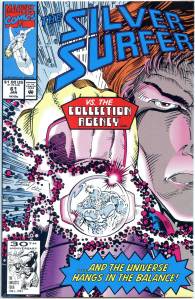
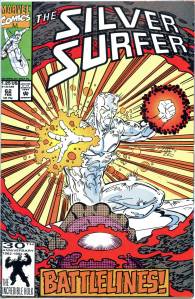
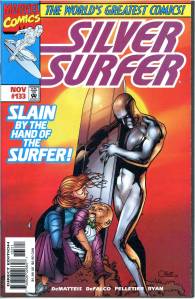
The third Captain Marvel is Genis-Vell, who first appeared in Silver Surfer Annual #6 (1993) using the codename of “Legacy”. The character is the genetically-engineered son of Mar-Vell and his lover Elysius, created from the late Mar-Vell’s cell samples and artificially aged to physical, if not emotional, maturity. Genis, like his father, wears the Nega-Bands, possesses Cosmic Awareness, and is, for a time, bonded with Rick Jones. Although the pair do not get along at first, they eventually become good friends. Genis goes insane and threatens to destroy the universe.

After dying and resurrecting himself—with the secret aid of Baron Helmut Zemo—Genis-Vell joins the Thunderbolts under the name Photon. However, in accelerating his resurrection, Zemo links Genis to the ends of time, causing a degenerative effect on the universe. To prevent the inevitable destruction of all existence, Zemo scatters pieces of Genis-Vell’s body through time and the Darkforce Dimension.

Spider-Man V1 (1990’s)

Spider-Man ran for 98 issues from 1990 to 1998. The series was re titled Peter Parker: Spider-Man with issue #75, but only on the covers, the series was still under its original Spider-Man title in the comic’s legal indicia, printed on the title page, from #75 to #98; the comic book would not officially be titled Peter Parker: Spider-Man until the volume 2 series relaunch.

The series originally was conceived as a showcase for Todd McFarlane. McFarlane, who until then had only been known as an artist, was hugely popular at the time and the series was created by editor Jim Salicrup so that McFarlane could pencil, ink, and write a Spider-Man title of his own, starting with the “Torment” storyline.

The series was a massive sales success with over 2.5 million copies printed. McFarlane stayed on the title until issue #16 (November 1991) in which the story was printed in a landscape format. He would go on to create the character Spawn and help found Image Comics in 1992. He was succeeded on the title by Erik Larsen, who had succeeded McFarlane on The Amazing Spider-Man two years earlier, and would later join him in the founding of Image. Larsen wrote and drew the six-issue story arc “Revenge of the Sinister Six” (#18–23). Writer Don McGregor and artist Marshall Rogers crafted a two-part story in issues #27–28 dealing with gun violence.

After that came a quick procession of different contributors, including writers Tom DeFalco, Ann Nocenti, David Michelinie, J. M. DeMatteis and Terry Kavanagh, and pencillers Ron Frenz, Klaus Janson and Jae Lee. The creative-team musical chairs settled with Spider-Man #44 (March 1994) when writer Howard Mackie and penciller Tom Lyle began a run on the title – Lyle through #61, and Mackie for over 6 years, through cancellation and into Vol. 2.

The Man Called Nova (1976)

Nova was created by Marv Wolfman and Len Wein in the fanzine Super Adventures in 1966. Seven years later John Romita, Sr. tweaked the design of the character’s uniform. Nova debuted in Nova #1 in 1976, written by Wolfman and drawn by John Buscema. Wolfman intended the teenage character to be an homage to Stan Lee and Steve Ditko‘s Spider-Man, down to his humble working-class roots and alliterative alter-ego. The original Nova series, The Man Called Nova, lasted 25 issues from September 1976 to May 1979. Dangling plot lines were resolved in issues 206-214 of Fantastic Four (also by Wolfman) and issue 24 of Rom the Spaceknight. The character then disappeared into obscurity until returning as a member of the original New Warriors team debuting in The Mighty Thor #411 (December 1989), and continuing through New Warriors #1-75, Annual #1-4 (July 1990—September 1996).

Marvel Knights: Spider-Man (2000’s)

The underlying difference between this title and the other Spider-Man titles was that Marvel Knights Spider-Man was done with a more mature slant (in style if not content), thus the “Marvel Knights” prefix.

Intended to replace the canceled Spider-Man’s Tangled Web series, Marvel Knights Spider-Man was originally supposed to be written by Kevin Smith, but due to scheduling problems he was replaced by Mark Millar. When Millar completed his year-long story arc, he was followed by writer Reginald Hudlin.

With the consolidation of the Marvel Knights line, Marvel Knights Spider-Man was renamed The Sensational Spider-Man as of issue 23. At this time, Roberto Aguirre-Sacasa took over writing duties on the book.

Wolverine – Mini Series (1982)

The first Wolverine series was a limited series written by Chris Claremont with pencils by Frank Miller, inks by Joe Rubinstein, letters by Tom Orzechowski, and colors by Glynis WeinMarvel Comics published the series from September to December 1982. This story arc covers the events leading up to Wolverine’s engagement to Mariko Yashida.

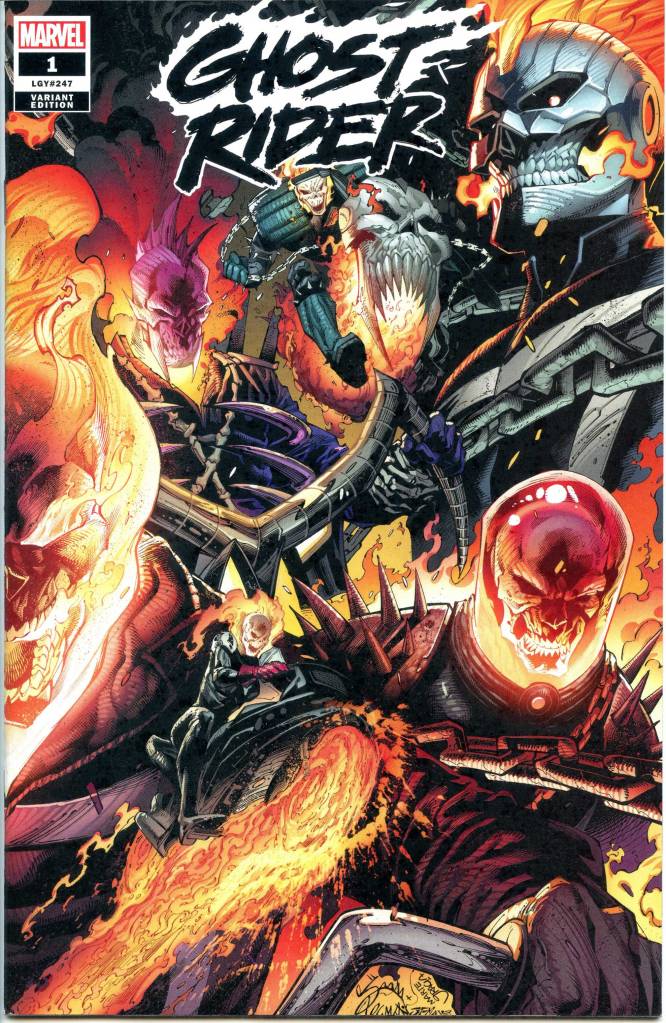
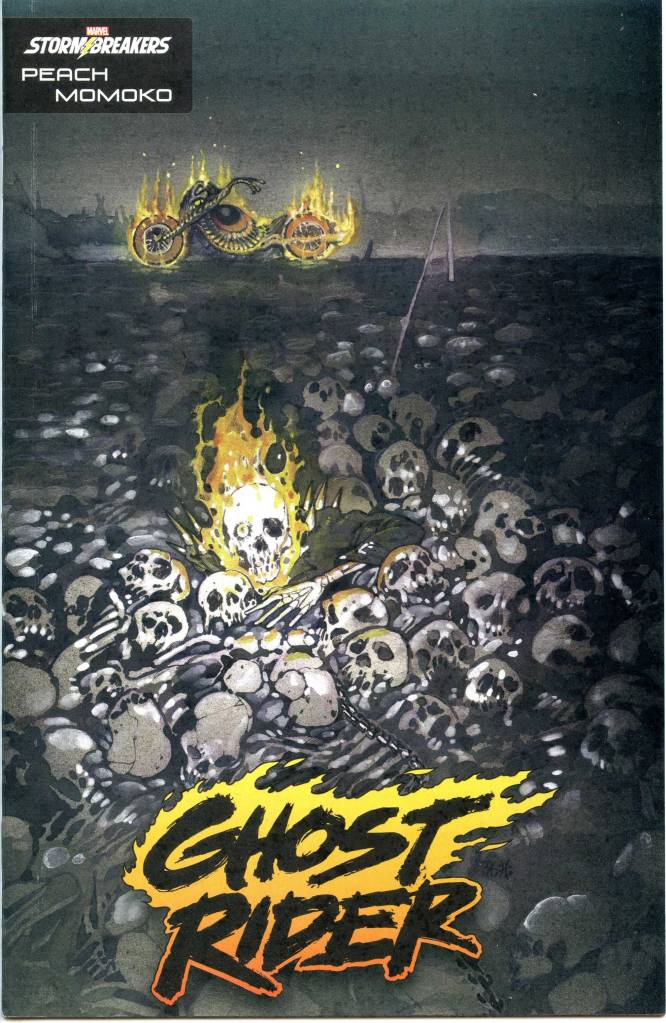
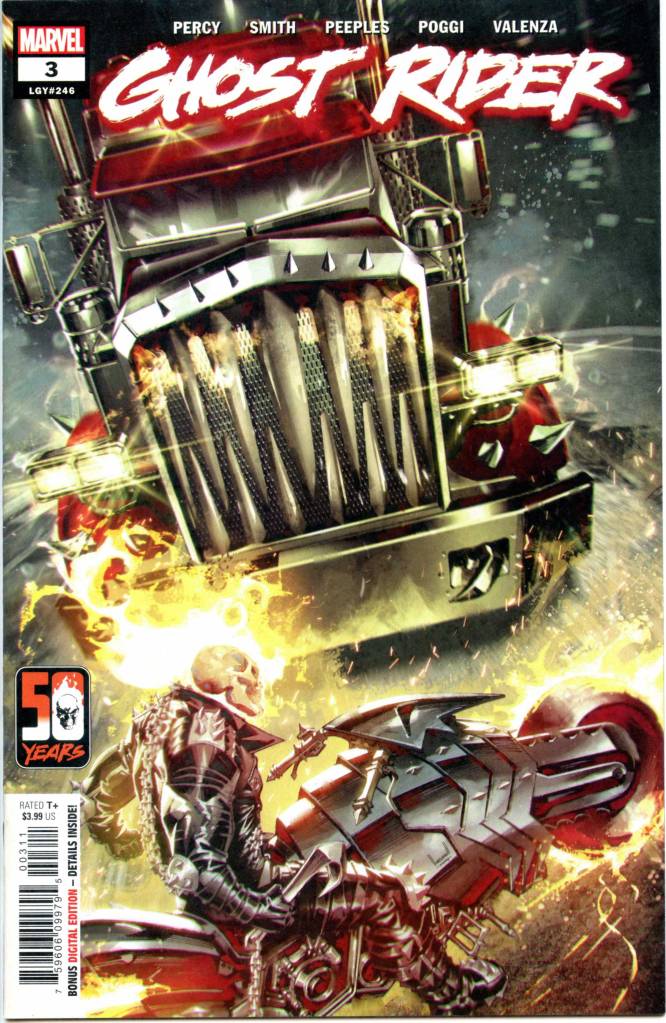
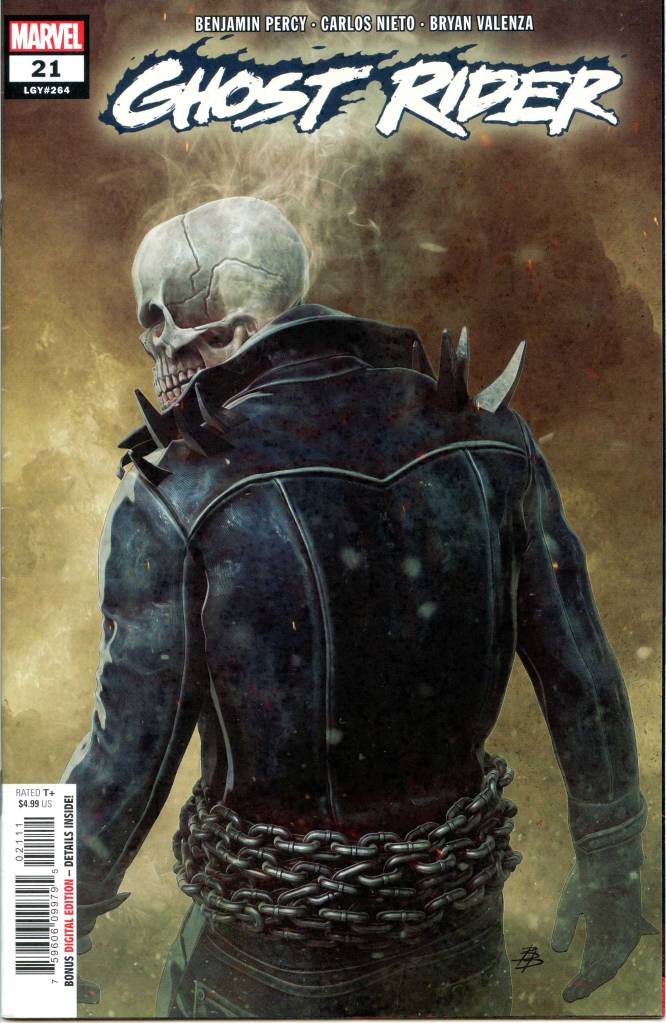
Ghost Rider 2099 (1994)

The series is set in the year 2099, in a dystopian possible future of the Marvel Universe, and features Kenshiro “Zero” Cochrane, a hacker who was killed but resurrected as the Ghost Rider — his mind controlling a powerful and well-armed robot. As with most of the Marvel 2099 titles, the protagonist was a futuristic version of a commercially successful Marvel Universe character. The series was heavily influenced by cyberpunk science fiction.