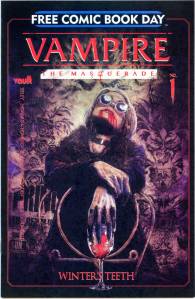
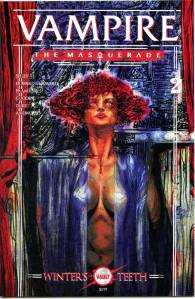
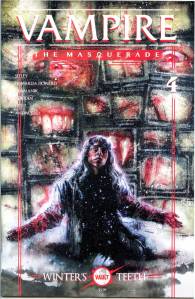
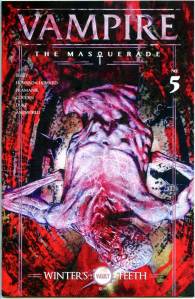
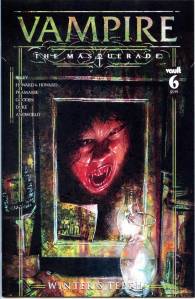
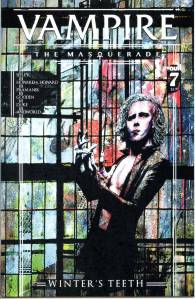
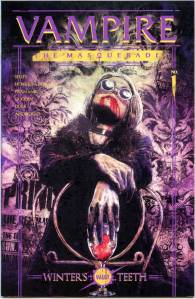
When Cecily Bain, an enforcer for the Twin Cities’ vampiric elite, takes a mysterious new vampire under her wing, she’s dragged into an insidious conspiracy. Meanwhile, on the outskirts of the cities, a rebellious found-family of vampire cast-outs investigates a vicious killing. As the unlives of the Kindred twine together and betrayals are unearthed, will Cecily be able to escape and save what’s left of her family, or will she be yet another pawn sacrificed to maintain the age-old secret: that vampires exist among the living?
Tag: Iron Age
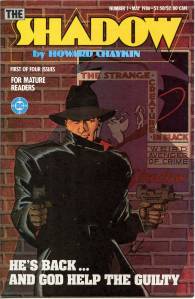
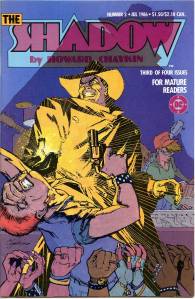
The Shadow: Blood and Judgement (1986)
In 1986, another DC adaptation of The Shadow was developed by Howard Chaykin. This four issue mini-series, The Shadow: Blood and Judgement, brought The Shadow to modern-day New York. While initially successful, this version proved unpopular with traditional Shadow fans because it depicted The Shadow using Uzi submachine guns and rocket launchers, as well as featuring a strong strain of black comedy and extreme violence throughout.
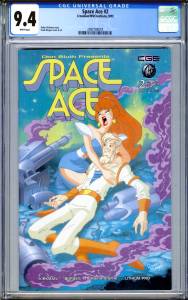
Space Ace (2003)
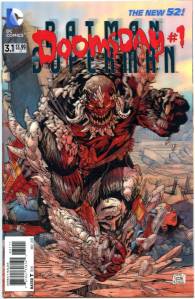
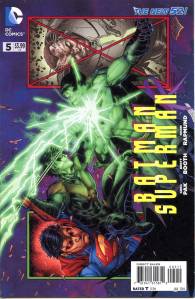
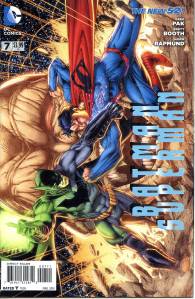
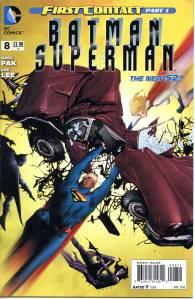
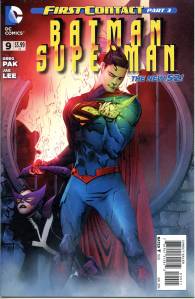
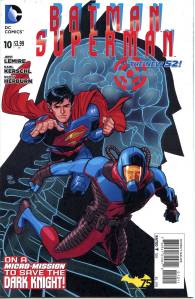
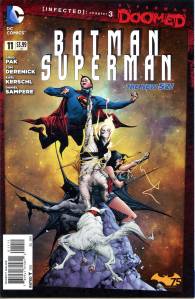
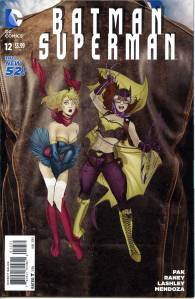
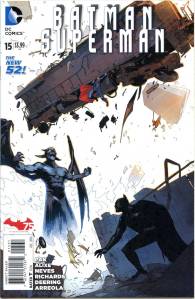
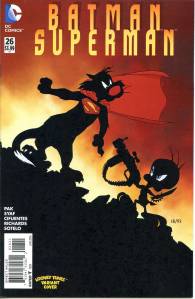
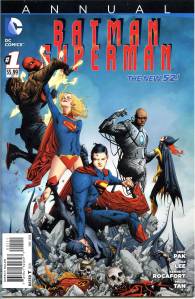
Batman/Superman – New 52 (2013)
Batman/Superman (Volume 1) is a comic book series chronicling the adventures of Batman and Superman. It, along with Superman Unchained, was launched coinciding with the 75th anniversary of Superman.
Unlike its predecessor series, Superman/Batman, the stories reflect the status quo that is going on in the other Batman and Superman comic books.
Carnage: It’s a Wonderful Life (1996)
Cletus Kasady was introduced in The Amazing Spider-Man #344 and first appears as Carnage in issue #361. He is the main villain in the 1993 “Maximum Carnage” crossover, a 14-part story line crossover that spanned through all the Spider-Man titles. In 1996, two one-shot comics centered entirely around Carnage were released, entitled Carnage: Mind Bomb and Carnage: It’s A Wonderful Life, both of which expand on his character.
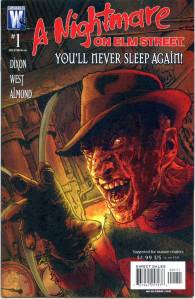
A Nightmare on Elm Street – Wildstorm (2006)
In 2006, WildStorm Productions, a publishing imprint of DC Comics, acquired the “A Nightmare on Elm Street” license and, in October of the same year, began publication of a new ongoing comic book series written by veteran comic book writer, Chuck Dixon with artwork by Kevin J. West, Bob Almond and Joel Gomez and covers by Tony Harris of Ex Machina fame.
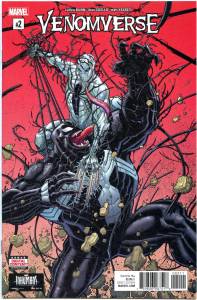
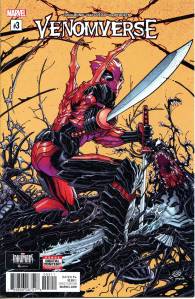
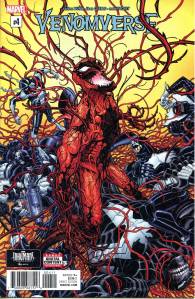
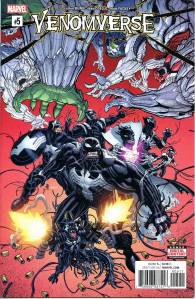
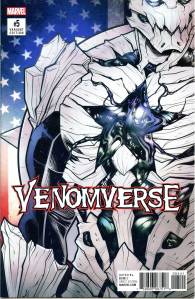
Venomverse (2017)
The actual Venomverse arc was released after the conclusion of the Edge of… miniseries, it was written by Cullen Bunn and drawn by Iban Coello, who had already worked toguether in Deadpool & the Mercs for Money. The editor Devin Lewis described it as “the biggest Venom story of all time”, and it intended to make Venom an important character in the Marvel universe. Bunn pointed that most of the other main characters were selected because they would seem unexpected hosts of the symbiote. Lewis mentioned Deadpool in particular, and said that “Deadpool is one of our main venomized protagonists. He’s got so much heart and he’s also a source of unpredictability, insanity, and goofiness”. Bunn preferred instead his version of Rocket Raccoon.
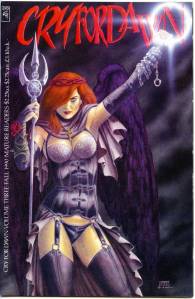
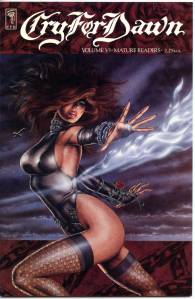
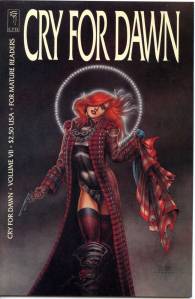
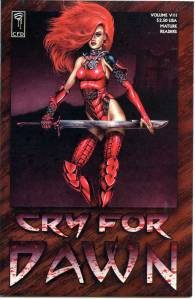
Cry for Dawn (1989)
Cry for Dawn was a 9-issue horror anthology comic book. The book was primarily written by Joseph Michael Linsner and Joseph Monks with artwork by Joseph Michael Linsner.The series featured guest artist and writers in some issues, but the work was largely performed by Linsner and Monks. It was published by Cry for Dawn Productions from 1989–1992 and is famous for introducing the character of Dawn, the goddess of birth and rebirth. Although Dawn served as an emcee in the Cry for Dawn issues, she would later have many titles dedicated to her journeys through heaven and hell across multiple spin-off titles for Sirius Entertainment, Image Comics, and Linsner.com.
Cry for Dawn was a mature-readers-only title that hit during the peak of the 90’s independent comic rise. Due to the artwork by Linsner and the cutting-edge subject matter that the series dealt with, the titled developed a cult following that has continued in the decades following the publication.
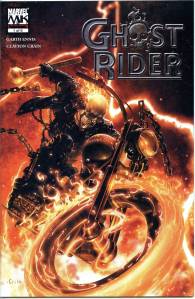
Ghost Rider V5 (2005)
Following the western comics character who originally used the name, the first superhero Ghost Rider, Johnny Blaze, debuted in Marvel Spotlight #5 (Aug. 1972), created by writer-editor Roy Thomas, writer Gary Friedrich, and artist Mike Ploog. He received his own series in 1973, with penciller Jim Mooney handling most of the first nine issues. Several different creative teams mixed-and-matched until penciller Don Perlin began a considerably long stint with issue #26, eventually joined by writer Michael Fleisher through issue #58. The series ran through in issue #81 (June 1983). Blaze returned as Ghost Rider in a 2001 six-issue miniseries written by Devin Grayson; a second miniseries written by Garth Ennis in 2005; and an ongoing monthly series that began publication in July 2006. Johnny Blaze was the son of Naomi Blaze and Barton Blaze, Naomi being the previous Ghost Rider.
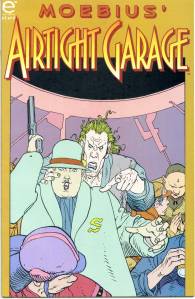
Airtight Garage (1993)
Major Grubert’s own creation, the Airtight Garage, has been taken over by his nemesis, Lewis Carnelian. After Grubert sends his spies to the Garage, he soon follows, knowing he must face Carnelian himself. Written by Moebius and R.J.M. Lofficier. Art and cover by Moebius.