Supergirl V4 (1996)

Beginning in September 1996, DC published Supergirl (vol. 4) written by Peter David. The 1996 Supergirl comic book revamped the previous Matrix Supergirl by merging her with a human being, resulting in a new Supergirl. Many elements of the Pre-Crisis Supergirl were incorporated in new ways. The woman that the Matrix merges with has the same name as the Pre-Crisis Supergirl’s secret identity, Linda Danvers. The series is set in the town of Leesburg, named after Danvers’ pre-adoption surname. Linda’s father is named Fred Danvers, the same as the Pre-Crisis Supergirl’s adopted father. Furthermore, new versions of Dick Malverne and Comet appear as part of the supporting cast.

As the series begins, the Matrix sacrifices herself to save a dying Linda Danvers and their bodies, minds and souls merge to become an “Earth-Born Angel“, a being created when one being selflessly sacrifices him or herself to save another who is beyond saving. As the angel, Supergirl loses some of her powers, but gains others, including fiery angel wings and a “shunt” ability that allows her to teleport to any place she has been before.

Wonder Woman – V5 Rebirth (2016)

In 2016, DC Comics once again relaunched all of its publications as part of the “DC Rebirth” continuity reboot, and new fifth volume of Wonder Woman was released bi-monthly with writer Greg Rucka. This fifth volume of Wonder Woman is part of the “DC Universe”, the current continuity established after Rebirth. The new series does not use a regular storyline that exists between each issue; instead two separate storylines share the book, with an installment of one story published every other issue, and those of the other storyline published in between those. This practice began with the storyline “The Lies” for the odd numbered issues, and “Year One” for the even numbered issues. The new storyline as presented in these issues effectively retcons the events from the previous New 52 series. “The Lies” storyline reveals that a number of events from the previous Wonder Woman series in which Diana was made the Queen of the Amazons and the God of War, was in fact all an illusion created by a mysterious villain, and she had never once been back to Themyscira ever since she left, nor is she capable of returning there. The “Year One” story is presented as an all-new origin story for Diana, which reveals how she received her powers from the Olympian Gods, which was intended to bring her back to her classical DC roots. Wonder Woman appears in DC Rebirth with a revised look, which includes a red cape and light armor fittings. Along with her lasso and bracelets, she now regularly utilizes her sword and shield. Wonder Woman: Rebirth artist Liam Sharp described the new armor as a utilitarian piece which allows her to move more freely.

X-23 V4 (2018)

In July 2018, Laura to returned her to original moniker in a fourth volume of X-23 by writer Mariko Tamaki and artist Juann Cabal. Tamaki said, “This is a story about being in the very weird kind of family that someone like Laura/X-23 finds herself in. It’s about what it means to wrestle with legacy and identity when you were created to be a weapon and not someone with a birthday and a sister.”

Space Usagi SDCC Exclusive (2022)

SDCC 2022 Exclusive celebrating the 30th anniversary of Space Usagi.

Reprinting Space Usagi #1 in color for the first time.

Each cover limited to 500 copies.

Space Usagi featured characters similar to those in the original series, including a descendant of Miyamoto Usagi, but set in a futuristic setting that also emulated feudal Japan in political and stylistic ways. Three mini-series of three issues each and two short stories featuring the characters were produced.

Adventures of Superman (2000’s)

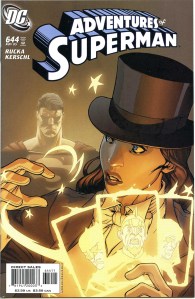
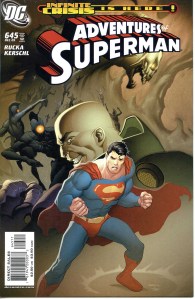
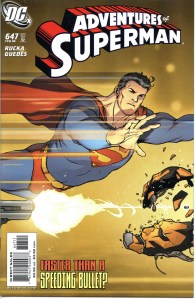
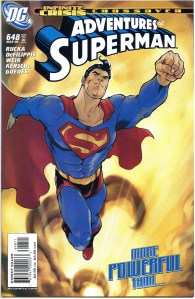
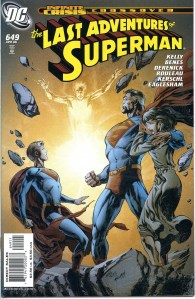
The Adventures of Superman was numbered from issue #424 (January 1987) to issue #649 (April 2006), for a total of 228 monthly issues including issue #0 (October 1994) published between issues #516 and #517 as a tie-in to the Zero Hour limited series and issue #1,000,000 (November 1998) as a tie-in to the DC One Million limited series and nine Annuals published between 1987 and 1997.

As of the start of 2002, the integration between the Superman titles became less frequent, and the remaining issues of The Adventures of Superman commonly carried self-contained stories. Issue #600 (March 2002) was a double-sized special featuring Superman combating Lex Luthor.The final issue (#649) was part of a three-part crossover with Superman and Action Comics, an homage to the Earth-2 Superman in the wake of events in the limited series Infinite Crisis.

For its last two years, The Adventures of Superman was written by Greg Rucka. His stories included the villain Ruin, the attempted assassination of Lois Lane and a number of Mister Mxyzptlk appearances.

House of M (2005)

House of M is a follow-up to the events of the “Planet X” and “Avengers Disassembled” storylines, in which the superhero Scarlet Witch suffered a mental breakdown and tried to alter the fabric of reality to recreate her lost children. Scarlet Witch’s father, Magneto, and her twin brother, Quicksilver, played major roles in the series. Like the 1995–1996 “Age of Apocalypse” storyline, “House of M” replaced the Earth-616 as the main reality for a brief time until Scarlet Witch reverted it to normal. The events of the storyline were later indicated to have occurred on Earth-58163.


Dark Avengers (2009)

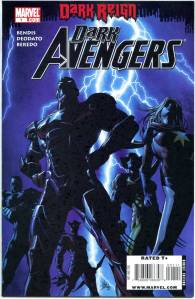
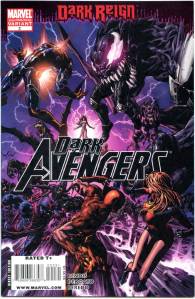
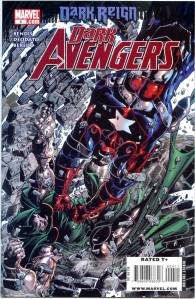
The series debuted with issue #1, dated January 2009, as part of a multi-series story arc entitled “Dark Reign.” In the premiere, writer Brian Michael Bendis and artist Mike Deodato (working from a continuity begun in a previous, company-wide story arc, “Secret Invasion,” involving an infiltration of Earth by the shape-shifting alien Skrulls and that race’s eventual defeat) chronicled the aftermath of the U.S. government’s disbanding of the federally sanctioned superhero team, the Avengers. Bendis described the thinking behind the team: “These are bad-ass, hardcore get-it-done types. They’ll close the door and take care of business and he’s dressing them up to make them something that the people want. This is in contrast to the changes Norman Osborn is shown making to the Thunderbolts, where, according to writer Andy Diggle, he turns that team into “something much more covert and much more lethal: his own personal hit squad”.

The series ended with Dark Avengers #16, at the culmination of the Siege storyline.

The Thunderbolts comic book was renamed Dark Avengers beginning with issue #175, but the creative team remained unchanged. Dark Avengers ended with issue #190.

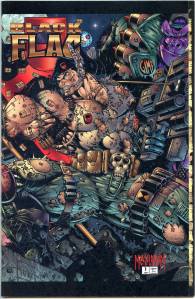
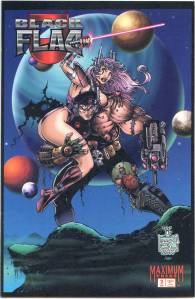
Black Flag (1994)

The setup of the series is that a para-military group called Black Flag is formed and funded by April Imoto, aka Geisha, who inherited her father’s billion dollar empire after he was executed. One of the members of Black Flag is Raiden, a master of mysticism. Using his powers, he sees a young boy in trouble, fighting to escape Hades, and a purple gorilla who was the subject of numerous experiments to make him a genius fighting machine. Raiden senses and imbalance in the universe due to these events and Black Flag rescues both of these characters and begin their adventure together as a team.

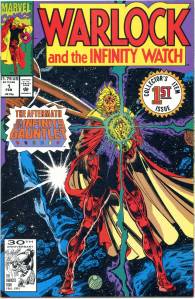
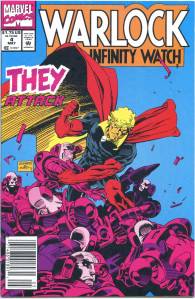
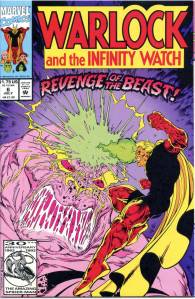
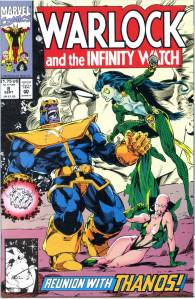
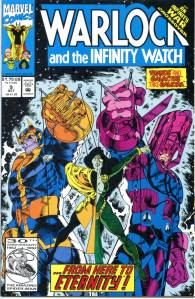
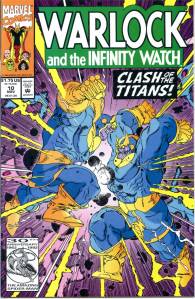
Warlock and the Infinity Watch (1991)

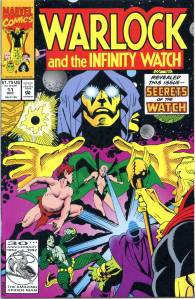
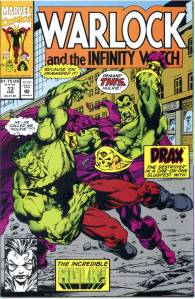
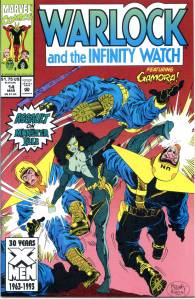
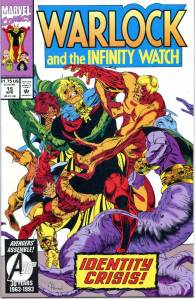
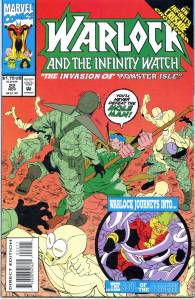
After saving the universe from Thanos and ultimately acquiring his prize, the Infinity GauntletAdam Warlock finds himself on trial, judged by the very cosmic beings who supported him in the conflict. Presiding over the trial is the Living Tribunal, and the one making the case that Warlock is not fit to be the supreme master of the universe is Eternity. Eventually, the Living Tribunal rules against Warlock, and he is forced to surrender his godhood by dividing the six Infinity Gems.

Captain America (1980’s)

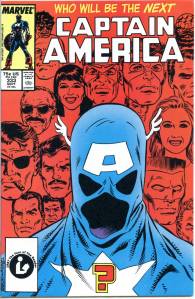
The 1980s included a run by writer Roger Stern and artist John Byrne. Stern had Rogers consider a run for President of the United States in Captain America #250 (June 1980), an idea originally developed by Roger McKenzie and Don Perlin. Stern, in his capacity as editor of the title, originally rejected the idea but later changed his mind about the concept. McKenzie and Perlin received credit for the idea on the letters page at Stern’s insistence. Stern additionally introduced a new love interest, law student Bernie Rosenthal, in Captain America #248 (Aug. 1980).

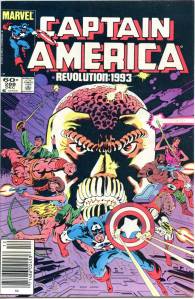
Writer J. M. DeMatteis revealed the true face and full origin of the Red Skull in Captain America #298-300, and had Captain America take on Jack Monroe, Nomad, as a partner for a time. Around this time, the heroes gathered by the Beyonder elect Rogers as leader during their stay on Battleworld in the 1984 miniseries Secret Wars. Homophobia is dealt with as Rogers runs into a childhood friend named Arnold Roth who is gay.

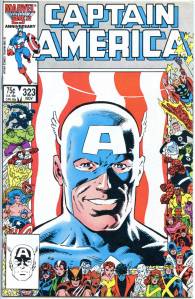
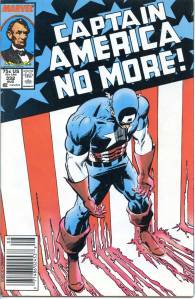
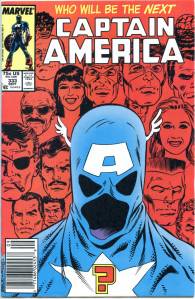
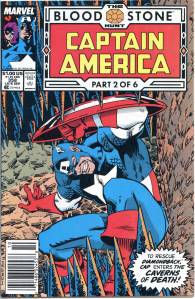
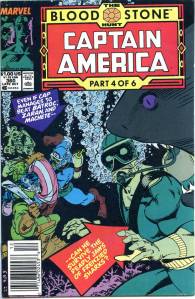
Mark Gruenwald became the writer of the series with issue #307 (July 1985) and wrote 137 issues for 10 consecutive years from until #443 (Sept. 1995) the most issues by any single author in the character’s history. Gruenwald created several new foes, including Crossbones and the Serpent Society. Other Gruenwald characters included DiamondbackSuper Patriot, and Demolition Man. Gruenwald explored numerous political and social themes as well, such as extreme idealism when Captain America fights the anti-nationalist terrorist Flag-Smasher; and vigilantism when he hunts the murderous Scourge of the Underworld.