The surprise popularity of the Igrat character from DSatanika, has spawned her own two issue mini-series written by Glenn Danzig and illustrated by Eric Canete (of MTVs Aeon Flux fame). This two issue mini-series tells the beginings and origin of how Igrat became Hells Assassin angel.
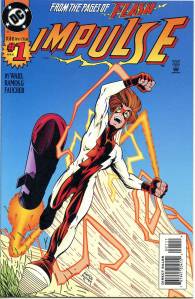
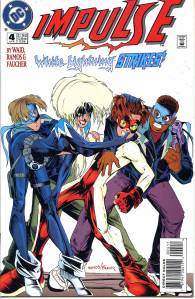
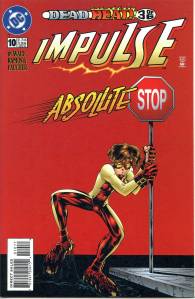
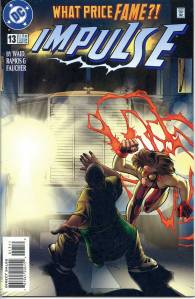
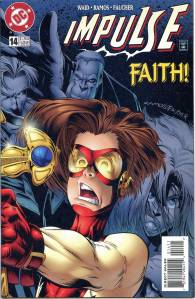
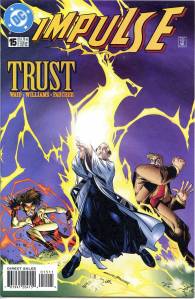
Suffering from a hyper-accelerated metabolism, Bart Allen was aging at a faster rate than that of any human being thus causing him to appear the physical age of twelve when he was chronologically, and mentally only two years old. To prevent him from developing mental health problems, he was raised in a virtual reality machine which created a simulated world that kept pace with his own scale of time. When it became clear that this method was not helping, his grandmother, Iris Allen, took him back in time to the present where The Flash, Wally West, tricked Bart into a race around the world. By forcing Bart into an extreme burst of speed, Wally managed to shock his hyper-metabolism back to normal. Because he had spent the majority of his childhood in a simulated world, Bart had no concept of danger and was prone to leaping before he looked. The youth proved to be more trouble than Wally could handle, and he was pawned off onto retired superhero speedster Max Mercury, who moved Bart to Manchester, Alabama. In Impulse #50, it was revealed that Batman actually named Bart “Impulse” as a warning, not a compliment.
Mystique, former terrorist and espionage agent supreme, is loyal to Professor X’s Quiet Council for one reason only: the promise that someday he will resurrect her beloved Destiny. But when Moira MacTaggert helped Professor X and Magneto realize their lifelong dreams for mutantkind, it came with one condition: Do not allow any precognitive mutants on the island of Krakoa. What will Mystique do when she realizes she’s being strung along? Vengeance burns hot, and Mystique is about to ignite an Inferno! And where has the elusive Moira been all this time, anyway?
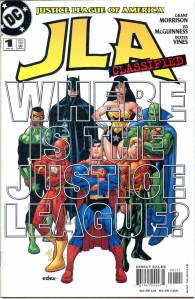
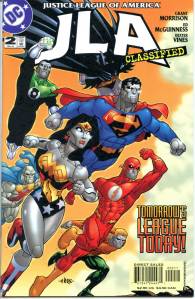
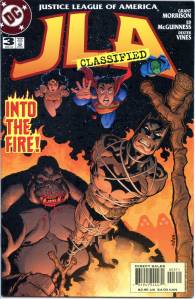
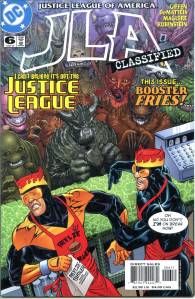
JLA: Classified is an anthology series which would feature rotating writers and artists producing self-contained story-arcs and aborted mini-series projects that were re-appropriated for publication within the pages of the series and starring the JLA. While the bulk of the stories took place within the continuity of the series (circa JLA #76–113) some of the stories take place outside of regular DC Universe canon.
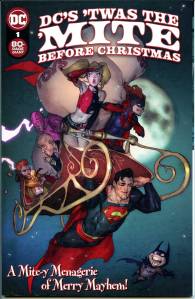
Join all your DC favorites as they take on eight classic holiday stories! From Constantine and Lex Luthor’s Dickensian tale to Batwoman’s puzzling Hanukkah hijinks to your classic cocoa-swilling Christmas romance switch with Harley and Amethyst, this book is a perfect companion for cookies by the fire and extra sour cream on your latkes.
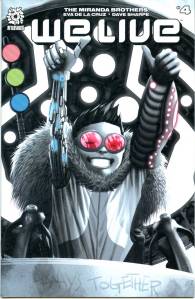
The year is 2084 and the world has changed. Wracked by calamities and crawling with mon-sters, the last remaining humans face a dangerous existence. And now, the Earth has been sent a message from the deepest reaches of space – a dark count-down to the extinction of all humanity. But there is hope! Five thousand children will be rescued by these mysterious message-senders. This is the journey of Hototo, one of the lucky five thousand – but only if his teenage sister, Tala, can safely deliver him to the nearest Beacon before time runs out
We Live #1 Momoko Kickstarter Variant CGC 9.8 White Pages $159
We Live #1 1:15 Nguyen Variant CGC 9.8 White Pages $95
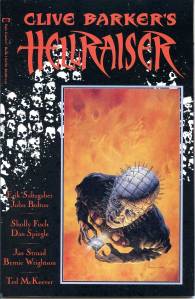
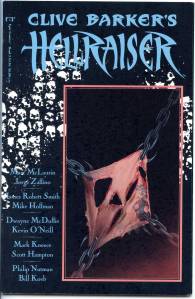
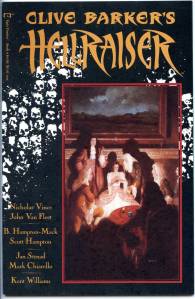
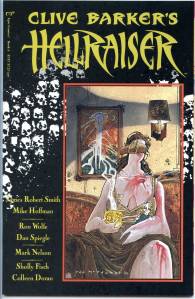
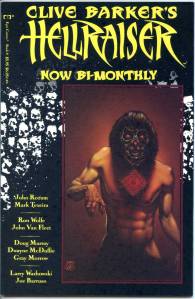
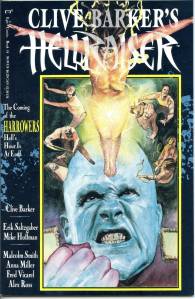
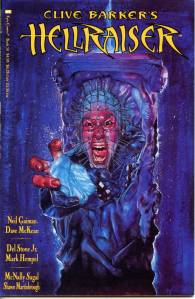
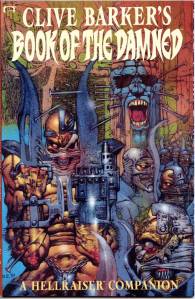
Epic Comics, an imprint of Marvel Comics, began publishing a series of comic book spin-offs for the Hellraiser franchise. The comics contained a set of short stories, with Clive Barker acting as a consultant on all of the comics. Between 1989 and 1992, Epic published twenty regular series comics.
The citizens in a retro-futuristic vision of the world of tomorrow struggle to come to terms with a variety of bizarre characters and their unusual schemes. Written by Dean Motter with art by Michael Lark.
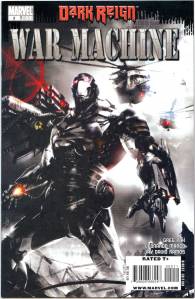
Controversy erupts as War Machine picks a target on U.S. soil in “Homeland.” When Jim Rhodes returns home he comes face-to-face with American Eagle, last seen in the pages of Thunderbolts, as two visions of America clash with earth-shattering results that may irrevocably change War Machine – and the nation he loves!