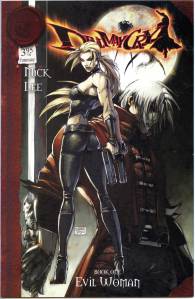
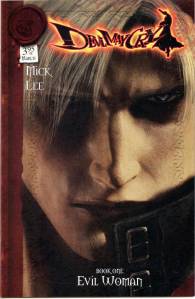
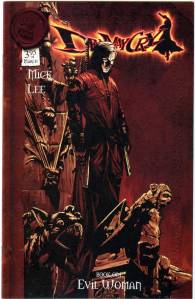
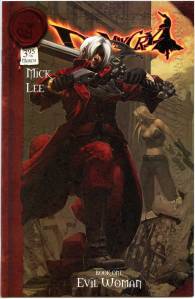
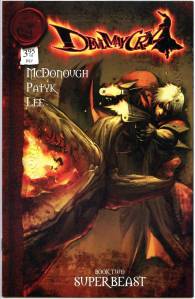
Devil May Cry is a comic adaptation of the first game, published by a Canadian publisher Dreamwave Productions in 2004. It was written by Brad Mick with art by Pat Lee, and additional cover images were provided by Michael Turner and Jae Lee. Three issues of the comics were released, but it was left unfinished when the company went bankrupt in 2005.
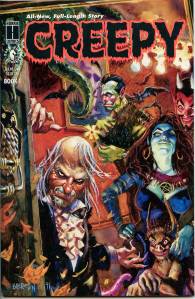
Harris Comics brings the old Warren magazine back from the dead, as it were, in this monstrous 1993 title. Creepy follows a familiar format, telling horror stories interspersed with comments from ghoulish hosts—in this case a sadistic couple of cousins. The stories hark back to the great EC horror titles such as Tales From the Crypt, featuring all number of vampires, witches, demons, and dark sorcery. And of course, there’s always Vampirella.
If there is one way in which Creepy sets itself apart from old-style horror, it’s that in classic horror comics, evil was (almost) always punished, and good always won out in the end. Creepy, on the other hand, makes no such distinction—preferring, as it might say, to be an “equal opportunity destroyer.”
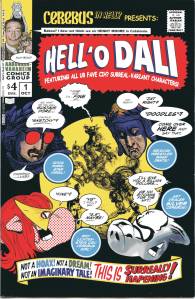
Where has Cerebus been since he died twelve years ago? Is he in hell? Purgatory? Limbo? Some strange 1980 disco with links to Close Encounters of the Third Kind and Henry Kissinger? Some ancient Greek disco with links to Plato, Socrates, Aristotle? Some 1990s disco with links to The Stone Roses, the Happy Mondays, and Oasis? Is he stuck inside his own Cerebus Online Disco Twitter-feed? Well, wherever he is, he deserves it, so feel free to laugh at his misfortune!
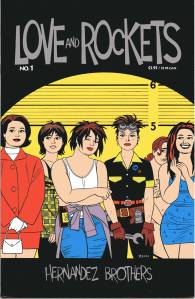
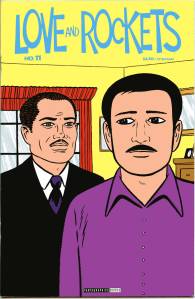
Love and Rockets, reuniting all three Hernandez Brothers! Jaime picks up the newly-divorced Maggie’s story as she returns to the old neighborhood to try to reconnect with her past; in the first issue she meets up with everyone’s favorite Hoppers resident, Izzy Ortiz. Gilbert launches a thrilling new graphic novel, “Julio’s Day,” about a man’s life from 1900 to 2000. Every person gets his day… or does he? Finally, Gilbert (artist) and Mario (writer) collaborate on “Me for the Unknown,” a tale of political intrigue, dumping on the little guy, psychosis, and violent revenge reminiscent of some of their earliest L&R stories (or their Mister X “Tales of Somnopolis” stories).
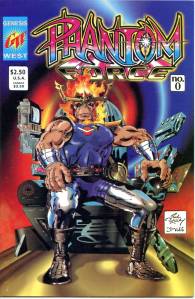
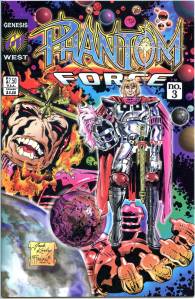
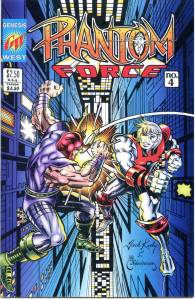
Phantom Force was the last comic book Kirby worked on before his death. The story was co-written by Kirby with Michael Thibodeaux and Richard French, based on an eight-page pitch for an unused Bruce Lee comic in 1978. Issues #1 and 2 were published by Image Comics with various Image artists inking over Kirby’s pencils. Issue #0 and issues #3–8 were published by Genesis West, with Kirby providing pencils for issues #0 and 4. Thibodeaux provided the art for the remaining issues of the series after Kirby died.
From the legendary Leiji Matsumoto, along with Jerome Alquie, comes an epic new story! Set within the timeline of the original series, this brand-new Captain Harlock adventure marks the beginning of a new story arc. Planet Earth is threatened by an upcoming invasion by the Sylvidres and despite being banished as a pirate, Captain Harlock won’t give up trying to save the world. This time, the source of danger comes directly from Earth, not outer space. A team of scientists discovers a Sylvidres mausoleum where they find information about terrifying genetic manipulations and a destructive power capable of either providing the Sylvidres with immortality or putting an end to their civilization. The unprecedented cold spell hitting Earth might only be a taste of what this new enemy has in store… Will Captain Harlock and his crew manage to solve this mystery and save the Earth from yet another menace?
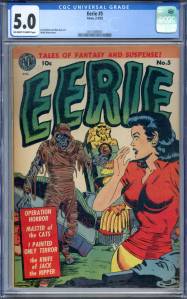
In 1951, Eerie #1, cover-dated May/June 1951, was published by Avon and saw a run of seventeen issues. The first issue of Eerie reprinted “The Strange Case of Henpecked Harry” from one-shot Eerie of 1947 as “The Subway Horror”, and issue 12 printed a Dracula story based on the Bram Stoker novel. Several covers featured large-breasted women in bondage. Artists Joe Orlando and Wallace Wood were associated with the series. The title saw a run of seventeen issues, ceasing publication with its August/September 1954 issue. Eerie then morphed into Strange Worlds with #18, October/November 1954.
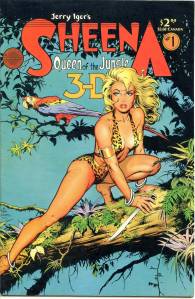
The first issue of Blackthorne’s long-running 3-D series, featuring Jerry Igers classic jungle princess, hero of pulps, comics, and the big and small screens. Absent from comics for almost three decades, this presents some of her 1950s adventures in 3-D format, including one by legendary good-girl artist Matt Baker. But the main draw for many fans will be the stunning cover by beloved artist (and Rocketeer creator) Dave Stevens. Also featuring an introduction by creator Jerry Iger, a Snarzan the Ape spoof from Great Comics (1941) #1, and a Congo King story with art by legendary good-girl artist Matt Baker. Heroine in the Jungle; Sargasso of Lost Safaris; Snarzan the Ape in Mein Kemp Von Der Chungle; Congo King; Spoor of the Dancing Skeletons. 32 pages, B&W with 3-D effects.
Madman first appeared as Frank Einstien in Creatures of the Id and Grafik Muzik published in 1990, but it wasn’t until March 1992 that the first Madman miniseries debuted from Tundra Publishing. The series gained further recognition with its move to Dark Horse Comics in April 1994, where it was relaunched as Madman Comics and went on to be nominated for several Harvey Awards. Madman Comics ran for 20 issues and ended in 2000. From 2007–2009, Image Comics published Madman: Atomic Comics for 17 issues.
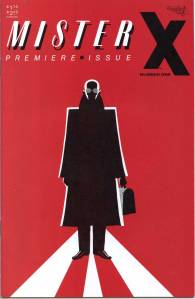
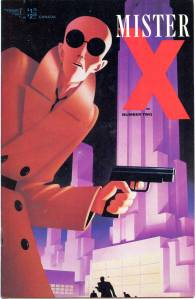
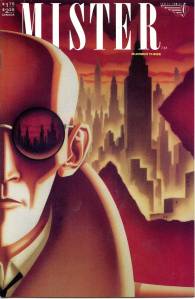
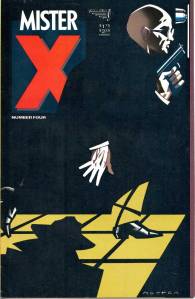
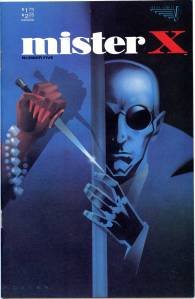
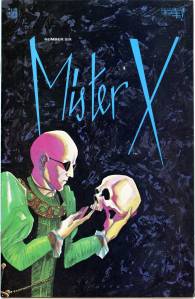
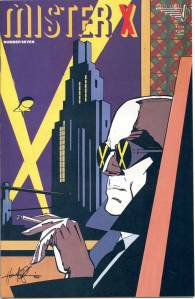
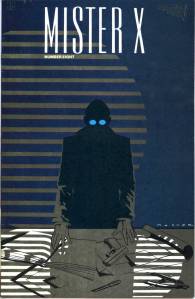
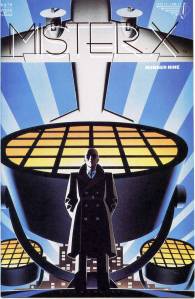
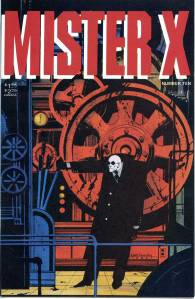
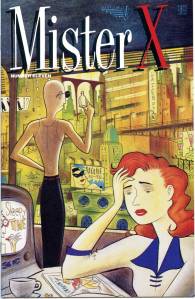
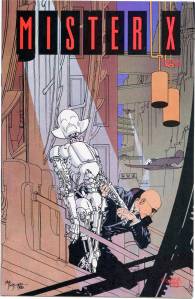
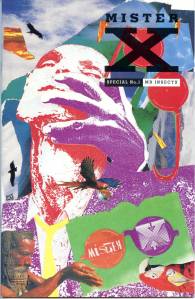
Created by album and book cover designer Dean Motter, Mister X was developed for a year in close collaboration with comic artist and illustrator Paul Rivoche, whose series of poster illustrations stirred up great interest in the project. The series published early work by comic artists who would later emerge as important alternative cartoonists, including Jaime Hernandez, Gilbert Hernandez, Mario Hernandez, Seth, Shane Oakley and D’Israeli.
A highly successful promotional campaign with posters and ads followed for the next year, while Motter and Rivoche struggled to produce an actual issue of Mister X. When Rivoche quit, Vortex Comics president Bill Marks became more skeptical than ever that Motter would be able to produce the series on time, and decided to turn the work over to the Hernandez brothers. The first four issues were written and illustrated by Jaime and Gilbert Hernandez, with additional writing by Mario Hernandez. The Hernandez brothers quit over payment delays from Vortex. Issues 5 through 14 of the series were then written by Motter, with issues 6 through 13 illustrated by Seth.










 EHT Comics