Promethea (1999)

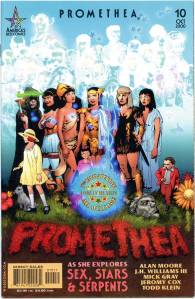
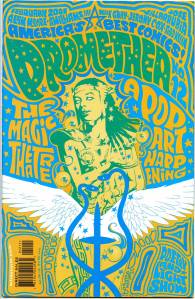
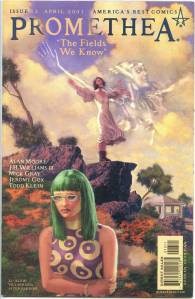
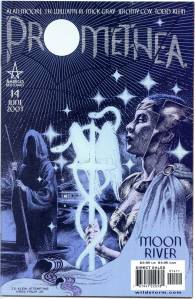
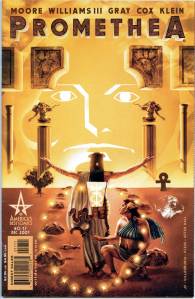
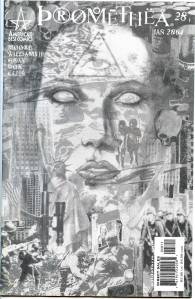
Promethea is created by Alan MooreJ. H. Williams III and Mick Gray, published by America’s Best Comics/WildStorm.

It tells the story of Sophie Bangs, a college student from an alternate futuristic New York City in 1999, who embodies the powerful entity known as Promethea whose task it is to bring the Apocalypse.

Originally published as 32 issues from 1999 to 2005, the series has been re-published into five graphic novels and one hard-back issue. Moore weaves in elements of magic and mysticism along with superhero mythology and action, spirituality and the afterlife (in particular the Tree of Life) and science-fiction. Promethea includes wide-ranging experimentation with visual styles and art.

Mage – The Hero Discovered (1984)

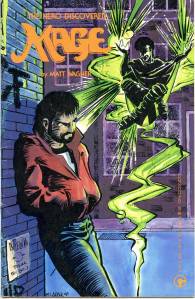
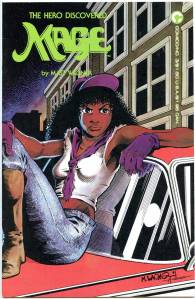
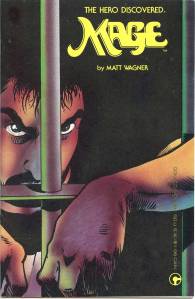
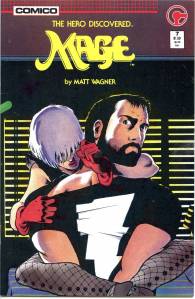
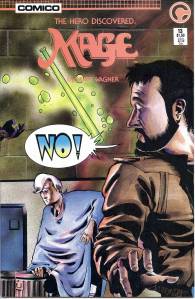
The Hero Discovered follows Kevin Matchstick, an alienated young man who meets a wizard called Mirth and discovers that he, among other things, possesses both a magic baseball bat and superhuman abilities. In the course of the comic, he defeats the nefarious plans of a being called the Umbra Sprite. He ultimately discovers that Mirth is Merlin, the baseball bat is Excalibur, and he is, in some ambiguous way, King Arthur. All the chapter titles are lines from Shakespeare’s Hamlet.
Evil Ernie – Revenge (1994)

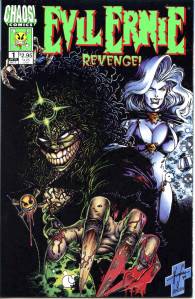
Evil Ernie, an undead psychotic killer, is a fictional comic-book character created by writer Brian Pulido and artist Steven Hughes in 1991 and originally published by Eternity Comics. Evil Ernie is currently published by Chaos! Comics and Devil’s Due Publishing.
In this series, Evil has cleared the Eastern Seaboard of human life and now is turning his attention inland. Meanwhile Dr Price and Dr Young are now charged with putting a stop to the undead maniac. They explore the very beginnings of Ernie’s undead rampage and come up with a plan to take him down and sever him from the power that keeps him going once and for all. Smiley button’s personality starts to come to the front as he advises Ernie on tactics and the special relationship between them is explored. Meanwhile in Hell Lady Death is tormented by visions and is unable to control her own kingdom as a winged tormentor haunted her every move.

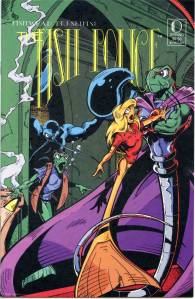
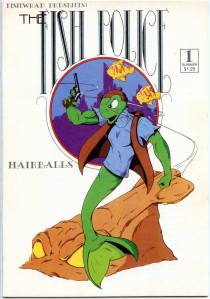
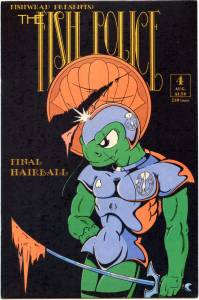
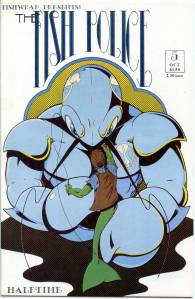
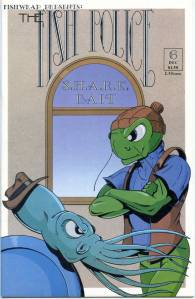
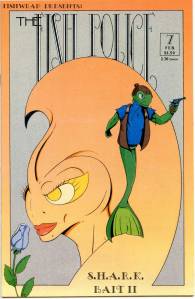
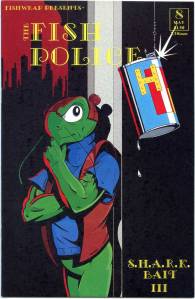
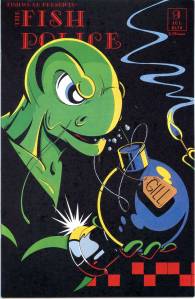
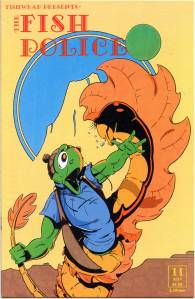
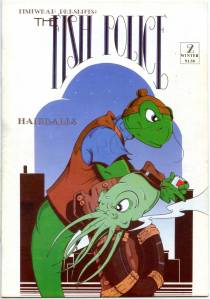
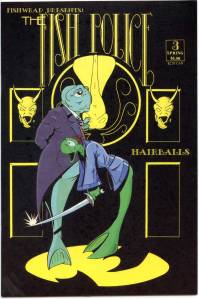
Fish Police V1 (1985)

A series by American cartoonist Steve Moncuse. The plot centers on law and crime in a fictional underwater metropolis with the protagonist, Inspector Gill, trying to solve various crimes, often Mafia-related, while avoiding being seduced by the buxom Angel Jones. The comic featured several marine species as its characters, while the plots and dialogue were reminiscent of film noir.

Original Fish Police stories were published from 1985 to 1991. Sam Kieth (The Maxx) inked “a single panel and drew a ‘Next Issue’ pin-up”

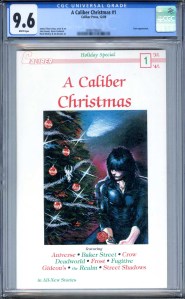
A Caliber Christmas (1989)

Cover by James O’Barr. Stories and art by Kyle Garrett, Jim Kesler, Gary Reed, Randy Zimmerman, Charles Marshall, Greg Cravens, Susan Van Camp, Kirk Jarvinen, Guy Davis, Mark Bloodworth, Kevin Van Hook, Vince Locke, Mark Winfrey, John Dennis, Ken Landgraf and James O’Barr. Christmas-themed stories featuring some of the popular Caliber series, including Deadworld, Baker Street, The Realm, The Aniverse, and even The Crow.

The Adventurers (1986)

The Adventurers was a well-produced sword and sorcery title from writer Scott Behnke and Peter Hsu. It draws heavily on fantasy/role-playing games like Dungeons & Dragons in creating its world of fearless adventurers, strange magics, horrible monsters, and lost treasures.

The tale begins when eight adventurers are recruited by Tarrus the One-Eyed to recover a magical key from the lost city of Tecumeth. This city had been considered the home of great evil for generations—and with good cause. The adventurers’ quest would be one of constant peril, with the party facing dangers both living and mystical. Although the adventurers have more than their share of differences, they would need all their skills if they were to have any hope of survival.

Ripley’s Believe It or Not!

For generations, Ripley’s Believe It or Not! told tales of the bizarre and uncanny, but which “were absolutely true—believe it or not!” In doing so, Ripley has introduced readers to everything from child prodigies who composed masterpieces before they turned 12, to great islands built by people throwing pebbles off into the water over a period of several generations.

In this series, previously entitled “True War Stories,” Ripley tends to stretch the bounds of credibility. Readers who do not dispute the existence of spirits may have trouble believing these thrilling tales of ghost ships, hauntings, and other supernatural phenomena. Then again, Ripley has always known how to tell a good yarn—whether you believe it or not!

Scud: The Disposable Assassin (1994)

In this future, it is possible to obtain robot assassins out of vending machines at the cost of 3 Franks. After terminating their target, the robot self-destructs for easy clean-up. During his first mission, the Scud we follow sees his self-destruct warning in a mirror during an 18-page fight scene. Programmed for self-preservation for the sake of winning fights, Scud doesn’t want to die, so only wounds Jeff bad enough to be put on life support at a nearby hospital, ensuring their mutual survival.

The main plot of Scud: The Disposable Assassin follows Scud’s career as a freelance mercenary and assassin, working to pay off Jeff’s medical bills.

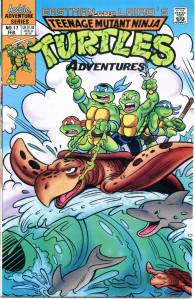
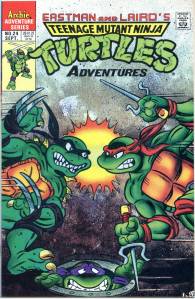
Teenage Mutant Ninja Turtles Adventures (1988)

The initial storylines were close adaptations of the 1987 Teenage Mutant Ninja Turtles television series, but by the fifth issue the creators handed the series over to Ryan Brown and Stephen Murphy. In their hands the comic immediately diverged from the cartoon series into unique new story arcs, often incorporating social, environmentalist, and animal-rights themes. It also introduced several new characters of various races and backgrounds, including humans, mutants, aliens, and other anthropomorphic creatures. Additionally, the series added new layers to established players such as April O’Neil, who began training with a katana, and the Shredder, who gradually revealed a sense of honor. The stories were often seen as ‘deeper’ and more ‘serious’ than the cartoon. As the new tales and characters were explored, original antagonists KrangBebop and Rocksteady were eventually phased out early, making later appearances during stories involving alien worlds. Shredder would remain a recurring adversary.

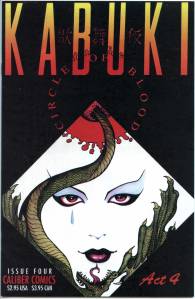
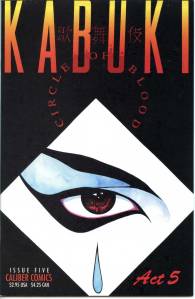
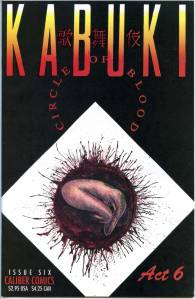
Kabuki – Circle of Blood (1994)

Set in an alternate near-future Japan, a young woman codenamed “Kabuki”, acts as an agent and television law-enforcement personality for a clandestine government body known as “The Noh”. In the first volume of the series, The Noh’s nature and background is explained.

The Noh is controlled by a renowned World War II Japanese military man known as the General, who has achieved much power and status for being a brilliant military tactician during his many years of service. The agency itself exists as part of Japan’s strict police state, which hunts down and brutally executes criminals for their misdeeds under the veil of keeping the peace. Secretly the Noh also acts to maintain the balance of crime and order that ultimately benefits the national economy on both sides of the law and thus targets politicians, businessmen and certain underworld kingpins whose actions threaten this balance. Kabuki herself is one of eight masked assassins whom perform these secret executions under the General’s orders.