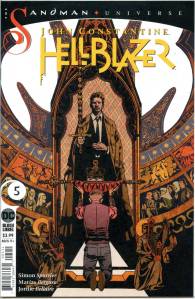
The second year of the Sandman Universe begins with the long-awaited arrival of one of DC’s most iconic characters…John Constantine, Hellblazer! John Constantine is back in London, back to his old tricks-and just in time, as things have become very dark indeed in his old stomping grounds.
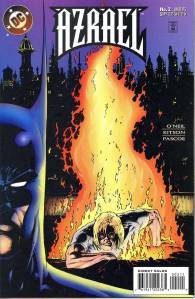
In 1995 Azrael appeared in his on self-titled series, chronicling Valley’s battles against the Order of St. Dumas. Azrael ran for 100 issues between 1995 and 2003. Starting with issue #47, it was re-titled to Azrael: Agent of the Bat in an attempt to boost sales by tying the series in with the rest of the Batman mythos, including Azrael as part of the team of Batman, Robin, and the new Batgirl.
Initial issues of this volume reintroduced the characters, and provided new and divergent origins for them. Most characters resemble their previous counterparts in costume and powers, with the most notable exceptions including Chameleon Boy, now called simply Chameleon and depicted as an androgynous creature; Star Boy, who in this version of the Legion is black; Colossal Boy, who is now a giant who shrinks to human size; and Phantom Girl, who exists in two universes at once and has conversations with people in her own dimension while talking to Legionnaires at the same time.
Beginning with issue #16, The Legion of Super-Heroes (vol. 5) was retitled Supergirl and the Legion of Super-Heroes with Supergirl traveling to the future and joining the Legion. With issue #31, Tony Bedard replaced Waid as writer. The title reverted to The Legion of Super-Heroes with issue #37 and Jim Shooter became the writer. The series ended with issue #50, in which the script was credited to “Justin Thyme”, a pseudonym previously used by uncredited comic book artists.
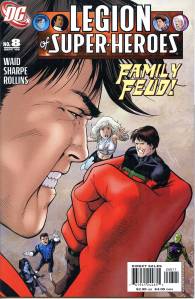
Legion of Super-Heroes #8 NM $3
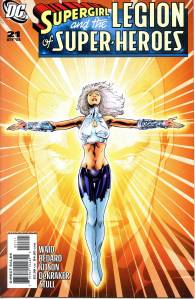
Supergirl and the Legion of Super-Heroes #21 NM $3
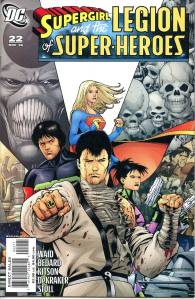
Supergirl and the Legion of Super-Heroes #22 NM $3
The characters returned in a six issue limited series as part of The Sandman Universe initiative. The series, written by Pornsak Pichetshote with art by Jeff Stokley, debuted on December 27, 2022 and concluded on May 24, 2023. In the last issue Edwin Payne realized that he has romantic feelings for his partner Charles Rowland.
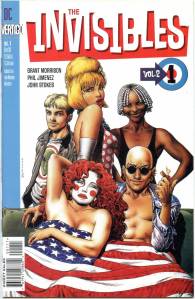
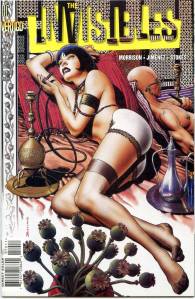
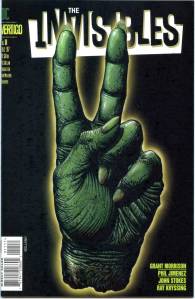
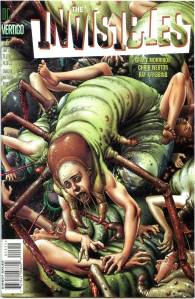
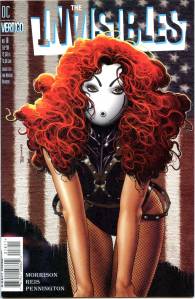
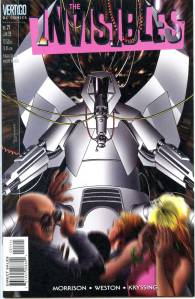
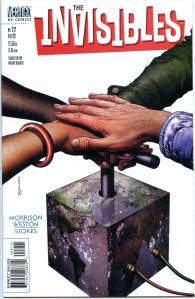
The second volume begins a year after the events in London. The arc “Black Science” follows the Invisibles embarking on a mission after taking a year off in America at the New York City estate of wealthy Invisible Mason Lang. While Jack Frost, Boy, and Lord Fanny explore New York City, King Mob and Ragged Robin begin a sexual relationship. Jolly Roger, an Invisible and an old friend of King Mob’s, asks them to help her steal an AIDS vaccine from Dulce Base. There, the Invisibles face off against Mr. Quimper and Colonel Friday, two psychic agents of the Outer Church. The Invisibles are victorious, though Quimper plants a tiny part of his psyche in Ragged Robin’s subconscious.
Superman has received news that Doomsday has destroyed an island and disappeared without a trace. According to Superman’s scientific ally, Dr. Shay Veritas, Doomsday can enter and exit the Phantom Zone at will. Also, Doomsday’s blood now has a virus that incinerates anything within a hundred yards, which means Superman is the only one who can survive a direct confrontation with it. In a Justice League meeting in how to confront Doomsday, Lex Luthorinforms them Doomsday is absorbing the life-force of his victims in order to become powerful enough to defeat Superman. Luthor suggests Superman should leave Earth and hopefully Doomsday will leave Earth as well. Superman agrees, but not before giving Batman a key to the Fortress of Solitude. Superman confronts Doomsday in outer space. The battle ends in Smallville, where Superman rips Doomsday in half. To prevent Doomsday’s toxin from spreading across the world, Superman inhales it all from Doomsday’s corpse and falls unconscious.
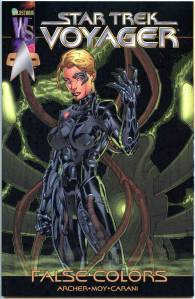
In 1999, the license drifted back to DC, to its Wildstorm imprint. Wildstorm decided to not do an ongoing series, instead publishing limited series and trade paperbackgraphic novels. Their TNG publications dealt with the movie era between Insurrection and Nemesis; their Deep Space Nine stories were based on the post-Season 7 novel continuity, and their Voyager series took place during the series. Wildstorm also published an issue based on the novel series New Frontier (written by series creator Peter David) and the video game Elite Force. Their license expired in 2002.
Star Trek Special NM $10
Star Trek The Next Generation – Embrace the Wolf NM $9
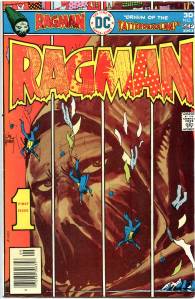
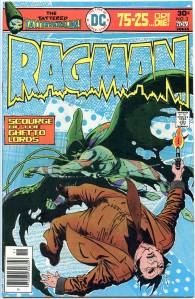
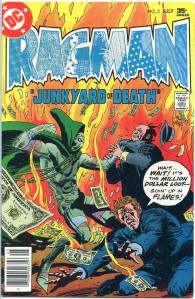
Ragman first appeared in the short-lived comic-book series named after him. He is one of a number of Jewish superheroes, and his continuity is tied to that of DC Comics‘ Golem, derived from the Golem of Prague of Jewish folklore. Ragman was created by writer Robert Kanigher and artist Joe Kubert. Ragman is sometimes compared to the other nighttime defender of Gotham City, Batman.
A Vietnam veteran, Rory had grown up helping his father, a junk man who owned a pawn shop named Rags’n’Tatters. His father always dreamed of making a better life for Rory and constantly promised that someday he would make Rory rich. While drinking with his friends one night, his father discovered 2 million dollars stuffed inside an old mattress that had been pawned just recently. He and his friends decided to hide the money for Rory, since they were too old to truly benefit from it. The money turned out to be the loot from an armored car heist and when the hoods came to the shop one night to get it, they shot down some electrical wires and used them to torture Rory’s father and his friends into revealing where the money was hidden. Rory arrived soon after and seeing his father in agony attempted to pull him free from the wires. A final shock of power ran though the old men and grounded out at Rory, knocking him unconscious. When he woke his father and friends were dead and the hoods responsible were gone. Using a costume made out of old rags (his father had bought it from a stranger before he died and left a note saying Rory could wear it to a costume party) he became Ragman, “The Tatterdemalion of Justice”.
After four issues as The Sinister House of Secret Love, which featured Gothic romance/horror stories written by Michael Fleisher and others, the title changed to Secrets of Sinister House, and the original format and romance angle were abandoned the following issue.
In the same vein as House of Mystery and House of Secrets (as well as its successor, Secrets of Haunted House), Secrets of Sinister House was “hosted” by Eve (the character debuted in issue #6) and included guest appearances by Eve’s cousins Cain and Abel. In issue #16, Eve was removed as host — as editor Joe Orlando departed from the title, replaced by Jack C. Harris — to focus on the concept of the “sinister houses”. The following month, she began nudging Destiny out of Weird Mystery Tales.















 EHT Comics