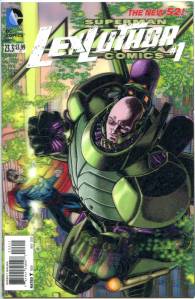
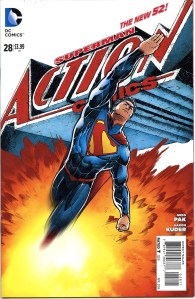
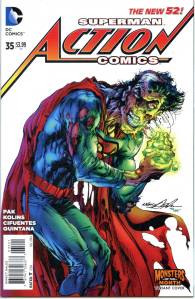
As with all of the books associated with the DC relaunch, Clark Kent appears to be about five years younger than the previous incarnation of the character (where it would focus on the early days of Superman’s career, whereas the main series would focus on the present). Superheroes at large have appeared only in the past five years, and are viewed with at best, suspicion, and at worst, outright hostility. The storyline in Action Comics takes place about a year before the events of Justice League #1, and was referred to by DC Co-Publisher Dan DiDio as “DC Universe Year Zero” while JL operates as “Year One.” The Man of Steel is not yet trusted by the citizens of Metropolis and wears a basic costume consisting of a caped T-shirt, jeans and work boots.
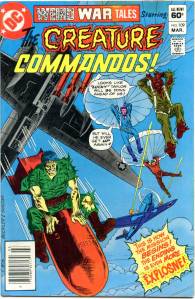
The original title ran for 12 years and 124 issues. It was an anthology series that told war stories with horror, mystery, fantasy and science fiction elements. Changes in the Comics Code Authority made the use of horror elements possible. The first seven issues were reprinted material. Each issue beginning with issue #8 was hosted by Death, usually depicted as a skeleton dressed in a different military uniform each issue. The title’s name was inspired by editor Joe Orlando.Walt Simonson‘s first professional published comic book work appeared in Weird War Tales #10 (January 1973).Roger McKenzie and Frank Miller‘s first collaboration was on a two-page story published in Weird War Tales #68 (October 1978). Recurring characters began to appear late in the series run, notably the G.I. Robot, and the return of “The War that Time Forgot” which originally ran in Star Spangled War Stories. Writer J. M. DeMatteis and penciler Pat Broderick created the Creature Commandos in Weird War Tales #93 (November 1980).
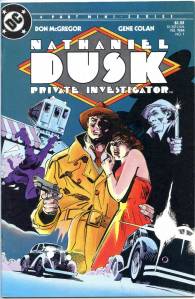
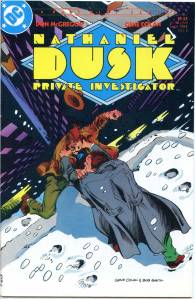
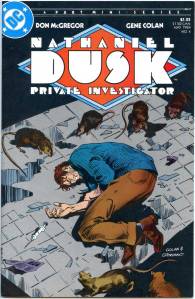
Nathaniel Dusk is a private investigator from New York City whose adventures in the 1930s are portrayed in the stories. He served in the United States armed forces in World War I and was hired by the New York City police force. Dusk fell deeply in love with Joyce Gulino, a beautiful young saleswoman with two children, Jennie and Anthony. Gulino’s ex-husband was a gangster named Joseph Costilino. Costilino later killed his family.
The 2017-2019 miniseries Doomsday Clock, by Geoff Johns and Gary Frank features Nathaniel Dusk in the DC Universe as a noir film character portrayed by a fictional actor named Carver Colman. Colman plays a key role in the story.
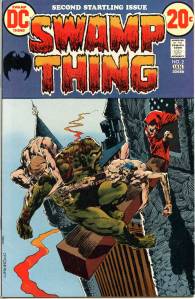
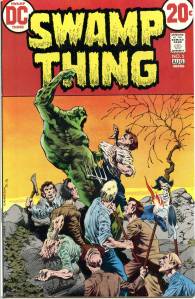
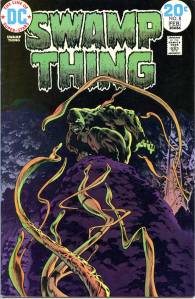
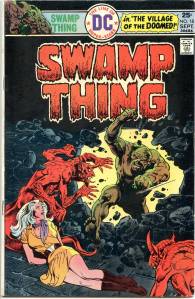
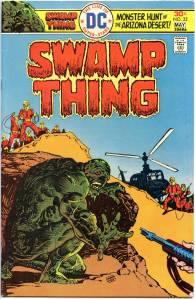
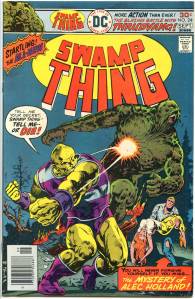
The Swamp Thing character first appeared in House of Secrets #92 (June–July 1971). After the success of the short story in the House of Secrets comic, the original creators were asked to write an ongoing series, depicting a more heroic, more contemporary creature. InSwamp Thing #1 (October–November 1972) Wein and Wrightson updated the time frame to the 1970s and featured a new version character: Alec Holland, a scientist working in the Louisiana swamps on a secret bio-restorative formula “that can make forests out of deserts”. Holland is killed by a bomb planted by agents of the mysterious Mr. E (Nathan Ellery), who wants the formula. Splashed with burning chemicals in the massive fire, Holland runs from the lab and falls into the muck-filled swamp, after which a creature resembling a humanoid plant appears. Roy Thomas and Gerry Conway, who co-created Man-Thing for Marvel Comics a year and a half earlier, thought that this origin was too similar to that of their character, and Wein himself had written a Man-Thing story that was published with a June 1972 cover date, but he refused to change the origin in spite of some cajoling by Conway, who was his roommate at the time. Marvel, however, never took the issue to court, realizing the similarity of both characters to The Heap.
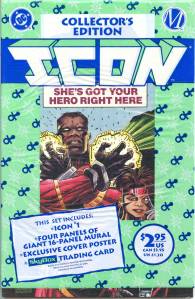
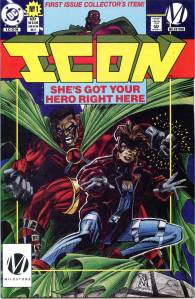
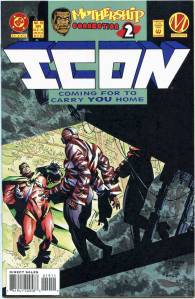
Icon is one of the headline characters introduced by Milestone Media in the 1990s. A being from another planet, he has taken on the form of an African American man, but has abilities such as flight, super-strength, and invulnerability. He uses these in partnership with Rocket, a human teenager using his alien technology, to protect the people of the fictional city of Dakota.
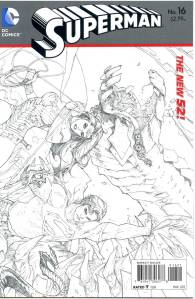
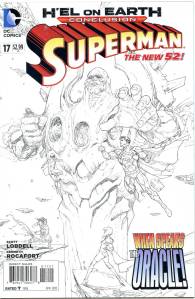
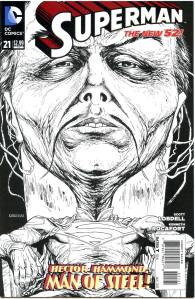
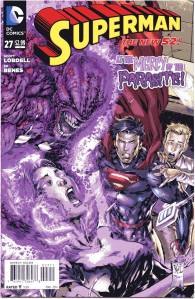
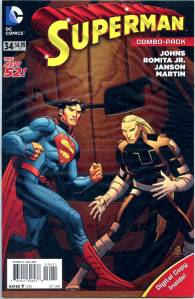
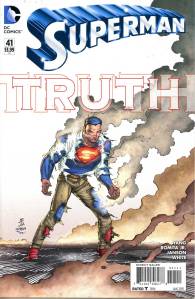
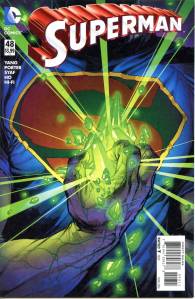
In late July 2011, DC released The New 52, a free preview book giving solicitations and previews of all of the new titles launching from August 31, 2011. Notable continuity changes shown included Superman‘s two new looks: one which consists of jeans, a blue T-shirt with the “S” logo and a cape, the other consisting of Kryptonian battle armor that resembles his classic costume.
In 1989, DC Comics began publishing the Forgotten Realms comic series, written by Jeff Grubb. Each issue contained twenty-six pages, illustrated primarily by Rags Morales and Dave Simons. The 19 issues produced by Morales were his first professional works. Tom Raney illustrated issues #17 and #20. Elliot S. Maggin served as an editor for DC from 1989 to 1991 and oversaw the licensed TSR titles, including Forgotten Realms. Twenty-five issues were published in total, with the last being released in 1991.
Supergirl (Volume 2) was published from November of 1982 until September of 1984, spanning a total of 23 issues. The series was initially entitled, the Daring New Adventures of Supergirl, but shortened the title to simply, Supergirl, with issue #13. This was the last regular comic series to feature the Pre-CrisisKara Zor-El as Supergirl.
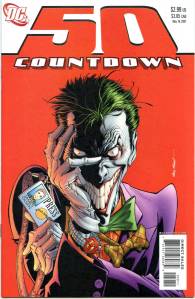
Countdown consists of 51 issues, number in reverse, published weekly for one year, crossing over with noteworthy and significant titles published by DC. The series covers much of the fictional DC Universe, told in parallel narratives, through the interconnecting stories of a cast of characters, and frequently crosses over with various other DC titles. Unlike the 52 limited series of the previous year, Countdown is not depicted as taking place in “real time” but presumably operates on the same floating timeline as DC Comics stories in general.
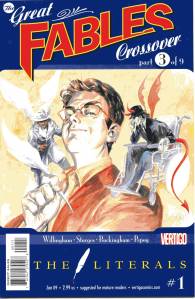
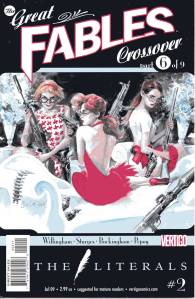
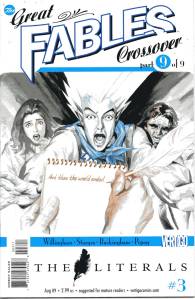
The Literals is an limited series by Bill Willingham published under DC’s Vertigo imprint. It was created to be parts Three, Six, and Nine of The Great Fables Crossover.



















 EHT Comics