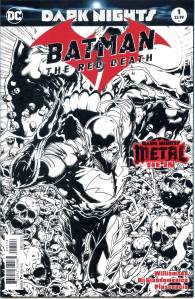
Batman (1940’s)

In early 1939, the success of Superman in Action Comics prompted editors at National Comics Publications (the future DC Comics) to request more superheroes for its titles. In response, Bob Kane created “the Bat-Man”. Collaborator Bill Finger recalled that “Kane had an idea for a character called ‘Batman,’ and he’d like me to see the drawings. I went over to Kane’s, and he had drawn a character who looked very much like Superman with kind of … reddish tights, I believe, with boots … no gloves, no gauntlets … with a small domino mask, swinging on a rope. He had two stiff wings that were sticking out, looking like bat wings. And under it was a big sign … BATMAN”. The bat-wing-like cape was suggested by Bob Kane, inspired by Leonardo Da Vinci‘s sketch of an ornithopter flying device as a child.

Finger suggested giving the character a cowl instead of a simple domino mask, a cape instead of wings, and gloves; he also recommended removing the red sections from the original costume. Finger said he devised the name Bruce Wayne for the character’s secret identity: “Bruce Wayne’s first name came from Robert Bruce, the Scottish patriot. Wayne, being a playboy, was a man of gentry. I searched for a name that would suggest colonialism. I tried Adams, Hancock … then I thought of Mad Anthony Wayne.” He later said his suggestions were influenced by Lee Falk‘s popular The Phantom, a syndicated newspaper comic-strip character with which Kane was also familiar.

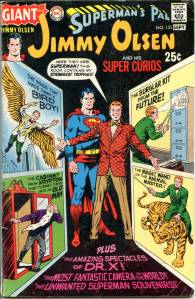
Superman’s Pal Jimmy Olsen (1970’s)

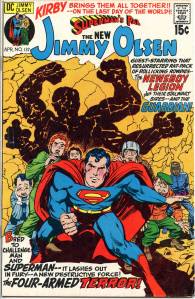
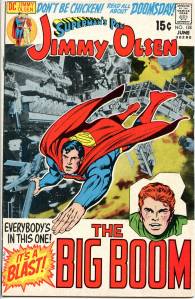
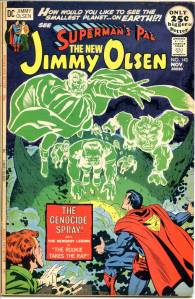
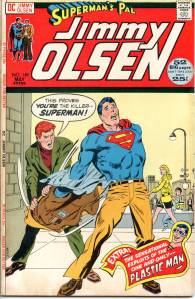
Superman’s Pal, Jimmy Olsen is a series published by DC Comics from September–October 1954 until March 1974, spanning a total of 163 issues. Featuring the adventures of Superman supporting character Jimmy Olsen, it contains stories often of humorous nature.

The 1952 television series Adventures of Superman co-starred actor Jack Larson, who appeared regularly as Jimmy Olsen. Largely because of the popularity of Larson and his portrayal of the character, National Comics Publications (DC Comics) decided to create a regular title featuring Jimmy as the leading character. Curt Swan was the main artist on the series for its first decade.
Many of the issues include Jimmy undergoing a transformation of some form.

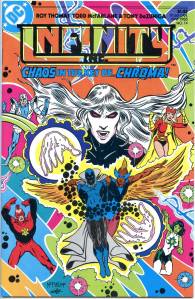
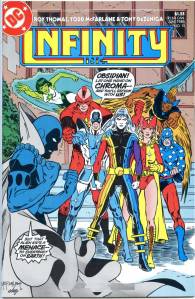
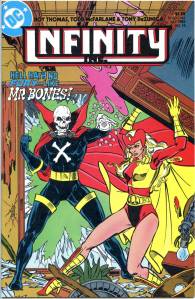
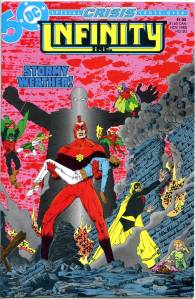
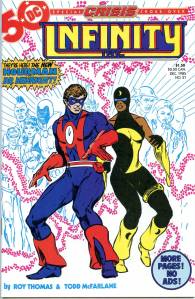
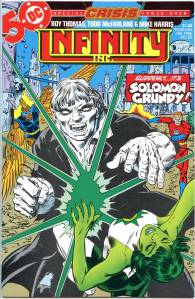
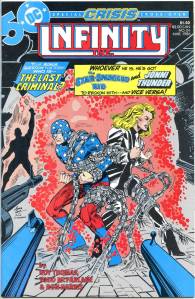
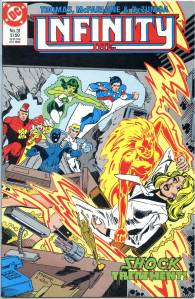
Infinity Inc. (1984)

Roy Thomas and his wife, Dann Thomas, wrote the series throughout its run. Artists on the series included Jerry OrdwayDon NewtonTodd McFarlaneMichael Bair, and Vince Argondezzi.

The group was organized by Sylvester Pemberton, the original Star-Spangled Kid, in Infinity Inc. #1, when a number of JSA protégés were denied admission to the JSA. They instead formed their own group. Members of Infinity, Inc. were known as Infinitors.

The series ended in 1988 with the death of the Star-Spangled Kid (by then known as Skyman), and presumably the group disbanded shortly thereafter. Several members have gone on to supporting roles in other comics series. Fury filled a pivotal role in The Sandman and is the mother of Daniel HallHourmanObsidian, Nuklon (as Atom Smasher), Silver Scarab(as Doctor Fate), and Power Girl eventually joined the 21st century incarnation of the JSA.

Originally, the series took place on the parallel world of Earth-Two, but in 1986 it was merged with the rest of DC continuity following Crisis on Infinite Earths. From then on, they shared their spot as Los Angeles’ superteam with the Outsiders, and were involved in a crossover with the New Teen Titans.

Lex Luthor: Man of Steel (2005)

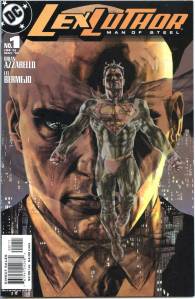
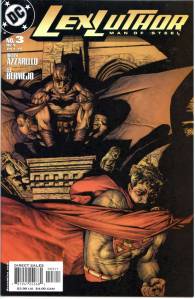
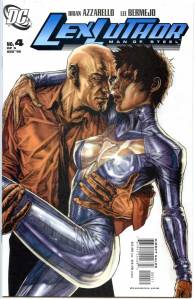
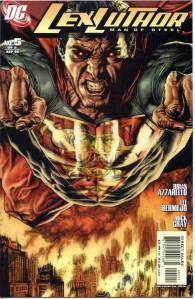
Lex Luthor: Man of Steel (later collected as simply Luthor) is a five-issue monthly limited series written by Brian Azzarello and illustrated by Lee Bermejo, which features Superman‘s nemesis Lex Luthor as the protagonist.

It explores Luthor’s motivations behind being a constant foe to the Man of Steel inside a city that has largely embraced him. Luthor views Superman as a demigod who looks down on humanity and believes that in order to “save” the human race from extraterrestrial threats, Superman must be stopped.

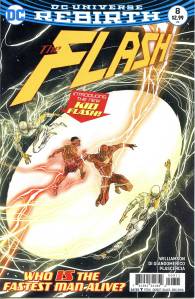
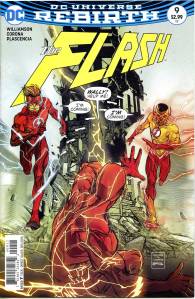
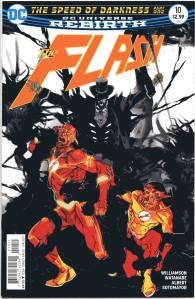
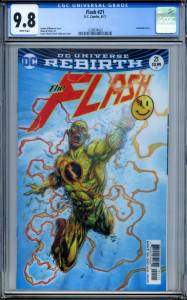
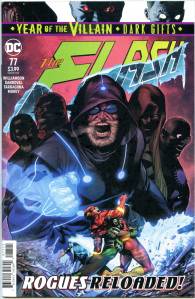
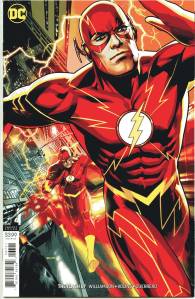
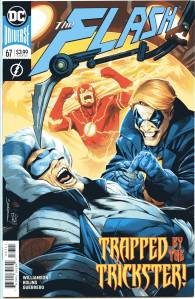
Flash V5- Rebirth (2016)

A new storm brews over Central City and disproves the old adage about lightning never, well…you know. Just as Barry begins to feel overwhelmed fighting crime, a new speedster debuts—but just where did this amazing new friend come from?

Spinning directly out of the epic events of DC UNIVERSE: REBIRTH #1, the Fastest Man Alive finds himself at the center of a DC Universe at a crossroads.

Action Comics (2000’s)

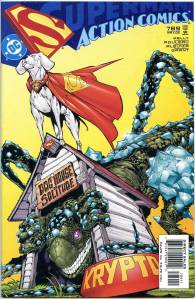
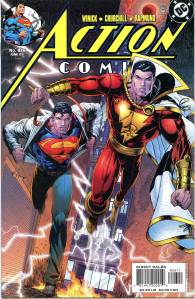
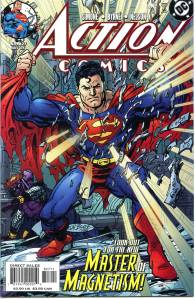
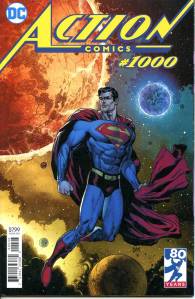
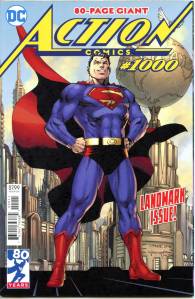
Several major Superman storylines crossed over with Action Comics including “Emperor Joker” in 2000[and “Our Worlds at War” in 2001. John Byrne returned to Action Comics for issues #827–835 working with writer Gail Simone in 2005-2006.

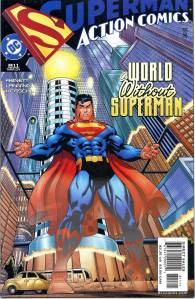
After the “One Year Later” company-wide storyline, Action Comics had a crossover arc with the Superman series, titled “Up, Up and Away!” which told of Clark Kent attempting to protect Metropolis without his powers until eventually regaining them.

The “Last Son” storyline was written by Geoff Johns and Richard Donner, the director of the 1978 film Superman: The Movie, and was pencilled by Adam Kubert. This story introduced the original character, Christopher Kent and adapts the classic Superman film villains, General Zod, Ursa and Non into the regular DC Universe continuity. Issue #851 (August 2007) was presented in 3-D.

Starting with issue #875 (May 2009), written by Greg Rucka and drawn by Eddy BarrowsThara Ak-Var and Chris Kent, took Superman’s place as the main protagonists of the comic, while Superman left Earth to live on New Krypton. A Captain Atom back-up feature began in issue #879 (September 2009).

L.E.G.I.O.N (1988)

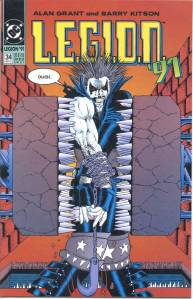
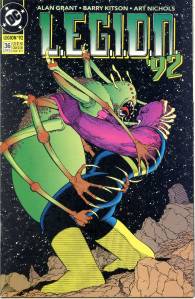
L.E.G.I.O.N. is a science fiction comic book created by Keith GiffenBill Mantlo and Todd McFarlane and published by DC Comics. The principal subject of the comic book is a team of fictional extraterrestrial superheroes. The characters first appeared in Invasion! #1 (December 1988). The original series chronicled the formation and activity of an interplanetary police force whose mission was to act as a peace-keeping force in their galaxy.

Action Comics (2010’s)

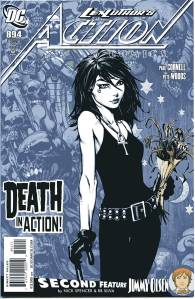
Although DC had initially announced Marc Guggenheim as writer of the title following the War of the Supermen limited series, he was replaced by Paul Cornell. Cornell featured Lex Luthor as the main character in Action Comics from issues #890-900 and Death appeared in issue #894, with the agreement of the character’s creator, Neil Gaiman. In April 2011, the 900th issue of Action Comics was released. It served as a conclusion for Luthor’s “Black Ring” storyline and a continuation for the “Reign of Doomsday” storyline. The final issue of the original series was Action Comics #904.

Strange Adventures (1970’s)

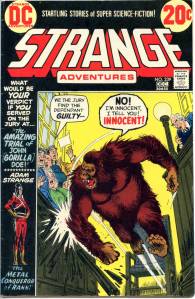
Strange Adventures ran for 244 issues and was DC Comics’ first science fiction title. It began with an adaptation of the film Destination Moon. The sales success of the gorilla cover-featured story in Strange Adventures #8 (May 1951) led DC to produce numerous comic book covers with depictions of gorillas.

With issue #217, the title gained another new logo and began reprinting stories of Adam Strange and the Atomic Knights, among other stories. Several Strange Adventure stories were also reprinted in some of DC Comics’ later anthologies such as From Beyond the Unknown.

In 1978, DC Comics intended to revive Strange Adventures. These plans were put on hold that year due to the DC Implosion, a line-wide scaling back of the company’s publishing output. When the project was revived a year later, the title was changed to Time Warp and the series was in the Dollar Comics format.

Dark Nights: Metal (2017)

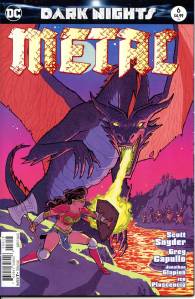
The story involves Batman discovering a dark multiverse that exists beneath the core DC multiverse. It is revealed that both multiverses are connected through mysterious metals that Batman has encountered over the years. His investigations eventually result in him releasing seven evil versions of himself from the dark multiverse, led by the dark god known as Barbatos, who plans to unleash darkness across every Earth.