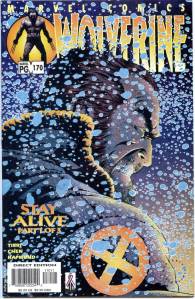
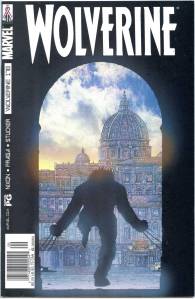
An ongoing Wolverine series started publication in 1988 and lasted until 2003 when it was relaunched after issue 189. The original creative team consisted of writer Chris Claremont and penciler John Buscema. Claremont described the series as “high adventure rather than super heroics, sort of a combination of Conan meets Terry and the Pirates.” As a visual manifestation of the series’ break from the traditional superhero genre, throughout Claremont’s run Wolverine wears either civilian clothes or a mask-less, all black outfit instead of his superhero costume, and costumed characters in general were few and far between. Nearly half of the series’s run was written by Larry Hama.
Tag: Comic
Superman V1 (2000’s)
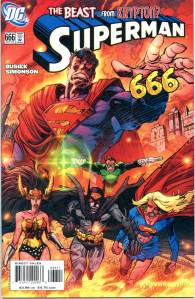
In the middle of 1999, the Superman titles relaunched with pretty much all new creators, and folks like Jerry Ordway, Louise Simonson and Dan Jurgens who had been working on the books for years moving on. That relaunch, which starts with Superman #151 by Jeph Loeb and Ed McGuinness more or less jettison most of the triangle era’s supporting cast, with a focus on more action and less character drama.
After Loeb moves on to Superman/Batman, we get a 12 issue run on Superman by Brian Azzarello and Jim Lee, Gail Simone takes over Action Comics for a year, with John Byrne on art, as all three Superman titles begin setting up the next major crossover, Infinite Crisis.
After Infinite Crisis, the DC Universe leap forward “One Year Later.” Geoff Johns and Kurt Busiek are the writers on Superman, starting off co-writing an 8 issue relaunch of the Superman titles. In the wake of Geoff Johns’ final storyline involving Brainiac, the Superman titles got intertwined again as a massive storyline spanning two years involving the creation of a New Krypton in Earth’s solar system, with Supergirl, Action Comics, Superman, the World of New Krypton miniseries, several specials, all culminating in the “War of the Supermen” miniseries.
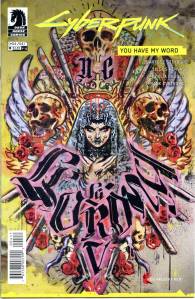
Cyberpunk 2077: You Have My Word (2021)
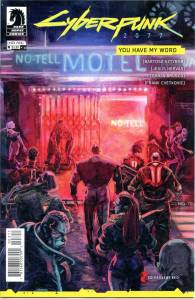
A new urban development proposal is being pushed through city council–a flagrant infraction on those safeguarded by the Valentinos gang. They enlist the service of three cyberpunks to discreetly and strategically terminate the project, but their subject is more than an ordinary target.
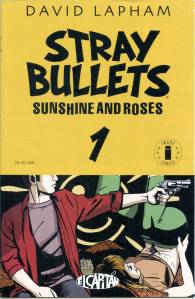
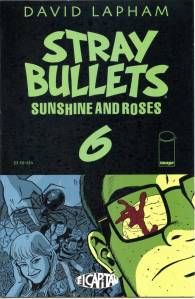
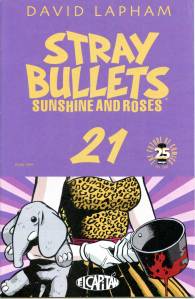
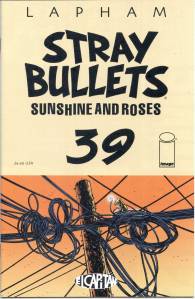
Stray Bullets – Sunshine and Roses (2015)
A story about violence, love, and really bad decisions. The Baltimore underworld is falling apart at the seams and blood has been spilt. Where and when things went to hell in a handbasket can be traced back to a time a few years earlier, when a man named Harry ran the city, Spanish Scott and Monster enforced the rules, and an insecure young man named Orson met a wild and crazy girl named Beth. The two together cooked up the boldest, most outlandish, and just about the stupidest plan ever devised-a plan to steal a whole lot of Harry’s money and drugs and get a little revenge along the way.
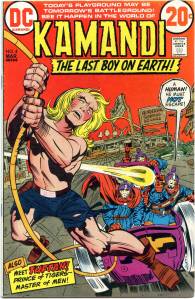
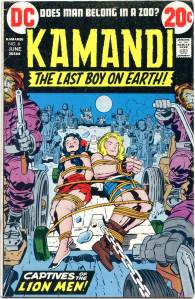
Kamandi (1972)
DC editor Carmine Infantino had tried to acquire the license to publish Planet of the Apes comic books. When this failed to happen, he asked Jack Kirby for a series with a similar concept. Kirby had not seen the films but he knew the rough outline and he had also created a very similar story, “The Last Enemy!”, in Harvey Comics‘ Alarming Tales that predated the original Planet of the Apes novel. He also had an unused comic strip he created in 1956, titled Kamandi of the Caves. Kirby brought all those elements together to create Kamandi. Although his initial plan was to not work on the comic books themselves, the cancellation of Forever People freed him up to do so.
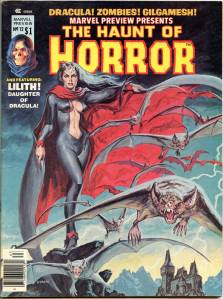
Marvel Preview V1 (1977)
An umbrella title that showcased a different heroic-adventure, science-fiction, or sword-and-sorcery character in virtually every issue. The title introduced the Marvel Comics characters Dominic Fortune in issue #2, Star-Lord in #4,and Rocket Raccoon in #7. The vigilante character the Punisher, introduced as an antagonist in the comic book The Amazing Spider-Man, had his first solo story in issue #2.
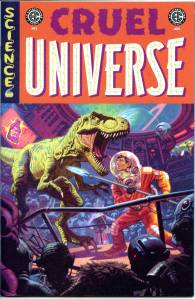
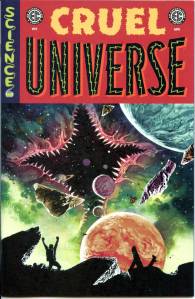
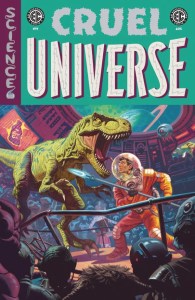
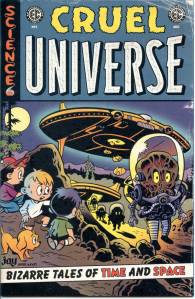
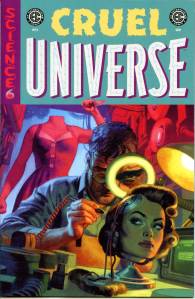
Cruel Universe (2024)
The unpredictable return of EC Comics continues here with the quantum comics event of the millennium! Galaxies will collapse. Space-time will be distorted. And your very will to exist, too, shall be broken. . . . Just remember: It’s all in the name of SCIENCE!
The Brave and the Bold (1980’s)
The character Nemesis, also known as Thomas Tresser, debuted in an eight-page backup story in issue #166 (September 1980) written by Cary Burkett and drawn by Dan Spiegle. The Tresser character was created by Burkett in 1979, and named for an actor with whom Burkett was rooming in New Hampshire.
Alan Brennert wrote four issues of The Brave and the Bold featuring Batman teaming with the Creeper, Hawk and Dove, the Robin of Earth-Two, and the Catwoman.
The title’s final issue featured a team-up of the Batmen of Earth-One and Earth-Two and included a preview of Batman and the Outsiders, the title that replaced The Brave and the Bold on DC’s schedule and became Aparo’s next regular assignment.
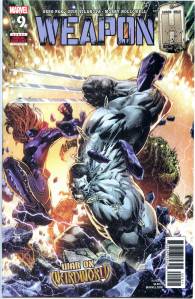
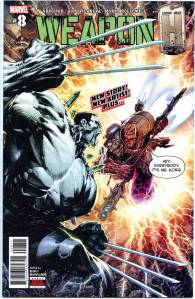
Weapon H (2018)
The character, created by Greg Pak and Mike Deodato Jr., first appeared in The Totally Awesome Hulk #21 (September 2017) during the “Weapons of Mutant Destruction” storyline.
Weapon H later gained his own comic series that details what he has been up to since the end of the “Weapons of Mutant Destruction” storyline.
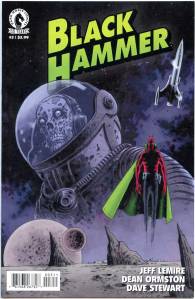
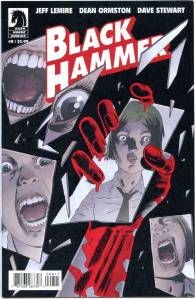
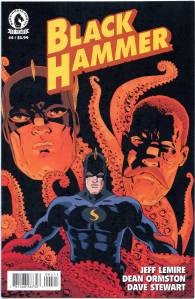
Black Hammer (2016)
Jeff Lemire originally conceived of Black Hammer in 2007, intending to draw the story himself after the end of Essex County. In 2008 he pitched the series to Dark Horse editor Diana Schutz. The pitch was accepted, but Lemire was unable to begin work until he finished The Nobody and Sweet Tooth for Vertigo, then his exclusivity contract for DC Comics prevented him from working on the series from 2010 to 2014. When Lemire returned to the series in 2014, he was working on so many projects that drawing it himself was no longer possible, so he teamed up with artist Dean Ormston for the title. According to Lemire, it was important for Black Hammer to not to look anything like mainstream superhero comics. He wanted the series to stand outside of superhero comics and comment on them, not become one of them. For this, Ormston’s art style was deemed perfect.