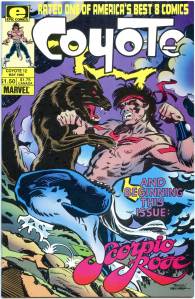
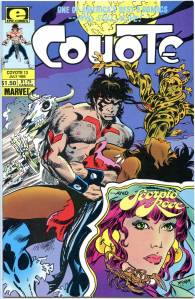
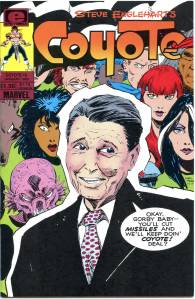
The characters first appeared in Eclipse Magazine #2-8. It would later be reprinted in a color trade paperback, I Am Coyote. Afterwards, a new comic book series started at Marvel ComicsEpic Comics line, that ran 16 issues. It was notable for the first published work of Todd McFarlane. According to Epic editor-in-chief Archie Goodwin, artist Steve Leialoha‘s departure after issue #2 caused deadline problems that the series never fully recovered from, leading to its early cancellation.
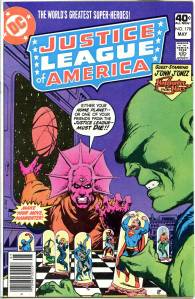
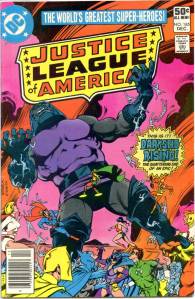
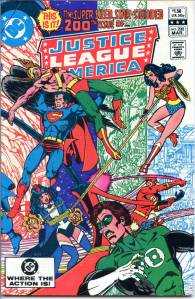
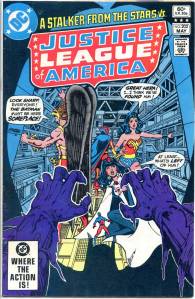
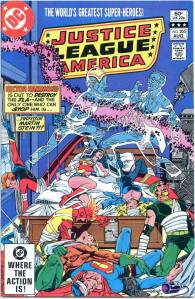
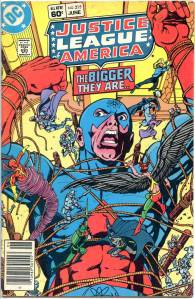
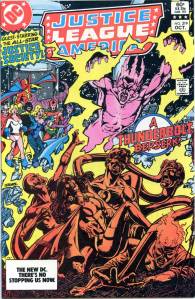
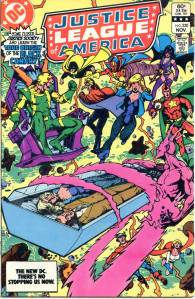
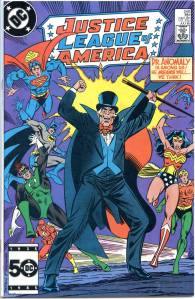
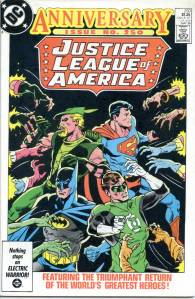
In the early 80’s, George Pérez, Don Heck, and Rich Buckler would rotate as artist on the title. The double-sized anniversary issue #200 (March 1982) was a “jam” featuring a story written by Conway, a framing sequence drawn by Pérez, and chapters drawn by Pat Broderick, Jim Aparo, Dick Giordano, Gil Kane, Carmine Infantino, Brian Bolland, and Joe Kubert. Bolland’s chapter gave the artist his “first stab at drawing Batman.” Pérez would leave the title with issue #200 to concentrate on The New Teen Titans although he would contribute covers to the JLAthrough issue #220 (November 1983). The 1982 team-up with the Justice Society in issues #207–209 crossed over with All-Star Squadron #14–15. A Justice League story by Gerry Conway and Rich Buckler originally intended for publication as an issue of All-New Collectors’ Edition saw print in Justice League of America #210–212 (January–March 1983).
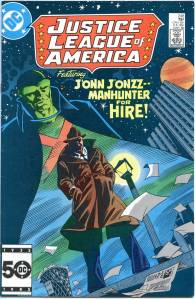
Seeking to capitalize on the popularity of their other team books, which focused upon heroes in their late teens/early 20s, Gerry Conway and artist Chuck Patton revamped the Justice League series. After most of the original heroes fail to help fend off an invasion of Martians, Aquaman dissolves the League and rewrites its charter to allow only heroes who will devote their full-time to the roster. The new team initially consists of Aquaman, Zatanna, Martian Manhunter, Elongated Man, the Vixen, and a trio of teenage heroes Gypsy, Steel, and Vibe. Aquaman leaves the team after a year, due to resolving marital problems, and his role as leader is assumed by the Martian Manhunter.
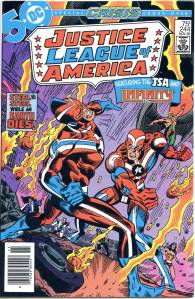
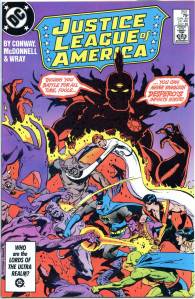
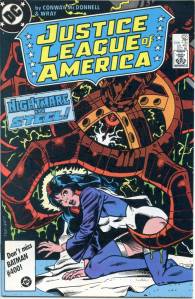
The final storyline for the original Justice League of America series (#258–261), by writer J. M. DeMatteis and artist Luke McDonnell, concludes with the murders of Vibe and Steel at the hands of robots created by long-time League nemesis Professor Ivo, and the resignations of Vixen, Gypsy, and the Elongated Man during the events of DC’s Legends miniseries, which sees the team disband.
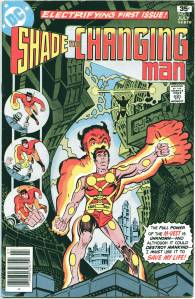
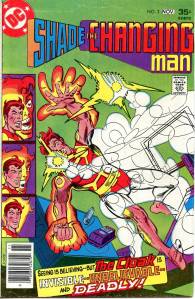
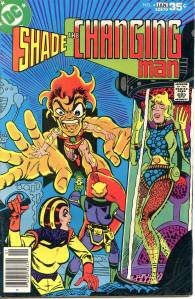
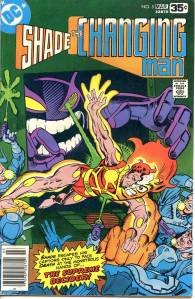
Shade, the Changing Man told the story of a fugitive from the militant planet Meta in another dimension. Shade (whose full name is Rac Shade) was powered by a stolen “M-vest” (or Miraco-Vest, named for its inventor) which protected him with a force field and enabled him to project the illusion of becoming a large grotesque version of himself. The character was the first Ditko had created, or helped to create, for a mainstream publisher for many years. Prior to rejoining DC Comics, Ditko had worked on characters such as his Mr. A. title. Shade was very much a return to mainstream superheroics, although Shade indicated no particular connection with the DC Universe (although the letters columns stated that there is no reason it could not be shown to be there). Michael Fleisher scripted the series based on Ditko’s plotting and art.
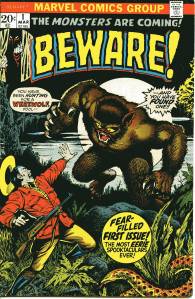
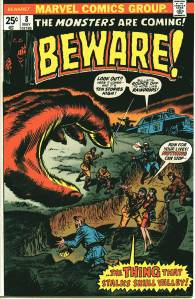
Beware was an 8 issues series that ran from March, 1973 to May, 1974. The series contained reprints of Atlas comics with new covers by Bill Everet, John Romita & Gil Kane The title continued as Tomb of Darkness with issue #9 in July of 1974.
DC 100 Page Super Spectacular was published by DC Comics from 1971 through 1973, featuring only reprints initially and later including new stories. The “100 Page” count included both sides of the front and back covers as pages. Each numbered issue appearing under this title featured a wrap-around cover with all editorial content and no advertisements. Versions after late 1973 included advertisements.
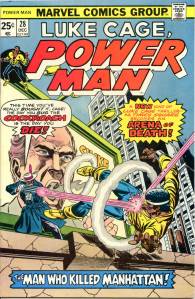
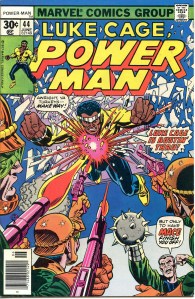
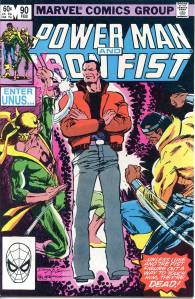
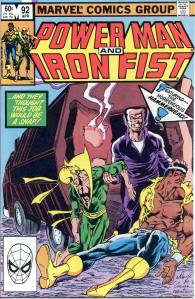
Luke Cage was created by Archie Goodwin and John Romita, Sr. shortly after Blaxploitation films emerged as a popular new genre. He debuted in his own series, Luke Cage, Hero for Hire, which was initially written by Goodwin and pencilled by George Tuska. Cage’s adventures were set in a grungier, more crime-dominated New York City than that inhabited by other Marvel superheroes of the time. The series was retitled Luke Cage, Power Man with issue #17.
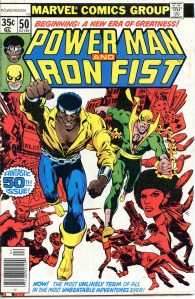
As the Blaxploitation genre’s popularity faded, Cage became unable to support his own series and was paired with another superhero whose popularity was based on a declining film genre, the martial arts hero Iron Fist, in an effort to save both characters from cancellation. Though the series title would remain Power Man in the indicia for a while longer, with issue #50 (April 1978) the cover title became Power Man and Iron Fist. It would remain thus until the series’s cancellation with issue #125 (September 1986). The series’s final writer, James Owsley, attempted to shed Cage’s Blaxploitation roots by giving him a larger vocabulary and reducing usage of his catchphrase, “Sweet Christmas!”.
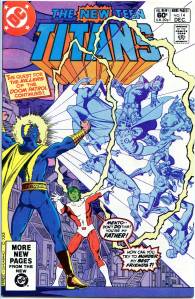
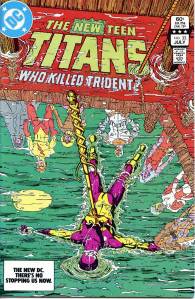
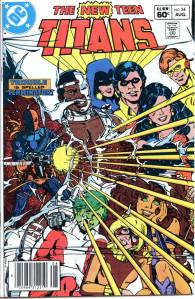
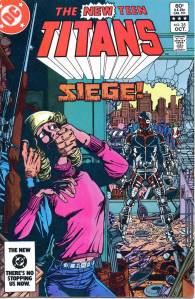
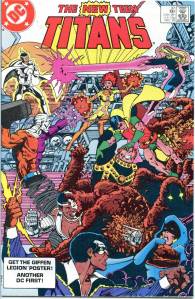
In 1980, Teen Titans relaunched as The New Teen Titans, aging the characters to young adulthood. Original members Robin, Wonder Girl and Kid Flash were joined by new characters Cyborg, Starfire and Raven, as well as the former Doom Patrol member Beast Boy, as Changeling. The group had several encounters with the original Titans of Greek mythology, particularly Hyperion.
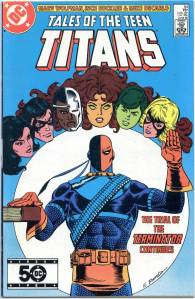
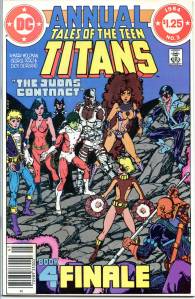
The team’s adversaries included Deathstroke the Terminator, a mercenary who takes a contract to kill the Titans to fulfill a job his son had been unable to complete. This led to perhaps the most notable Titans storyline of the era. 1984’s “The Judas Contract,” in Tales of the Teen Titans #42-44 and Teen Titans Annual #3 featured a psychopathic girl named Terra with the power to manipulate earth and all earth-related materials. She infiltrates the Titans in order to destroy them. “The Judas Contract” won the Comics Buyer’s Guide Fan Award for “Favorite Comic Book Story” of 1984, and was later reprinted as a standalone trade paperback in 1988. Robin adopts the identity of Nightwing, while Wally West gives up his Kid Flash persona and quits the Titans. It also featured the introduction of a new member in Jericho, Deathstroke’s other son.
New Teen Titans V1 #14 NM- $4
New Teen Titans V1 #33 NM- $3
New Teen Titans #34 VF+ $3
New Teen Titans V1 #35 NM- $3
New Teen Titans V1 #36 VF-NM $3
New Teen Titans V1 #37 NM $5
New Teen Titans V1 #40 NM- $3
Tales of the Teen Titans #54 VF- $4
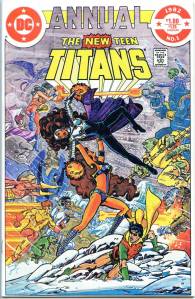
New Teen Titans V1 Annual #1 NM $5
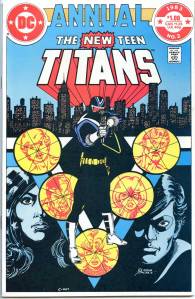
New Teen Titans V1 Annual #2 NM $29
Tales of the Teen Titans Annual #3 VF $6
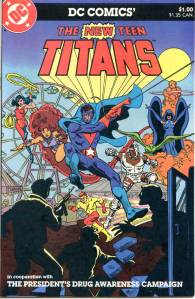
New Teen Titans 1983 Drug Awareness Campaign NM $5
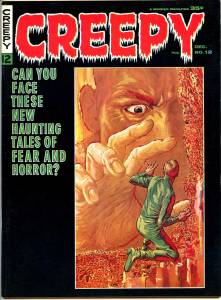
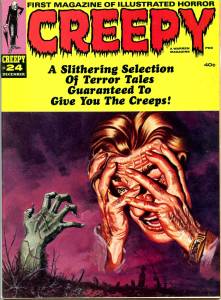
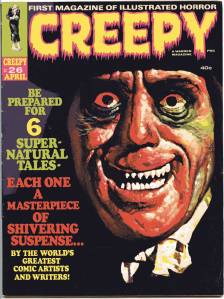
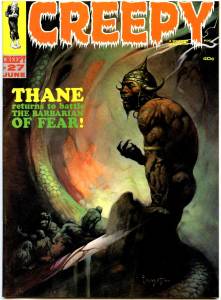
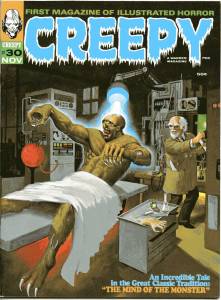
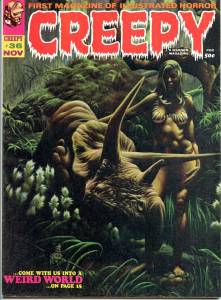
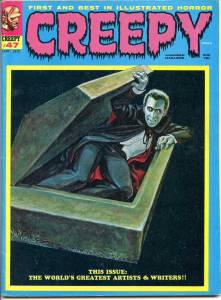
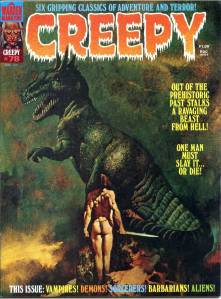
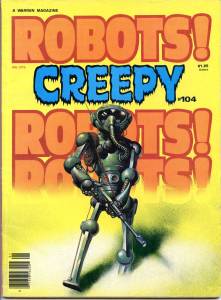
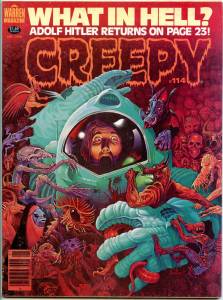
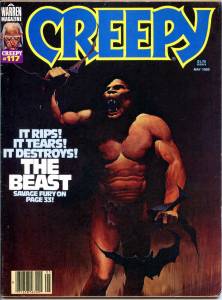
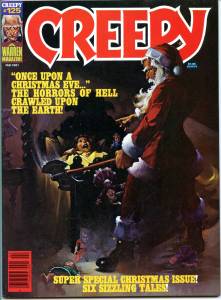
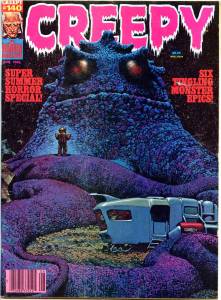
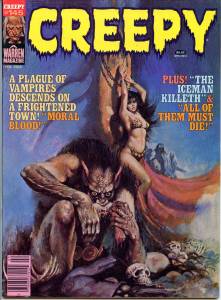
Creepy was an American horror-comics magazine launched by Warren Publishing in 1964. Like Mad, it was a black-and-white newsstand publication in a magazine format and thus did not require the approval or seal of the Comics Code Authority. The anthology magazine was initially published quarterly but later went bimonthly. Each issue’s stories were introduced by the host character, Uncle Creepy. Its sister publications were Eerie and Vampirella.
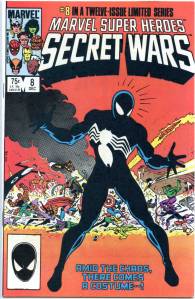
In 2011, IGN listed Secret Wars as one of the best comic book events. Their writers found the action and goofiness of the story to be enjoyable. They also highlighted the impact it had on the Marvel Universe by introducing the symbiote and new characters. In 2011, Alex Zalben of MTV News ranked Secret Wars as the second biggest comic event ever; he praised its story and lasting effect.
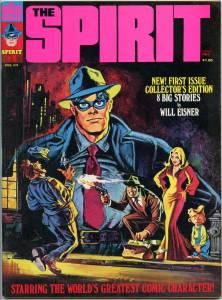
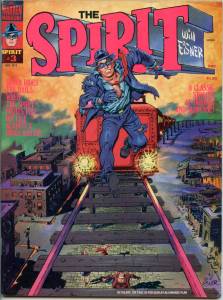
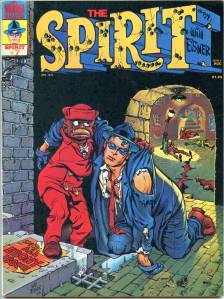
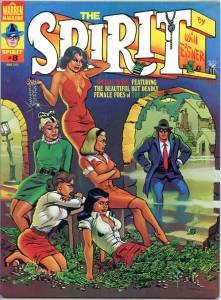
From 1974 to 1976, James Warren‘s Warren Publishing published 16 issues of The Spirit (also known as The Spirit Magazine), a large black-and-white magazine consisting of reprints with original covers (primarily by Eisner), concluding with a separate 1975 color issue, The Spirit Special, which includes an afterword by Bill DuBay. Kitchen Sink picked up the series beginning in 1977 with issue 17, eventually concluding with issue 41 (June 1983). Issue 30 of the Kitchen Sink series (July 1981) features “The Spirit Jam“, with a script from Eisner and a few penciled pages, plus contributions from 50 artists, including Fred Hembeck, Trina Robbins, Steve Leialoha, Frank Miller, Harvey Kurtzman, Howard Cruse, Brian Bolland, Bill Sienkiewicz, John Byrne, and Richard Corben.
































 EHT Comics