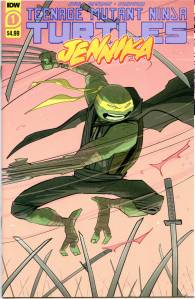
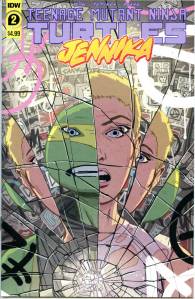
A three-issue miniseries starring the original IDW character Jennika. In this story, past, present and future collide for Jennika when she is forced to face the ghosts from her former human life and is given a chance to permanently reverse her mutation.
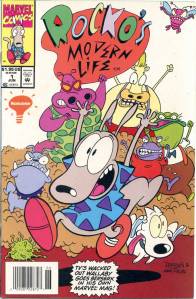
Rocko’s Modern Life (1994)
Nickelodeon approached Marvel, asking the company to produce comic book series for Rocko’s Modern Life and Ren and Stimpy. Marvel purchased the license for Rocko from Nickelodeon. The staff created the comics, and Susan Luposniak, a Nickelodeon employee, examined the comics before they were released. Joe Murray said in a December 2, 2008 blog entry that he drew some of the pages in the comic book series.
The comics contain stories not seen in the television show. In addition, the comic book series omits some television show characters and places, while some original places and characters appear in the comics. John “Lewie” Lewandowski wrote all of the stories except for one; Joey Cavalieri wrote “Beaten by a Club”, the second story of Issue #4.
Troy Little, a resident of Monroe, Oregon, wrote to Marvel requesting that the title for the comic’s letters column should be “That’s Life”. In Issue 3, published in August 1994, the editors decided to use the title for the comic’s “Letters to the Editor” section. In Issue 5, published in October 1994, the editors stated that they were still receiving suggestions for the title of the comic even though they had decided on using “That’s Life” by Issue 3.
On December 6, 2017, Boom! Studios began publishing a new Rocko’s Modern Life comic book series.
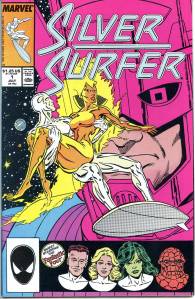
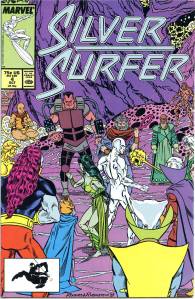
Silver Surfer V3 (1987)
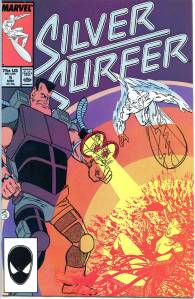
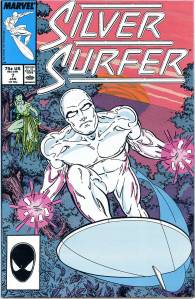
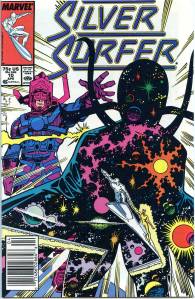
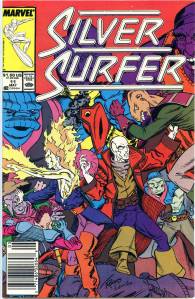
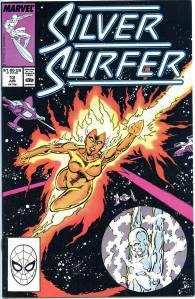
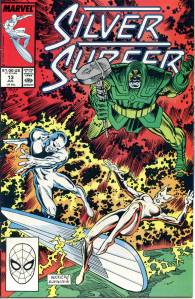
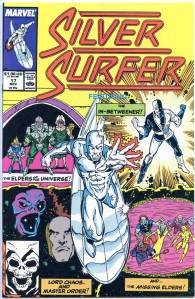
After a 1982 one-shot by writer-artist John Byrne (with scripting by Stan Lee), the Surfer appeared in his second solo, ongoing title in 1987.
Initially written by Steve Englehart, the series was to be set on Earth and one issue was completed under this premise before Marvel agreed to let Englehart remove the long-standing restriction regarding Silver Surfer being imprisoned on Earth. This first issue was shelved and a brand new first issue was written, to set up this plot twist; the original first issue would ultimately be reprinted in Marvel Fanfare #51. The series marked the first Silver Surfer stories not written by Stan Lee, a fact which Lee was openly unhappy about.
Robotech (2017)
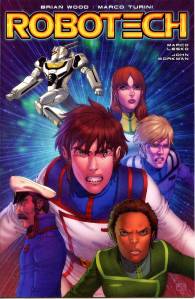
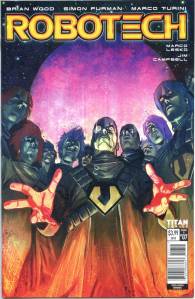
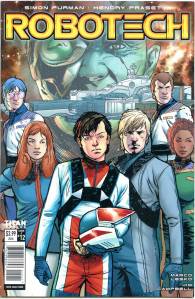
In June, 2016, Harmony Gold and Titan Comics announced a collaboration to release a new Robotech comic line in 2017. A cover was revealed in October, drawn by the Waltrip brothers. This series marks the very first time the Robotech story has been rebooted, offering significant changes to events and characters.
Death’s Head 2 V1 (1992)
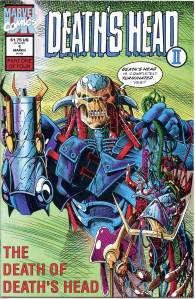
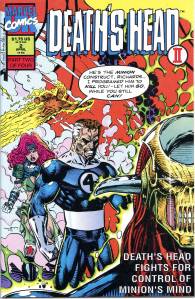
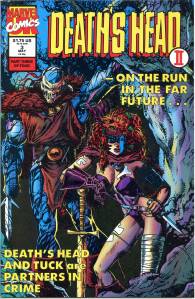
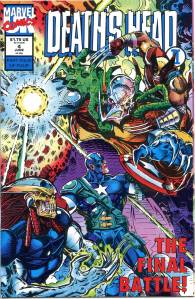
After the initial Death’s Head stories ceased publication, the character was revamped for inclusion in Marvel UK’s next wave of titles, where it became the company’s biggest ever exported seller.
There were plans in 1991 to bring back the original Death’s Head, which would have featured the character on trial and facing the death penalty, and flashing back to how he’d got there. Early into production the new editor Paul Neary scrapped it and commissioned Death’s Head II instead: replacing the character with a new version, created by Dan Abnett, Andy Lanning, and Liam Sharp. In an autumn 1992 interview with Comic World, Neary was dismissive about the original character and the aborted : “I didn’t like the pages that had been produced – I didn’t think there was much future in Transformers-style robots and I thought we could do an awful lot better.” He produced some sample sketches of how he wanted the character to look,and Liam Sharp’s take gave the project “a kickstart”. Ironically, the success of Death’s Head II meant Neary was ordered to create more titles and the easiest way was to reprint the original series (“The Incomplete Death’s Head”); editor John Freeman had to talk him into it.
Tweety and Sylvester (1952)
Dell was the first publisher of the Looney Tunes comic books, starting in 1941 and lasting until 1962, with a total of 246 issues published. Dell also made other comics based on the Looney Tunes characters including Bugs Bunny, Daffy Duck, Tweety and Sylvester, etc. All Looney Tunes publications stopped in 1962, moving over to Gold Key Comics instead. The Looney Tunes title itself took a hiatus till 1975, but the character-based titles continued.

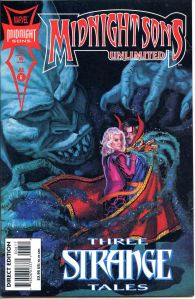
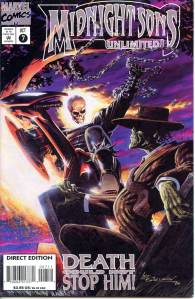
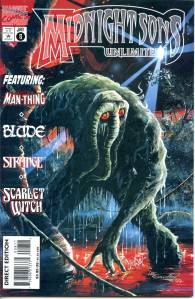
Midnight Sons Unlimited (1990’s)
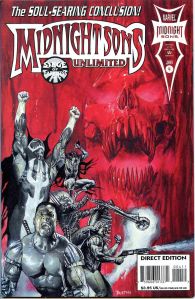
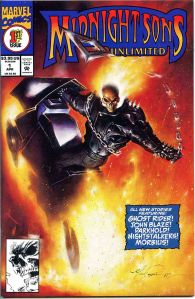
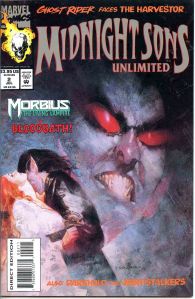
The Midnight Sons is fictional team of supernatural superheroes in the Marvel Comics universe. Including Hellstorm, Jennifer Kale, Morbius, Werewolf by Night, and Ghost Riders Danny Ketch and Johnny Blaze, the team first appeared in Ghost Rider (vol. 2) #28 (August 1992). From December 1993–August 1994, Marvel branded all stories involving the group with a distinct family imprint and cover treatment.
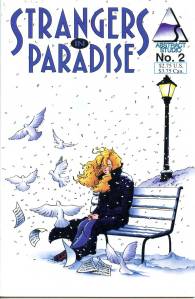
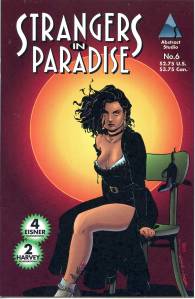
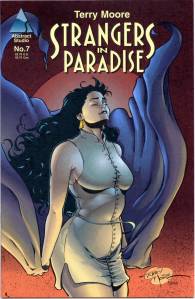
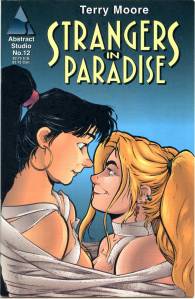
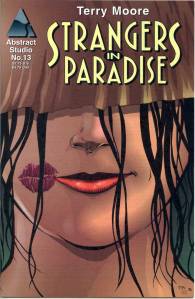
Strangers in Paradise V2 (1995)
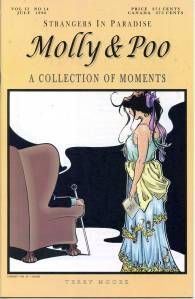
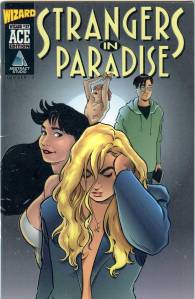
SiP, as it is commonly known, began as a three-issue mini-series published by Antarctic Press in 1993, which focused entirely on the relationship between the three main characters and Francine’s unfaithful boyfriend. This is now known as “Volume 1”. Thirteen issues were published under Moore’s own “Abstract Studio” imprint, and these make up “Volume 2”. This is where the “thriller” plot was introduced. The series moved to Image Comics‘ Homage imprint for the start of “Volume 3”, but after eight issues moved back to Abstract Studio, where it continued with the same numbering. Volume 3 concluded at issue #90, released June 6, 2007.
The Infinity Entity (2016)
When last we saw Adam Warlock, he was a captive of Annihilus of the Negative Zone. So where does The Infinity Entity #1 find him? Hanging with the original Avengers? Then things start getting weird. But what else would you expect from the cosmic team of Jim Starlin and Alan Davis? Guest starring the Guardians of the Galaxy.
Gambit and the X-Ternals (1995)
Gambit‘s X-Ternals consist of Sunspot, Jubilee, Strong Guy, and Lila Cheney. They are sent deep into space using Lila’s teleportation in order to retrieve a shard of the M’Kraan Crystal, essential to the verification of Bishop’s alternate reality. The X-Ternals are pursued by Rictor, a henchman of Apocalypse desperate to earn his master’s praise by killing Gambit. Upon reaching Shi’ar space, the X-ternals fight the Imperial Guard in order to retrieve the crystal shard. Upon their return to Earth, Strong Guy betrays the team, not only stealing the M’Kraan Crystal, but also kidnapping Magneto’s son, Charles. This title replaced X-Force.