Johnny the Homicidal Maniac (often abbreviated JtHM) is the first comic book by Jhonen Vasquez. The series tells the story of a young man named Johnny C. as he explores the psychological and possibly supernatural forces which compel him to commit a string of murders with which he always seems to get away. JtHM began as a comic strip in the 1990s, then ran under alternative comics publisher Slave Labor Graphics as a limited series of seven issues. The series produced two spin-offs: Squee! and I Feel Sick.
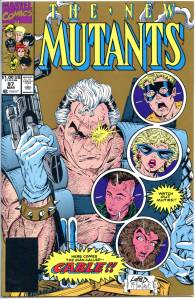
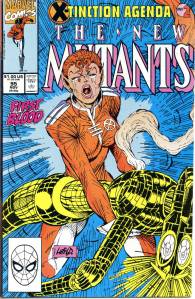
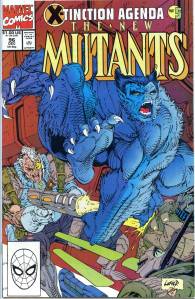
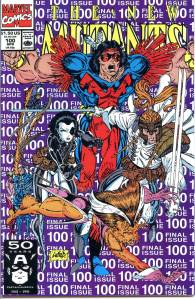
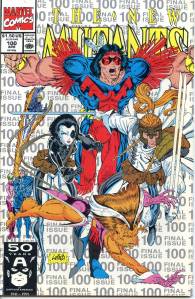
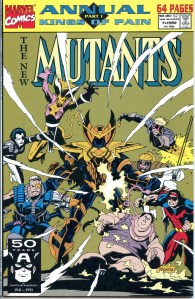
The New Mutants V1 (1990’s)
Sales of The New Mutants had slumped for several years in the late 80’s, but took a sharp upturn after Rob Liefeld took over the penciling and co-plotting chores at the end of 1989. A new mentor for the group, the mysterious mercenary Cable, was introduced, further helping sales. Over the next year, several longtime team members were written out or killed off. However, the relationship between Liefeld and Simonson was fraught with tension, and Simonson claims that Harras dealt with the situation by rewriting her plots and dialogue so that the characterizations did not make sense: “Although I wasn’t being fired, I think I was being shoved out the door with both hands by Bob Harras. Bob was only doing what he had to do, I expect, which was make Rob Liefeld happy.” Simonson eventually gave in, leaving after issue #97. When Liefeld and Fabian Nicieza, who wrote dialogue based on Liefeld’s plots, took over as writers of the final three issues of the series, they included several harder-edged characters.
The New Mutants was cancelled in 1991 with issue #100, but the new platoon-like team formed by Cable continued in X-Force, a successful series (whose first issue sold approximately one million copies) that would continue until 2002, and feature a variety of the former New Mutants cast.




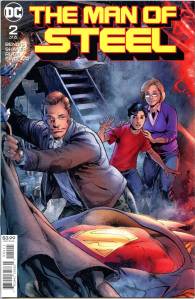
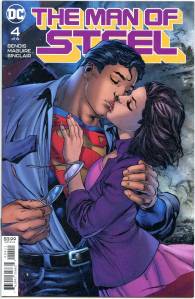
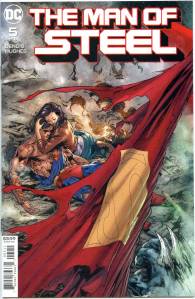
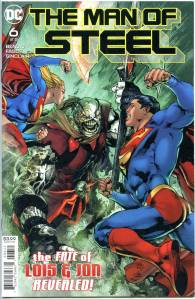
The Man of Steel V2 (2018)
A new era begins for Superman as a threat from his earliest origins reemerges to destroy the Last Son of Krypton. As Superman struggles to come to grips with what has happened to his wife and son, he must also face a new threat that’s determined to burn down Metropolis!
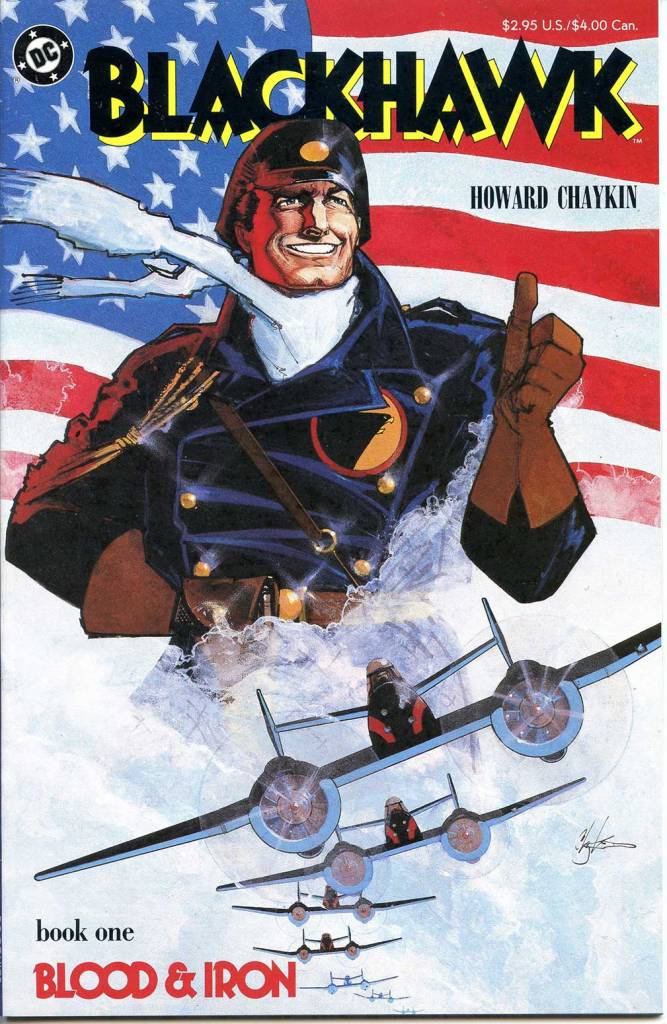
Blackhawk Mini-Series (1988)
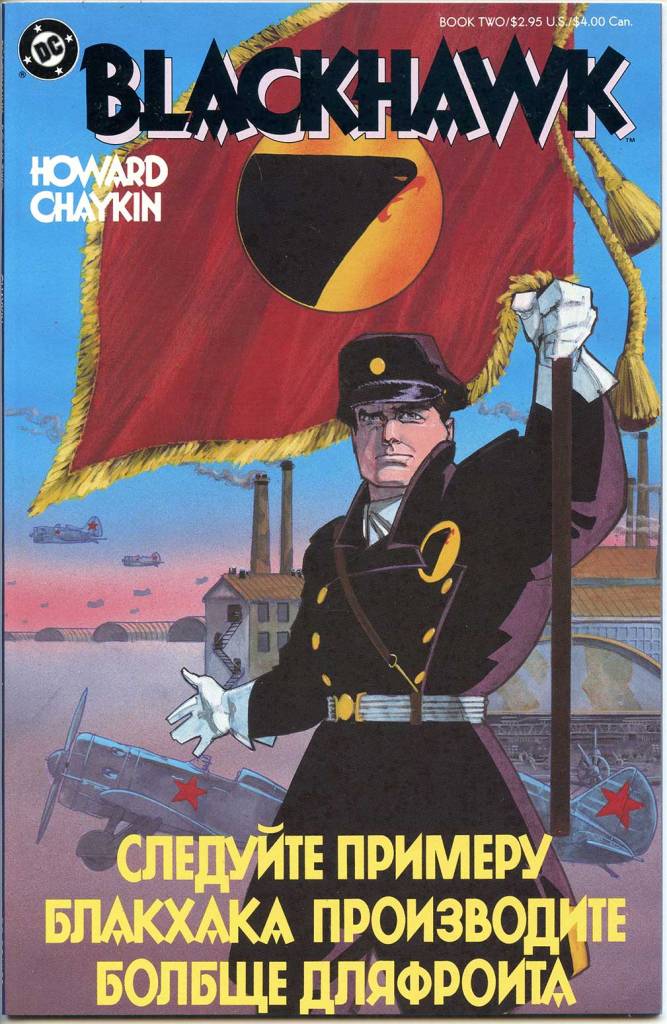
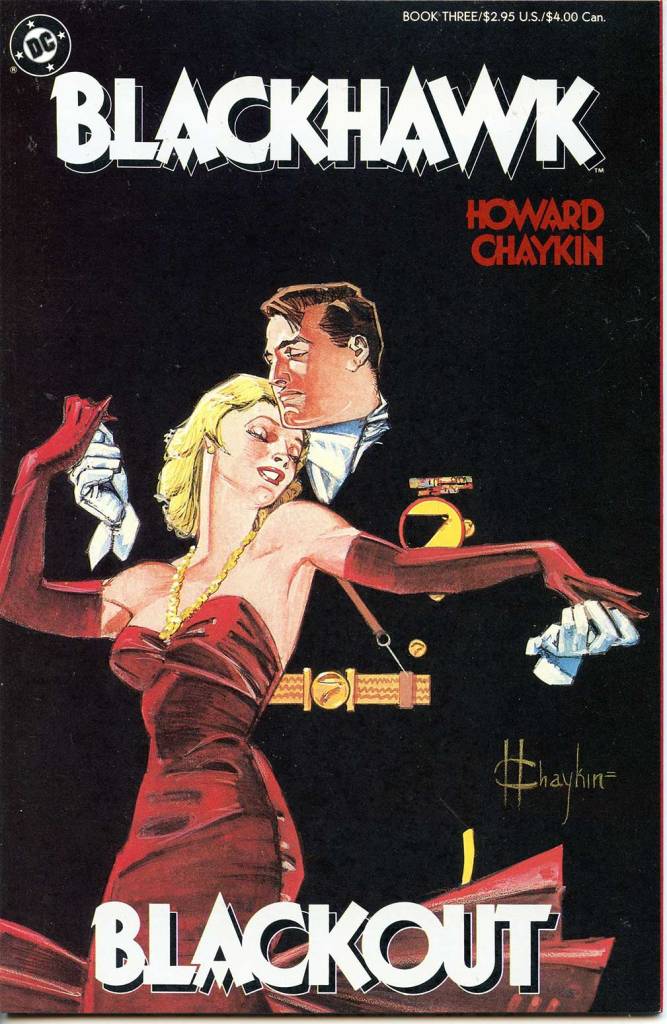
In 1988, a three-issue mini-series by Howard Chaykin re-imagined the team during World War II yet again, this time with a notably more adult and gritty take on the characters. Chaykin, for the most part, eschewed the team dynamic so familiar to Blackhawk readers, instead crafting a politically charged espionage thriller that focused prominently on Blackhawk and a new version of Lady Blackhawk. Post-war stories respecting Chaykin’s continuity followed in Action Comics Weekly #601–608, #615–622, and #628–635, as well as in a monthly series that restarted with an issue #1 and ran 16 issues from March, 1989, to August, 1990.
In 1992, DC Comics published Blackhawk Special #1. Still respecting Chaykin’s continuity and set 10 years after the events of Blackhawk #16, the story spans a five-year period as Blackhawk seeks to avenge the death of team member André.
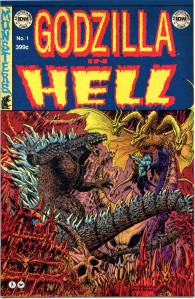
Godzilla in Hell (2015)
Godzilla’s battle with the legions of hell is to be told by multiple artists and writers, with James Stokoe, Matt Frank, Bob Eggleton, and Dave Wachter each working on an issue.
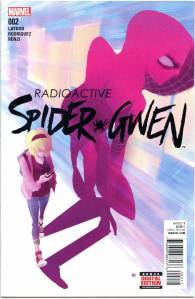
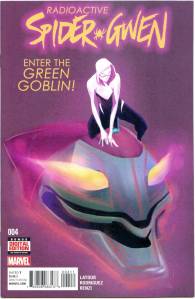
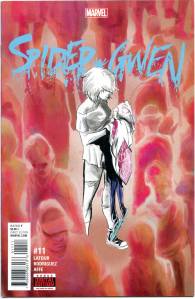
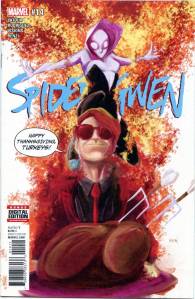
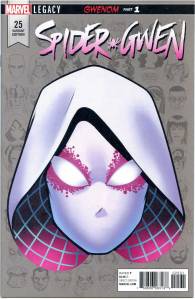
Spider-Gwen V2 (2015)
Gwen Stacy is back in the webs and has an all-new, all-different mystery to solve: the reappearance of The Lizard! Spider-Woman was convinced that the Lizard died in her arms along with Peter Parker. But when a similar monster goes on a reptilian rampage, she’s left with doubts not only about Peter’s life, but his death as well. And witness the debut of the Osborns of Earth-65!


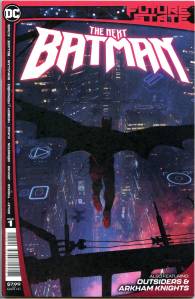
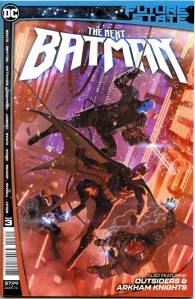
The Next Batman (2021)
A serial rapist is trying to escape from the police, when Batman stops him in his tracks, removing his mask. This will mean he saved his life, even if it’s not really worth it. As two agents of the GCPD spot them, they capture the rapist and leave Batman be, even if they shouldn’t. This Batman, he’s not Bruce Wayne, but a different man: since Bruce disappeared, Gotham stopped being safe for whoever had a mask on: the Magistrate, led by the Peacekeepers, is in town, with a precise order, to shoot on sight to anyone spotted with a mask on. Including the Dark Knight: he’s number one in the Magistrate’s list.


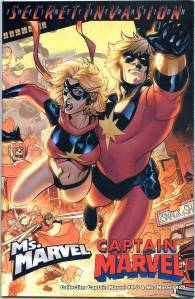
Ms Marvel/Captain Marvel: Secret Invasion – Infiltration (2008)
Ms Marvel/Captain Marvel: Secret Invasion – Infiltration One-Shot! Collecting the sold out Captain Marvel #4 and #5 as well as Ms. Marvel #25 with a wraparound cover by Terry Dodson.
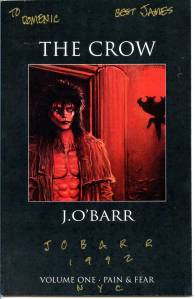
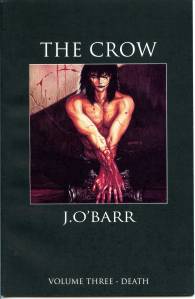
The Crow – Tundra (1992)
The Crow was created by James O’Barr. The series was originally written by O’Barr as a means of dealing with the death of his girlfriend at the hands of a drunk driver. It was later published by Caliber Comics in 1989, becoming an underground success, and later adapted into a film of the same name in 1994. Three film sequels, a television series and numerous books and comic books have also been subsequently produced.
The story revolves around an unfortunate young man named Eric. He and his fiancée, Shelly, are assaulted by a gang of street thugs after their car breaks down. Eric is shot in the head and is paralyzed, and can only watch as Shelly is savagely beaten and raped. They are then left for dead on the side of the road.
He is resurrected by a crow and seeks vengeance on the murderers, methodically stalking and killing them. When not on the hunt, Eric stays in the house he shared with Shelly, spending most of his time there lost in memories of her. Her absence is torture for him; he is in emotional pain, even engaging in self-mutilation by cutting himself.
The crow acts as both guide and goad for Eric, giving him information that helps him in his quest but also chastising him for dwelling on Shelly’s death, seeing his pining as useless self-indulgence that distracts him from his purpose.


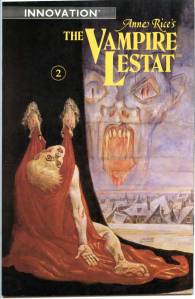
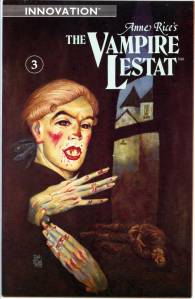
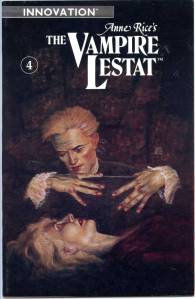
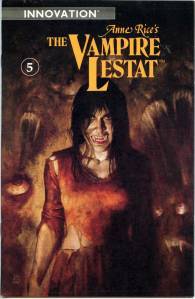
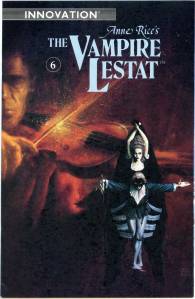
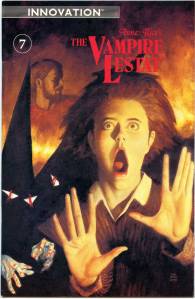
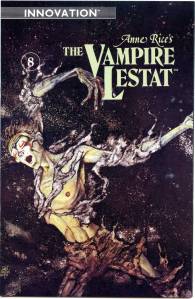
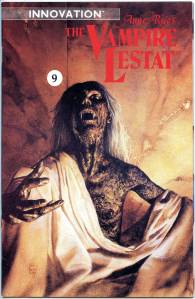
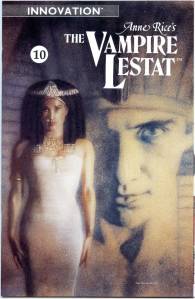
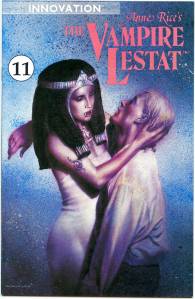
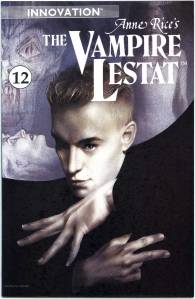
The Vampire Lestat (1990)
The Vampire Lestat was adapted into a comic and released as a 12-part miniseries by Innovation Comics in 1990 and 1991. The comic, which was formally titled Anne Rice’s The Vampire Lestat and featured Daerick Gross and Mike Okamoto as lead artists, had a script adapted from the novel by Rice and Faye Perozich. In 1991 the entire series was published as a graphic novel by Ballantine.