Fantastic Four (2010’s)

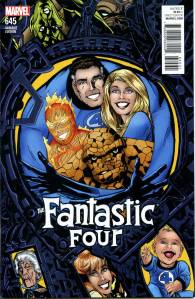
In the storyline “Three”, which concluded in Fantastic Four #587 (cover date March 2011, published January 26, 2011), the Human Torch appears to die stopping a horde of monsters from the other-dimensional Negative Zone. The series ended with the following issue, #588, and relaunched in March 2011 as simply FF. The relaunch saw the team assume a new name, the Future Foundation, adopt new black-and-white costumes, and accept longtime ally Spider-Man as a member. In October 2011, with the publication of FF #11 (cover-dated Dec. 2011), the Fantastic Four series reached its 599th issue.

In November 2011, to commemorate the 50th anniversary of the Fantastic Four and of Marvel Comics, the company published the 100-page Fantastic Four #600 (cover-dated Jan. 2012), which returned the title to its original numbering and featured the return of the Human Torch. It revealed the fate of the character of Johnny Storm after issue #587, showing that while he did in fact die, he was resurrected to fight as a gladiator for the entertainment of Annihilus. Storm later formed a resistance force called Light Brigade and defeated Annihilus.

As part of Marvel NOW! Fantastic Four ended with #611, ending Jonathan Hickman’s long run on FF titles, and the title was relaunched in November 2012 with the creative team of writer Matt Fraction and artist Mark Bagley. In the new title with its numbering starting at #1, the entire Fantastic Four family explore space together, with the hidden intent for Reed Richards to discover why his powers are fading.
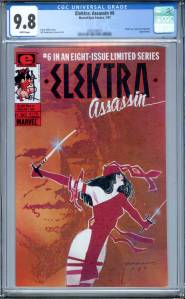
Elektra: Assassin (1986)

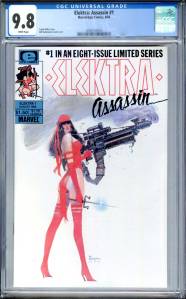
Frank Miller and Bill Sienkiewicz were at the height of their popularity when this series was released, shortly on the heels of Miller’s hugely successful Batman: The Dark Knight Returns, and Miller & Sienkiewicz’s Marvel Graphic Novel Daredevil: Love and War.

As with Ronin and Born Again, Miller wrote the series with the full script method.

As with Daredevil: Love and War, Sienkiewicz illustrated Elektra: Assassin using watercolors as opposed to the traditional pencilling/inking method. His exaggerated art was unique amongst mainstream comics of the time, bringing to mind the illustration style of adult-oriented comics magazines like Heavy Metal.

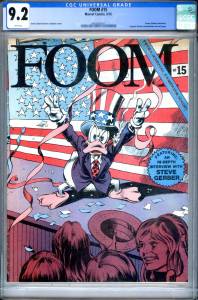
Foom (1973)

Jim Steranko, in his first-issue introduction, wrote that he had “dropped in at the Marvel bullpen to rap with [publisher] Stan Lee about the current comic scene” and that Lee told him about plans to start an in-house fan club. EC Comics had had its “EC Fan-Addict” club in the 1950s, and Marvel the Merry Marvel Marching Society beginning 1964; after the MMMS had run its course by 1969, Marvel licensed a small company in Culver City, California to produce the fanzine/product catalog Marvelmania, which lasted a year. Steranko, writing that he nostalgically “recalled the days of radio, with all the clubs and super-premiums that were perpetually offered over the air”, volunteered “my services as a designer, writer and comic historian”. Ken Bruzenak served as associate editor, with Marvel editor-in-chief Roy Thomas as consulting editor and Ed Noonchester, Joel Thingvall, and Gary Brown as staff.

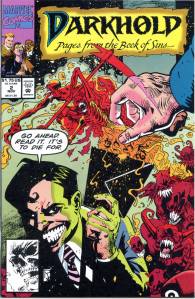
Darkhold (1992)

Once you get your hands on the Darkhold, you’ll be dying to read what’s inside! And when long-lost pages of the Book of Sins begin to resurface, cursing those who read them with vicious twists on their greatest desires, it’s up to Victoria Montesi and her Darkhold Redeemers, Sam Buchanan and Louise Hastings, to keep them out of the wrong hands! As the mysterious Darkhold Dwarf spreads chaos and the powerful pages wreak havoc, the Redeemers get a little help from Doctor Strange, Ghost Rider and their fellow Midnight Sons — but whose side is Modred the Mystic on? With demonic forces on the rise, can the Redeemers prevent the rebirth of Chthon?


Identity Disk (2004)

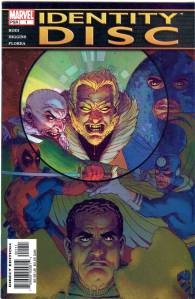
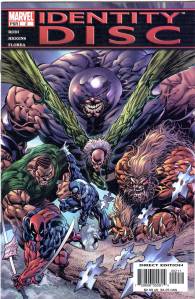
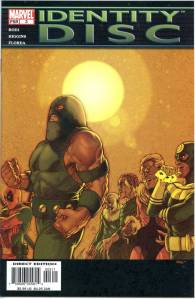
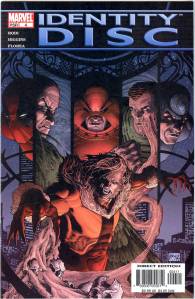
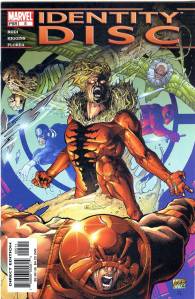
The story opens with a younger Adrian Toomes, pre-Vulture, being captured by police as his wife takes his daughter from him. Years later, Deadpool, Bullseye, Juggernaut, Sandman, the Vulture, and Sabretooth are recruited by an agent working for underworld figure Tristram Silver, who knows a dark secret for each supervillain, (although at the time Juggernaut and, arguably, Deadpool, were not villains). The agent demonstrates that she can take any one of them down by killing the Sandman. She wants them to hunt down the Identity Disc, which contains every piece of information on Marvel’s Earthbound superheroes.

Heroes Reborn: The Return (1997)

The “Heroes Reborn” was followed by “Heroes Return”, which consisted of a central, four-issue miniseries, Heroes Reborn: The Return, by writer Peter David and artist Salvador Larocca (December 1997). In the story, the Celestials take notice of Franklin’s pocket universe and initially demand that he eliminate one of the two universes, but eventually relent on the condition that all beings native to Earth-616 evacuate the pocket universe and never return.

Devil Dinosaur (1978)

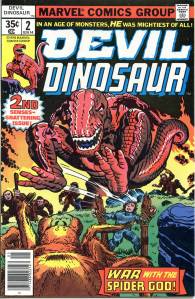
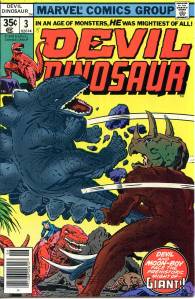
Devil Dinosaur and Moon-Boy are the creations of artist Jack Kirby who scripted and penciled all nine issues of the first series. Devil Dinosaur was created during Kirby’s third stint at Marvel (1975–1978). Having learned that DC Comics was working on an animated series featuring Kirby’s Kamandi, Marvel attempted to one-up their competitor by instructing Kirby to create a series similar to Kamandi, but incorporating a dinosaur co-star, since dinosaurs were hugely popular with young audiences of the time. The resulting Devil Dinosaur series was short lived, lasting only nine months (April – December 1978), and the proposed animated series never entered development. The original Devil Dinosaur series chronicled Devil and Moon-Boy’s adventures in their home, “Dinosaur World”. After the cancellation of Devil Dinosaur, the character’s appearances were relegated to one-shot comics, cameos, and supporting roles in other series.

Marvel (2021)

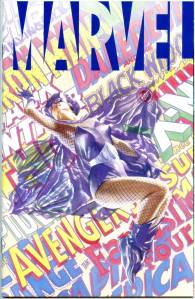
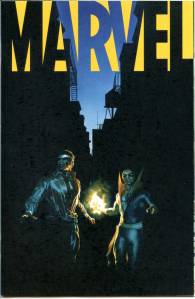
Thirty years ago, Alex Ross had a vision of a new series showing the Marvel heroes in a way they’d never been seen before. The first realization of that idea became the blockbuster MARVELS — but today Alex finally brings about his original vision: An anthology of stories by unique, exceptional talents, many of whom are doing Marvel characters for the very first time. Over this showcase series you’ll see work by such artists as Adam Hughes, Bill Sienkiewicz, Dan Brereton and more, linked together by an overarching story by Alex and Steve Darnall.

Monsters on the Prowl (1971)

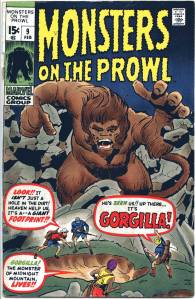
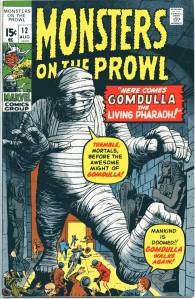
Chamber of Darkness was retitled Monsters on the Prowl with issue #9 (Feb. 1971), this version ran one new story each issue through #13 (Oct. 1971) with the remaining content consisting of reprints from Atlas Comics, Marvel’s 1950s predecessor, and “pre-superhero Marvel”, primarily drawn by Jack Kirby or Steve Ditko. It expanded into a double-sized, 25-cent comic for two issues (#13-14, Oct.-Dec. 1971). Some issues of the reprint books featured new covers by John Severin, Marie Severin, Gil Kane, and Herb Trimpe.