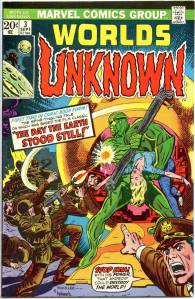
Worlds Unknown ran eight issues, cover-dated May 1973 to August 1974. The title was one of four launched by Marvel Comics editor-in-chief Roy Thomas to form a line of science fiction and horroranthologies with more thematic cohesiveness than the company’s earlier attempts that decade, which had included such series as Chamber of Darkness and Tower of Shadows. Whereas those titles generally presented original stories, these new books would instead adapt genre classics and other works.
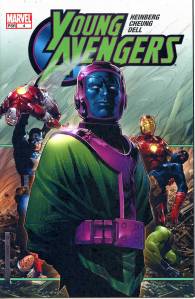
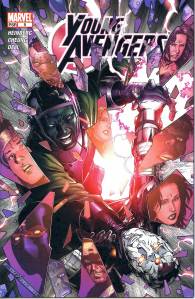
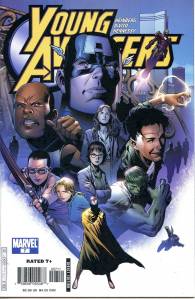
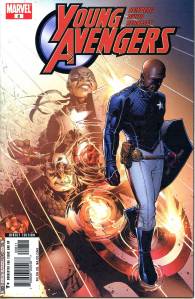
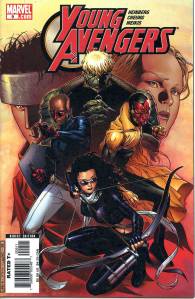
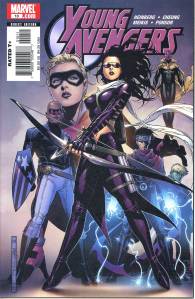
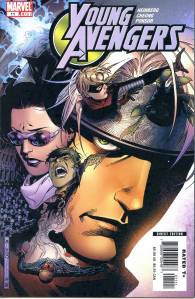
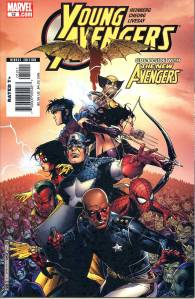
The team, created by Allan Heinberg and Jim Cheung, features numerous adolescent characters who typically have connections to established members of Marvel’s primary superhero team, the Avengers. The Young Avengers originally featured in a twelve issue run, later appearing in several notable Marvel crossover series, including the Civil War and The Children’s Crusade events, before the series was relaunched in January 2013 as part of the Marvel NOW! rebranding by writer Kieron Gillen and artist Jamie McKelvie.
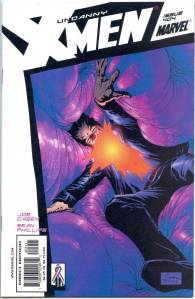
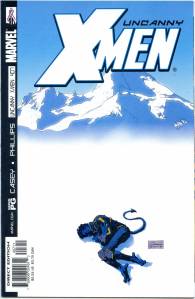
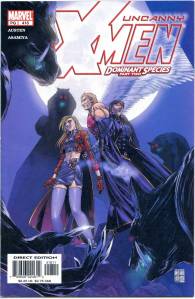
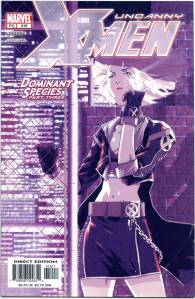
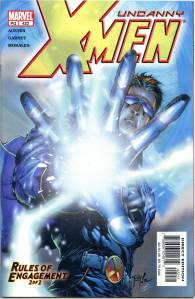
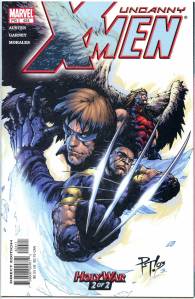
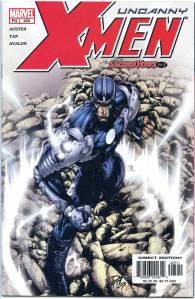
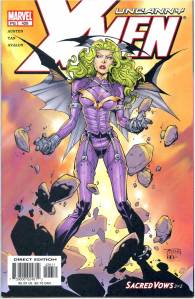
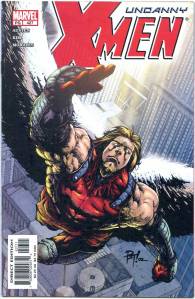
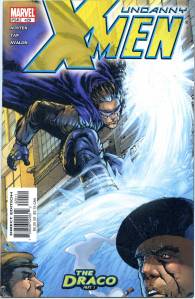
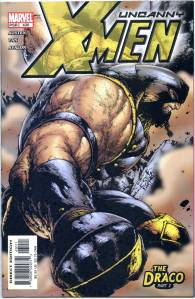
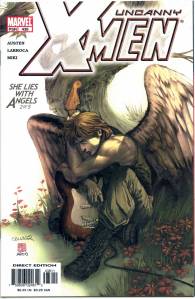
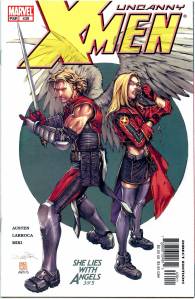
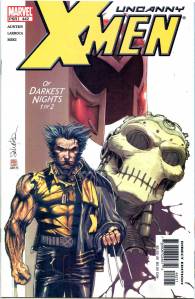
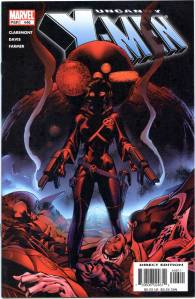
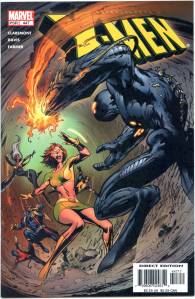
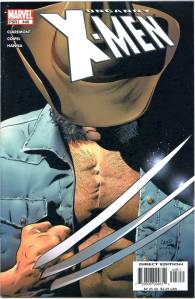
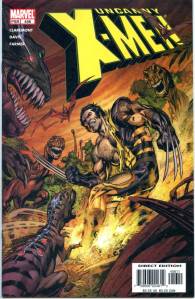
Chris Claremont made a brief return from #381 (June 2000) to #389, at which point he transferred to the new X-Treme X-Men title, as Grant Morrison took over the X-Men vol. 2 and that became the flagship X-Men title. From 2001 Lobdell made a short return, and then Joe Casey and Chuck Austen wrote runs into 2004. The title became bimonthly from 2003 to 2004.
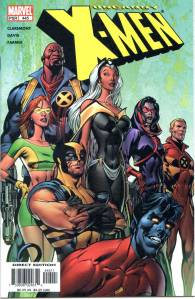
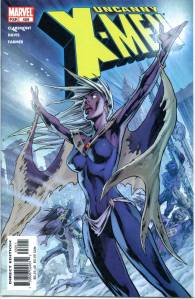
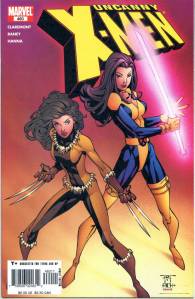
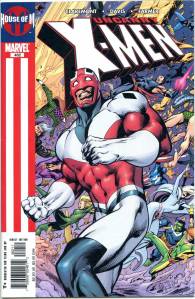
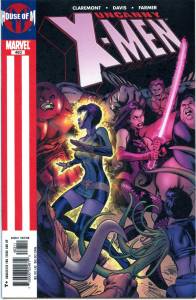
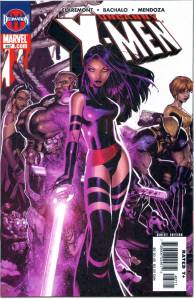
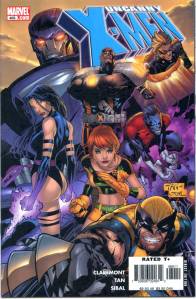
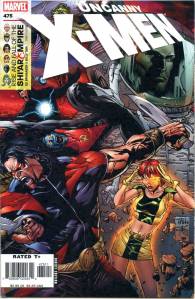
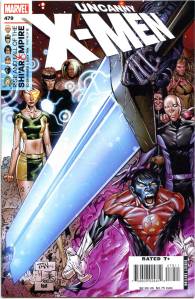
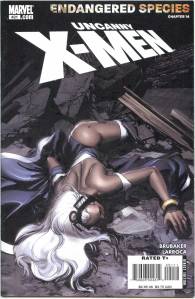
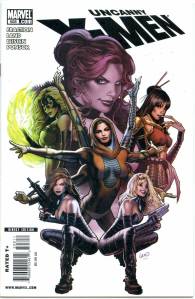
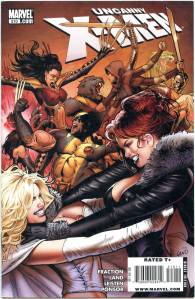
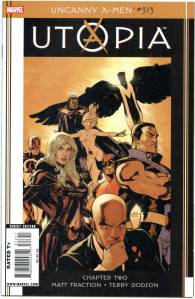
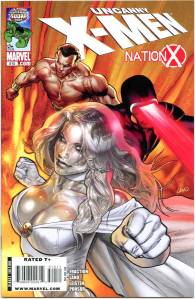
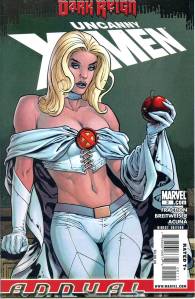
The X-Men: Reload reshuffle of titles in 2004 led to Claremont returning to Uncanny with issue #444. The stories addressed the new status quo established by Morrison, with Jean Grey having died again, and Cyclops in a relationship with Emma Frost. Claremont remained until #473. His final story was the “Death of the Greys” in 2006, as part of the “Decimation” storyline, where the vast majority of mutants had lost their powers. He was replaced by Ed Brubaker, who wrote a 12-part epic space opera story “The Rise and Fall of the Shi’ar Empire”, as a follow-up to his miniseries X-Men: Deadly Genesis. After this the title led into the “Messiah Complex” crossover event, dealing with the first mutant birth since the Decimation.
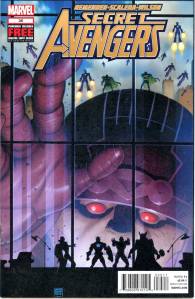
Secret Avengers, published by Marvel Comics features a fictionalblack opssuperhero team of the same name. The series started with Ed Brubaker on writing duties, depicting a black-ops sect of Marvel’s premiere super hero team, the Avengers, which operates under the guidance and leadership of Captain Steve Rogers (the former Captain America). The series is part of the Avengers-line relaunch as part of the “Heroic Age“.
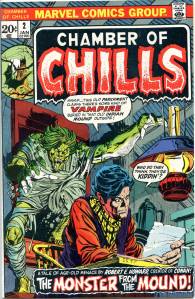
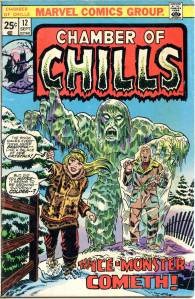
The title was one of four launched by Marvel Comics editor-in-chief Roy Thomas to form a line of science fiction and horror anthologies with more thematic cohesiveness than the company’s earlier attempts that decade, which had included such series as Chamber of Darkness and Tower of Shadows. Whereas those titles generally presented original stories, these new books would instead adapt genre classics and other works.
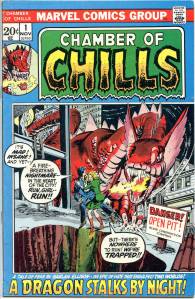
With the four titles’ debuts set to be staggered over the course of four months, Marvel premiered Journey into Mystery vol. 2 (Oct. 1972),Chamber of Chills (Nov. 1972), Supernatural Thrillers (Dec. 1972), and, with a late start, Worlds Unknown (May 1973). The first issue features an original six-page story by science fiction novelist George Alec Effinger, “Moon of Madness, Moon of Fear”, penciled by P. Craig Russell (then credited as Craig Russell), and a slightly retitled adaptation of the Harlan Ellison short story “Delusions for a Dragon Slayer”, by writer Gerry Conway and artist Syd Shores; in-between was a story by writer Stan Lee and artist Russ Heath, “They Wait in Their … Dungeon”, reprinted from Menace #1 (March 1953), from Marvel’s 1950s forerunner, Atlas Comics.
The bimonthly series ran exclusively new material through issue #4, with one reprinted story added to the mix for the following two issues, and only one new story in issue #7, after which the series became all-reprint. Most of the reprinted stories were 1950s “pre-Code” horror stories, which the industry self-censorship organization the Comics Code Authority had forbidden on Code-approved comics until a loosening of the Code in 1971.
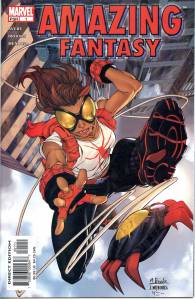
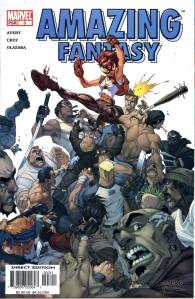
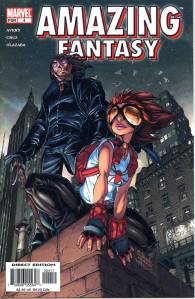
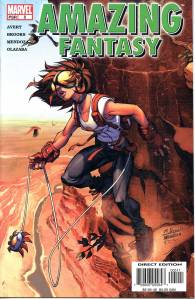
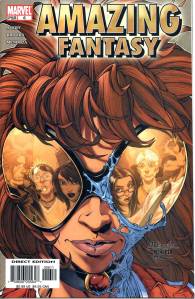
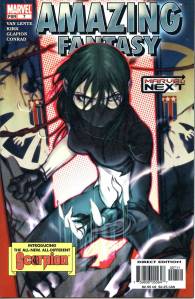
The second volume of Amazing Fantasy ran 20 issues (cover-dated Aug. 2004 – June 2006). The first arc ran through vol. 2, #1–6 and featured a new teenaged heroine, Araña. The second arc, in vol. 2, #7–12, published after a short hiatus, featured a revamped, female version of the supervillain the Scorpion. A back-up feature in vol. 2, #10–12 (Sept.-Nov. 2005) starred the character Nina Price, Vampire by Night. Vol. 2, #13–14 (both Dec. 2005) led with the modern-West feature “Vegas”, backed up by “Captain Universe“
The cover to #15 was a revamped version of the original Amazing Fantasy #15 cover, complete with Spider-Man swinging through a modern-day New York City, while the new heroes watch in awe in the background.
The final arc, in vol. 2, #16–20 (Feb.-June 2006), introduced Death’s Head 3.0, a revamp of the Marvel UK character, written by the original version’s creator, Simon Furman. Issues #18–19 contain two “Tales of the New Universe” stories as backup features, while #20 featured a Western backup, “Steamrider”
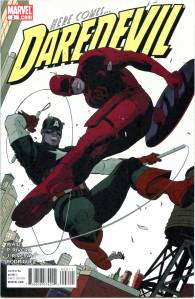
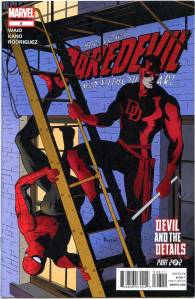
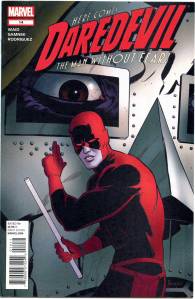
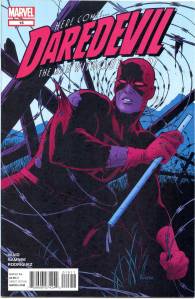
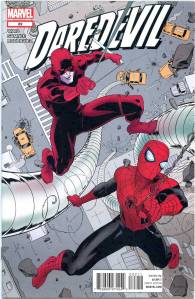
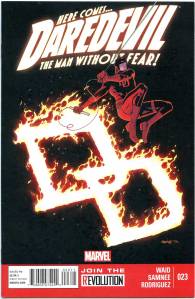
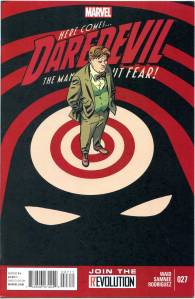
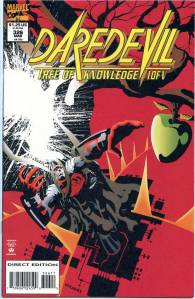
In July 2011, Daredevil relaunched with vol. 3, #1 (Sept. 2011), with writer Mark Waid. Waid focused on emphasizing the character’s powers and perception of the physical world. In the premiere issue, Murdock finds he can no longer serve as a trial lawyer due to past allegations of his being Daredevil causing a case he represents in court to turn into a media circus. Two issues later, Nelson and Murdock have developed a new business strategy of serving as consulting counselors, by teaching clients how to represent themselves in court.
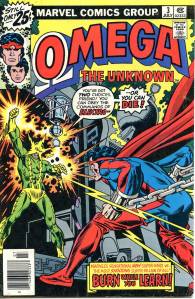
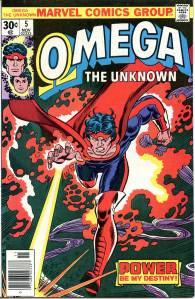
Omega the Unknown was published by Marvel Comics from 1976 to 1977, featuring the eponymous fictional character. The series, written by Steve Gerber and Mary Skrenes and illustrated by Jim Mooney, ran for 10 issues before cancellation for low sales. Despite its short run, it has remained as a cult classic due to its intriguing characters and unusual storytelling. A 10-issue series revamping the character was published from 2007 to 2008, written by novelist Jonathan Lethem and illustrated by Farel Dalrymple.
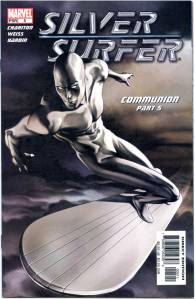
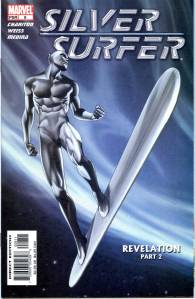
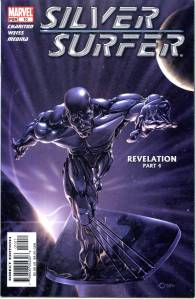
Children all around the world are vanishing, spirited away by a gleaming figure from the stars! Are these just routine cases of alien abduction, or the harbinger of something far more sinister?
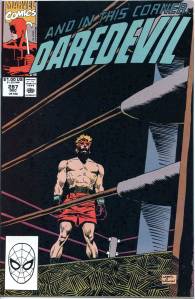
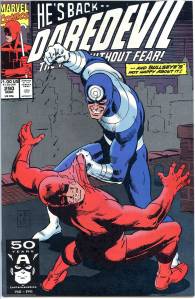
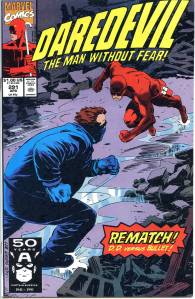
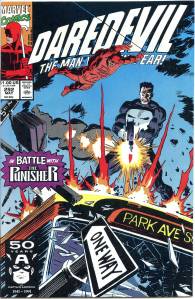
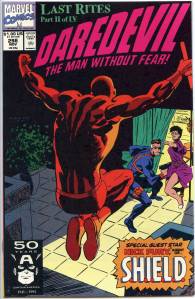
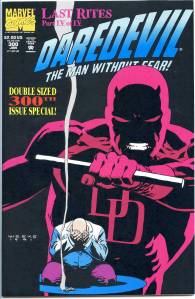
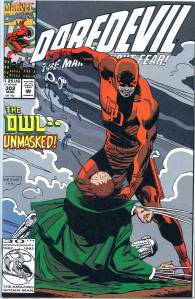
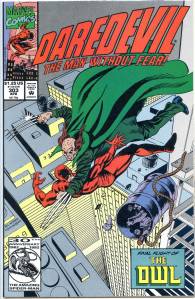
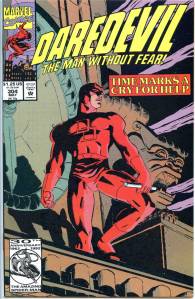
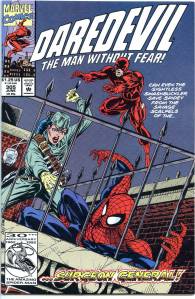
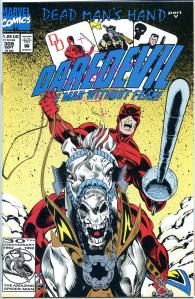
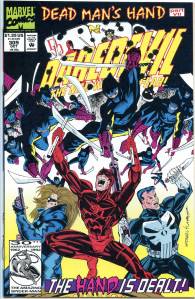
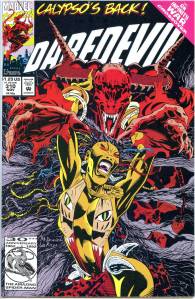
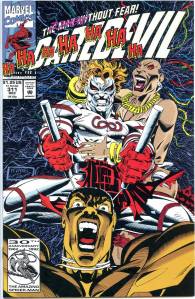
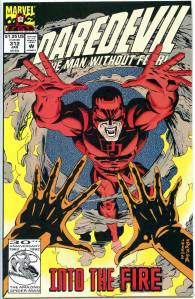
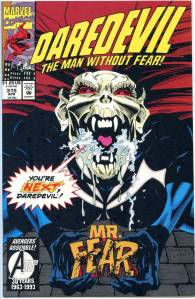
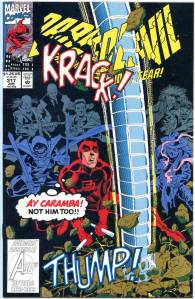
New writer D. G. Chichester and pencilerLee Weeks continued from where Nocenti left off, with Murdock resuming his friendship with Foggy Nelson, struggling to re-win the heart of Karen Page, appealing the revocation of his attorney’s license, and bonding more deeply than ever with Hell’s Kitchen. Chichester’s focus on Daredevil’s relationship with New York City went so far as to have two issues devoted entirely to Daredevil defending New Yorkers from ordinary criminals and even simple accidents. The critically acclaimed “Last Rites” arc from #297–300 saw Daredevil regaining his attorney’s license and finally bringing the Kingpin to justice.
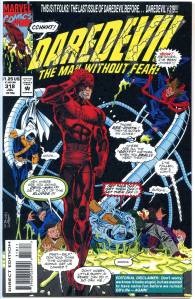
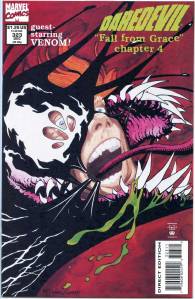
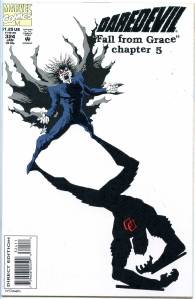
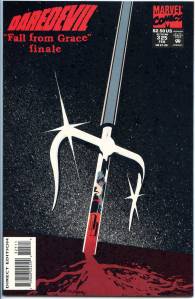
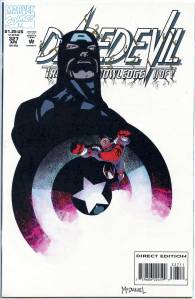
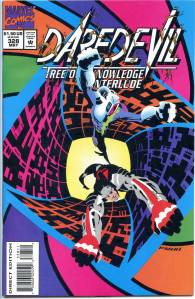
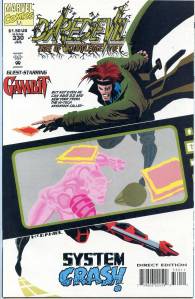
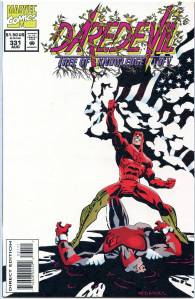
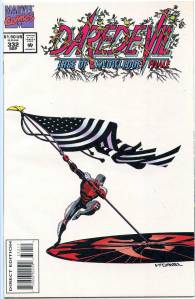
The creative team of Chichester and penciler Scott McDaniel changed the status quo with their “Fall From Grace” storyline in issues #319–325 (Aug. 1993 – Feb. 1994). Elektra, who was resurrected in #190 but had not been seen since, finally returned. An injured Daredevil creates a more protective costume from biomimetic materials: red and gray with white armor on the shoulders and knee pads. Revamped billy clubs could attach to form nunchucksor a bo staff. His secret identity becomes public knowledge, leading to him faking his own death and assuming the new identity of “Jack Batlin”. This new identity and costume lasts for several story arcs, while Murdock finds a way to convince the world that he is not, in fact, secretly Daredevil (courtesy of a double). A short stint by J. M. DeMatteis returned Daredevil to his traditional red costume and Matt Murdock identity.





































 EHT Comics