The Dark Crystal was adapted into comic book form by Marvel Comics. It debuted as a 68 page adaptation in Marvel Super Special #24, in 1982. The story was later re-printed in two issues in April and May, 1983.
This was the first of three Marvel adaptations of Jim Henson movies; it was followed by The Muppets Take Manhattan in 1984, and Labyrinth in 1986.
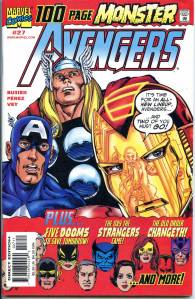
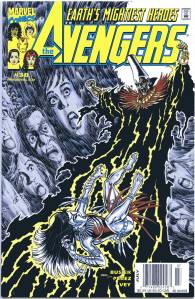
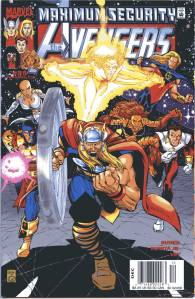
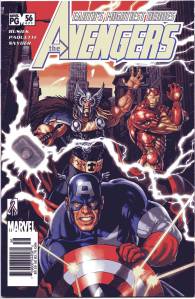
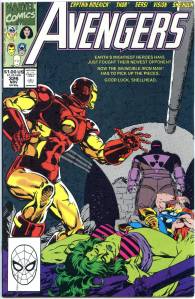
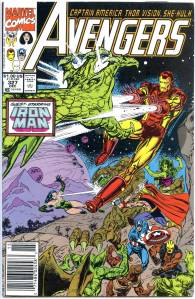
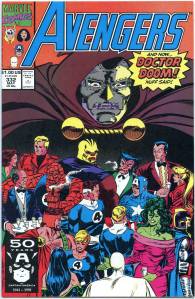
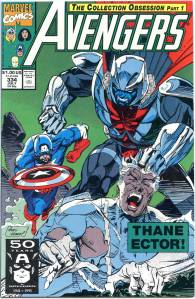
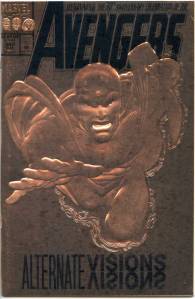
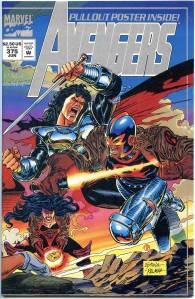
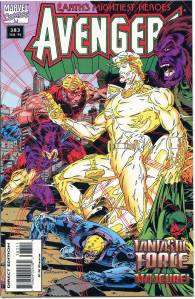
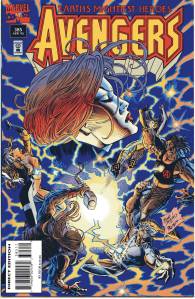
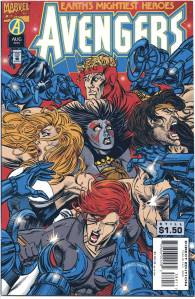
After the Heroes Reborn series concluded, the Avengers comic was restarted with vol. 3 #1 written by Kurt Busiek and pencilled by George Pérez. New members during this run included the revived Wonder Man, Justice, Firestar, Silverclaw, and Triathlon. The Avengers fought many of their traditional villains such as the Grim Reaper,Ultron,Count Nefaria, and Kang the Conqueror. The limited seriesAvengers Forever, starting during this period, was a time travel story that explored the history of the Avengers and resolved many outstanding questions about Kang and Immortus’s past manipulations of the team, featuring various Avengers from the past, present and possible futures working alongside Kang the Conqueror and Rick Jones as part of Kang’s attempt to escape his perceived ‘destiny’ as Immortus.
At this point, ongoing storylines and character development focused on the Black Knight, Sersi, Crystal, Hercules, the Vision, and the Black Widow. Their primary antagonists in this run were the mysterious Proctor and his team of other-dimensional Avengers known as the Gatherers. During this period, the Avengers found themselves facing increasingly murderous enemies and were forced to question their rule against killing.[109]
This culminated in “Operation: Galactic Storm“, a 19-part storyline that ran through all Avengers-related titles and showcased a conflict between the Kree and the Shi’ar Empire. The team split when Iron Man and several dissidents executed the Supreme Intelligence against the wishes of Captain America. After a vote disbanded the West Coast Avengers, Iron Man formed a proactive and aggressive team called Force Works. During the team’s first mission, Wonder Man was killed again, though his atoms were temporarily scattered. Force Works later disbanded after it was revealed that Iron Man became a murderer via the manipulations of the villain Kang, the same storyline seeing Iron Man sacrificing himself and being replaced by his teenage counterpart from a parallel timeline.
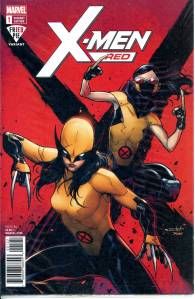
X-Men Red is a sister book to X-Men Gold and X-Men Blue, which began ten months earlier. It follows events from the December 2017 miniseries Phoenix Resurrection: The Return of Jean Grey written by Matthew Rosenberg and illustrated by Leinil Francis Yu. The first issue, released February 7, 2018, was written by Tom Taylor and illustrated by Mahmud Asrar. It was available in ten different variant covers. Taylor’s initial plans for the series did not involve any crossovers with other comic series. The series was promoted as part of Marvel’s “Fresh Start“, a full company relaunch of publications.
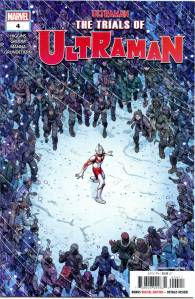
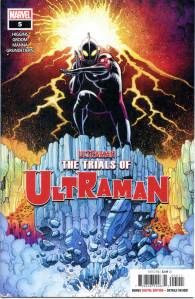
Now come the consequences! Ultraman narrowly averted a catastrophe decades in the making. The world was saved — but also forever changed. Much of the populace regard their defenders with suspicion. Enemies hide in plain sight, and even those closest to Shin Hayata don’t necessarily have faith in the Giant of Light. But at last, a long-thought-lost comrade has returned! That’s a good thing…right? Unfortunately, the forces aligned against the USP and Ultraman are far more widespread — and more organized — than our heroes ever suspected. If they’re going to survive, they’ll need a new ally of their own — and the man they’re thinking of just so happens to be one of the most powerful and influential people in the world. But what is his history with the USP, and why does he seem to have his own hidden agenda?
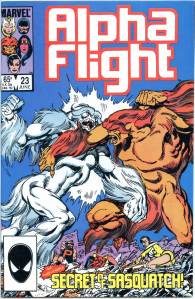
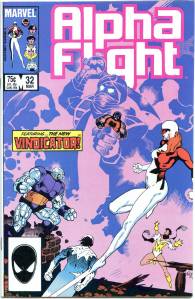
Most team members have distinctly Canadian attributes, such as having Inuit/First Nations or French heritage. Throughout most of its history, the team has worked for Department H, a fictional branch of Canada’s Department of National Defence that deals with super-powered villains.
The team was originally merely a part of the backstory of the X-Men‘s Wolverine but, in 1983, Marvel launched an eponymous series featuring the group, which continued until 1994, lasting 130 issues as well as annuals and miniseries.
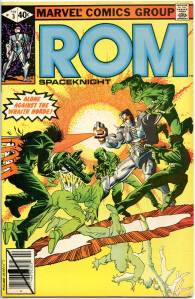
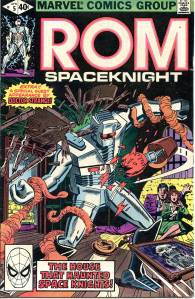
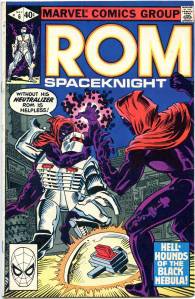
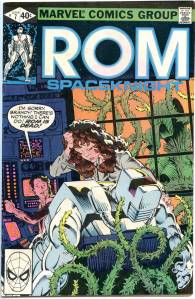
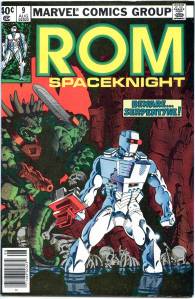
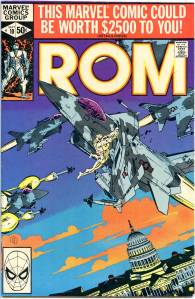
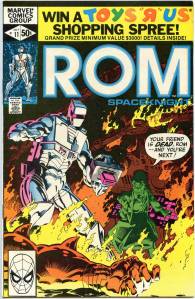
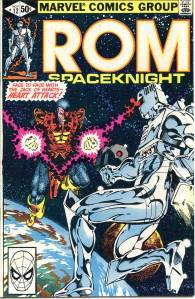
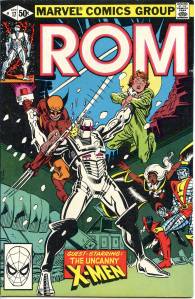
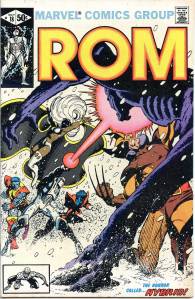
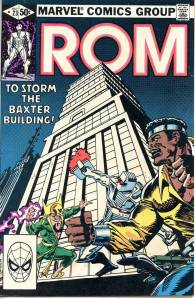
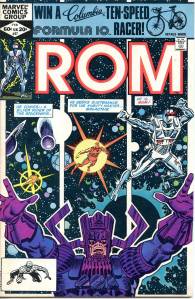
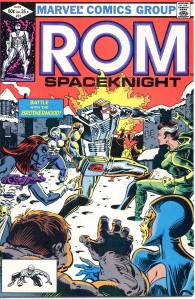
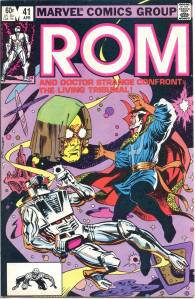
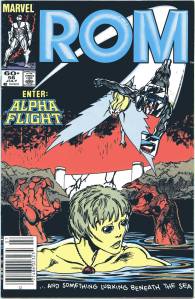
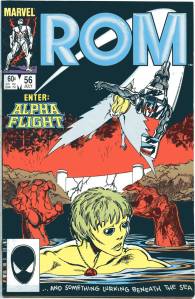
To build interest in the ROM toy, Parker Brothers licensed the character to Marvel Comics, which created a comic book featuring Rom. The comic expanded on the premise that Rom was a cyborg and gave him an origin, personality, set of supporting characters and villains, as well as interaction within the Marvel Universe. The comic was written by Bill Mantlo and initially illustrated by artist Sal Buscema. Buscema stated in a 2010 interview, “I liked the character. And I liked what they did with it. I thought the concept was quite good. It was unique. It made it attractive to do. I almost hate to say this, but it was pretty easy to draw, too.” Buscema was the main artist for the series from its creation through 1984. Steve Ditko took over for the final two years of the original run.
Ultimately, the toy failed and only sold 200,000 to 300,000 units in the US, with creator McCoy blaming the failure on poor packaging and marketing. Parker Brothers subsequently abandoned the line.
The comic book outlasted the toy which it was created to support. The series lasted for 75 issues (not including the four annual issues) from December 1979 to February 1986. Rom’s regular encounters with mainstream heroes and villains established him as part of Marvel continuity.
The series explicitly does not use a floating timeline like the mainstream Marvel Universe, instead presenting a Punisher who ages in real time. Gravestones and other references indicate that his family was killed in 1976. The Punisher has been active for almost 30 years at the time presented in most stories, with issue #19 specifying that he has killed approximately 2,000 people. Born also establishes that the Punisher’s service in the Vietnam War is still in MAX continuity.
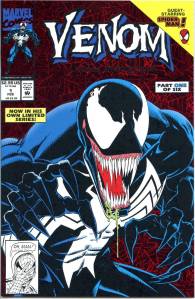
This marked the first time Eddie Brock received a series in which he was the main character, and recast Venom from an unambiguous villain to an anti-hero.
Before the story begins, Venom makes an agreement with Spider-Man that they will leave each other alone, on the condition that Venom commits no crimes. Venom then moves from New York City to San Francisco, and takes up with a group of Californianmole people. Shortly thereafter the father of one of Venom’s victims seeks him out with a group of super-powered mercenaries to take revenge.
Spider-Man, seeing misleading coverage of Venom on television, heads to San Francisco to confront him and instead winds up fighting alongside Venom against five new offspring of the Venom Symbiote: Scream, Phage, Riot, Lasher, and Agony.
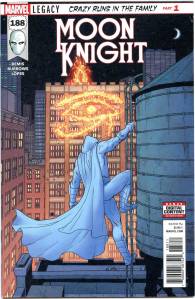
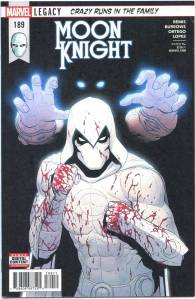
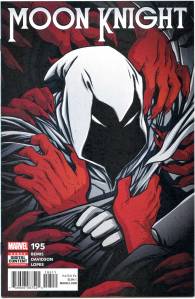
The new “Marvel Legacy” volume launched in January 2018, starting with issue number 188 and continued through issue 200. The initial issue was written by Max Bemis and was drawn by Jacen Burrows.Ty Templeton then steps in as the primary artist for issue 194, with Paul Davidson on issues 195, 196, and 199, and Burrows returning for 197–198. Issue 200 had several artists from Moon Knight‘s run contributing art. In 2019 Cullen Bunn wrote and Ibrahim Mustafa and Matt Horak drew Moon Night Annual #1.






















 EHT Comics