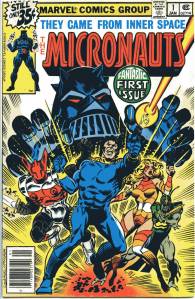
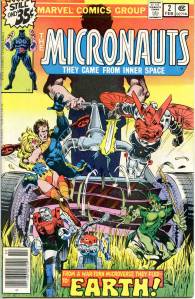
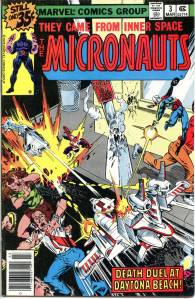
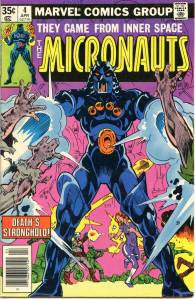
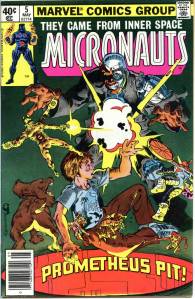
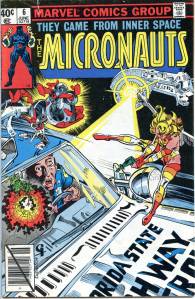
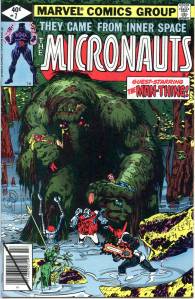
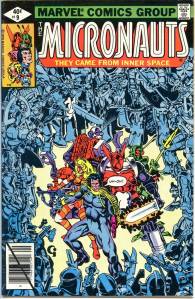
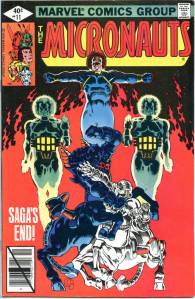
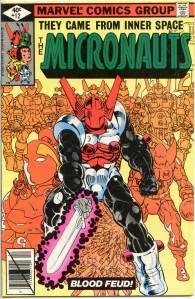
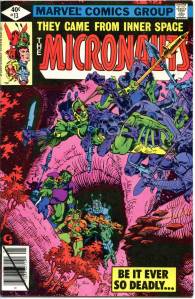
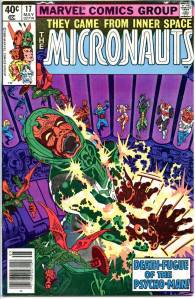
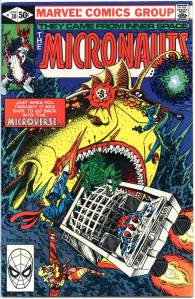
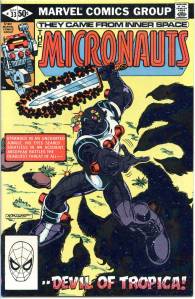
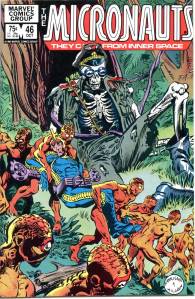
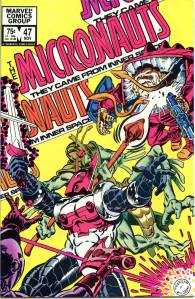
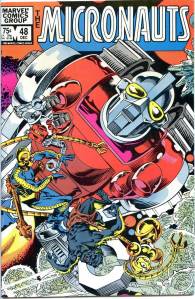
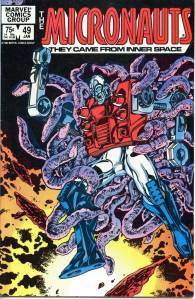
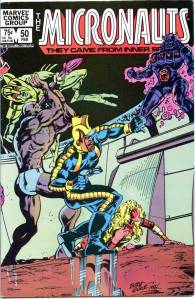
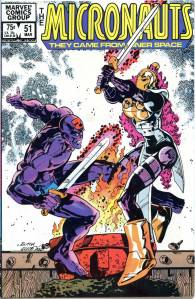
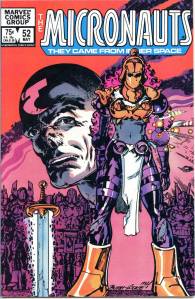
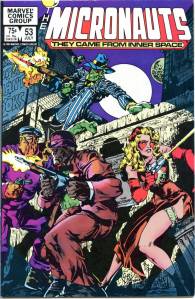
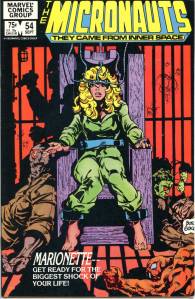
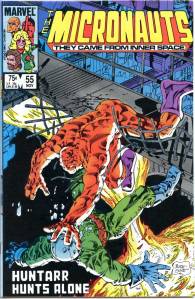
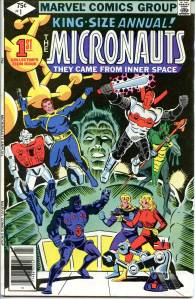
The Micronauts began life as comic book characters thanks to a fortuitous accident on Christmas 1977. Marvel Comics writer Bill Mantlo’s son Adam opened a new present, a line of the Mego Corporation‘s Micronauts action figures. Seeing the toys, Mantlo was instantly struck by inspiration to write their adventures. Convincing then Editor-in-chief Jim Shooter to get the comics license for these toys, Mantlo was hired to script their series.
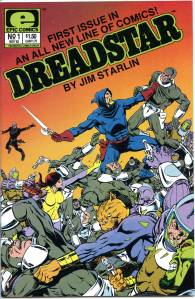
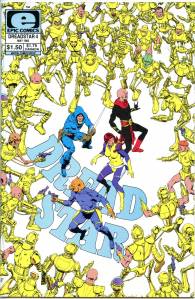
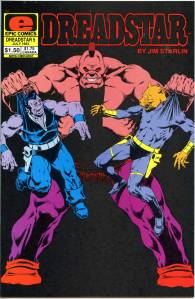
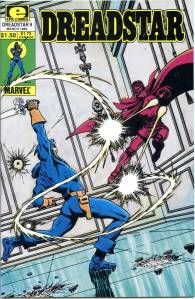
The series centered on the exploits of Vanth Dreadstar and his crew—powerful mystic Syzygy Darklock, the cybernetic telepath Willow, cat-like humanoid Oedi, and freebooter Skeevo. Vanth, newly arrived in the Empirical Galaxy after the events of Metamorphosis Odyssey, tries to live a pastoral existence on Oedi’s planet of peaceful cat-people, but his peace is disturbed by the arrival of Darklock, who wants him to get involved in the conflict between the two major forces in the galaxy, the Monarchy and the theocratical Instrumentality. Vanth refuses until the war comes to his planet, wiping out most of the population. Oedi survives and joins them; Willow and Skeevo join later, though the team is in place for the first issue.
Dreadstar takes the side of the Monarchy against the evil Lord High Papal of the Instrumentality, but his team end up becoming fugitives when the Monarchy falls, and go to great lengths to try to uncover a traitor in their midst. The transition to First Comics happened just when the traitor was about to be revealed, and the first issue published under First Comics, #27 contained this revelation.
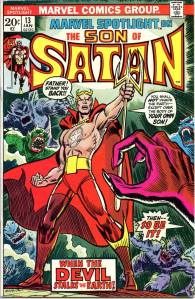
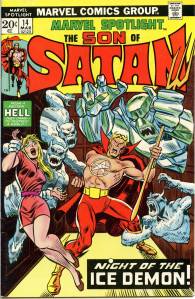
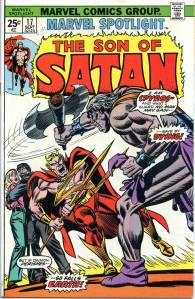
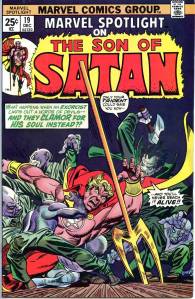
Encouraged by the success of Ghost Rider and The Tomb of Dracula, both of which starred occult characters, Stan Lee proposed a series starring Satan, to be titled The Mark of Satan. Editor Roy Thomas had reservations about this idea and suggested a series focusing on the son of Satan instead. (Due to an oversight, “The Mark of Satan” is mentioned in a blurb in Ghost Rider #1).
The character Daimon Hellstrom first appeared in Ghost Rider vol. 1, #1 (Sept. 1973), then was spun off into a feature, “Son of Satan”, in Marvel Spotlight #12–24 (Oct. 1973 – Oct. 1975). During the “Son of Satan” run, Marvel Spotlight was a controversial series, with numerous readers writing to object to the depictions of satanism and wiccanism as being either inaccurate or furthering the cause of evil. Nonetheless, sales were strong, prompting Marvel to launch the character into his own series, Son of Satan, written by John Warner. The character’s success faded soon after the series launch, and Son of Satan was cancelled with issue #7, though an unused fill-in was published as Son of Satan #8 (Feb. 1977).
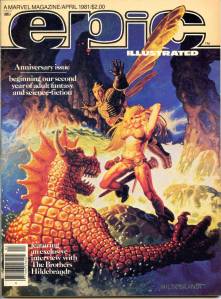
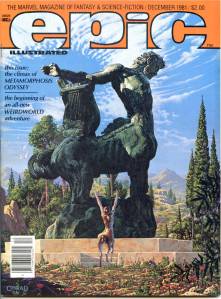
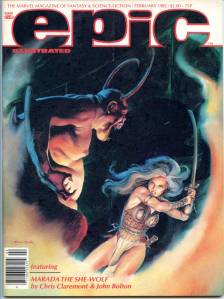
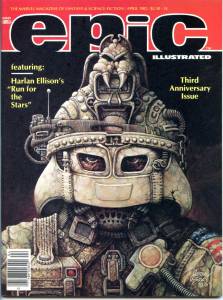
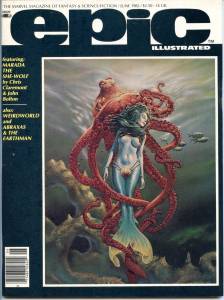
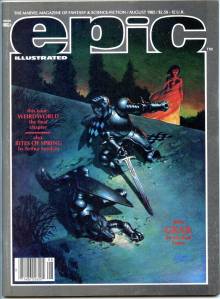
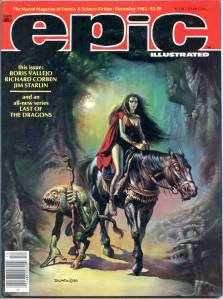
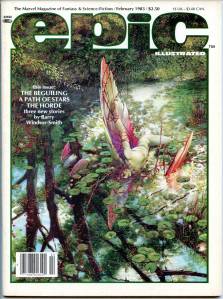
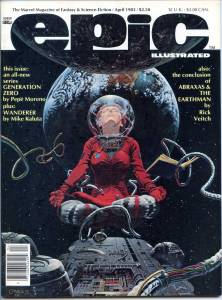
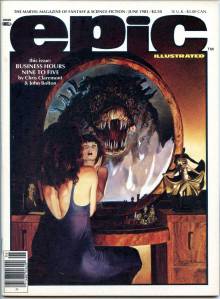
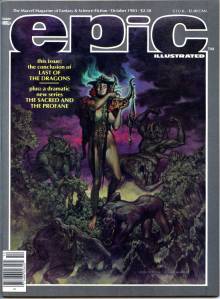
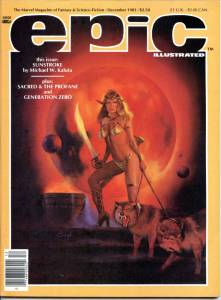
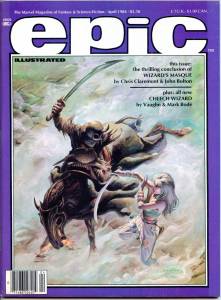
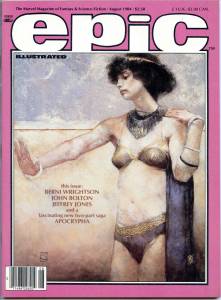
Epic Illustrated was a comics anthology in magazine format published in the United States by Marvel Comics. Similar to the US-licensed comic book magazine Heavy Metal, it allowed explicit content to be featured, unlike the traditional American comic books of that time bound by the restrictive Comics Code Authority, as well as offering its writers and artists ownership rights and royalties in place of the industry-standard work for hire contracts. The series lasted 34 issues from Spring 1980–February 1986.
A color comic-book imprint, Epic Comics, was spun off in 1982.
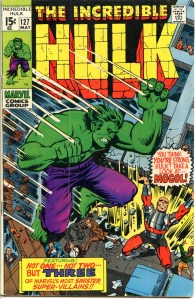
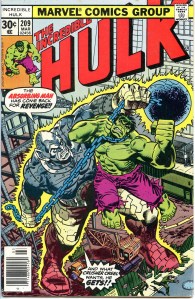
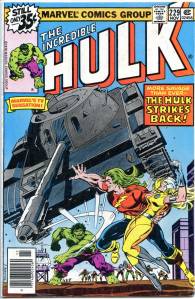
The 1970s saw Banner and Betty nearly marry in The Incredible Hulk #124 (Feb. 1970).Betty ultimately married Talbot in issue #158 (Dec. 1972).The Hulk also traveled to other dimensions, one of which had him meet empress Jarella, who used magic to bring Banner’s intelligence to the Hulk, and came to love him. It was during this period that the Hulk helped to form the Defenders.
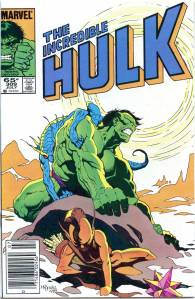
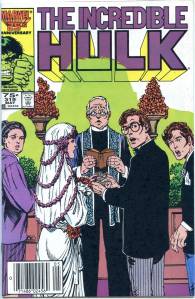
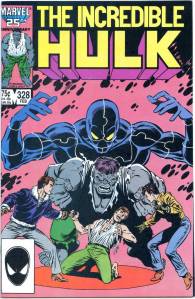
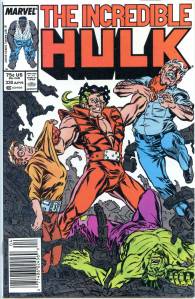
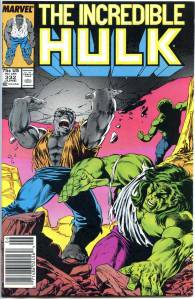
In the 1980s, Banner once again gained control over the Hulk, and gained amnesty for his past rampages; however, due to the manipulations of supernatural character Nightmare, Banner eventually lost control over the Hulk. It was also established that Banner had serious mental problems even before he became the Hulk, having suffered childhood traumas that engendered Bruce’s repressed rage. Banner comes to terms with his issues for a time, and the Hulk and Banner were physically separated by Doc Samson. Banner is recruited by the U.S. government to create the Hulkbusters, a government team dedicated to catching the Hulk. Banner finally married Betty in The Incredible Hulk #319 (May 1986) following Talbot’s death in 1981. Banner and the Hulk were reunited in The Incredible Hulk #323 (Sep. 1986) and with issue #324, returned the Hulk to his grey coloration, with his transformations once again occurring at night, regardless of Banner’s emotional state. In issue #347 the grey Hulk persona “Joe Fixit” was introduced, a morally ambiguous Las Vegas enforcer and tough guy. Banner remained repressed in the Hulk’s mind for months, but slowly began to reappear.
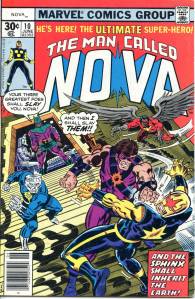
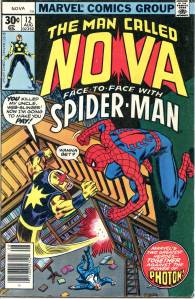
Nova was created by Marv Wolfman and Len Wein in the fanzine Super Adventures in 1966. Seven years later John Romita, Sr. tweaked the design of the character’s uniform. Nova debuted in Nova #1 in 1976, written by Wolfman and drawn by John Buscema. Wolfman intended the teenage character to be an homage to Stan Lee and Steve Ditko‘s Spider-Man, down to his humble working-class roots and alliterative alter-ego. The original Nova series, The Man Called Nova, lasted 25 issues from September 1976 to May 1979. Dangling plot lines were resolved in issues 206-214 of Fantastic Four (also by Wolfman) and issue 24 of Rom the Spaceknight. The character then disappeared into obscurity until returning as a member of the original New Warriors team debuting in The Mighty Thor #411 (December 1989), and continuing through New Warriors #1-75, Annual #1-4 (July 1990—September 1996).
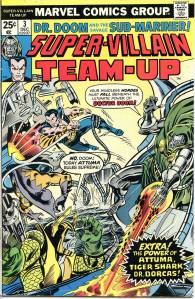
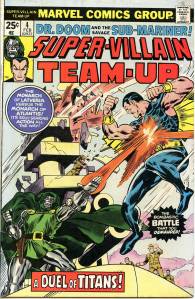
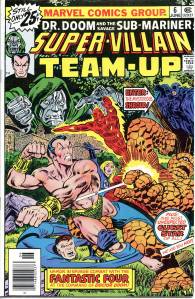
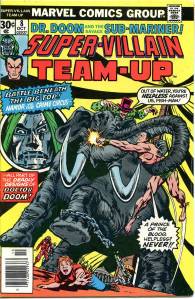
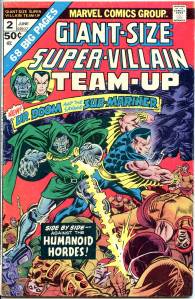
The first series started in 1975 with two giant-size issues before starting as a regular series, and was mostly bi-monthly during its existence. It initially teamed up Doctor Doom and the Sub-Mariner, who had lost his own series, from which it picked up the unresolved plots, especially that of the comatose Atlanteans. After a succession of writers and artists and a crossover with The Avengers, the plot gets resolved in issue #13 when Dr. Doom revives the Atlanteans, thus dissolving his alliance with the Sub-Mariner.
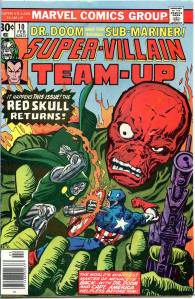
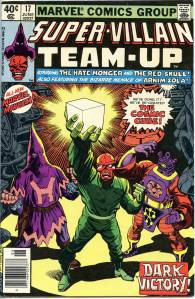
Issue #14 (Oct. 1977), which featured Magneto and Dr. Doom, was billed as the final issue of the series, and its plotline was resolved in The Champions #16. The following year, SVTU continued with issue #15 (Nov. 1978), a reprint of Astonishing Tales #4-5. Issues #16 (May 1979) and #17 (June 1980) featured the Red Skull and the Hate-Monger. The irregular publishing frequency of the final three issues was due to a legal maneuver to prevent DC Comics from trademarking the term “super-villain”.
The series saw the death of the Sub-Mariner’s 1940s sweetheart Betty Dean and the death of her murderer, Dr. Dorcas. Steve Englehart created The Shroud, a character partly inspired by Batman, shortly before he started to work for DC Comics on Detective Comics.
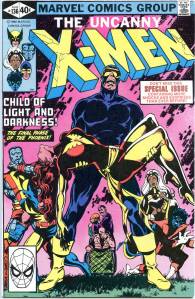
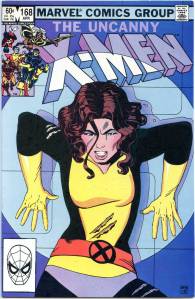
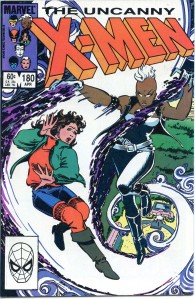
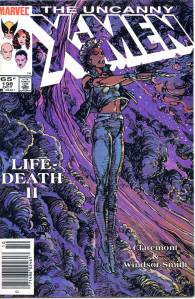
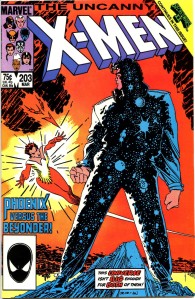
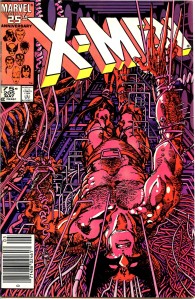
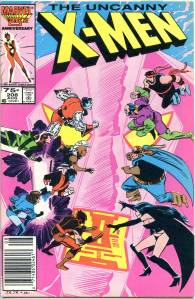
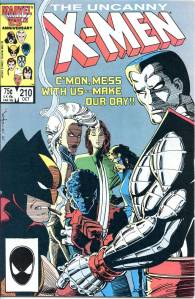
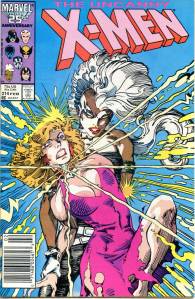
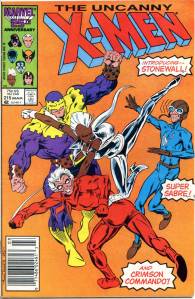
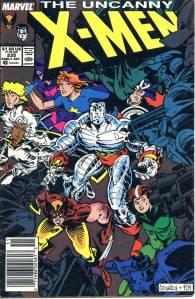
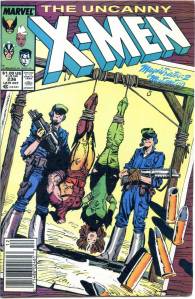
The “Dark Phoenix Saga” in 1980 led to a change in the line-up of the team, with the death of Phoenix (Jean Grey), and Cyclops leaving the team to mourn for her. Comics writers and historians Roy Thomas and Peter Sanderson observed that “‘The Dark Phoenix Saga’ is to Claremont and Byrne what ‘the Galactus Trilogy‘ is to Stan Lee and Jack Kirby. It is a landmark in Marvel history, showcasing its creators’ work at the height of their abilities.” The storyline also saw the introduction of recurring antagonists the Hellfire Club, and its Inner Circle consisting of Sebastian Shaw, Emma Frost, Harry Leland, Donald Pierce, along with Mastermind, previously a member of Magneto’s Brotherhood. The new teenage mutant Kitty Pryde was introduced in #129 (Jan. 1980) and joined the X-Men in #139. The Dazzler, a disco-singing, roller-skating mutant, was introduced in #130 (Feb. 1980), but did not join the team, instead headlining her own solo title.
A new Brotherhood of Evil Mutants, led by Mystique, was introduced in the “Days of Future Past” storyline (#141-#142, Jan–Feb 1981) in which a time-travelling Kitty Pryde tried to avert a dystopian future caused by the Brotherhood assassinating Presidential candidate Senator Robert Kelly. Byrne plotted the story wanting to depict the Sentinels as a genuine threat to the existence of the mutant race. He then left the series after #143, being replaced by a returning Cockrum, who in turn was succeeded by Paul Smith and John Romita Jr.













































 EHT Comics