In Volume 1 Machine Man entering the mainstream Marvel Universe. Jack Kirby wrote and drew the first nine issues, which dealt with the title character’s status as a fugitive from the military after the death of his creator, and his first interactions with mankind. The book was canceled at the end of 1978 with X-51 finally standing up to the military. Machine Man appeared next in a three issue story arc within the pages of The Incredible Hulk vol. 2 #235–237, battling the Hulk within the suburban setting of his human friend, Dr. Peter Spaulding. By the end of the storyline, he incurred a complete system shutdown, leading to the events portrayed in his relaunched monthly series. The title was relaunched in issue #10 after a nine-month hiatus. Status quo in the book changed with Machine Man now living amongst humanity, and dealing with his own new-found emotions. Marv Wolfman came aboard as the new writer, partnered with artist Steve Ditko, which helped set a different tone from Kirby’s previous stories. Issue #15 saw a new writer, Tom DeFalco, taking over the writing chores. The title lasted until issue #19, ending in Feb. 1980.
Category: Marvel Bronze Age
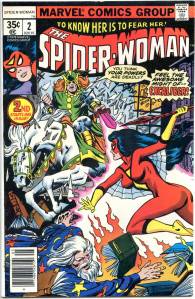
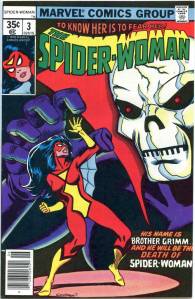
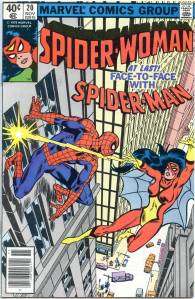
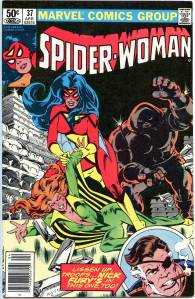
Spider-Woman (1978)
Marvel Comics‘ then-publisher Stan Lee said in 1978, shortly after Spider-Woman’s debut in Marvel Spotlight #32 (Feb. 1977) and the start of the character’s 50-issue self-titled series (cover-datedApril 1978 – June 1983), the character originated because,
I suddenly realized that some other company may quickly put out a book like that and claim they have the right to use the name, and I thought we’d better do it real fast to copyright the name. So we just batted one quickly, and that’s exactly what happened. I wanted to protect the name, because it’s the type of thing [where] someone else might say, ‘Hey, why don’t we put out a Spider-Woman; they can’t stop us.’ … You know, years ago we brought out Wonder Man, and [DC Comics] sued us because they had Wonder Woman, and … I said okay, I’ll discontinue Wonder Man. And all of a sudden they’ve got Power Girl [after Marvel had introduced Power Man]. Oh, boy. How unfair.
Logan’s Run (1977)
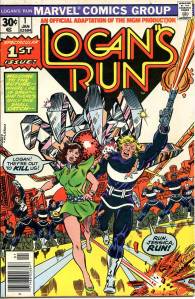
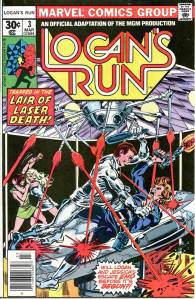
Marvel Comics published Logan’s Run in 1977, with George Pérez drawing five issues between January and May 1977, with “acceptable” sales. The comics adapted the film’s story in five issues and briefly continued beyond. In his art, Pérez sought to follow the art direction of the film. The book was cancelled after issue #7 in July 1977.
Howard the Duck V1 (1970’s)
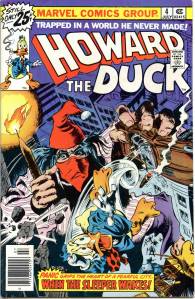
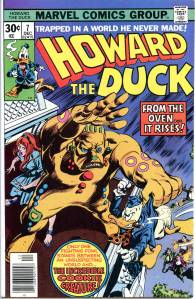
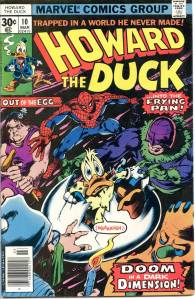
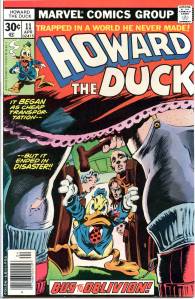
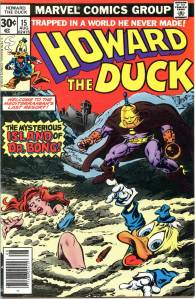
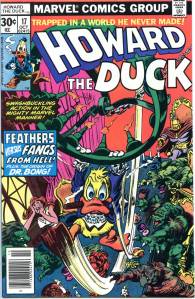
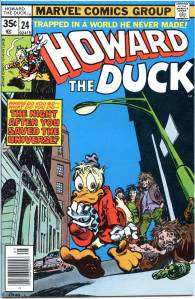
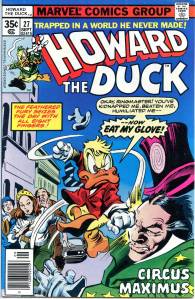
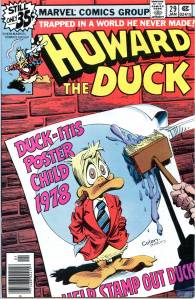
Howard the Duck, was created by Steve Gerber and artist Val Mayerik. The character first appeared in Adventure into Fear #19 (Dec. 1973). He graduated to his own backup feature in Giant-Size Man-Thing, confronting such bizarre horror-parody characters as Hellcow and the Man-Frog, before acquiring his own comic book title with Howard the Duck #1 in 1976.
Foom (1973)
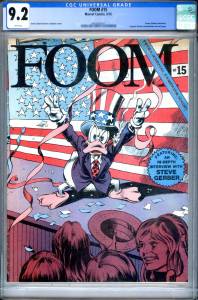
Jim Steranko, in his first-issue introduction, wrote that he had “dropped in at the Marvel bullpen to rap with [publisher] Stan Lee about the current comic scene” and that Lee told him about plans to start an in-house fan club. EC Comics had had its “EC Fan-Addict” club in the 1950s, and Marvel the Merry Marvel Marching Society beginning 1964; after the MMMS had run its course by 1969, Marvel licensed a small company in Culver City, California to produce the fanzine/product catalog Marvelmania, which lasted a year. Steranko, writing that he nostalgically “recalled the days of radio, with all the clubs and super-premiums that were perpetually offered over the air”, volunteered “my services as a designer, writer and comic historian”. Ken Bruzenak served as associate editor, with Marvel editor-in-chief Roy Thomas as consulting editor and Ed Noonchester, Joel Thingvall, and Gary Brown as staff.
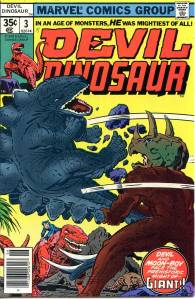
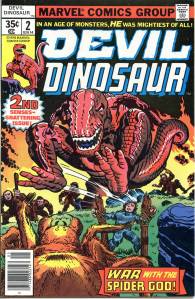
Devil Dinosaur (1978)
Devil Dinosaur and Moon-Boy are the creations of artist Jack Kirby who scripted and penciled all nine issues of the first series. Devil Dinosaur was created during Kirby’s third stint at Marvel (1975–1978). Having learned that DC Comics was working on an animated series featuring Kirby’s Kamandi, Marvel attempted to one-up their competitor by instructing Kirby to create a series similar to Kamandi, but incorporating a dinosaur co-star, since dinosaurs were hugely popular with young audiences of the time. The resulting Devil Dinosaur series was short lived, lasting only nine months (April – December 1978), and the proposed animated series never entered development. The original Devil Dinosaur series chronicled Devil and Moon-Boy’s adventures in their home, “Dinosaur World”. After the cancellation of Devil Dinosaur, the character’s appearances were relegated to one-shot comics, cameos, and supporting roles in other series.
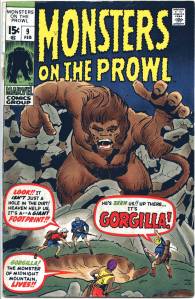
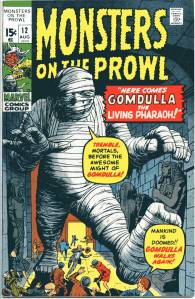
Monsters on the Prowl (1971)
Chamber of Darkness was retitled Monsters on the Prowl with issue #9 (Feb. 1971), this version ran one new story each issue through #13 (Oct. 1971) with the remaining content consisting of reprints from Atlas Comics, Marvel’s 1950s predecessor, and “pre-superhero Marvel”, primarily drawn by Jack Kirby or Steve Ditko. It expanded into a double-sized, 25-cent comic for two issues (#13-14, Oct.-Dec. 1971). Some issues of the reprint books featured new covers by John Severin, Marie Severin, Gil Kane, and Herb Trimpe.
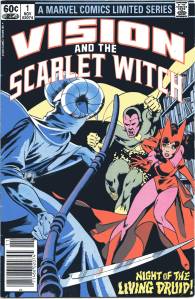
Vision and the Scarlet Witch V1 (1982)
The first limited series was published beginning in November 1982, for four issues. It was written by Bill Mantlo and pencilled by Rick Leonardi. In this series, the villain Magneto is retconned as the father of the Scarlet Witch and Quicksilver, and intending to give up his villainous life. The reveal had some previous clues released in the Avengers and X-Men titles and stayed as comic book canon for decades until it was undone in the 2014 crossover AXIS.
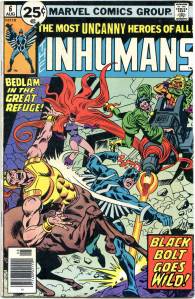
Inhumans (1975)
The Inhumans received their own self-titled series in October 1975, which ran for 12 issues and ended in August 1977. All but issue #9 were written by Doug Moench, who has said he was fascinated with the shaggy God story aspect of the Inhumans. A follow-up to the series’s ending appeared in Captain Marvel #53 (November 1977).
Strange Tales (1970’s)
Doctor Strange was canceled with #183 (Nov. 1969). Four years later, Strange Tales resumed at its old numbering with #169 (Sept. 1973), which introduced the supernatural feature Brother Voodoo by writer Len Wein and artist Gene Colan. This lasted only to issue #173 (April 1974), with Brother Voodoo continuing briefly in the black-and-white Marvel horror-comics magazine Tales of the Zombie. This was followed by two different creative teams producing three stories of The Golem in four issues (#174–177), the second of these a fill-in monster-reprint issue.
The next feature was writer-artist-colorist Jim Starlin‘s take on Adam Warlock, picking up the character from the 1972–73 series Warlock (a.k.a. The Power of Warlock) and reviving him in Strange Tales #178 (Feb. 1975). Another creative high-water mark, this feverishly imaginative feature from Starlin, who had similarly reinvigorated Captain Marvel, introduced the Marvel characters Gamora, Pip the Troll and The Magus, and helped establish the mythos Starlin would mine in his many “Infinity” sagas of the 1990s. After issue #181 (Aug. 1975), the story would continue in Warlock #9 (Oct. 1975), picking up from the old series’ numbering. Strange Tales soldiered on with Doctor Strange reprints through issue #188 (Nov. 1976).