Enter the Savage Dragon! The Dragon joins forces with the Turtles to battle his old foe Virago, who is terrorizing Chicago by bringing stone gargoyles to life. Story by Erik Larsen and Michael Dooney; art by Dooney and Robert Jones.
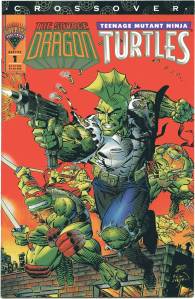
Enter the Savage Dragon! The Dragon joins forces with the Turtles to battle his old foe Virago, who is terrorizing Chicago by bringing stone gargoyles to life. Story by Erik Larsen and Michael Dooney; art by Dooney and Robert Jones.
What if “The Smoking Man” from X-Files was a real person, and his daughter found out what he did for a living? The daughter of an assassinated globalist kingpin breaks out of an internment camp and leads her fellow escaped prisoners in a battle against an elitist conspiracy of shadow governments, megabanks, and military juntas in this edgy and subversive thriller that channels Fight Club by way of Girl With The Dragon Tattoo.


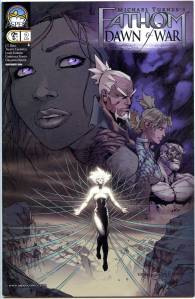
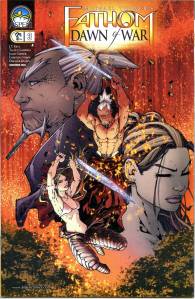
Fathom: Dawn of War bridges the gap between the original series and Fathom vol. 2. The story focuses on the Blue warrior Kiani, who is forced to side with the rebellious councilman Marqueses in order to save her master, Casque, from the clutches of human military scientists. Marqueses has engineered the situation in order to kidnap Casque and to secure the older warrior’s immense power for an offensive against the humans. Kiani tracks down Marqueses and saves Casque only to find he is part of the Black. The Black come for Casque, and he is forced to rejoin them, leaving Kiani angry and lost.
Dawn of War emphasizes Kiani’s loneliness and character development. It also introduces audiences further to the underwater world of the Blue.

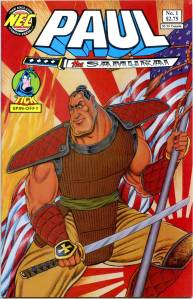
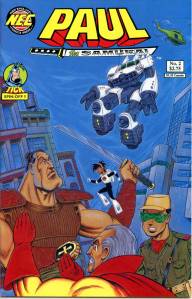
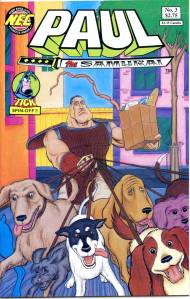
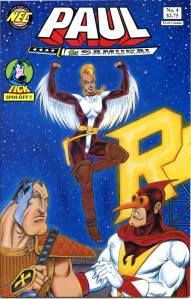
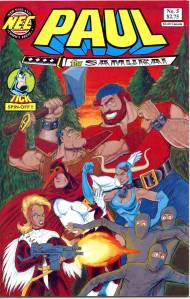
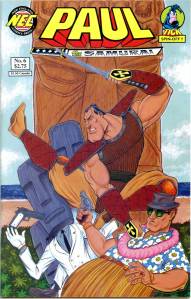
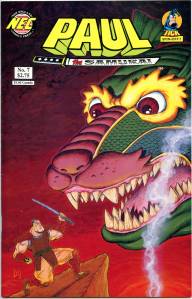
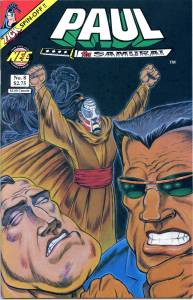
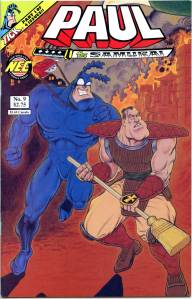
Paul begins adapting to the unusual barbarians inhabiting his new land. He confronts The Detroit Fury a metal monster created by a disgruntled American autoworker; He also encounters THE MITI MEN a superhero group sent from Japan to protect Japanese interests from the Detroit Fury’s attacks!

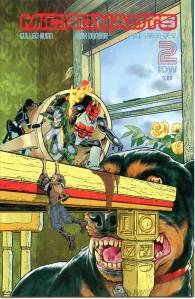
In 2015, IDW Publishing acquired publishing rights from Hasbro to produce new comic books for the Micronauts and Rom the Space Knight, both formerly popularized by Marvel as licensed properties. IDW released the first issue of their Micronauts series in April 2016, with scripts by Cullen Bunn and art by David Baldeon. The comic ran for eleven issues from 2016 to 2017. It was followed by two five-issue miniseries Micronauts: Wrath of Karza and Rom & the Micronauts which were released between 2017 and 2018.

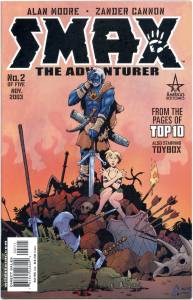
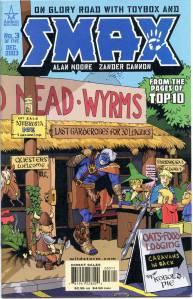
The story deals with Smax and Toybox returning, via magical teleportation, to Jeff’s magically enchanted homeworld. Smax, now a city dweller, seems embarrassed by his unsophisticated, sword-and-sorcery roots. They attend Smax’s uncle’s funeral where Jeff introduces Robyn as his wife, though no such relationship exists. At this point Jeff’s sister Rexa Macksun is introduced, dressed in the typical garb of a female fantasy barbarian such as Red Sonja and just as tall and physically impressive as her brother with the same blue skin and white hair.


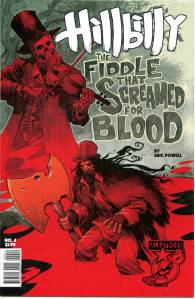
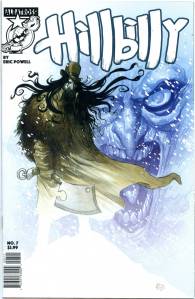
Hillbilly is a fantasy adventure series by Eric Powell (creator of The Goon), set in a fantasy realm drawing less from Tolkien and more from the myths and folklore of rural Appalachia. Unlike The Goon, it’s more-or-less kid-friendly, if still reasonably dark. Rondel is a wanderer, travelling from place to place.

Whiz Comics #2 (cover-dated Feb. 1940) was published in late 1939. The comic’s lead feature introduced audiences to Billy Batson, an orphaned boy who, by speaking the name of the ancient wizard Shazam, is struck by a magic lightning bolt and transformed into the adult superhero Captain Marvel. Shazam’s name was an acronym derived from the six immortal elders who grant Captain Marvel his superpowers: Solomon, Hercules, Atlas, Zeus, Achilles and Mercury.
In addition to introducing the main character, his alter ego, and his mentor, Captain Marvel’s first adventure in Whiz Comics #2 also introduced his archenemy, the evil Doctor Sivana, and found Billy Batson talking his way into a job as an on-air radio reporter with station WHIZ. Captain Marvel was an instant success, with Whiz Comics #2 selling over 500,000 copies. By 1941, he had his own solo series, Captain Marvel Adventures, while he continued to appear in Whiz Comics, as well as periodic appearances in other Fawcett books, including Master Comics.

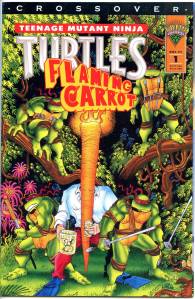
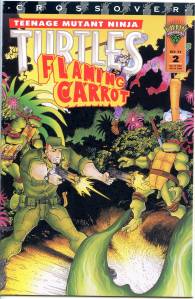
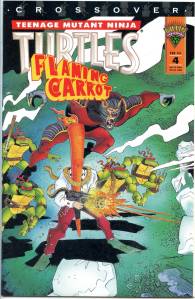
The TMNT are onboard a blimp, traveling to Central America after a devastating storm has crippled much of North and South America. The Turtles are accompanying Colonel Blade, who is using the dirigible to bring relief supplies to those affected by the storm. Upon landing and unloading, Blade receives new instructions from the local ambassador: he’s to travel to the Abecero Penninsula and restore contact with a missing research team. Joining the Colonel and the Turtles on the mission will be archaeologist Professor Daub.
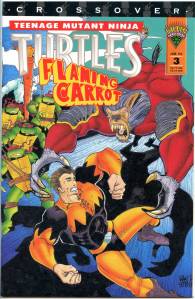
Meanwhile, back in the USA in the secret headquarters of the Mystery Men, the team of unsual heroes (Flamng Carrot, Bondoman, The Shovelor, Mystic Hand, Star Shark, The Zeke’s, the Spleen, Screwball and Mr. Furious) is called into action to find the same research team that the TMNT and Blade are seeking.
In a world that had been long since become a terrible place, Solar reluctantly granted the wish of his lifelong companion, Gayle Nordheim to dissipate the lifegiving energy that had kept her alive and young for so long. So unable to contain his grief over her death, Solar was literally split in two. The remaining Solar vanished into a life of seclusion while the new persona went off to find other planes of reality to explore.[3]
There, in a dimension between what is real and unreal, he encountered a creature of incredible power, a woman from a distant universe, Void. The two fell in love, a love that wound end all time literally. Upon consummating, their combined energies fused, unwarping the fabric of time, spiraling backwards and eating away at their distinct timelines. In an instant, things were not as they should be: heroes fought alongside those who had been their enemies in a different world; great men who would bring justice to the world died horrible, untimely deaths. Only men with the gift of foresight, Geoff McHenry and Prophet, knew that all was not as it should be. Where they had seen a future so clearly before, there was now nothing.
Geoff and Prophet are resolved to gather the heroes of this amalgamated universe together to fight the battle to save all time.