Eightball (1989)

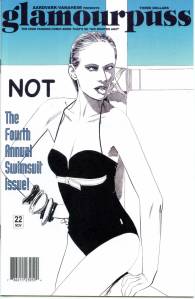
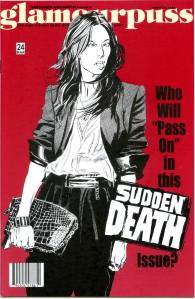
Eightball is an alternative comic book series written and drawn by Daniel Clowes. The first issue was published by Fantagraphics Books in 1989, soon after the end of Clowes’s previous comic series, Lloyd Llewellyn. It has consistently been among the best-selling independently authored comics.

Marvel Tales – Atlas (1949)

The first Marvel Tales was the direct continuation of the superhero anthology Marvel Mystery Comics, published by Marvel Comics‘ initial iteration, Timely Comics. This series ran through issue #92 (cover-dated June 1949). Beginning with issue #93 (Aug. 1949), it became Marvel Tales, an anthology of horror, fantasy, and science fiction stories. The bulk of this series was published under the company name Atlas Comics.
Marvel Tales included among its contributors writer and editor-in-chief Stan Lee and such comics artists as Golden Age veterans Harry Anderson, Carl BurgosBill EverettFred KidaMike SekowskySyd Shores, and Ogden Whitney, and, early in their careers, Dick AyersGene ColanTony DiPretaMort DruckerRuss HeathBernard KrigsteinJoe ManeelyJoe Sinnott, and Basil Wolverton, among others. Issue #147 featured one of Steve Ditko‘s first stories for Marvel, “The Vanishing Martians”. The series ran 67 issues under the new title, through #159 (Aug. 1957). It ended because of the collapse of Atlas’s distributor, American News Company, and the subsequent restructuring that limited the number of comics the company could publish in a month.

An issue of Marvel Tales was included in a display of covers representative of the “Crime, Horror & Weird Variety” at the April 1954 hearings of the United States Senate Subcommittee on Juvenile Delinquency.

Unity (1992)

Unity is a company-wide crossover published by Valiant Comics in 1992, featuring all of their ongoing superhero titles at the time. This includes the RenegadesMagnus, Robot FighterRaiShadowmanSolar, Man of the AtomTurok, and X-O Manowar. The crossover also introduced new books for Archer & Armstrong and Eternal Warrior. The central antagonist is Mothergod, who attempts to rewrite reality and restore her original universe. This conflict leads to Valiant heroes of both the 21st Century and the 41st Century coming together for the first time.

Comix International (1974)

Comix International was a short-lived magazine comprised entirely of reprinted material (in color) from other Warren publications. With stories by Richard Corben, Reed Crandall, Wally Wood, Bernie Wrightson, and others. The name Comix International was originally to have been used for an underground title put together for Warren by Keith Green which never appeared.

Something is Killing the Children (2019)

When the children of Archer’s Peak—a sleepy town in the heart of America—begin to go missing, everything seems hopeless. Most children never return, but the ones that do have terrible stories—impossible details of terrifying creatures that live in the shadows. Their only hope of finding and eliminating the threat is the arrival of a mysterious stranger, one who believes the children and claims to be the only one who sees what they can see. Her name is Erica Slaughter. She kills monsters. That is all she does, and she bears the cost because it must be done.

Coda (2018)

In the aftermath of an apocalypse which wiped out nearly all magic from a once-wondrous fantasy world, a former bard named Hum (a man of few words, so nicknamed because his standard reply is “hm”) seeks a way to save the soul of his wife with nothing but a foul-tempered mutant unicorn and his wits to protect him…but is unwillingly drawn into a brutal power struggle which will decide forever who rules the Weird Wasteland.

Married… with Children (1990)

Married… with Children was adapted into a comic book series by NOW Comics starting in 1990. Featuring all the characters you know and love — Al Bundy, Peggy Bundy, Bud Bundy, Kelly Bundy, Snake Face, Greg Miller, Dean Keller and Suzy!

Zot! (1984)

Zot! is a comic book created by Scott McCloud in 1984 and published by Eclipse Comics until 1990 as a lighthearted alternative to the darker and more violent comics that dominated the industry during that period. There were a total of 36 issues, with the first ten in color and the remainder in black and white. McCloud credited Astro Boy creator Osamu Tezuka as a major influence on the book, making it one of the first manga-inspired American comic books.

Archie’s Mad House (1959)

The first 18 issues featured the “Archie gang” in stories that were a bit more “off the wall” than the normal Archie series. The idea was to produce stories that made no sense. The title Mad House was written as two words instead of one to suggest a false connection to MAD Magazine and recapture its success. Beginning with issue 19, the Archie gang was dropped (though it was still called Archie’s Mad House), and the title began featuring monsters, space stories and other wacky short stories. The gags in the comics often parodied the latest fads and popular culture. For a time, it would focus on stories with what were intended to be one-off characters. There were, however, exceptions to this rule. Characters becoming popular enough would appear again.

Many Deaths of Laila Starr (2021)

With humanity on the verge of discovering immortality, the avatar of Death is fired and relegated to the world below to live out her now-finite days in the body of twenty-something Laila Starr in Mumbai. Struggling with her newfound mortality, Laila hatches a plan and soon discovers a way to be placed at the time and location where the creator of immortality will be born . . . But will Laila take her chance to permanently reverse the course of (future) history, or does a more shocking fate await her within the coils of mortal existence?