
Penthouse Men’s Adventure Comix was the first spin-off of the popular Penthouse Comix, and most of the stories were done by well known comic professionals.

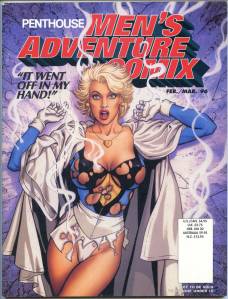
Penthouse Men’s Adventure Comix was the first spin-off of the popular Penthouse Comix, and most of the stories were done by well known comic professionals.
Released in 1994, this figurine was sculpted by Jeff Smith/Randy Bowen. It is limited to 3000 pieces of which this is #2001. Also included is a limited edition Bone print. Figurine is still sealed in the original bag and box.


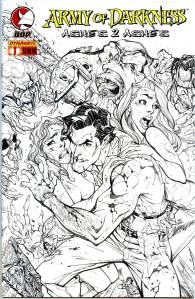
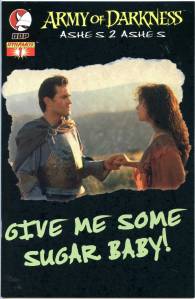
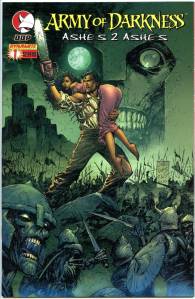
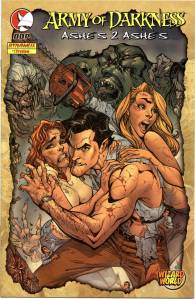
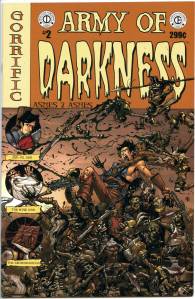
The plot picks up right at the end of the film, where the wizard of Army of Darkness goes to Ash’s times to tell him that he’s still not in his right time and that he arrived moments before he left to the wood in the first Evil Dead. Now he once again faces the evil in the woods and encounters his self from the true present, and along with the Wizard sends him to the past where the events of The Army of Darkness took place. While trying to destroy the book that caused all the events of the trilogy to take place, the two travel to Egypt, where the wizard is killed and Evil Ash is resurrected, in a final battle Ash is able to destroy Evil Ash and his army with the help of the medieval warriors of Arthur’s court from the 3rd film and once again encounters Sheila, after the end of the battle everybody goes to their respective timeline but Ash leaves the book behind, forgetting to destroy it.



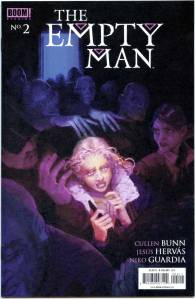
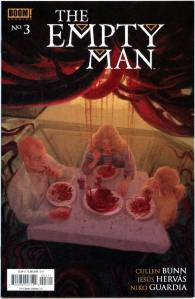
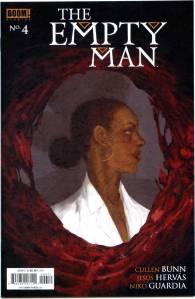
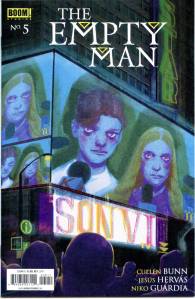
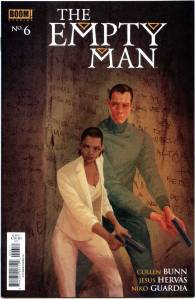
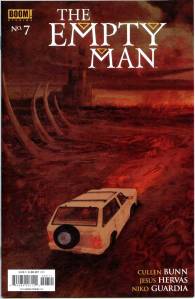
Cullen Bunn returns to the world of Empty Man with artist Jesús Hervás in this new ongoing series. The nation is in the grip of a terrible pandemic. The so-called Empty Man disease causes insanity and violence. Government quarantines are mandatory. One of the afflicted is Melissa Kerry, and the next step should be to quarantine her—but those who enter quarantine are never seen again. Melissa’s family won’t let that happen. All they have to do is care for her, keep her worsening condition a secret—and they’ll do anything, trust anyone, to keep her safe.

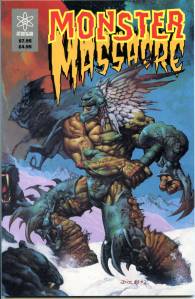
Featuring tales of sci-fi horror by Simon Bisley, James O’Barr, Kevin O’Neill, Dave Gibbons, Dougie Braithwaite, Dave Elliott, Simon Furman, Peter Snejbjerg, and John Tomlinson.
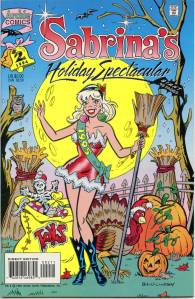
Debuting in 1993 as Sabrina’s Halloween Spook-tacular, the series continued as the Holiday Spectacular in 1994 and 1995. The stories in the oversized issues are all holiday-themed.
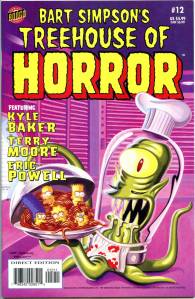
Bart Simpsons’ Treehouse of Horror is an annual horror series. It has been published around September–October, for Halloween, every year since 1995. It takes its name from the annual “Treehouse of Horror” episodes of The Simpsons. Like the episodes, the comic book always feature three stories in each issue. The stories are written and illustrated by some of the most famous people in the comic book business. Over the last dozen years, the series has had stories created by such industry stars as Garth Ennis(Preacher), Dan Decarlo (Archie Comics), Evan Dorkin (Milk and Cheese), Marv Wolfman and Gene Colan (Blade, Archie Comics, Tomb of Dracula) and rock stars Gene Simmons (Kiss), Alice Cooper and Rob Zombie as well as (humorously) Pat Boone. The stories usually parody modern horror stories and films, and feature distorted versions of the people of Springfield.
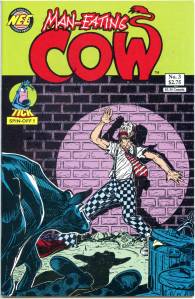
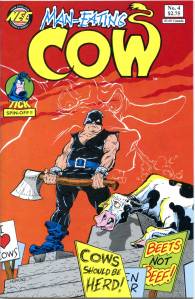
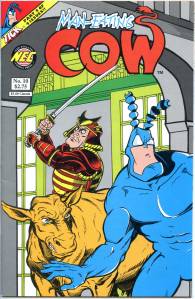
Published by New England Comics starting in 1992, Man-Eating Cow is a Tick spin-off by Clay Griffith and Allan Hopkins.

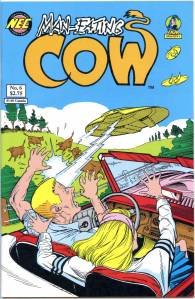
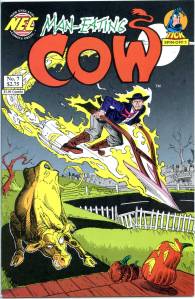
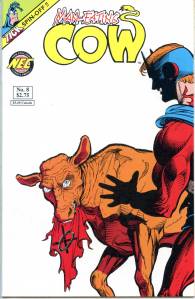
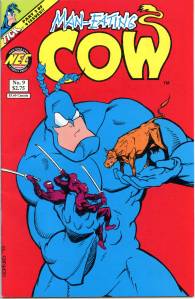
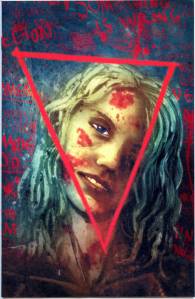
I Feel Sick is a comic book created by artist Jhonen Vasquez, with colors by Rosearik Rikki Simons. Published in August 1999 through May 2000, it is a spin-off of Vasquez’s comic book series Johnny the Homicidal Maniac. I Feel Sick revolves around Devi D., who first appeared in Johnny the Homicidal Maniac. Devi, a graphic designer, must face the supernatural and psychological forces that drove Johnny C. to lunacy.
Published by Slave Labor Graphics, it was originally intended as a single paperback but was split into two issues. Vasquez said the creation process of I Feel Sick was cathartic. Devi’s problems working for Nerve Publishing and neglecting her own work are reminiscent of the pressure Vasquez experienced working on Invader Zim, an animated television series he created for Nickelodeon.

Walter Lantz Woody Woodpecker became an independent comic book (starting with issue #16 to reflect the earlier appearances in Four Color) in Dec. 1952-Jan. 1953. It ran for 201 issues, published by Dell and then Western Publishing (Whitman/Gold Key), lasting until 1983.


