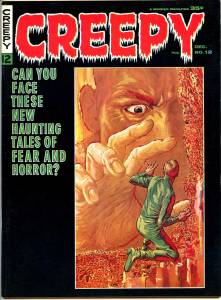
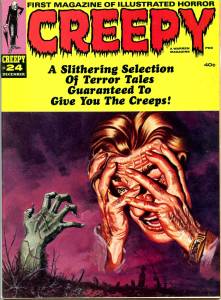
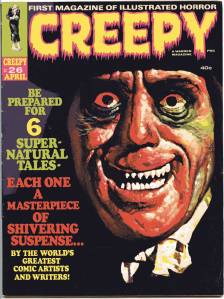
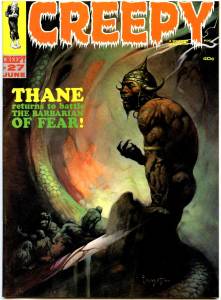
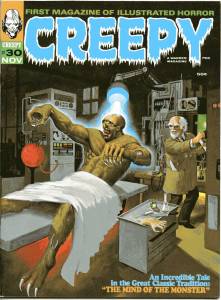
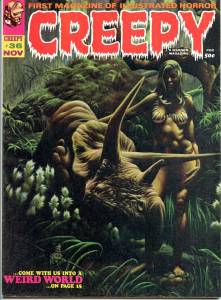
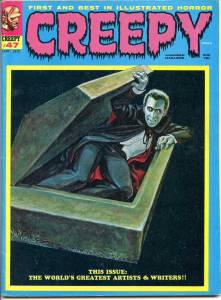
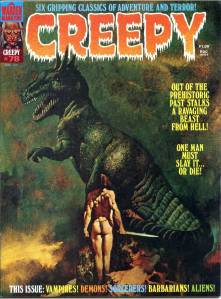
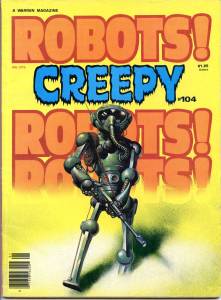
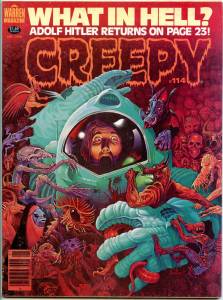
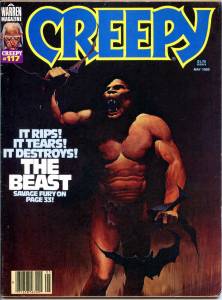
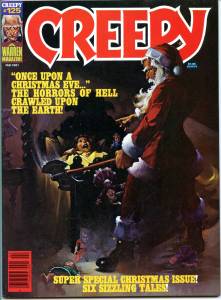
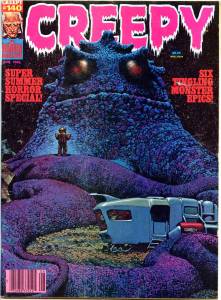
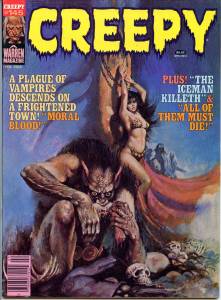
Creepy was an American horror-comics magazine launched by Warren Publishing in 1964. Like Mad, it was a black-and-white newsstand publication in a magazine format and thus did not require the approval or seal of the Comics Code Authority. The anthology magazine was initially published quarterly but later went bimonthly. Each issue’s stories were introduced by the host character, Uncle Creepy. Its sister publications were Eerie and Vampirella.
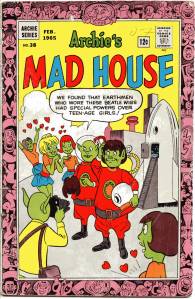
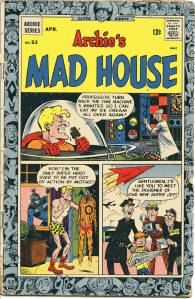
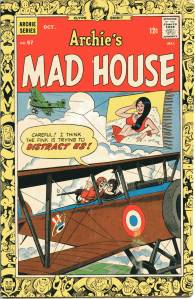
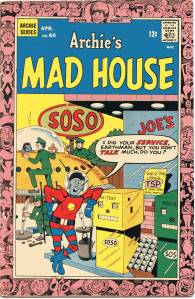
The first 18 issues featured the “Archie gang” in stories that were a bit more “off the wall” than the normal Archie series. The idea was to produce stories that made no sense. The title Mad House was written as two words instead of one to suggest a false connection to MAD Magazine and recapture its success. Beginning with issue 19, the Archie gang was dropped (though it was still called Archie’s Mad House), and the title began featuring monsters, space stories and other wacky short stories. The gags in the comics often parodied the latest fads and popular culture. For a time, it would focus on stories with what were intended to be one-off characters. There were, however, exceptions to this rule. Characters becoming popular enough would appear again.
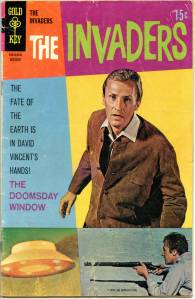
Comic book version of the 1960s TV series about one man’s crusade to convince people that an advance guard of alien creatures had infiltrated the world’s population and were preparing to conquer Earth.
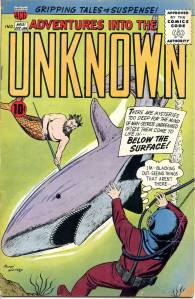
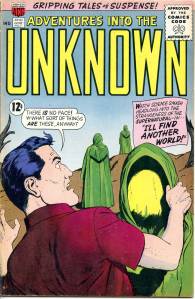
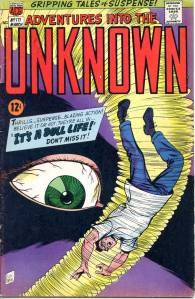
Adventures Into the Unknown was best known as the medium’s first ongoing horror-comics title. Published by the American Comics Group, initially under the imprint B&I Publishing, it ran 174 issues (cover-dated Fall 1948 – Aug. 1967). The first two issues, which included art by Fred Guardineer and others, featured horror stories of ghosts, werewolves, haunted houses, killer puppets, and other supernatural beings and locales. The premiere included a seven-page abridged adaptation of Horace Walpole‘s seminal gothic novelThe Castle of Otranto, by an unknown writer and artist Al Ulmer.
Unlike many American horror comics of the Golden Age, it weathered the public criticism of the early 1950s and survived the aftermath of the Senate Subcommittee on Juvenile Delinquency hearings of April and June 1954 when the comics industry attempted self-regulation with a highly restrictive Comics Code.
More than 1,000 issues were published, usually with multiple titles released every month. An exact accounting of the actual number of unique issues produced is difficult because occasional issue numbers were skipped and a number of reprint issues were also included. Nonetheless, the Overstreet Comic Book Price Guide lists well over 1,000 individual issues, ending with #1354. It currently holds the record for most issues produced of an American comic book; its nearest rivals, Action Comics and Detective Comics, ended their initial runs in 2011 at 904 issues and 881 issues, respectively. The first 25 issues are known as “series 1”; after they were published, the numbering began again and “series 2” began. Four Color published many of the first comics featuring characters licensed from Walt Disney.
Four Color #638 F+ $14
The Two Mouseketeer’s Dell Four Color Comics #642 VF $24
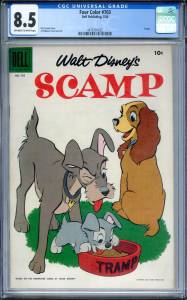
Four Color #703 CGC 8.5 Off White to White Pages $95
Four Color Comics #1078 G $8
Four Color #1173 F+ $69
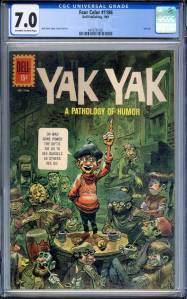
Four Color #1186 CGC 7.0 Off-White to White Pages $95
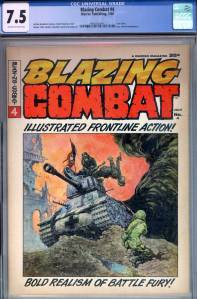
Following the success of Warren Publishing‘s black-and-white horror-comics magazine Creepy in 1964, publisher James Warren expanded into war fiction the following year with the short-lived Blazing Combat. The black-and-white, 64-page Blazing Combat ran four quarterly issues, cover-dated October 1965 to July 1966, and, like Creepy, carried a 35-cent cover price.
Blazing Combat #4 CGC 7.5 Off-White to White Pages $69
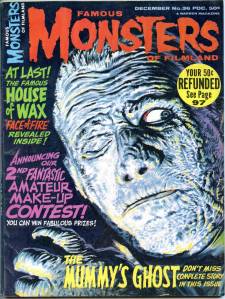
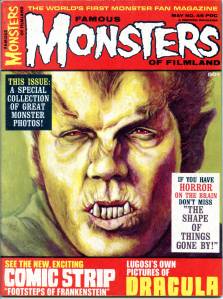
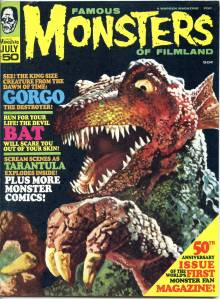
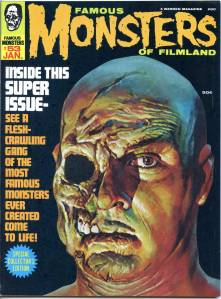
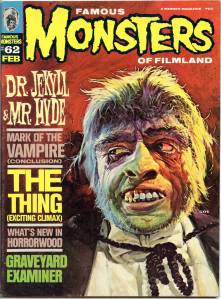
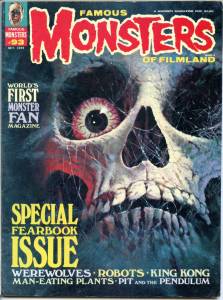
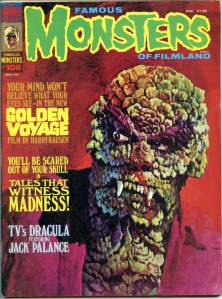
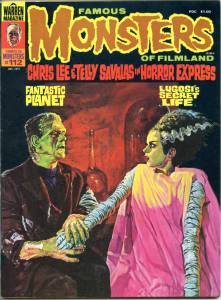
Famous Monsters of Filmland was originally conceived as a one-shot publication by Warren and Ackerman, published in the wake of the widespread success of the Shock Theater package of old horror movies syndicated to American television in 1957. But the first issue, published in February 1958, was so successful that it required a second printing to fulfill public demand. Its future as part of American culture was immediately obvious to both men. The success prompted spinoff magazines such as Spacemen, Favorite Westerns of Filmland, Screen Thrills Illustrated, Creepy, Eerie, and Vampirella.
In 1968 Gold Key reprinted a couple of TV ComicAvengers strips as a one-shot comic for the US market. For trademark reasons, since Marvel had the Avengers comic trademark in the USA, the comic was titled after the featured characters, John Steed and Emma Peel.
The Avengers is a spy-fiBritish television series created in the 1960s. The Avengers initially focused on Dr. David Keel (Ian Hendry) and his assistant John Steed (Patrick Macnee). Hendry left after the first series and Steed became the main character, partnered with a succession of assistants. Steed’s most famous assistants were intelligent, stylish and assertive women: Cathy Gale (Honor Blackman), Emma Peel (Diana Rigg), and later Tara King (Linda Thorson). Later episodes increasingly incorporated elements of science fiction and fantasy, parody and British eccentricity. The Avengers ran from 1961 until 1969, screening as one-hour episodes its entire run.
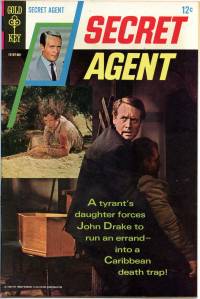
In 1966, Gold Key Comics published two issues of a Secret Agent comic book based upon the series Danger Man (titled Secret Agent in the United States), a British television series which was broadcast between 1960 and 1962, and again between 1964 and 1968. The series featured Patrick McGoohan as secret agent John Drake.
Prisoner fans frequently debate whether John Drake of Danger Man and Number Six in The Prisoner are the same person. Like John Drake, Number Six is evidently a secret agent, but one who has resigned from his job. Moreover, in the surrealPrisoner episode “The Girl Who Was Death“, Number Six meets “Potter”, John Drake’s Danger Man contact. Christopher Benjamin portrayed the character in both series.
In 1967, Gold Key reprinted a number of selected issues of their comics under the title Top Comics which were sold in plastic bags containing five comics at gas stations and various eateries. Like Dell, Gold Key was one of the few major American publishers of comic books never to display the Comics Code Authority seal on its covers.
Top Comics Daffy Duck #1 VF- $19
Top Comics Flipper #1 FN-VF $9
Top Comics The Gnome Mobile #1 VF- $19
Top Comics Lassie #1 VF $25
Top Comics – Mickey Mouse #3 F $10
Top Comics Porky Pig #2 VF-$14
Top Comics – Walt Disney Presents – Snow White and the Seven Dwarfs FN-VF 19
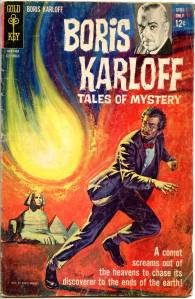
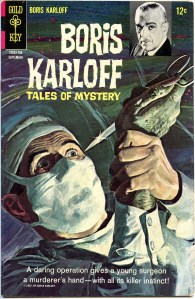
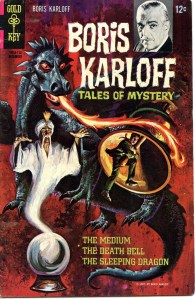
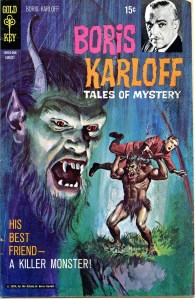
During the run of the television show Thriller, Karloff lent his name and likeness to a comic book for Gold Key Comics based upon the series. After Thriller was cancelled, the comic was retitled Boris Karloff’s Tales of Mystery. An illustrated likeness of Karloff continued to introduce each issue of this publication for nearly a decade after the real Karloff died; the comic lasted until the early 1980s. Starting in 2009, Dark Horse Comics started to reprint Tales of Mystery in a hard bound archive.







 EHT Comics