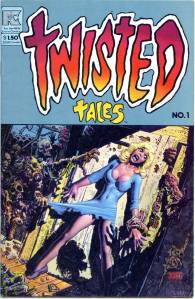
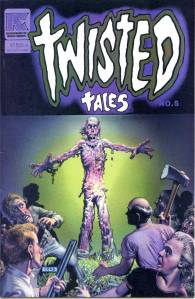
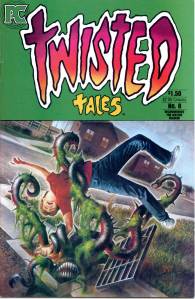
Twisted Tales was published bi-monthly by Pacific Comics from November 1982 to May 1984 (eight issues). After Pacific went bankrupt, two final issues were published by Eclipse Comics in November and December 1984. In August 1986, Blackthorne Publishing released Twisted Tales 3-D #1 (#7 in their 3-D series), with reprints of stories taken from earlier issues. In November 1987 a Twisted Tales trade paperback was released by Eclipse Comics with a Dave Stevens cover, featuring previously unpublished stories and art.
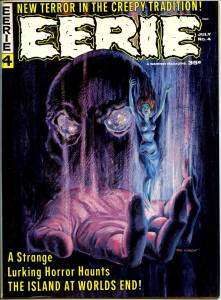
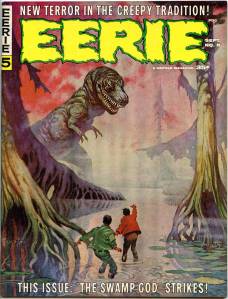
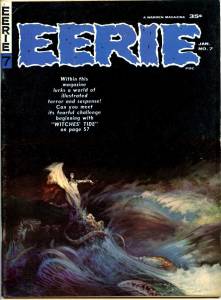
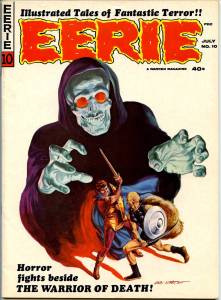
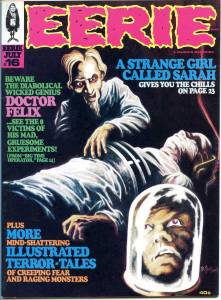
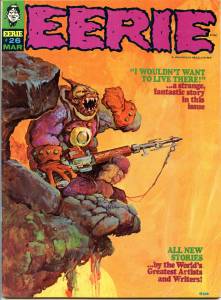
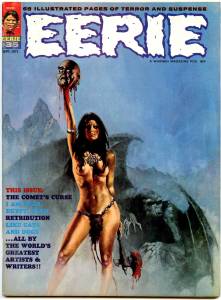
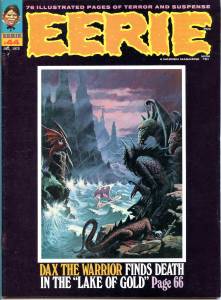
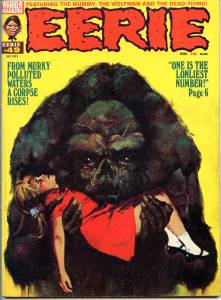
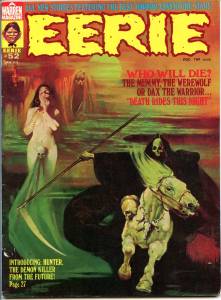
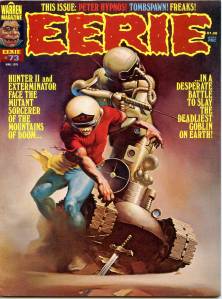
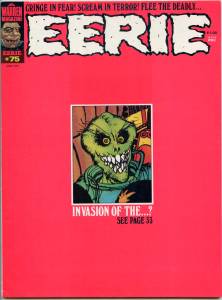
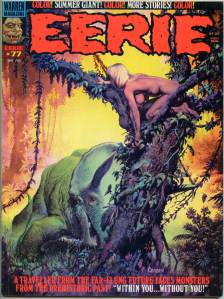
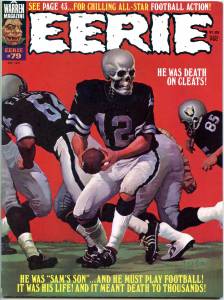
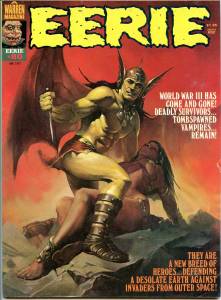
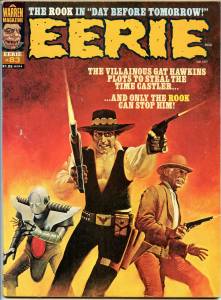
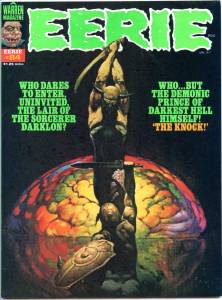
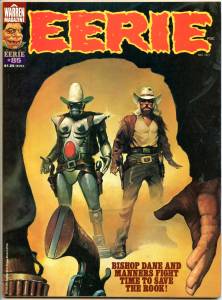
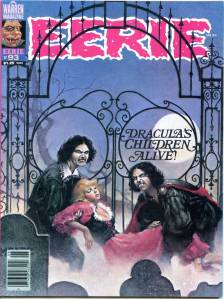
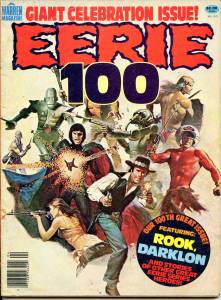
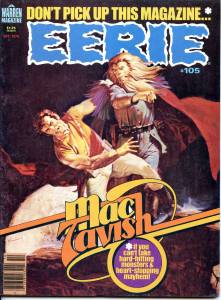
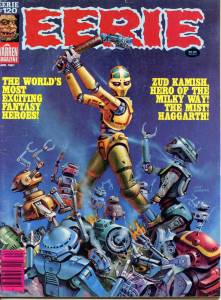
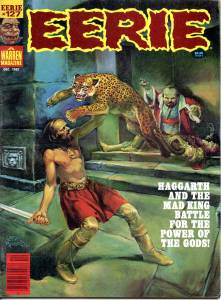
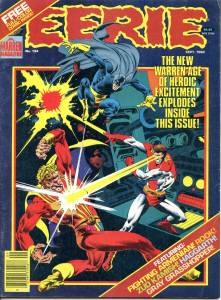
Eerie was an American magazine of horror comics introduced in 1966 by Warren Publishing. Like Mad, it was a black-and-white newsstand publication in a magazine format and thus did not require the approval or seal of the Comics Code Authority. Each issue’s stories were introduced by the host character, Cousin Eerie. Its sister publications were Creepy and Vampirella.
The first issue, in early 1966, had only a 200-issue run of an “ashcan” edition. With a logo by Ben Oda, it was created overnight by editor Archie Goodwin and letterer Gaspar Saladino to establish publisher Jim Warren’s ownership of the title when it was discovered that a rival publisher would be using the name.Warren explained, “We launched Eeriebecause we thought Creepy ought to have an adversary. The Laurel and Hardy syndrome always appealed to me. Creepy and Eerie are like Boris Karloff and Peter Lorre.”
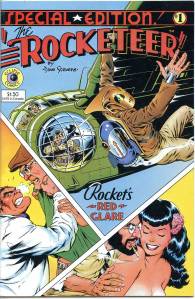
The Rocketeer’s first adventure appeared in 1982 as a backup feature in issues #2 and #3 of Mike Grell‘s Starslayer series from Pacific Comics. Two more installments appeared in Pacific’s showcase comic Pacific Presents #1 and 2. The fourth chapter ended in a cliffhanger that was later concluded in a special Rocketeer issue released by Eclipse Comics. The complete story was then collected by Eclipse in a single volume titled The Rocketeer.
American Flagg, which ran 50 issues (Oct. 1983 – March 1988),was one of the first titles to be published by First Comics, an early alternative press comics company founded in Evanston, Illinois in 1983. Unusually for the time, the company offered its freelance writers and artists creator rights, including ownership of their creations.Regardless, writer-artist Howard Chaykin, then living in New York City, felt trepidation when First Comics approached him to do a project. He recalled in 2010,
“My concern had all and everything to do with the fact that this was a brand new company, located in [a suburb of] Chicago. I’d always worked for companies I’d visited and had day-to-day-dealings with. [But they talked about a financial plan that would make it possible for me to get out from under the debt I had accrued working for [publisher] Byron Preiss[illustrating early graphic novels]. It was encouraging, so I went home and concocted a scenario, a pitch document, and that was it.”
Chaykin devised a series set in 2031, a high-tech but spiritually empty, consumerist world in which the American government has relocated to Mars, leaving what remains of the U.S. to be governed by the all-encompassing corporation the Plex. The series star is Reuben Flagg, a former TV star drafted into the Plexus Rangers and posted as a deputy in Chicago, Illinois.
The first 12 issues, running through cover-date September 1984, consisted of four interlocking, three-issue story arcs. Chaykin recalled his difficulty in producing 28 pages of art and script monthly. “I was still a smoker and a drinker at the time. And [the output was such that] I’d never done anything like that before, and it was insane. It just devoured my life I had no assistants. I didn’t how to work with an assistant at that point, and it was a very difficult process. … I was trying to do a fairly high-quality product and I didn’t want to slough it off.”
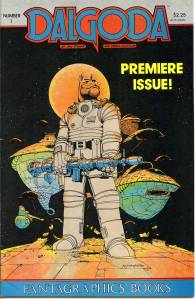
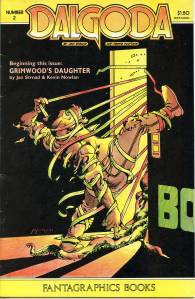
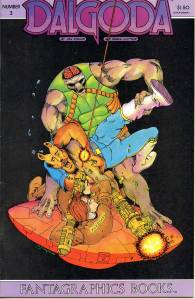
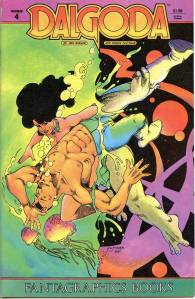
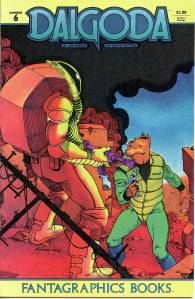
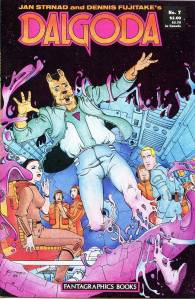
Dalgoda by Jan Strnad and Dennis Fujitake was published by Fantagraphics Books in 1984. This is a series that needs to come back! Not only were the featured stories and art amazing, but the books also featured back-up stories by Alan Moore (“The Bojeffries Saga”) and Kevin Nowlan (“Grimwood’s Daughter”).
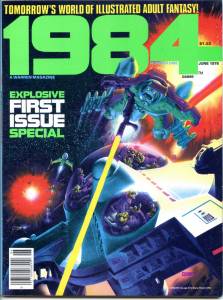
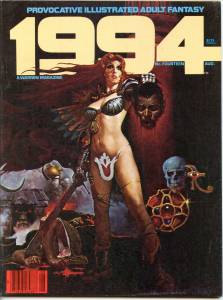
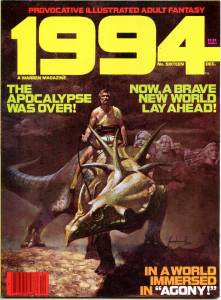
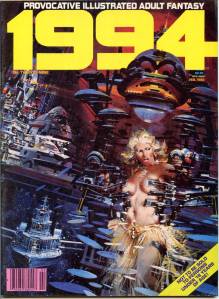
1984 was an American black and white science-fictioncomic magazine published in New York City by Warren Publishing from 1978 to 1983. 1984 was edited by Bill Dubay. The title of the magazine was changed to 1994 starting with issue #11 in February, 1980 based on a request by the estate of George Orwell. The magazine ceased publication with issue #29 in February, 1983 due to the bankruptcy of Warren Publishing.
Similar to its sister publications Eerie and Vampirella, 1984 featured numerous recurring series and characters. This included the following:
Mutant World (Artist: Richard Corben; Writer; Jan Strnad)
Ghita of Alizarr (Drawn and written by Frank Thorne)
Idi Amin (Artist: Esteban Maroto; Writer: Bill Dubay)
Rex Havoc (Artist: Abel Laxamana; Writer: Jim Stenstrum)
The Starfire Saga (Artist: Rudy Nebres; Writer: Bill Dubay)
Young Sigmond Pavlov (Artist: Alex Niño; Writer: Bill Dubay)
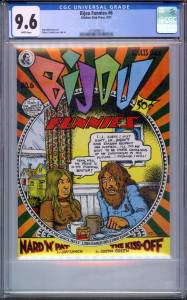
XYZ Comics —“The Last Word in Comics!”— was first published in 1972. This classic underground comic book leads off with “Cubist Be Bop Comics,” a stream-of-consciousness tour de force lasting eight-pages. “Girls, Girls, Girls” follows, Robert Crumb’s analytic look at female anatomy that results from reducio absurdem. Several short pieces featuring Bo Bo Bolinski, “Comical Comics,” Boingy Baxter, John Q. Public and the tongue-in-cheek nostalgia of “Remember Keep on Truckin’?” are followed by the autobiographical “The Many Faces of R. Crumb.” XYZ ends withRobert’s “Fuzzy the Bunny,” a thinly-disguised piece about his older brother Charles, who suffered from mental illness (as seen in theTerry Zwigoff documentary Crumb).
XYZ Comics (1972) CGC 9.0 Off-White to White Pages $139
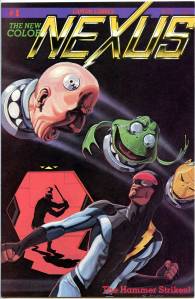
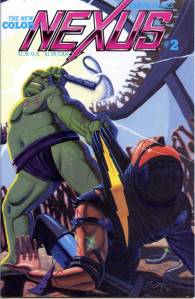
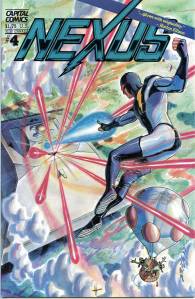
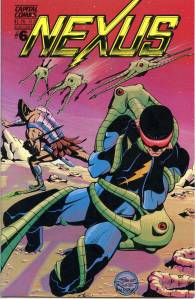
Nexus is a comic book series created by writer Mike Baron and penciler Steve Rude in 1981. The series is a combination of the superhero and science fiction genres, set 500 years in the future.
The series debuted as a three-issue black-and-white limited series (the third of which featured a 33 RPM flexi disc with music and dialogue from the issue), followed by an eighty-issue ongoing full-color series. The black-and-white issues and the first six color issues were published by Capital Comics; after Capital’s demise, First Comics took over publication.
On the creation of the series: Baron noted that they had originally pitched a series called Encyclopaedias to Capital Comics, but the company rejected this, saying they were looking for a superhero title. Over a drink at a restaurant, Baron outlined his ideas for Nexus to Rude.
Nexus was entirely Baron’s idea. He even came up with the lightning bolt for the costume. All that we needed then was a name… a few weeks passed. Baron calls, and, without preamble, just says “Nexus.” We finally had our name.”
The Grim Ghost is a fictional character, a superhero created by writer Michael Fleisher and artist Ernie Colón that debuted in The Grim Ghost #1 (cover-dated Jan. 1975) from Atlas/Seaboard Comics. The series lasted three issues before the company went out of business in January 1976. A new ongoing series published by a revival of Atlas Comics in association with Ardden Entertainment, debuted in 2010.





















 EHT Comics